
House Bunting
House Bunting
Emberiza sahari
Quick Identification guide
Quick Identification guide
- •
Features a reddish-brown body with streaked patterns throughout for camouflage
- •
Displays a grayish head with a distinctive white eye ring adding to its identity
- •
Has a slender beak that is finely pointed, suited for foraging small seeds
What does a house bunting sound like?
The house bunting produces a melodious song, primarily emphasizing a repetitive “tew-tew-tew-turrr” delivered in varying intensity and tempo. Its call notes include sharp “tik”, “tee” or “tink” sounds. These calls can shift in intensity during alarm situations, giving off a continuously repeated shrill note. It often combines or alternates calls with the primary song pattern. Their vocalizations are most prevalent at dawn, during courtship, or to defend territories.
Description
House buntings like to tell any potential intruders that this is their turf... By song! They sing to defend their territory and they might reuse the same nest for multiple broods with the same mate. You know what they say: if it ain't broke, don't fix it! They do not migrate and are often found places where humans live.
The house bunting can weigh between 12to18grams and be from13to14centimeters tall.
The house bunting typically lives for up to ten years. This is a relatively long life span, in comparison to species like the yellowhammer which lives up to four years, but shorter than the grey partridge, which can live up to thirteen years.
Did you know?
Most popular questions about house bunting
How to recognise a house bunting?
General appearance
The house bunting is a small bird with a distinctive combination of colors. Its upperparts and tail are a warm brown, while the underparts appear pale grey. Notable features include a darker head with a black eye stripe and throat.
Male vs female
Males and females of the house bunting species look similar, but discernible differences exist. Notably, males bear significantly more black on the head, encircling the eye and covering the throat, in contrast to the females where these features are a muted brown.
Juvenile
Juvenile house buntings possess a more subdued coloration than adults. They lack the stark black markings on the head, instead sporting a more uniform brown coloring. Overall, their plumage is more mottled and less distinctly patterned than the adults.
Often mistaken for
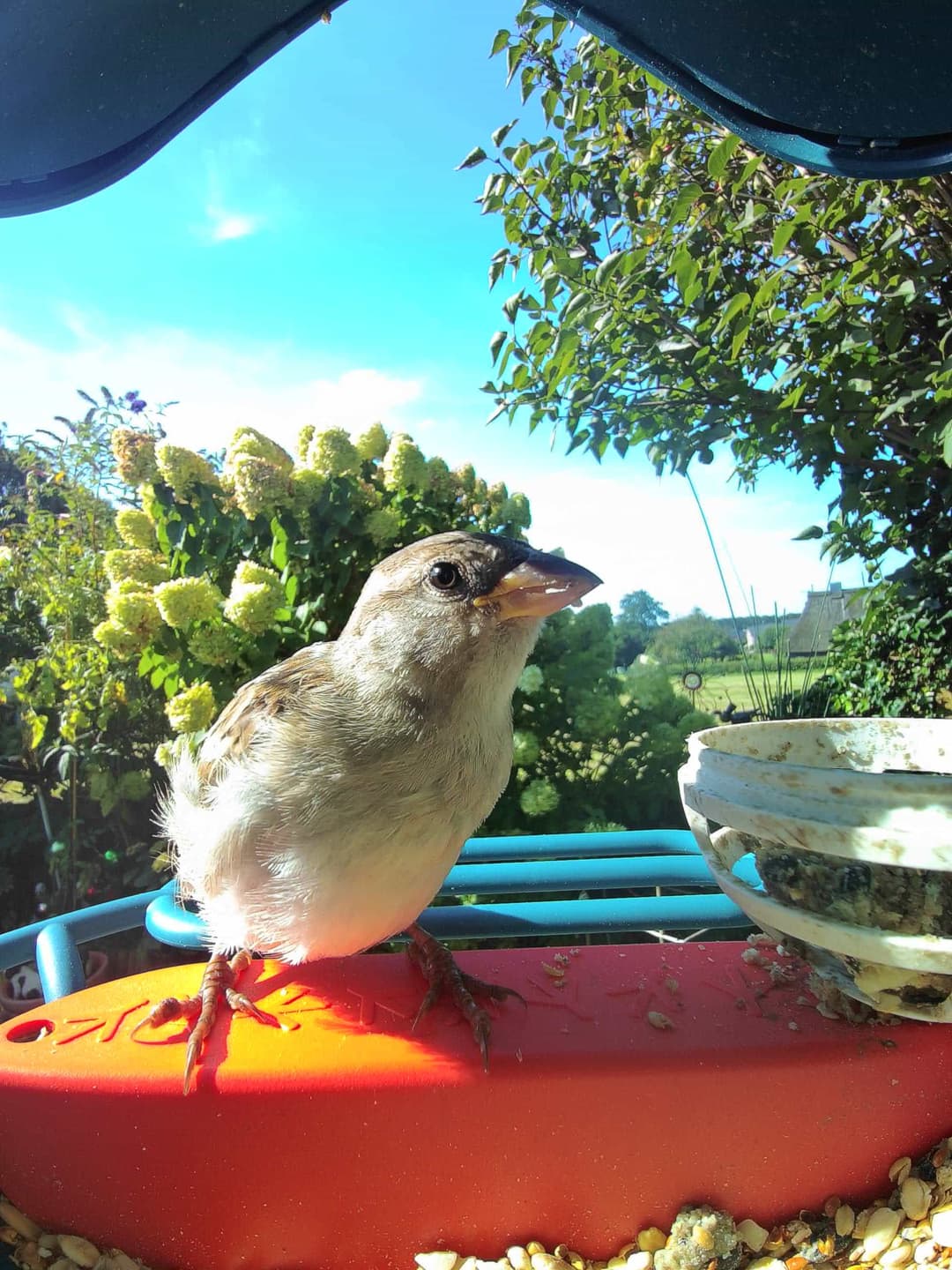
House Sparrow vs House Bunting
The House Sparrow resembles the House Bunting with its brown and gray hues, but it is bulkier with a more rounded head and a shorter tail.
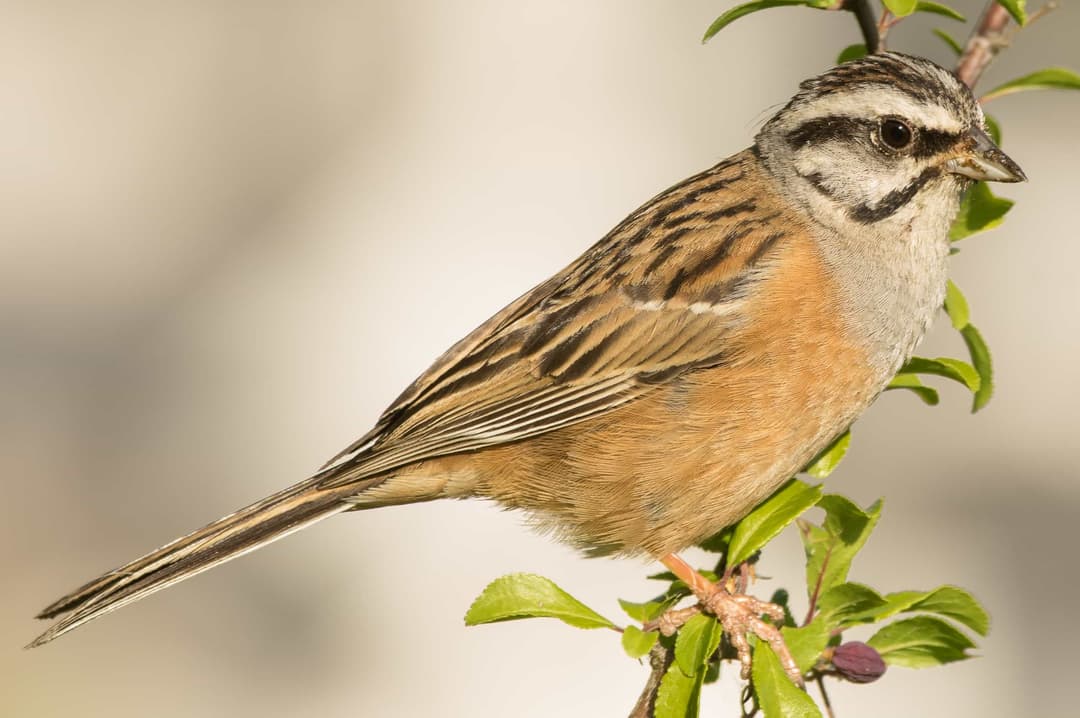
Rock Bunting vs House Bunting
The Rock Bunting is similar to the House Bunting, but it has a distinctive black and white head pattern and a more rust-colored underbelly.
Breeding and nesting habits of the house bunting
Mating behaviors
House buntings engage in elaborate courtship rituals, which include singing and flapping displays by males to attract females. Pair bonds are generally monogamous and formed for the duration of the breeding season.
Nesting details
House buntings prefer to nest in sheltered locations such as crevices, building eaves, or dense shrubbery. They construct cup-shaped nests using grasses, twigs, and soft materials such as feathers and wool. In garden settings, providing dense shrubs or creeper plants can encourage nesting.
Eggs and chick-rearing
The female lays 3-5 eggs and incubates them for about 12-14 days. Both parents participate in feeding the chicks, which fledge after approximately 14-16 days. Providing a variety of seeds and insects in gardens can support their feeding needs.
What does a house bunting like to eat?
Berries
Flowers
Insects
Scraps
Seeds
Spiders
Natural diet
The house bunting primarily feeds on seeds, grains, and small insects. Its diet includes grass seeds, weed seeds, and various cereal grains found in open fields and agricultural areas. During the breeding season, it may consume insects such as beetles, caterpillars, and ants to provide protein for its young. The house bunting forages mainly on the ground, searching through leaf litter or bare soil for food.
Bird feeders
At bird feeders, the house bunting is known to eat a variety of seeds. It is particularly attracted to black oil sunflower seeds, millet, and cracked corn. These birds might also consume suet mixed with seeds, especially in colder months when they require more energy. House buntings are flexible in their diet and can adapt to the food offerings available in urban or suburban settings.
Inviting house buntings with favorite snacks
House Buntings love a variety of seeds and insects. Offering a steady supply of Bird Buddy seeds, chosen by experts for each season, will make your yard a favorite spot. Additionally, house buntings are known to eat certain types of insects. If you have a garden, consider leaving a few insects for them to snack on.
Choosing the right feeder for house buntings
Bird feeders that are open and easily accessible tend to attract house buntings the most. A ground feeder or a low-hanging tray feeder are both excellent choices. Make sure your feeder is in a quiet and safe location, preferably near some shrubs or small trees, as house buntings enjoy having cover nearby.
Fun tricks to encourage house buntings visits
Playing the house bunting's song can pique their curiosity and gather them in your yard for a sing-along. Don’t forget to provide a comfortable environment, like providing water and using bird houses to encourage them to stay longer. You can also place the feeder closer to your window to enjoy the view and make them feel safe.
Recommended seeds for house buntings
Bird Buddy seeds come highly recommended for attracting house buntings. These seeds are chosen by bird specialists for each season, ensuring they meet the dietary needs of your feathered visitors throughout the year. The variety in Bird Buddy seeds will keep your visitors coming back for more.
Where can you find house buntings?
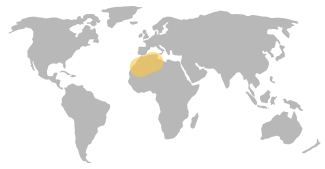
Primary habitat
The house bunting primarily inhabits North Africa and the Middle East, with a strong preference for arid, warm climate.
Additional range
It is known to adapt to urban environments, often seen in city centers and dwellings where it may nest in structures such as buildings and bridges.
Do they migrate?
The house bunting is generally a resident bird, meaning it does not migrate and tends to stay in one place throughout the year. It is found across parts of North Africa, the Middle East, and southwestern Asia. This bird typically inhabits cities, villages, and rocky areas, often in arid or semi-arid environments. While house buntings do not undertake significant migratory journeys, they may exhibit some local movements in response to changes in environmental conditions, such as food availability or seasonal weather patterns. These movements are generally not long-range migrations but rather small-scale shifts within their established territories. If any nominal movements occur, they are usually across short distances and not tied to specific migratory routes, timing, or key locations typical of migratory species. Overall, their residency makes them adaptable to stable environments offered by urban and rocky regions within their range.
What is the role of house buntings in nature and how to protect them?
Conservation status
The house bunting is classified as "Least Concern" on the IUCN Red List, indicating it is relatively common and not currently facing significant threats. This bird thrives in a wide range of habitats, including urban areas, which has helped stabilize its population. However, habitat destruction and urbanization in certain regions could pose potential risks. Despite this, there are no major targeted conservation efforts focused on this species, as its adaptability and widespread distribution have ensured it remains relatively secure in the short term. Ongoing habitat monitoring is essential to ensure continued stability.
Ecological role of house buntings
Its role in the ecosystem
The house bunting (Emberiza sahari) plays a significant role in the ecosystems that it inhabits, serving as both a predator and a seed disperser. As a predator, this bird helps to control the populations of insects and other small organisms that it feeds on, preventing these species from overpopulating and causing harm to the ecosystem. In particular, the house bunting can contribute to pest control in agricultural areas by eating insects that damage crops. Additionally, the house bunting contributes to seed dispersal, which helps plants spread and grow in new areas. By eating fruits and seeds, then excreting the seeds in different locations, the house bunting aids in the propagation of plant life. Therefore, the house bunting is ecologically significant for its roles in pest control, seed dispersal, and the maintenance of overall biodiversity.
How to help protect house buntings
Preservation tips
Habitat preservation strategies
Support the preservation of the house bunting's natural habitats which include urban settings and semi-open landscapes with shrubbery and trees. Help maintain areas free from intensive agriculture and land development. This can be done by lobbying local governments to protect such areas, participating in local conservation groups, and adopting sustainable practices in urban planning.
Community science initiatives
Become involved in community science initiatives focused on house bunting conservation. These often include participation in population surveys, bird banding, and habitat assessment. Educating the public about the house bunting and its ecological importance is also vital. You can host presentations at local schools, organize bird watching events to raise awareness, and encourage citizens to report sightings and nest locations to local wildlife authorities.