Pine Warbler or Cape May Warbler?
Here's how to tell the difference

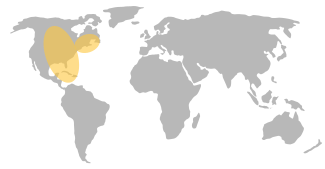


Pine Warbler


Cape May Warbler
Pine Warbler
Setophaga pinus
General appearance
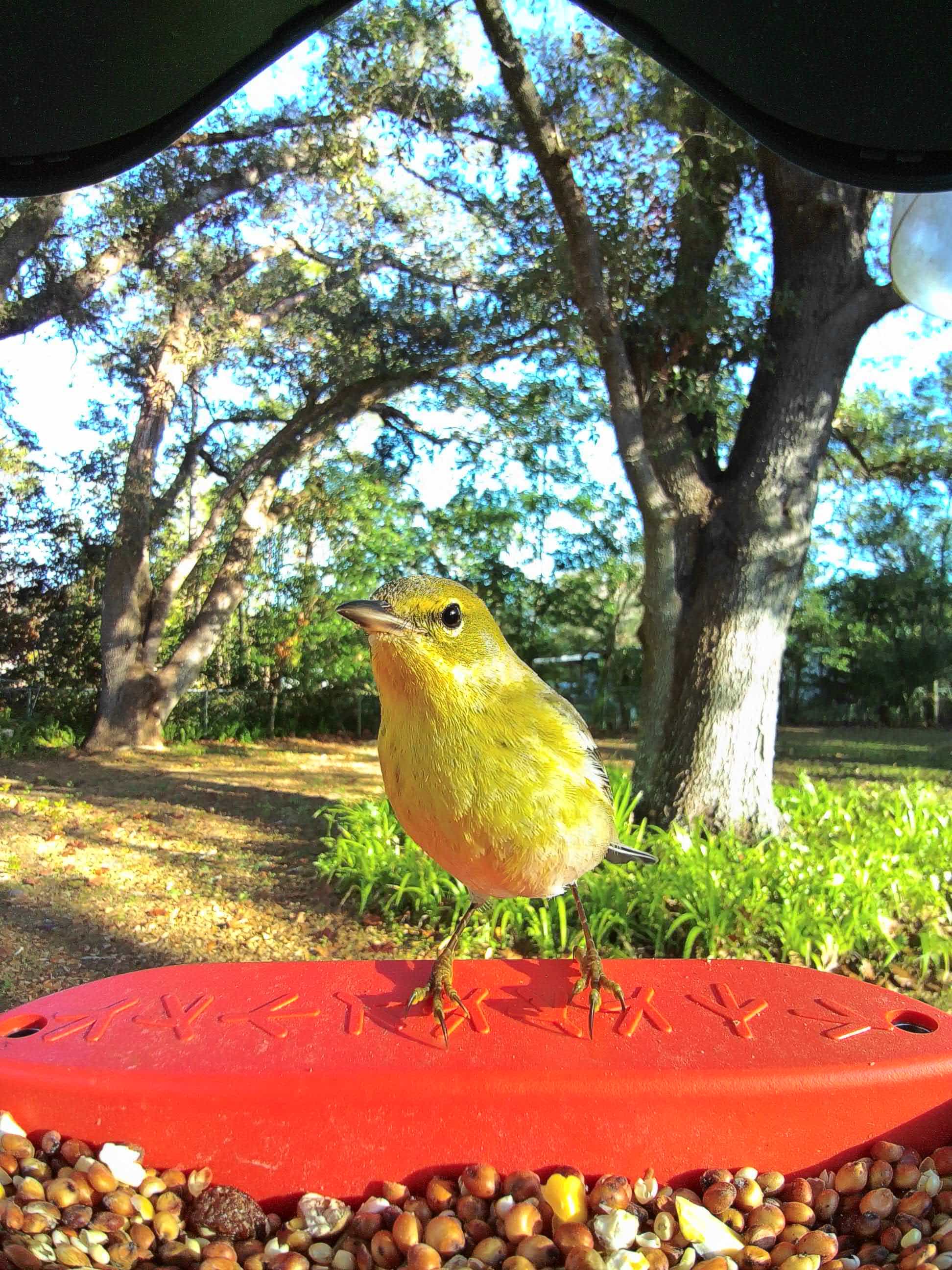
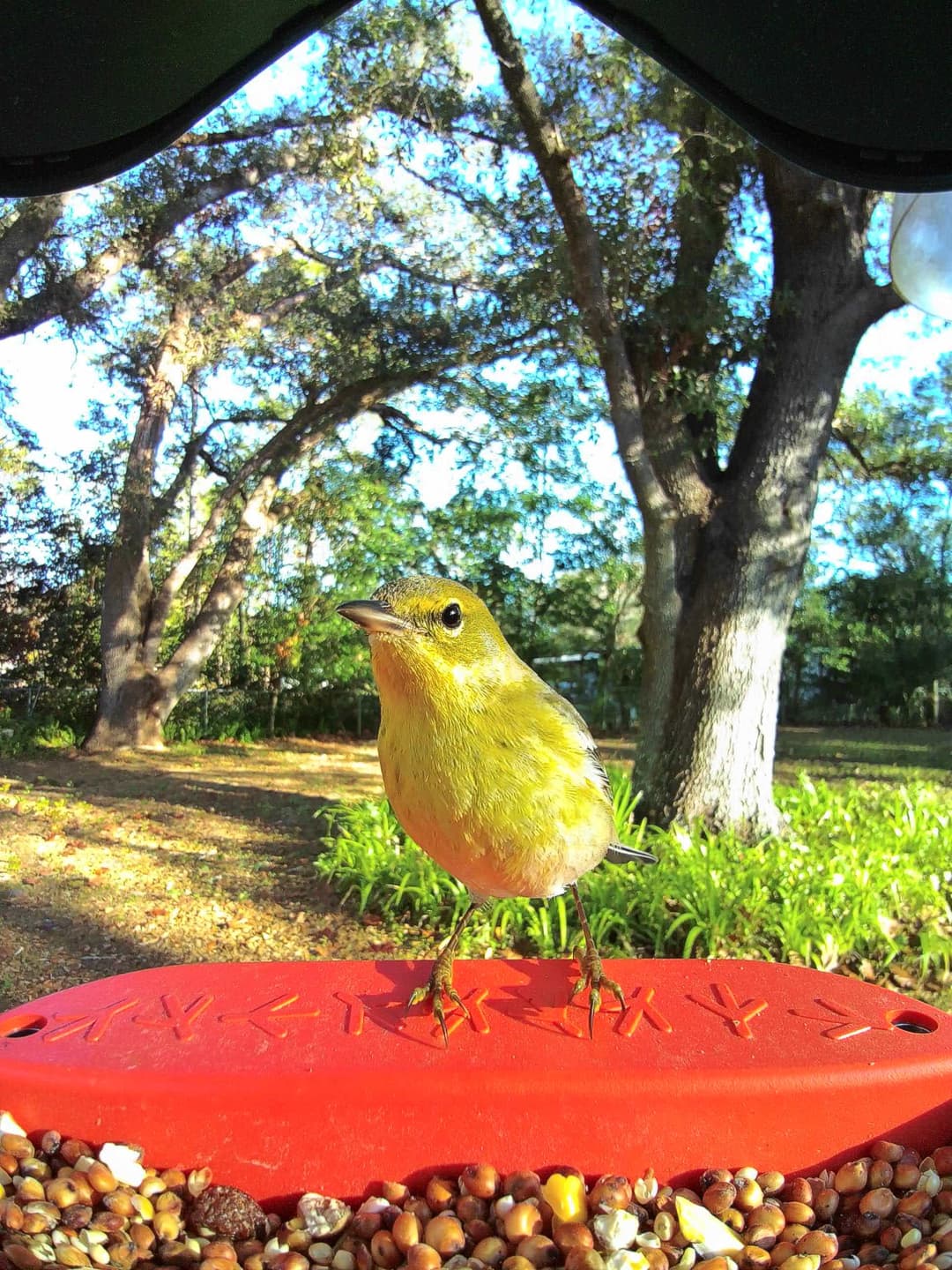
The Pine Warbler is a small bird about 14 cm in size, equivalent to a Sparrow. Its distinct features include rounded wings and a notched or square-tipped tail. The Warbler's coloration varies between black, brown, green, white and yellow. It carries an olive tone on the top side while boasting yellow on its chest area. It is marked with two wing-bars.
Male vs female
In mature Pine Warblers, there is a discernible difference between males and females. Males display blurry streaks on their chests, distinguishing them from the females who have plainer chests. On their cheeks, the patch shows more contrast when compared to females.
Juvenile
Juveniles or Pine Warblers in their immature fall phase, present a different appearance. Their color can range from yellowish to gray, bearing a resemblance to fall Blackpoll or Bay-breasted Warblers. However, they can be distinguished by the duller wing-bars and lack of streaks on their back.
Size
5.1 - 5.5 in/0.3 - 0.5 oz
There's more to learn about Pine Warbler
View full detailsCape May Warbler
Setophaga tigrina
General appearance
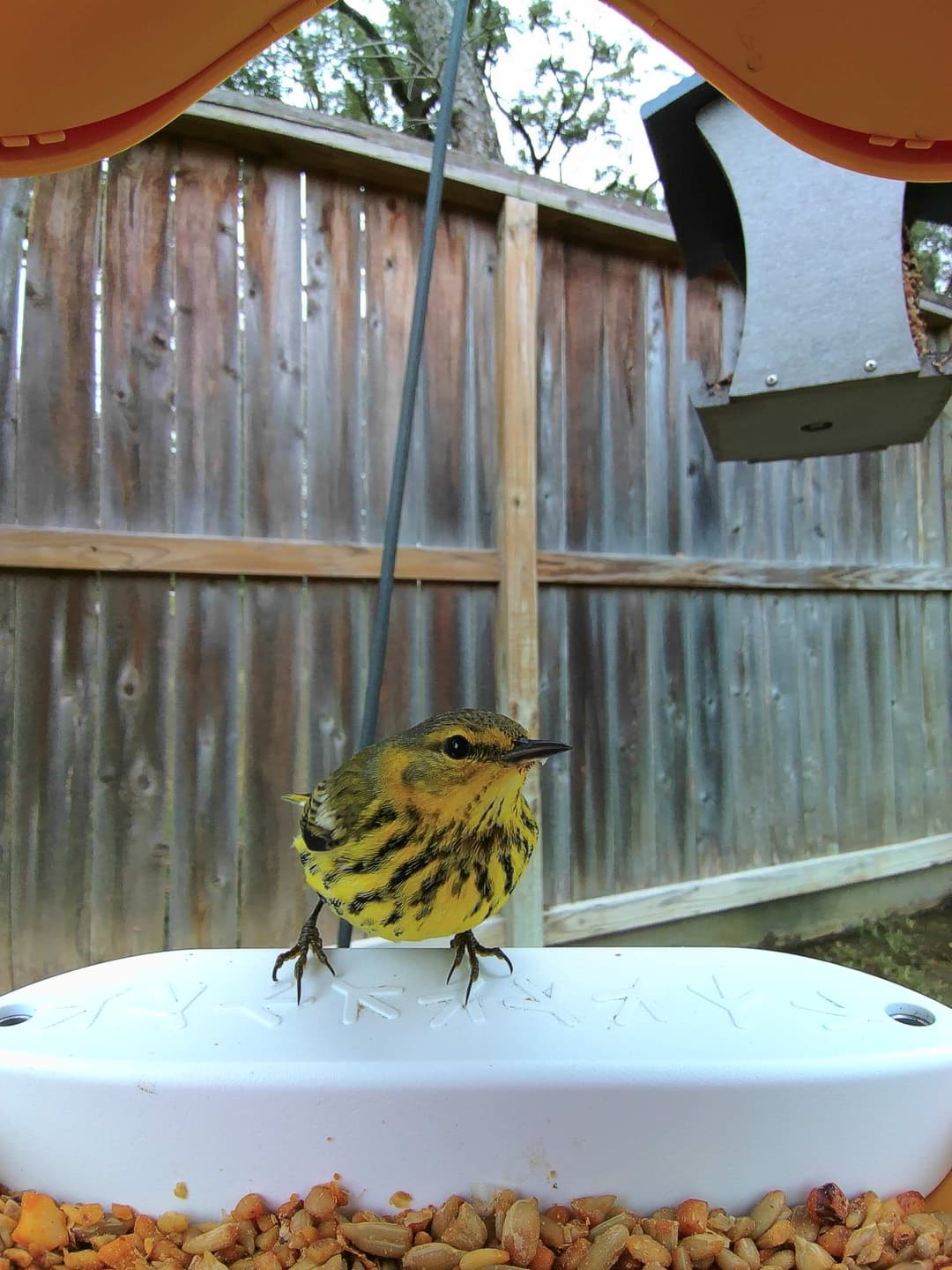
The Cape May warbler is about the size of a sparrow, measuring 13cm in length. Its most prominent features are its black stripes on a yellow breast and a yellow-green patch on its rump. It also displays a hint of a pale neck spot.
Male vs female
Gender differences are observable in terms of color intensity and specificity. The males have rich chestnut ear patches that are not present in females. Female warblers exhibit a duller version of the male pattern, retaining the stripes but without the chestnut ear patch.
Juvenile
Fall immature Cape May warbler shows variable coloring. Their coloration is more subdued and they might lack the bright yellow found in the adults. The combination of their more defined dark streaks on the underparts and shorter tail could lead to some identification challenges in the field.
Size
4.9 - 5.3 in/0.3 - 0.4 oz
There's more to learn about Cape May Warbler
View full detailsHow to tell the Pine Warbler from the Cape May Warbler
Visual differences
Pine Warblers (5.1-5.5 inches) and Cape May Warblers (5 inches) are similar in size. Pine Warblers show olive backs, yellow chests, and feature two wing-bars and rounded wings. The Cape May Warbler displays striking black streaks on a bright yellow breast and a yellow-green rump. Male Cape May Warblers have distinctive chestnut ear patches absent in females, contrasting the clearer cheek contrast among male Pine Warblers. Cape May Warblers also have a pale neck spot, and both genders display darker streaks compared to Pine Warblers.
Key differences and behavior
Pine Warblers inhabit pine forests year-round, sticking close to these trees even in winter, whereas Cape May Warblers prefer boreal forests and migrate to the Caribbean during winter. Pine Warblers symbolize adaptability, primarily consuming insects and seeds, while occasionally visiting feeders for suet. Cape May Warblers exhibit specialized behavior, using a unique tubular tongue to feed on nectar and rely heavily on spruce budworms, contributing to breeding success. Breeding for Pine Warblers involves singing to attract mates with nests high in pines, whereas Cape May Warblers also engage in territorial songs and perform flight displays, nesting in coniferous canopies. Pine Warblers start breeding in early spring; Cape May Warblers lay larger clutches. While both species consume insects, Cape May Warblers diversify their diet with fruits and nectar, especially during winter.
Still not sure? Here are more lookalikes!
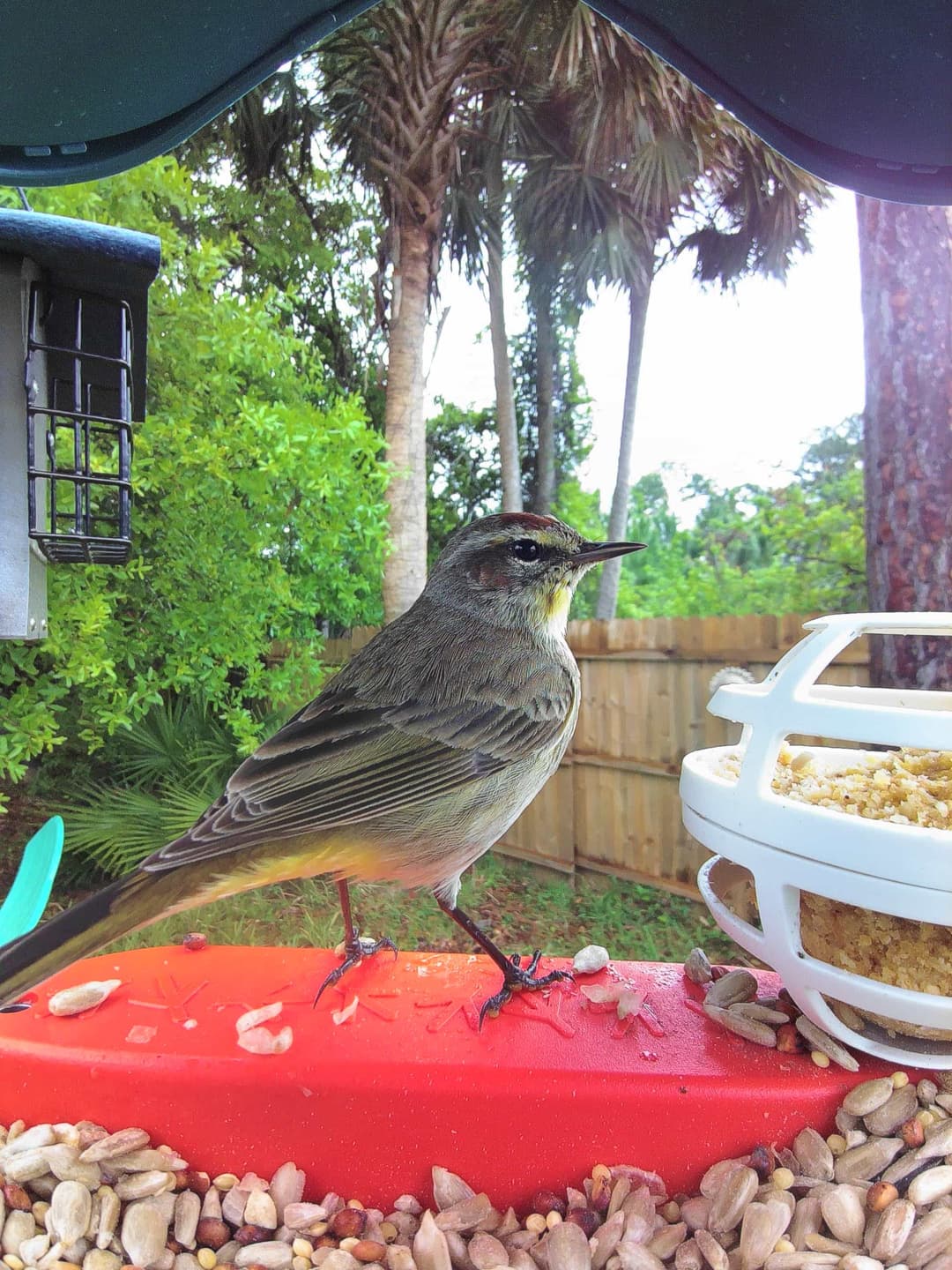
Cape May Warbler vs Yellow-Rumped Warbler

Pine Warbler vs [Select a bird]

[Select a bird]
Pick a bird to compare
Cape May Warbler vs [Select a bird]
[Select a bird]
Pick a bird to compare