Palm Warbler or Cape May Warbler?
Here's how to tell the difference
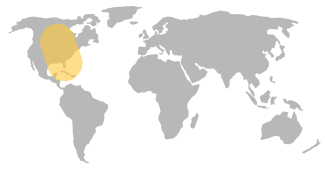


Palm Warbler


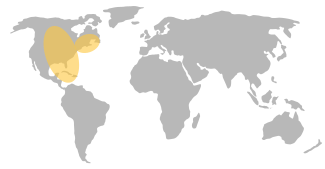
Cape May Warbler
Palm Warbler
Setophaga palmarum
General appearance
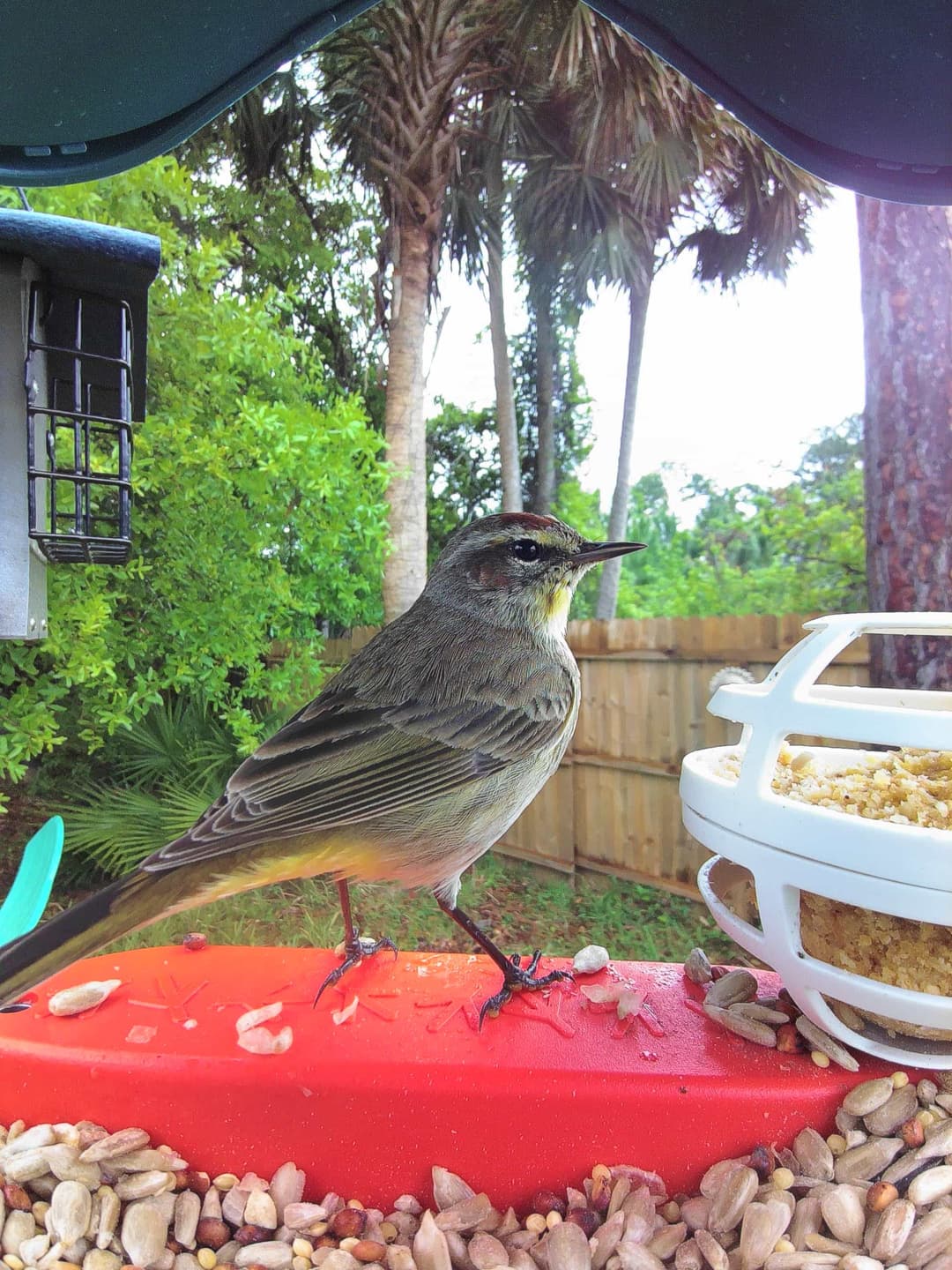
The palm warbler is a small songbird, averaging about 5 inches in length, with a wingspan of approximately 8 inches. It is characterized by its olive-brown upperparts and pale underparts with a distinct yellow undertone. A notable chestnut cap adorns the head, and a conspicuous white eyebrow stripe runs above the eye. During the breeding season, the yellow coloring becomes more pronounced, particularly on the throat and belly.
Male vs female
Males and females appear similar in coloration and size, though males may exhibit slightly brighter yellow underparts, particularly during the breeding season. Both sexes have the characteristic chestnut cap, but it can be marginally more vibrant in males.
Juvenile
Juvenile palm warblers are generally duller than adults, displaying more muted olive-brown tones without the pronounced chestnut cap. Their underparts are less vibrant, showing pale yellow-brown hues. As they mature, juvenile plumage transitions to resemble that of adults following their first molt.
Size
4.9 - 5.7 in/0.3 - 0.4 oz
There's more to learn about Palm Warbler
View full detailsCape May Warbler
Setophaga tigrina
General appearance
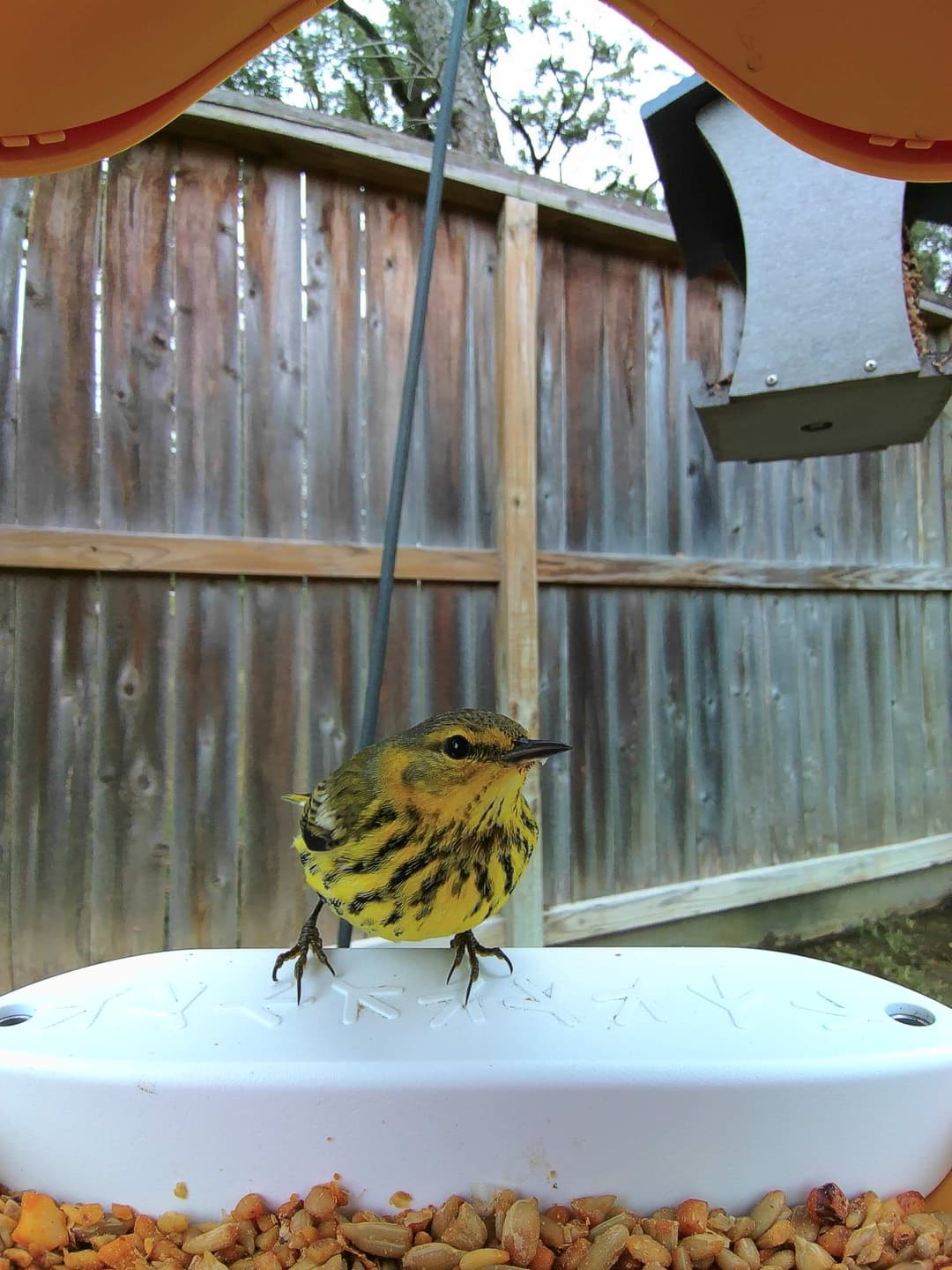
The Cape May warbler is about the size of a sparrow, measuring 13cm in length. Its most prominent features are its black stripes on a yellow breast and a yellow-green patch on its rump. It also displays a hint of a pale neck spot.
Male vs female
Gender differences are observable in terms of color intensity and specificity. The males have rich chestnut ear patches that are not present in females. Female warblers exhibit a duller version of the male pattern, retaining the stripes but without the chestnut ear patch.
Juvenile
Fall immature Cape May warbler shows variable coloring. Their coloration is more subdued and they might lack the bright yellow found in the adults. The combination of their more defined dark streaks on the underparts and shorter tail could lead to some identification challenges in the field.
Size
4.9 - 5.3 in/0.3 - 0.4 oz
There's more to learn about Cape May Warbler
View full detailsHow to tell the Palm Warbler from the Cape May Warbler
Visual differences
The Palm Warbler and Cape May Warbler are both small birds, with the Palm Warbler measuring about 5 inches long and the Cape May Warbler slightly smaller at approximately 5.1 inches. Palm Warblers have olive-brown upperparts, pale yellow underparts, and a chestnut cap. Cape May Warblers feature bold black stripes on a yellow breast and chestnut ear patches in males, absent in females. Unlike Palm Warblers, Cape May Warblers show more pronounced dark streaks. Both species display distinctive yellow tones, but Cape May Warblers have a more patterned appearance with more vivid markings.
Key differences and behavior
The Palm Warbler and Cape May Warbler exhibit distinct behaviors and ecological preferences. Palm Warblers prefer walking and tail-wagging rather than flying, residing in boreal forests and breeding in sphagnum bogs. They are sociable outside breeding season and often feed on the ground, consuming insects and berries. Cape May Warblers, in contrast, are adept flyers dwelling in high spruce canopies of North America. They have a crested mating display and migrate to the Caribbean where they consume fruit and nectar, aided by their unique tubular tongues. While Palm Warblers nest near the ground, Cape May Warblers build high in conifer trees. Palm Warblers are less inclined to visit bird feeders, whereas Cape May Warblers are drawn to nectar and fruit offerings.
Still not sure? Here are more lookalikes!
Palm Warbler vs Yellow-Rumped Warbler

Cape May Warbler vs Yellow-Rumped Warbler
Palm Warbler vs [Select a bird]

[Select a bird]
Pick a bird to compare
Cape May Warbler vs [Select a bird]
[Select a bird]
Pick a bird to compare