
Yellow-Rumped Warbler
Yellow-Rumped Warbler
Also known as: Butterbutt
Setophaga coronata


Quick Identification guide
Quick Identification guide
- •
Features streaky gray-brown upperparts with a distinctive bright yellow patch on the rump
- •
Exhibits two white wing bars on each wing and a narrow dark streak across the chest
- •
Presents a chunky build with a small, pointed beak, suited for feeding on insects and seeds
What does a yellow-rumped warbler sound like?
The yellow-rumped warbler produces a range of vocalizations. Its typical call includes a colorless buzzy warble and a sharp 'chek!'. The bird's call pattern is flat and undulating, varying the pitch with a rhythmic sense. The yellow-rumped warbler's songs encompass call types such as 'chirp/chip', a trilling sound, and a whistle, all demonstrating a diverse vocal repertoire.


Description
Did you know coronata is Latin for crown and setophaga is Ancient Greek for moth-eater? Yep, you guessed it, it's their food of choice. They typically flit from where they are perched to catch food, kind of like an adorable flycatcher. They will come to feeders if food is offered, especially peanut butter!
The yellow-rumped warbler can weigh between 10to17grams and be from13.5to14.5centimeters tall.
The yellow-rumped warbler typically has a lifespan of up to 7 years. This is relatively long for small songbirds, with most similar-sized species not living past 2-3 years. It shares this longevity with its close relatives in the warbler family.
Did you know?
Most popular questions about yellow-rumped warbler
How to recognise a yellow-rumped warbler?
General appearance
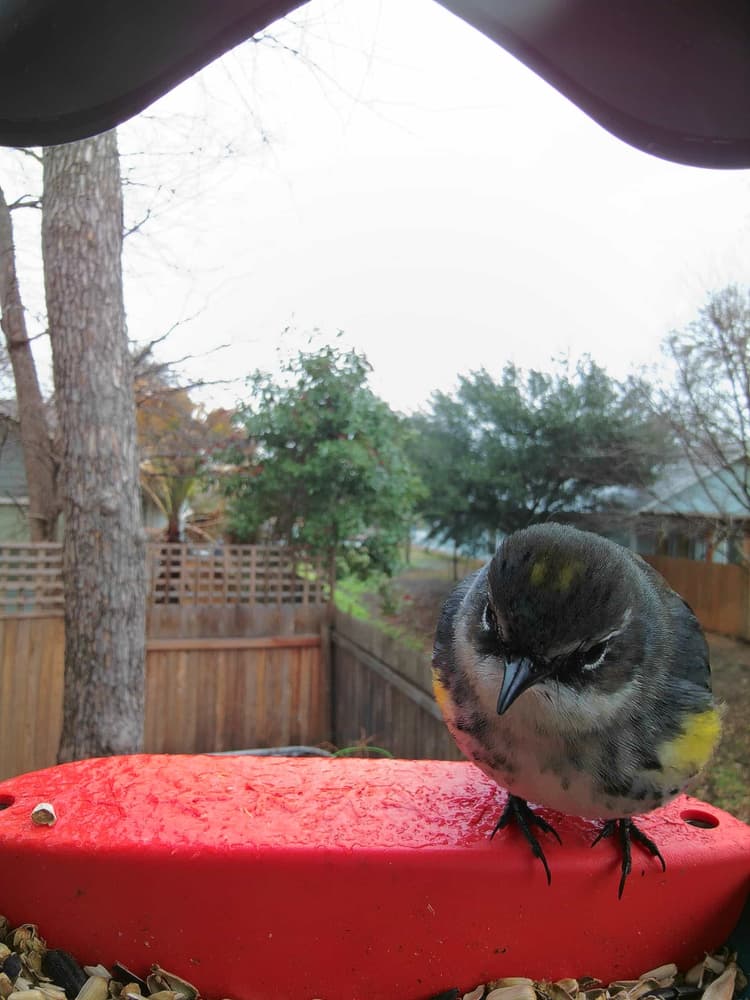
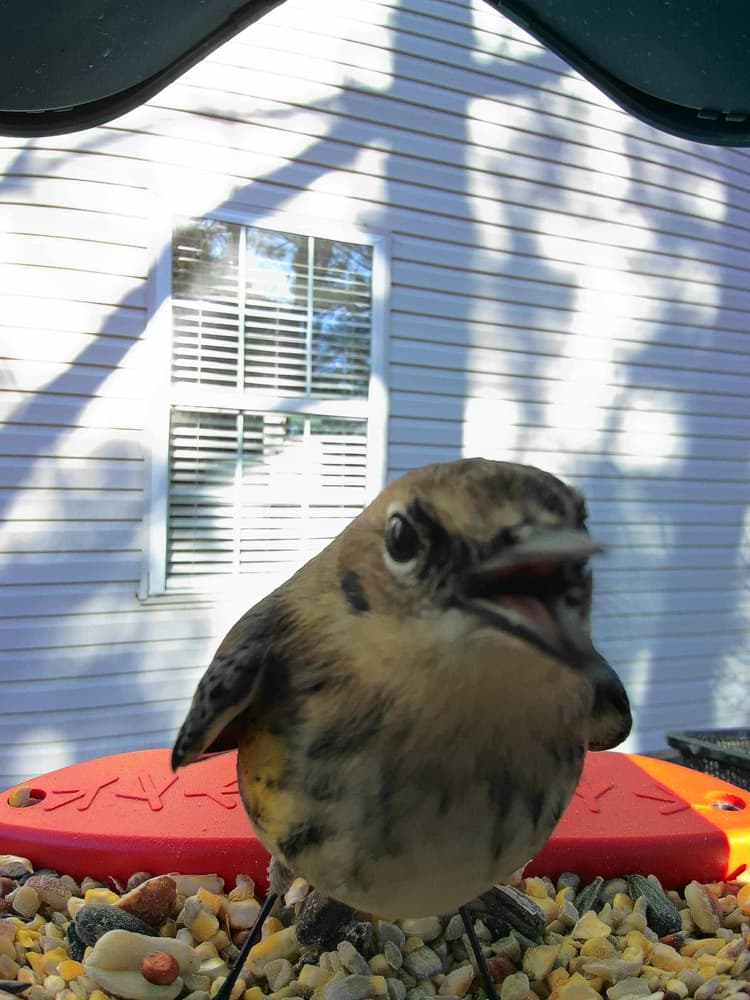
The Yellow-rumped Warbler is approximately the size of a Sparrow, clocking in at 5-6 inches (13-15 cm). The bird has a black, blue, brown, gray, white, and yellow plumage, and a distinctive bright yellow rump patch. Its tail features white spots, and there's a small yellow patch at the side of its chest. The face of the bird varies, with the 'Myrtle Warbler' having a white throat, and the 'Audubon's Warbler' boasting a yellow throat.
Male vs female
Males tend to have the brightest coloration, particularly in the spring. Females, particularly young ones in the fall and winter, exhibit a comparatively duller pattern. The 'Myrtle Warbler' variant possesses a well-defined dark cheek patch behind its white throat.
Juvenile
Juvenile Yellow-rumped Warblers may manifest a dull buff throat, particularly in some 'Myrtle Warbler' young ones. Juvenile females in the fall and winter present the dullest coloration.
Often mistaken for
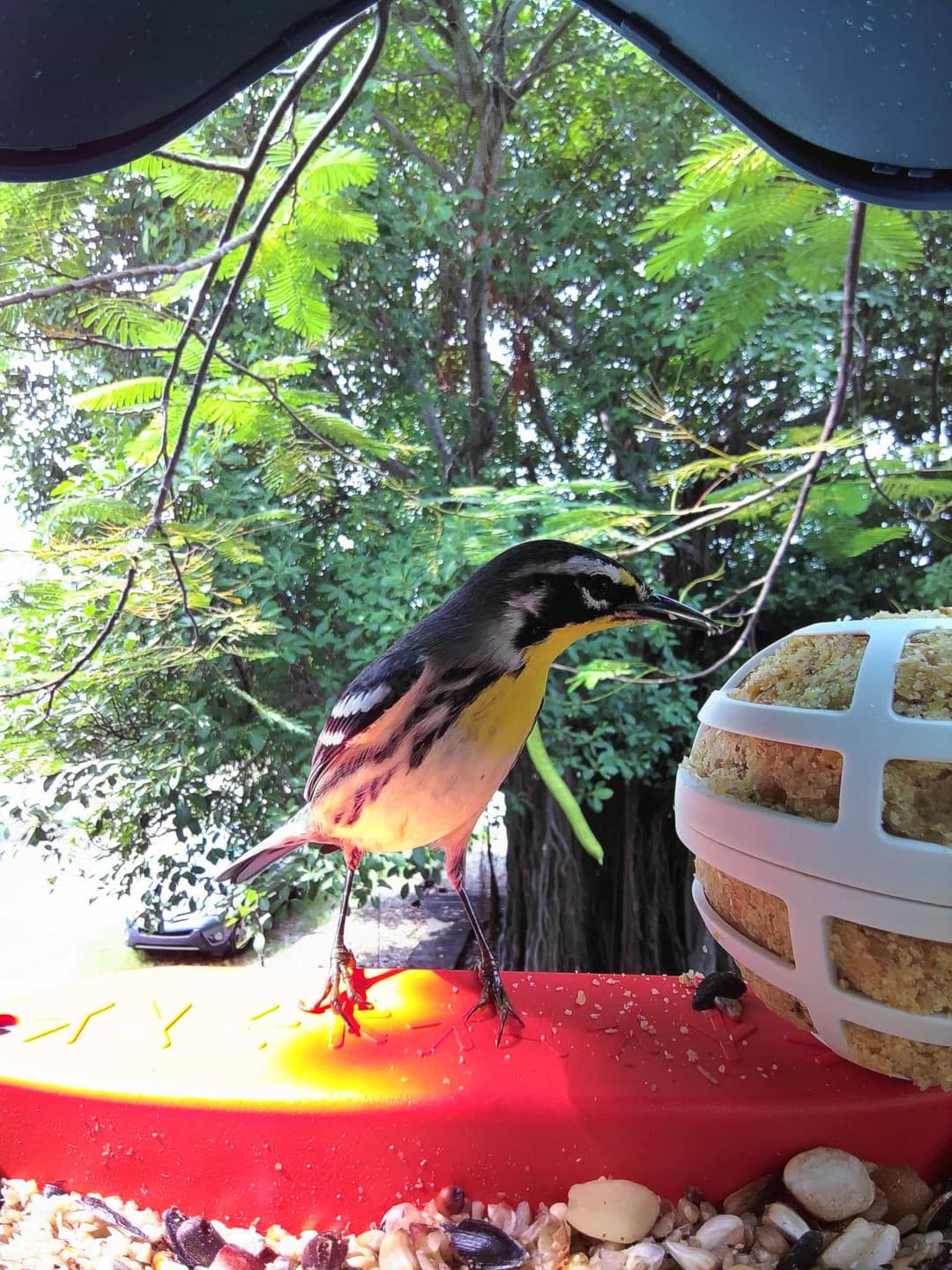
Yellow-Throated Warbler vs Yellow-Rumped Warbler
Yellow-Rumped Warbler has a distinct yellow rump patch, which Yellow-Throated Warbler lacks. While both have yellow patches, the Yellow-Throated Warbler's significant yellow is on its throat, which is absent on the Yellow-Rumped Warbler. Yellow-Throated Warblers have more pronounced black and white facial markings.
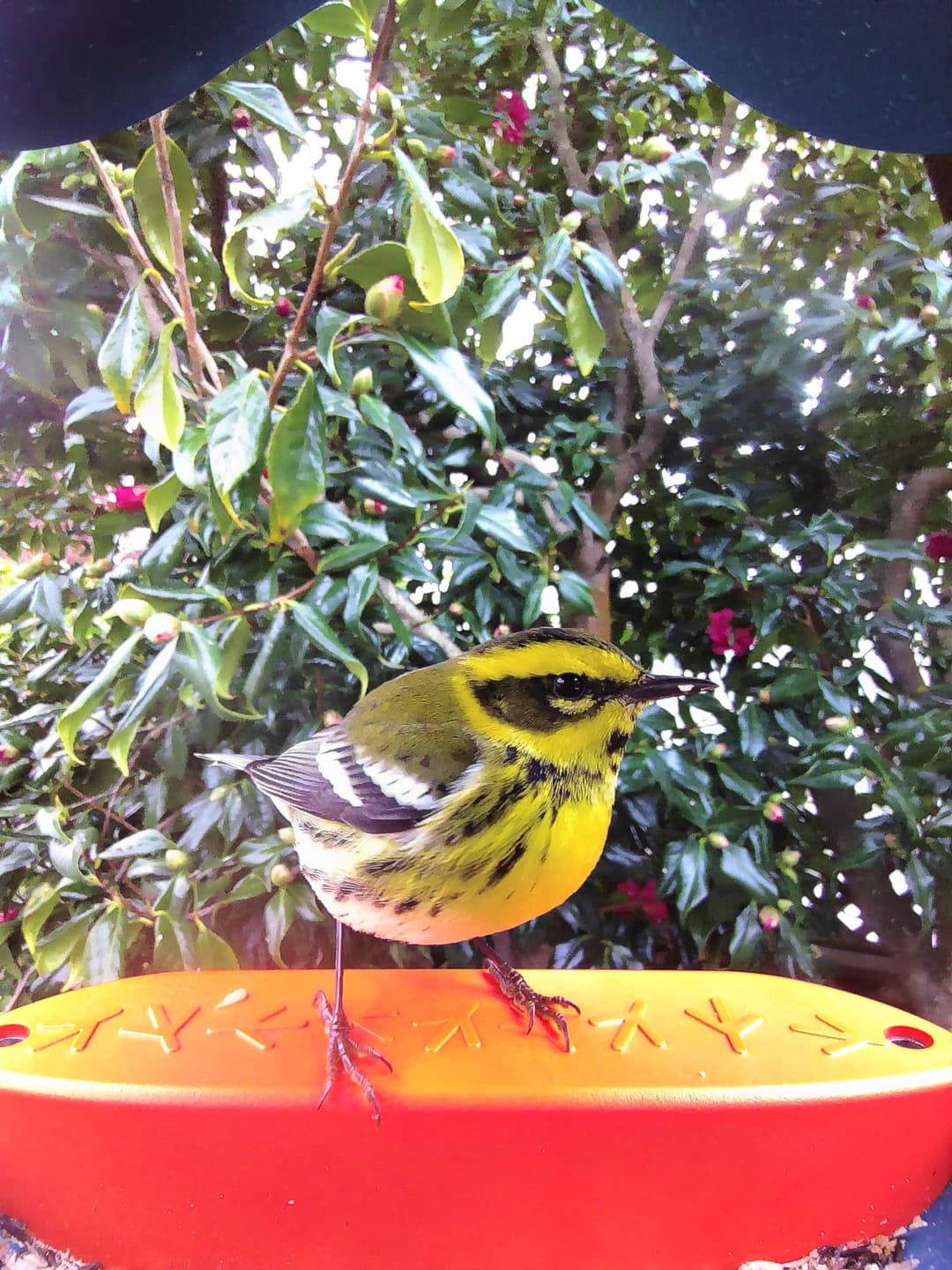
Townsend’s Warbler vs Yellow-Rumped Warbler
Yellow-Rumped Warbler is identifiable by its yellow rump and more muted facial pattern compared to Townsend’s Warbler. Townsend’s Warbler displays a striking black and yellow face with distinct black markings on its cheeks and throat. Yellow-Rumped has a paler overall appearance.
Breeding and nesting habits of the yellow-rumped warbler
Mating behaviors
Yellow-rumped warblers engage in elaborate courtship displays, including singing and fluttering flights performed by the male to attract a mate. These behaviors help establish pair bonds during the breeding season.
Nesting details
The species typically constructs cup-shaped nests in coniferous trees, though deciduous trees are also used. Nests are made using twigs, grass, moss, and lined with feathers for insulation. They rarely nest in gardens but providing coniferous plants can attract them.
Eggs and chick-rearing
The female lays 4-5 eggs, which are incubated for about 12 days. Both parents feed the chicks, which fledge approximately two weeks after hatching. The diet includes insects and berries, which parents also provide to chicks.
What does a yellow-rumped warbler like to eat?
Berries
Fruits
Honeydew
Insects
Sap
Seeds
Spiders
Suet
Natural diet
The yellow-rumped warbler has a diverse natural diet. During warmer months, it predominantly feeds on insects such as caterpillars, wasps, grasshoppers, gnats, aphids, and beetles, as well as spiders. In winter, when insects are scarce, it shifts to consuming berries. The warbler feeds on the berries of bayberry, juniper, wax myrtle, poison ivy, and other plants. A unique feature of its diet is its ability to digest the wax in these berry coatings, enabling it to winter further north than most other warbler species.
Bird feeders
At bird feeders, the yellow-rumped warbler may consume suet, peanut butter, and sunflower seeds. Offering a variety of foods can attract and sustain these birds, especially when natural food sources are limited.
Attracting the yellow-rumped warbler: food
To tempt the yellow-rumped warbler to your yard, remember that food is key. Offer 'Bird Buddy' seeds that have been specially selected by experts for the particular season. Yellow-rumped warblers also enjoy fruits, particularly berries such as juniper, cedar, and holly, so incorporating these plants into your landscape can create an irresistible treat for these birds.
Feeder tips for yellow-rumped warblers
Yellow-rumped warblers, being versatile diners, prefer a variety of feeders. Tube feeders, suet cages, hopper-style feeders, and platform feeders work well. Clear feeders allow them to see their food from afar, and the visibility helps them feel safer. Note that a feeders with perch sizes on the smaller side may be more attractive to this species as it matches their size.
Tricks to attract yellow-rumped warblers
Beyond feeders and food, a birdbath or other water sources can help attract yellow-rumped warblers. Plant native shrubs and trees which can provide both food and shelter. Another fun trick is to play recorded bird songs, particularly in the early morning or late evening. Just make sure to be responsible and considerate, as excessive or loud playback could disturb birds.
Where can you find yellow-rumped warblers?
Based on Birdbuddy sighting data. The heatmap shows where Birdbuddy users have spotted this species.
Embed this map
This map shows the full native range based on scientific range data.
Primary habitat
The yellow-rumped warbler prefers conifer and mixed forests, particularly those with open stands of pine, fir, spruce, aspen, and spruce-tamarack bogs. They typically breed in the North and up to altitudes of 12,000' in Western mountain conifer forests.
Additional range
This species demonstrates a wide winter range, occupying diverse lowland habitats such as open woods, brush, thickets, gardens, and even beaches. Notably, it frequents East coastal bayberry thickets and West streamside woods.
Do they migrate?
The yellow-rumped warbler is a migratory bird species known for its distinct migratory patterns compared to other warblers. It migrates earlier in the spring and later in the fall, making it relatively unique. There are two primary forms: the "Myrtle" warbler, predominantly found in eastern regions, and "Audubon's" warbler, primarily located in western parts of North America. During migration, the Myrtle form migrates through the eastern and central parts of North America. In spring, they move northward earlier than other warblers, reaching their breeding grounds in Canada and the northeastern United States. In the fall, they are among the last warblers to head south, wintering in the southeastern U.S. and as far south as Central America. In contrast, the Audubon's warbler has a different route. It breeds across the western U.S. and Canada. While it also heads south for the winter, its migration occurs later in the fall. A notable population winters along the Pacific Coast in streamside trees, particularly in California, where the Myrtle form is also commonly seen. Additionally, Audubon's warbler is a very rare stray in the East, occasionally appearing outside its usual migratory route.
What is the role of yellow-rumped warblers in nature and how to protect them?
Conservation status
The yellow-rumped warbler is currently considered "still abundant and widespread," indicating that it is common and not vulnerable or endangered. This species has a stable population due to its adaptability to various habitats and broad geographical range. However, habitat loss due to urban development and climate change poses potential threats. Conservation efforts typically focus on habitat preservation and monitoring population trends to ensure long-term stability. Continued vigilance is necessary to maintain its status, as environmental changes could impact its abundance in the future.
Ecological role of yellow-rumped warblers
Its role in the ecosystem
The Yellow-rumped Warbler plays important roles in ecosystems - pest control and seed dispersal being the key ones. With a diverse diet including caterpillars, wasps, gnats, aphids, beetles, and spiders. It significantly aids in managing pests, particularly during the breeding season. The warbler's consumption of many different insects contributes to the maintenance of balance within insect populations and reduces potential damage to the flora. In winter, the diet shifts to berries of bayberry, juniper, wax myrtle, poison ivy, and others. This ensures the dispersal of seeds, particularly of these plants, aiding their propagation and thus enhancing biodiversity within the ecosystem. The bird's ability to digest wax in the berries allows it to remain farther north during winter, contributing to its ecological role year-round. The sexual dimorphism observed in foraging behavior, where males tend to forage higher than females, might also help in localized spread of seeds and efficient consumption of pests. Therefore, Yellow-rumped Warblers are important players in sustaining health and diversity of ecosystems they inhabit.
How to help protect yellow-rumped warblers
Preservation tips
Habitat preservation for yellow-rumped warbler
To preserve the yellow-rumped warbler, implement strategies like protecting and restoring their preferred habitats such as forests, shrubs, and wetlands. Develop sustainable forestry practices, and contribute to reforestation projects to replace habitats lost to deforestation. Install bird-friendly windows or decals on windows to reduce bird collisions during migration seasons.
Community science initiatives
Promote community science initiatives to help monitor yellow-rumped warbler populations. Encourage citizens to participate in birdwatching programs and submit sightings data to local or national databases. Learning to identify this species and reporting sightings can provide valuable data for monitoring their population trends and habitat preferences. This will drive targeted conservation actions.