
Cape May Warbler
Cape May Warbler
Setophaga tigrina


Quick Identification guide
Quick Identification guide
Male
- •
yellow-olive upperparts with distinct black streaks
- •
Conspicuous chestnut cheek patch and yellow throat
- •
White wing bars on dark wings, enhancing contrast
Female
- •
Grayish-olive upperparts with subtle dark streaking
- •
Paler, yellowish underparts compared to the male
- •
Two white wing bars are present but less pronounced
What does a Cape May warbler sound like?
The Cape May warbler vocalizes through a song constituted of 4 or more high thin notes without any variation in pitch or volume, a pattern that sounds like 'seet-seet-seet-seet.' The bird's call can be categorized into various types including a flat pattern, a rising call, a buzz, a chirp, a chip, a high 'hi', and a whistle. These different vocalization patterns fulfill the Cape May warbler's communicative needs in different contexts and settings.


Description
They are not like other warblers: they have a curled, semitubular tongue that allows them to sip on nectar while vacationing in the tropics! This also makes them likely to pay your hummingbird feeder a visit. However, their favourite food ever are spruce budworms. Because Cape May warblers lay a larger clutch than most warblers, an outbreak of their preferred snack means you might be in for a baby boom!
The Cape May warbler can weigh between 8.8to12grams and be from12.5to13.5centimeters tall.
The Cape May Warbler typically has a lifespan of two years. This is similar to related species such as the Yellow-rumped Warbler and the Blackpoll Warbler which also tend to live for approximately two years in the wild. Like other small birds, the lifespan of these warblers can be affected by factors like predation and disease.
Did you know?
Most popular questions about Cape May warbler
How to recognise a Cape May warbler?
General appearance
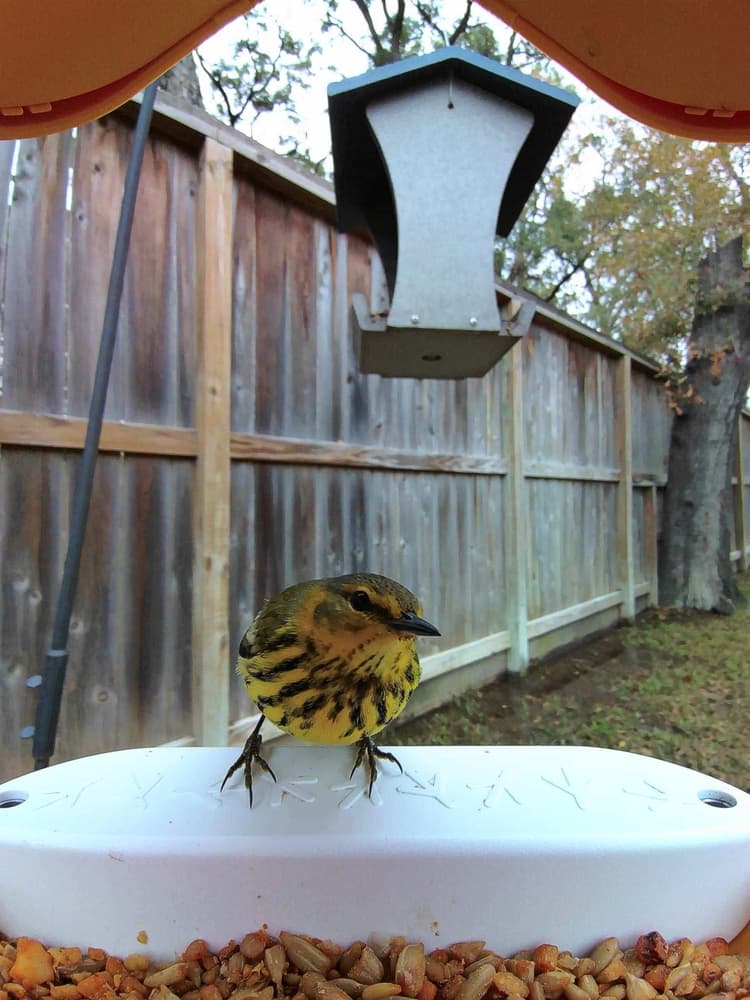
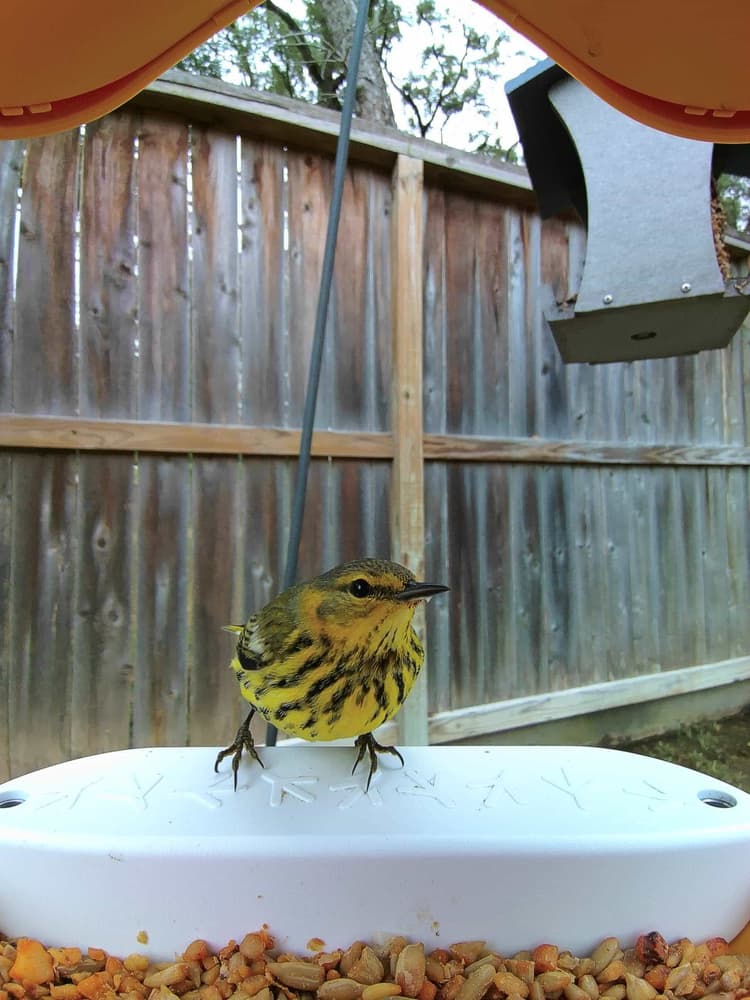
The Cape May warbler is about the size of a sparrow, measuring 13cm in length. Its most prominent features are its black stripes on a yellow breast and a yellow-green patch on its rump. It also displays a hint of a pale neck spot.
Male vs female
Gender differences are observable in terms of color intensity and specificity. The males have rich chestnut ear patches that are not present in females. Female warblers exhibit a duller version of the male pattern, retaining the stripes but without the chestnut ear patch.
Juvenile
Fall immature Cape May warbler shows variable coloring. Their coloration is more subdued and they might lack the bright yellow found in the adults. The combination of their more defined dark streaks on the underparts and shorter tail could lead to some identification challenges in the field.
Often mistaken for
Yellow-Rumped Warbler vs Cape May Warbler
Cape May Warblers have a chestnut cheek patch and are more vibrant, with a yellow body and tiger-striped chest. Yellow-Rumped Warblers lack the chestnut cheek and have a more muted, grayish or brownish body with a distinct yellow rump.

Palm Warbler vs Cape May Warbler
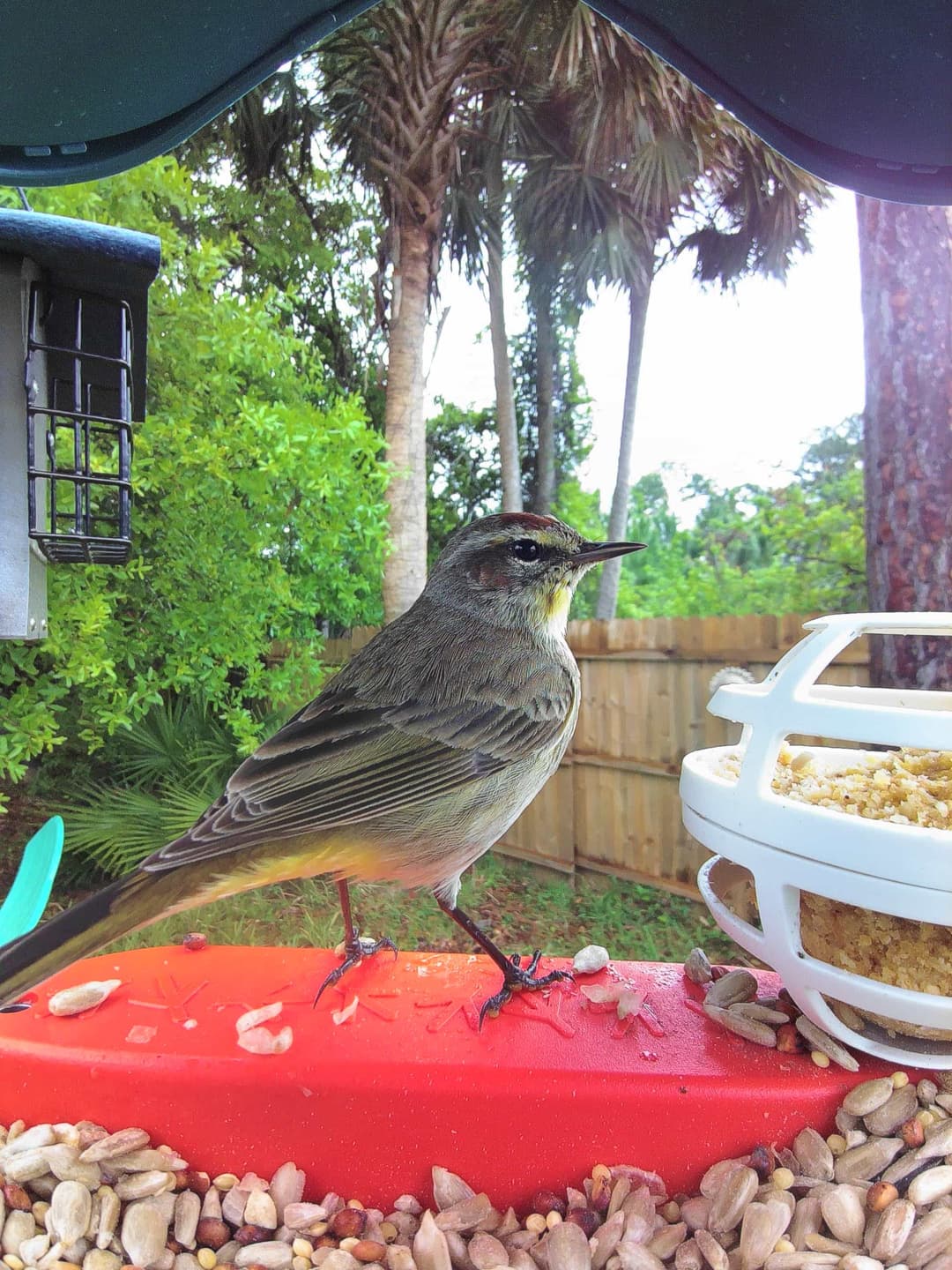
Cape May Warblers are brighter with pronounced tiger stripes on their chest and a chestnut cheek. Palm Warblers have a more olive-brown coloration and a continuously bobbing tail, without the tiger-striped chest or cheek patch.
Breeding and nesting habits of the Cape May warbler
Mating behaviors
Cape May warblers engage in courtship displays where males sing and perform flight patterns to attract females. Males establish and defend territories through song.
Nesting details
Nests are typically built in coniferous trees, situated high in the canopy. Materials such as twigs, grasses, and moss are used. This species rarely nests in gardens.
Eggs and chick-rearing
Females lay 4-9 eggs, incubating them for about 11-14 days. Both parents feed the chicks insects until they fledge, approximately 12-15 days after hatching.
What does a Cape May warbler like to eat?
Berries
Fruits
Insects
Nectar
Sap
Spiders
Natural diet
The Cape May Warbler primarily feeds on insects, with a diet consisting of spruce budworms, parasitic wasps, flies, ants, bees, small moths, beetles, leafhoppers, and spiders. It supplements this diet with fruit, nectar, and sap, often feeding on sap from holes drilled by sapsuckers. During migration, it may consume grapes by piercing them to drink the juice. Unique among warblers, it has a tubular tongue that aids in feeding heavily on flower nectar and fruit juices during winter.
Bird feeders
Cape May Warblers are known to visit bird feeders that offer foods mimicking their natural diet, such as fruit, nectar, and possibly suet. Feeders providing sugary solutions or fresh fruit may attract these warblers, especially during migration or in winter, when their natural food sources might be scarce.
Setting up the perfect feeder
Cape May warblers enjoy taller trees to perch and feed from, so place your feeder in a higher location, if possible. They prefer tube or hopper-style feeders. It's also important to keep your feeder clean, as warblers are attracted to tidy environments.
Treats for cape may warblers
Insects are a favorite treat of Cape May warblers, but during the winter, their diet shifts to berries and nectar. Keep this in mind when choosing your bird seed. A great choice is Bird Buddy seeds. Chosen by experts for each season, these seeds provide the nutrients that warblers need to stay healthy.
Attracting cape may warblers
One fun trick to attract these birds is to play recordings of their songs. They're a social bird and will often respond to the call. Additionally, Cape May warblers are attracted to water. Having a bird bath or water feature nearby can help draw them in.
Creating a bird-friendly landscape
Lastly, Cape May warblers are attracted to native plants and trees, particularly those that attract insects. Planting native flowering plants can create a warbler-friendly landscape right in your own backyard.
Where can you find Cape May warblers?

Forest canopy in boreal north america
Strutting high above in the lush, evergreen spruce forests of Boreal North America, Cape May Warblers flit joyfully. They revel in the cool, humid climate, carrying songs that echo enchantingly on the winds.
Unexpected winter stay in tropical caribbean
Winter transforms these sprightly sprites, as they dart away to the sun-dappled, juicy plantations in the Tropical Caribbean. Amid the ripe, divine fruits and fragrant orchids, they enjoy a warm tropical holiday!
Do they migrate?
The Cape May warbler is a migratory bird. It primarily migrates at night and follows a specific route during its seasonal movements. In the spring, the Cape May warbler moves northward from its wintering grounds in the Caribbean. The migration often occurs through Florida, marking a significant pathway for these birds as they head to their breeding territories further north. As the seasons change to early fall, many Cape May warblers begin their southward migration along the Atlantic Coast. This coastal route is a vital passage for their return to tropical climates for the winter months. While most of the population moves south during this period, a few individuals linger along the eastern seaboard, occasionally extending their stay into late fall or even winter. This extended presence outside their normal range is less common but notable. Key locations for observing Cape May warblers during migration include Florida during the spring migration north and various points along the Atlantic Coast during their southward journey in the fall. This migratory behavior highlights their dependence on specific geographic corridors for successful seasonal movements.
What is the role of Cape May warblers in nature and how to protect them?
Conservation status
The Cape May warbler is currently considered more common overall, despite fluctuations linked to population explosions of spruce budworm and other insects in northern forests. Its numbers rise during these events but may decrease otherwise. Significant threats include habitat loss and climate change, which could impact insect populations vital for their survival. While not listed as vulnerable or endangered, conservation efforts focus on maintaining healthy forest ecosystems to support the warbler’s food sources and breeding grounds, ensuring its continued resilience against environmental changes.
Ecological role of Cape May warblers
Its role in the ecosystem
The Cape May warbler plays a hugely important role in the ecosystem due to its unique feeding behaviors and diet. This nocturnal bird feeds on insects, fruit nectar, juice of grapes and sap from holes drilled by sapsuckers. It has its most ecological significance in pest control, as it consumes parasitic wasps, flies, and particularly the spruce budworm, a pest known to cause extensive damage to forests. This bird's diet of insects, some of which might be considered pests, helps control their populations. When sipping on the sap, pollen may also get stuck to the warbler which makes them play a vital role in pollination. This further promotes vegetation growth. During migration, it also aids in seed dispersal by piercing grapes and consuming other fruits and excreting the seeds throughout its travels. Therefore, Cape May warbler contributes to maintaining the health of the ecosystem in various ways.
How to help protect Cape May warblers
Preservation tips
Habitat preservation strategies
The Cape May warbler thrives in spruce and fir forests. To conserve their habitat, avoid deforestation and promote the replanting of native trees in these areas. Support policies that prevent harmful practices within these habitats, such as unchecked logging or mining. Participate in initiatives focusing on climate change, as rising temperatures can affect the proliferation of the warbler's preferred tree species.
Community initiatives
Community involvement can significantly impact the conservation of the Cape May warbler. Join local bird watching or conservation groups to monitor the health and population of these birds. Participate in citizen science programs, where you can contribute to scientific data collection on bird species, including the Cape May warbler. Encourage schools and community centers to incorporate education about local biodiversity and the importance of conservation in their programs.