
Palm Warbler
Palm Warbler
Setophaga palmarum


Quick Identification guide
Quick Identification guide
- •
Features a brown crown and contrasting bright yellow eyebrow which distinguishes it from other warblers
- •
Exhibits olive-brown upperparts and bright yellow underparts, with some individuals showing rust-colored streaks
- •
Possesses a slender bill typical of warblers, ideal for insect foraging, and long legs compared to similarly sized species
What does a palm warbler sound like?
The Palm Warbler produces a weak, dry trill similar but slower than the Chipping Sparrow. Its call pattern is undulating or flat and includes various types such as buzz, chirp or chip, and trill. This signifies its unique melody contributing to its distinct identity amongst different bird species, reflecting complex and diverse vocalizations. Overall, the Palm Warbler's song is characterized by slower tempo trills and a mixture of buzzing and chirping sounds.


Description
Palm warblers are not like other warblers! Instead of flying, they like to strut their stuff. Their walk is accompanied by a characteristic wagging of their tail feathers. You can find most in an area known as North America's bird nursery or Canada's great boreal forest. During breeding season, pairs like to keep to themselves, but they are otherwise quite outgoing and sociable birds!
The palm warbler can weigh between 9to12grams and be from12.5to14.5centimeters tall.
The Palm Warbler typically lives up to 3.4 years, but some individuals have been recorded living as long as 7 years. This is slightly longer than the lifespan of some related warbler species, such as the Yellow Warbler which often lives between 2 to 3 years. However, it is less than long-lived warbler species such as the Blackburnian Warbler, which can live up to 11 years.
Did you know?
Most popular questions about palm warbler
How to recognise a palm warbler?
General appearance
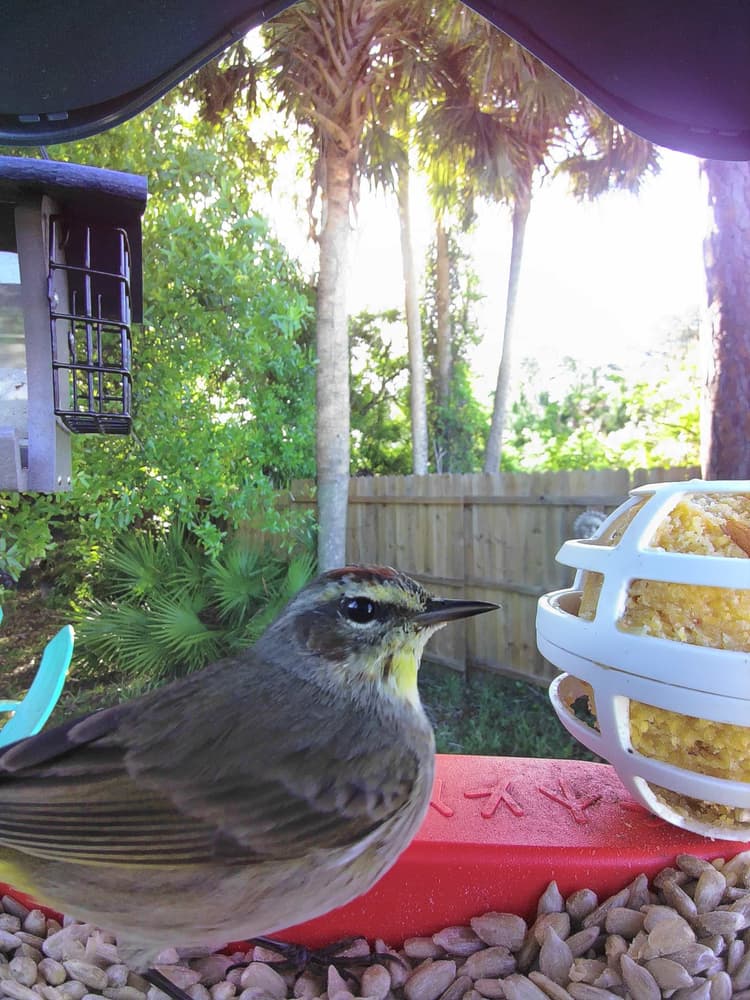
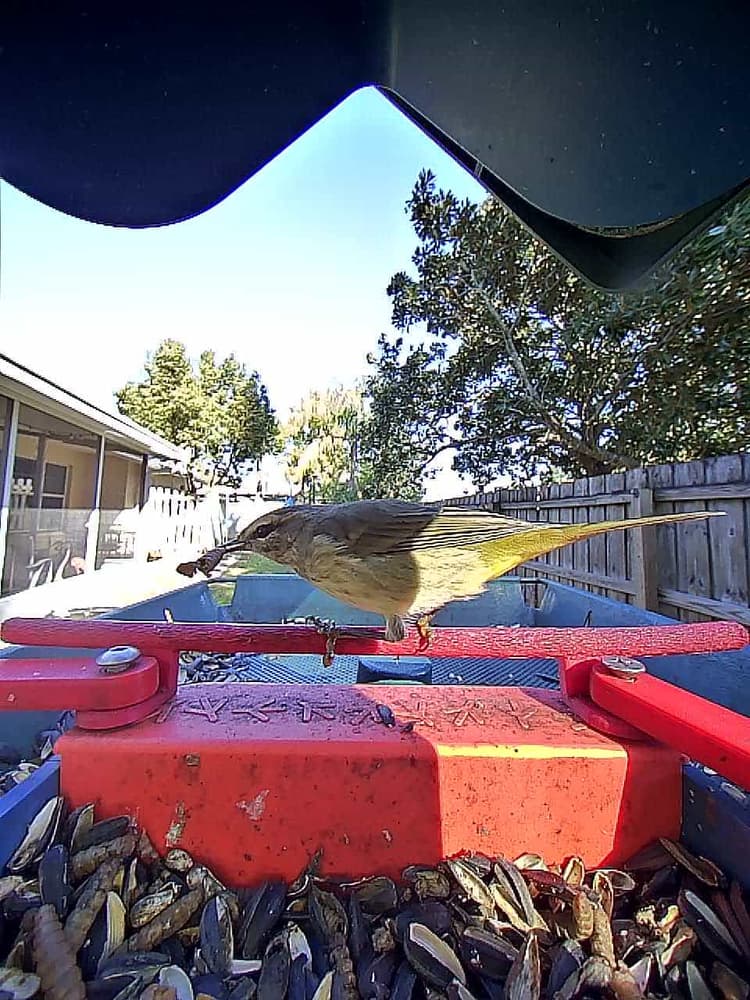
The palm warbler is a small songbird, averaging about 5 inches in length, with a wingspan of approximately 8 inches. It is characterized by its olive-brown upperparts and pale underparts with a distinct yellow undertone. A notable chestnut cap adorns the head, and a conspicuous white eyebrow stripe runs above the eye. During the breeding season, the yellow coloring becomes more pronounced, particularly on the throat and belly.
Male vs female
Males and females appear similar in coloration and size, though males may exhibit slightly brighter yellow underparts, particularly during the breeding season. Both sexes have the characteristic chestnut cap, but it can be marginally more vibrant in males.
Juvenile
Juvenile palm warblers are generally duller than adults, displaying more muted olive-brown tones without the pronounced chestnut cap. Their underparts are less vibrant, showing pale yellow-brown hues. As they mature, juvenile plumage transitions to resemble that of adults following their first molt.
Often mistaken for
Cape May Warbler vs Palm Warbler
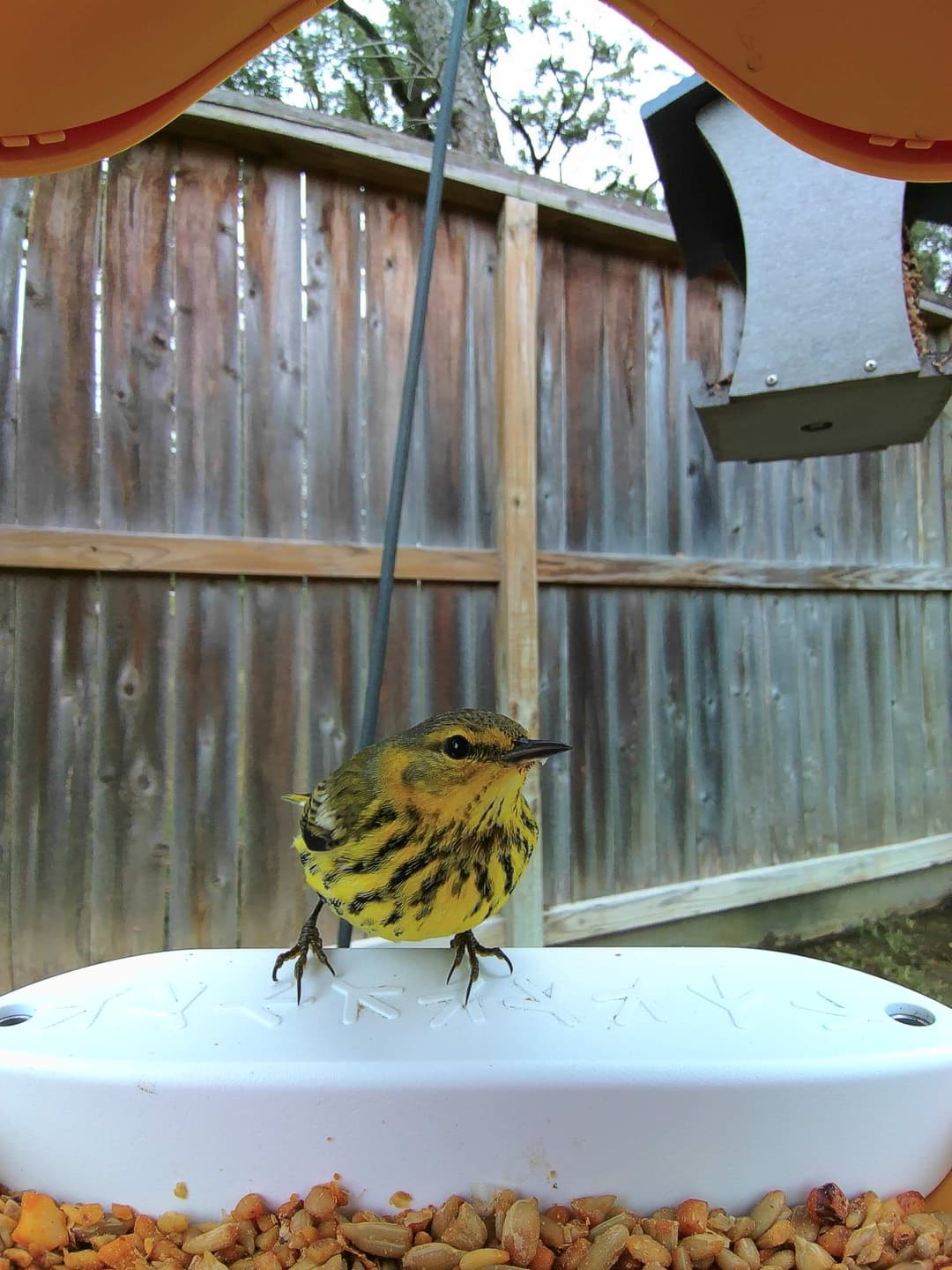
Palm Warblers and Cape May Warblers can be told apart by several key differences. The Palm Warbler often bobs its tail and has a more plain appearance with a brownish body and a yellow underbelly. In contrast, the Cape May Warbler displays a striking pattern, with a black crown, chestnut cheek patch, and yellow body adorned with black streaks. Look for the tail bobbing behavior to identify the Palm Warbler.
Yellow-Rumped Warbler vs Palm Warbler
Telling apart a Palm Warbler from a Yellow-Rumped Warbler requires attention to detail. The Palm Warbler is often found ground feeding and has a distinctive habit of tail wagging. It is mostly brown with a yellow underbelly. The Yellow-Rumped Warbler, as the name suggests, has a unique yellow rump patch, with more varied plumage that includes white, gray, and black, along with subtle yellow touches on the sides and throat. Focus on the yellow rump and tail wagging behavior to differentiate them.

Breeding and nesting habits of the palm warbler
Mating behaviors
Some male Palm Warblers practice polygyny, having more than one mate. Courtship involves males arriving early on breeding grounds to establish territory.
Nesting details
Nests are constructed by the female and placed on or near the ground in stunted spruce trees, close to the trunk. The open cup nest is concealed under grass clumps or on sphagnum moss hummocks, made from dry grass stems and bark shreds, and lined with feathers.
Eggs and chick-rearing
Nesting occurs from early May. Females incubate the eggs, ensuring warmth and protection. Both parents may help feed the chicks once hatched. The chicks are reared until they are ready to fledge.
What does a palm warbler like to eat?
Berries
Insects
Nectar
Seeds
Spiders
Natural diet
Palm warblers primarily feed on insects and berries. Their insect diet consists mostly of small beetles, mosquitoes, flies, caterpillars, aphids, grasshoppers, ants, bees, and spiders. They also consume a significant amount of vegetable matter, including raspberries, bayberries, and seeds.
Bird feeders
Palm warblers are not regular visitors to bird feeders. However, they may occasionally stop by feeders that offer suet or mealworms, as these mimic their natural food preferences.
Attracting palm warblers: setting up your feeders
If you want Palm Warblers to come visit your yard, set up a bird feeder that's specifically designed to attract them. These warblers prefer low feeders that include trays, platform, or hopper styles since these mimic their natural feeding behaviors. Additionally, it's best to place the feeder among low bushes or young trees to make it look more appealing.
Favorite snacks: what to put in your feeder
Warblers, including Palm Warblers, love small insects and berries, but they are also known to gorge on sunflower seeds, chopped up fruits, and peanut hearts. We recommend Bird Buddy seeds as these are chosen by experts for the season to attract a variety of birds, including Palm Warblers.
Fun tricks to encourage frequent visits
To entice Palm Warblers into frequent visits, maintain a clean feeder with fresh food. Also, setting up a small, shallow birdbath or garden fountain for them to drink from or bathe in can increase the attractiveness of your yard. Avoid using pesticides in your yard, as they reduce the population of small insects that warblers feed on. Finally, playing bird songs, or setting up a birdhouse designed for warblers can also encourage them to stay longer.
Where can you find palm warblers?
Primary habitat
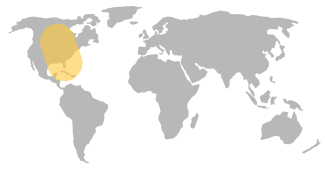
The Palm Warbler primarily inhabits the wooded borders of muskegs during summer and prefers low trees, bushes, and ground during migration. It breeds in sphagnum bogs with cedar, tamarack, and spruce trees.
Additional range
The western Palm Warbler breed in dry pine barrens of boreal forests with blueberry, bearberry, and sweet fern ground cover. They frequent hedgerows, stream edges, ponds, overgrown fields, and open pastures during migration.
Do they migrate?
The Palm Warbler is a migratory bird that follows a specific route and timing pattern. In spring, this species is known to migrate early compared to most other warblers. The Palm Warbler breeds in boreal forests, primarily in Canada and the northeastern United States. During its migration, the "Western" Palm Warbler, which has a duller plumage, is more frequently observed along the Atlantic Coast in fall than in spring. In the fall, Palm Warblers migrate late, traveling from their breeding grounds to wintering habitats in the southeastern United States, the Caribbean, and parts of Central America. Although the majority head to the southeastern U.S., very small numbers are known to winter regularly on the Pacific Coast, highlighting some variation in their migratory behavior. Key locations along their migration route include the Atlantic Coast during fall, where the Western subspecies is more populous. This species is adaptable in its choice of winter habitats, favoring open areas with scattered trees and shrubs. Overall, the Palm Warbler exhibits a distinct migratory pattern, with significant movement between breeding and wintering grounds, adapting to varied landscapes across North America.
What is the role of palm warblers in nature and how to protect them?
Conservation status
The palm warbler is currently considered common, with stable population numbers. It faces no significant threats to its habitat on both breeding and wintering grounds, and it often thrives in open or disturbed areas. Due to its stable numbers and adaptability, major conservation efforts are not urgently required at the moment. There are no significant threats impacting its habitat, contributing to its ongoing stability. Consequently, the palm warbler is not classified as vulnerable or endangered.
Ecological role of palm warblers
Its role in the ecosystem
The Palm Warbler plays a crucial role in the ecosystem as a pest controller and seed disperser. It feeds mostly on small beetles, mosquitoes, flies, caterpillars, aphids, grasshoppers, ants, bees, and spiders, hence maintaining a balance in the insect population. Thus, these warblers contribute to pest control, particularly during the breeding season. Moreover, Palm Warblers also consume a considerable amount of vegetable matter, including raspberries, bayberries, and seeds. As the birds move between regions, they disperse seeds through their droppings, contributing to the propagation of varied plant species. This not only aids in the survival and spread of these plants but can also alter landscapes and create new habitats. Additionally, their nests, generally situated on or near the ground, may also perform a role in altering the structural dynamics of ground vegetation.
How to help protect palm warblers
Preservation tips
Habitat preservation
Support the preservation and restoration of the Palm Warbler's natural habitats — boreal forests and wetland areas. Avoid deforestation and draining of wetlands in regions where the bird resides. Advocate for policies protecting these environments and consider joining or supporting local and global conservation organizations.
Community science initiatives
Participate in community science initiatives such as the Audubon Christmas Bird Count or the Great Backyard Bird Count that help track Palm Warbler populations and migration patterns. Document and share sightings using platforms such as eBird. These initiatives provide valuable data for researchers tracking the species' population trends and can help inform conservation strategies.