Australian Magpie or Eurasian Magpie?
Here's how to tell the difference
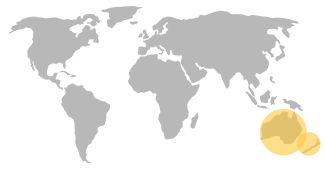


Australian Magpie


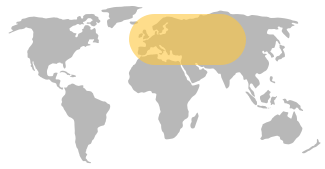
Eurasian Magpie
Australian Magpie
Gymnorhina tibicen
General appearance
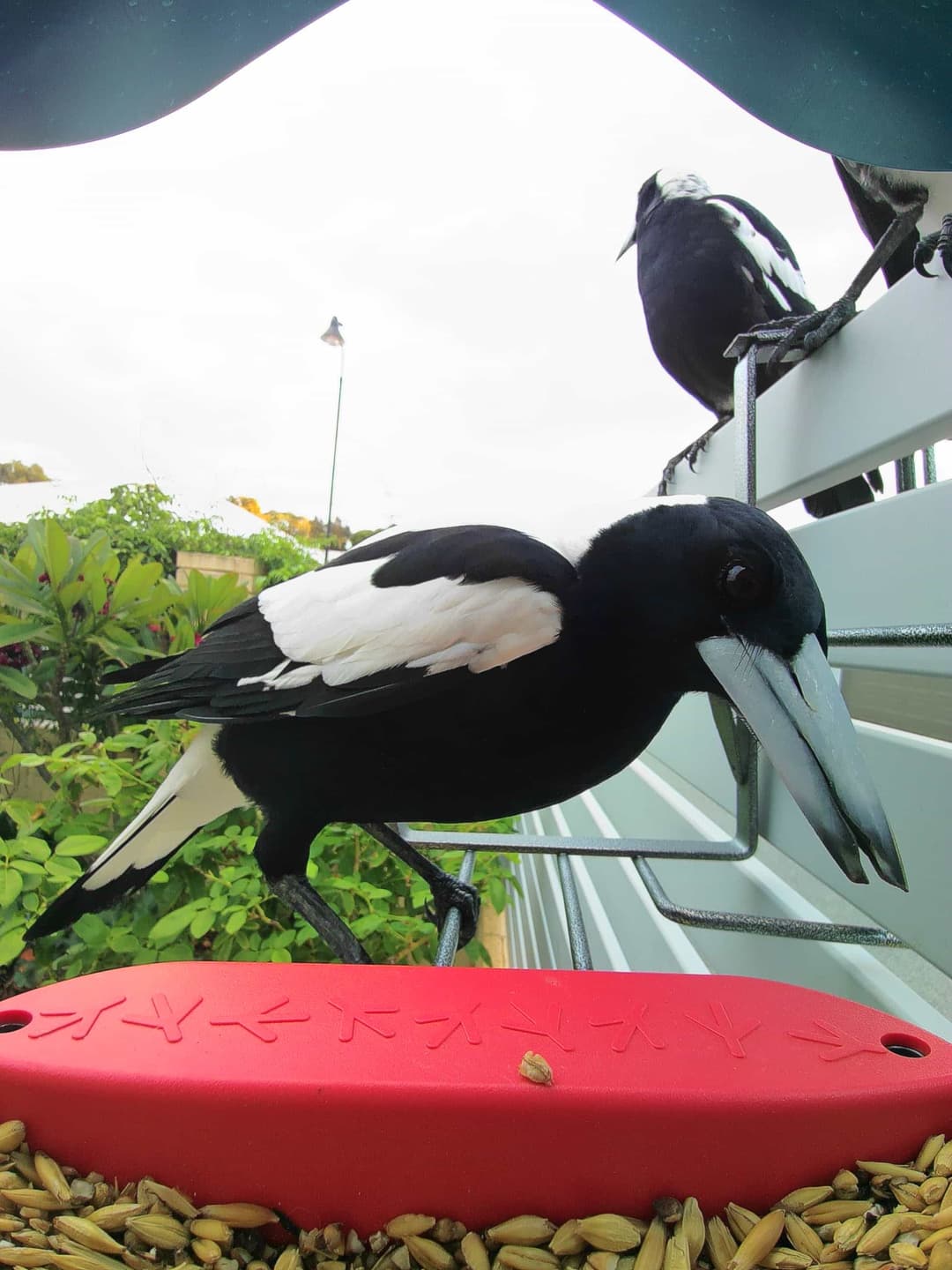
The Australian magpie is a medium-sized bird, generally characterized by its black and white plumage. The bird sports a strong, wedged-shaped beak and displays a slight but distinctive curve at the end. The legs are dark-grey, eyes are chestnut brown, and the feet are adapted for walking.
Male vs female
Males and females both exhibit black and white coloration, with males tending to be larger overall. However, discerning the sex based purely on physical appearance can be challenging. The most dependable differentiator is the white back of the male, as opposed to the female's scalloped greyish-white back. Additionally, male birds have a pure white iris, while female birds have a reddish-brown iris.
Juvenile
Juvenile Australian magpies can be identified by their greyish black bill, much lighter than the darker bill of adults. They also exhibit a fluffy appearance during their initial phase and their back feathers are dull and gray, unlike the glossy black feathers in adults. As the juveniles mature, the bill colour becomes darker before turning black.
Size
14.6 - 16.9 in/7.4 - 12.7 oz
There's more to learn about Australian Magpie
View full detailsEurasian Magpie
Pica pica
Also known as: Common Magpie
General appearance
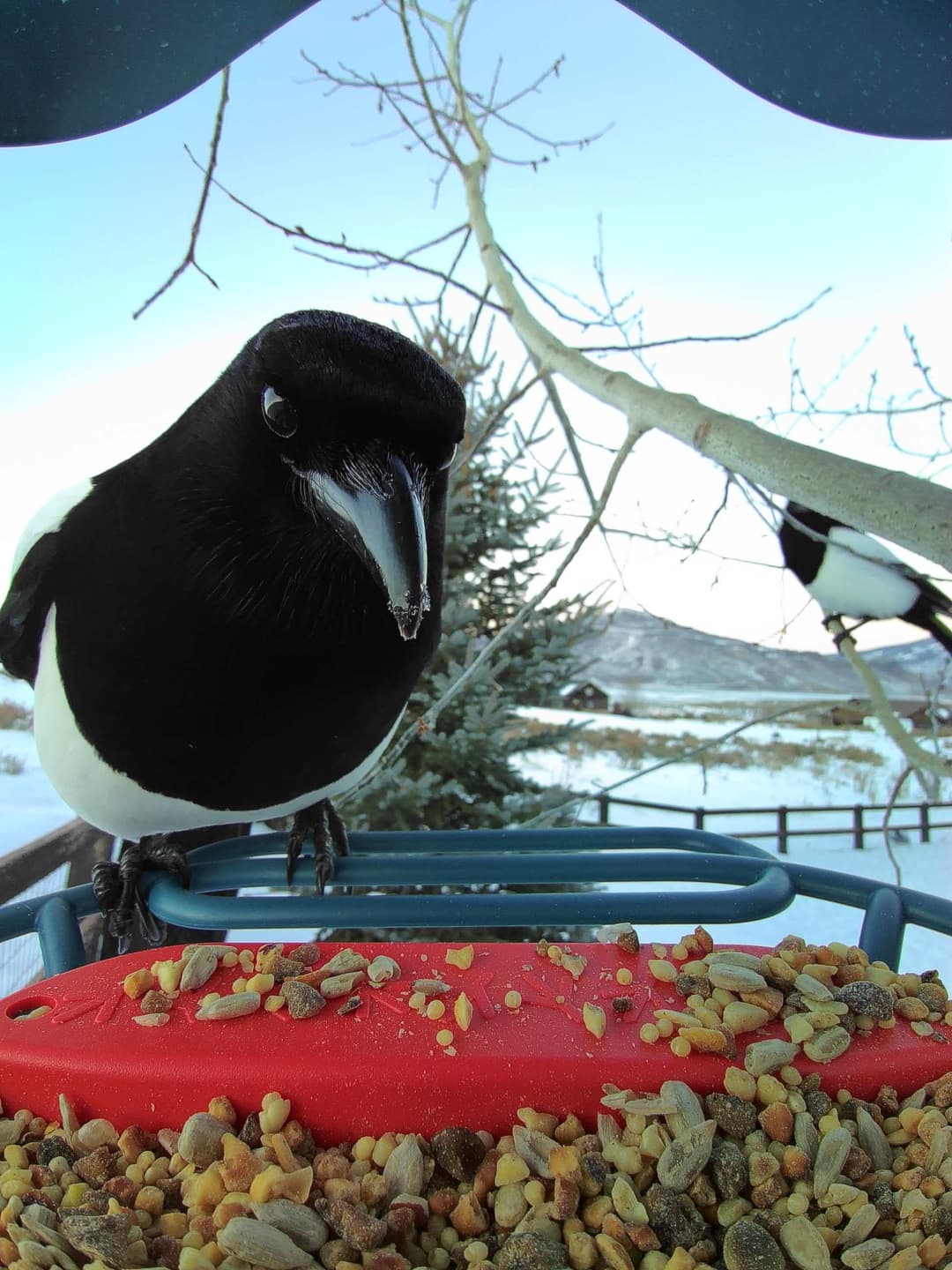
The Eurasian magpie (Pica pica) is a striking bird with a distinctive black and white coloration. Its head, neck, and breast are glossy black with iridescent hues, contrasting sharply with its white belly and shoulder patches. The long, graduated tail is black with a metallic green and blue sheen. The wings are mostly black with white primary feathers, visible in flight as bold white flashes. The magpie's robust bill and legs are black, and it exhibits a strong, purposeful flight pattern with distinctive wing beats.
Male vs female
Males and females of the Eurasian magpie species are similar in appearance, making them difficult to differentiate by sight alone. Both sexes feature the same striking black and white plumage and iridescent colors. However, males are slightly larger than females, with differences more pronounced during the breeding season when males display increased territorial behavior.
Juvenile
Juvenile magpies resemble adults but have duller plumage and lack the gloss and iridescence of mature birds. The black feathers in juveniles appear more sooty, and their tail is shorter and less graduated than in adults. Additionally, juvenile magpies' eyes are a lighter greyish-brown that darkens with age.
Size
18.1 - 19.7 in/5.6 - 9.5 oz
There's more to learn about Eurasian Magpie
View full detailsHow to tell the Australian Magpie from the Eurasian Magpie
Visual differences
The Australian Magpie (14.6-16.9 inches, 7.4-12.7 oz) has a wedge-shaped beak and uniform black and white plumage. Males have a white back; females have a greyish-white back. The Eurasian Magpie (18.1-19.7 inches, 5.6-9.5 oz) sports a long tail with iridescent green and blue hues, a glossy black head, and distinct white shoulder patches. Its robust bill and legs are black. Both male and female Eurasian Magpies look similar, whereas, in Australian Magpies, subtle sex differences exist in back and iris color.
Key differences and behavior
Australian Magpies and Eurasian Magpies, both notable for their intelligence, exhibit distinct behaviors. Australian Magpies, adept singers, recognize individuals and are territorial, especially near nests. They thrive in open habitats and adapt to urban spaces across Australia, feeding on insects, reptiles, and grains. They engage in elaborate mating displays and form long-lasting bonds, with females primarily incubating eggs. In contrast, Eurasian Magpies, common in Europe and Asia, prefer forested openings but adapt to urban areas. Renowned for problem-solving, they avoid shiny objects. Their courtship involves feather displays, and both partners share nest responsibilities. They eat insects, small mammals, and plant matter, showing opportunistic feeding habits. At bird feeders, they enjoy peanuts and suet, often outcompeting smaller birds. Despite both species' omnivory and social structures, their habitats, diet specifics, and courtship rituals reveal clear distinctions between them.
Still not sure? Here are more lookalikes!
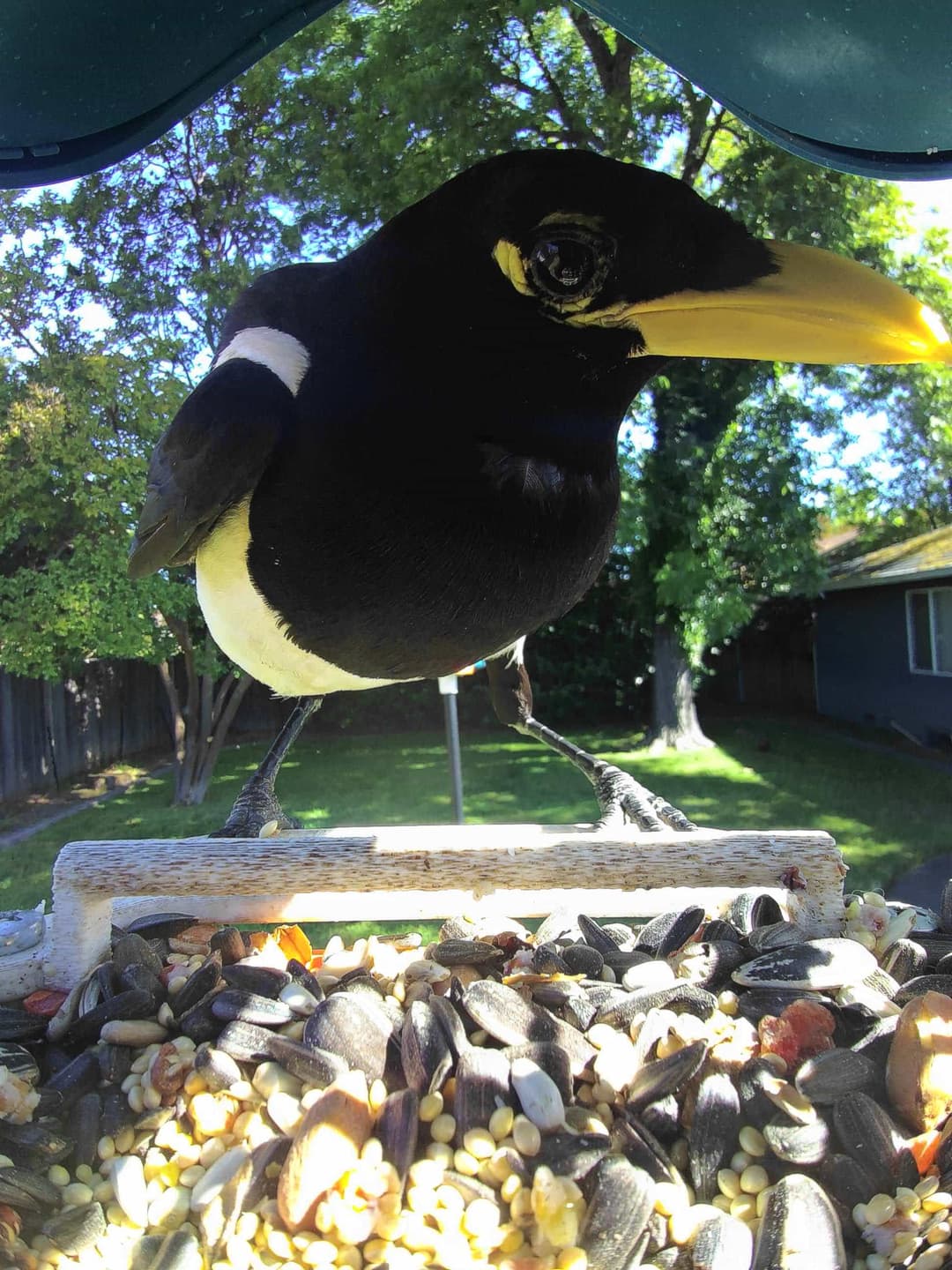
Australian Magpie vs Yellow-Billed Magpie
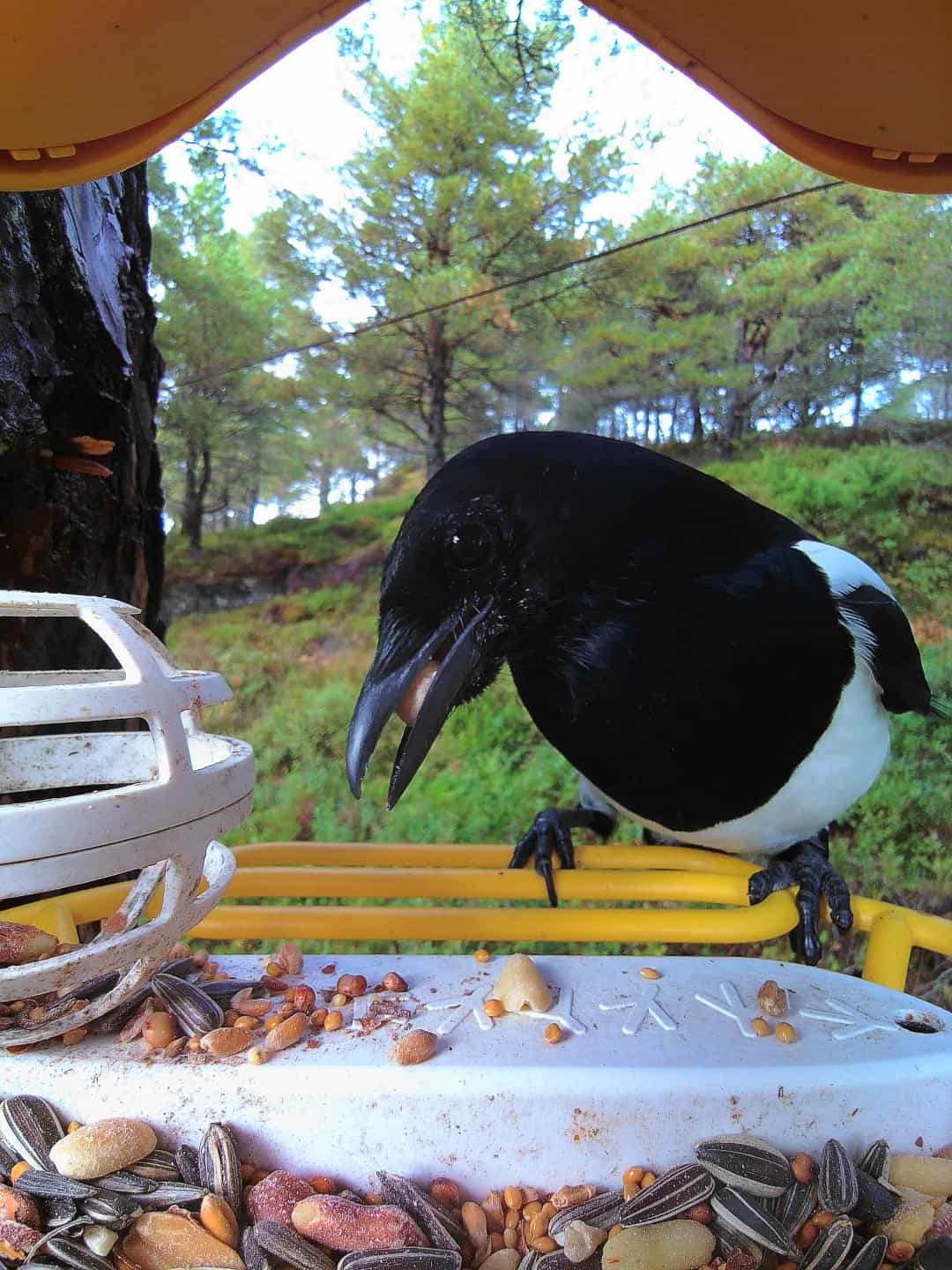
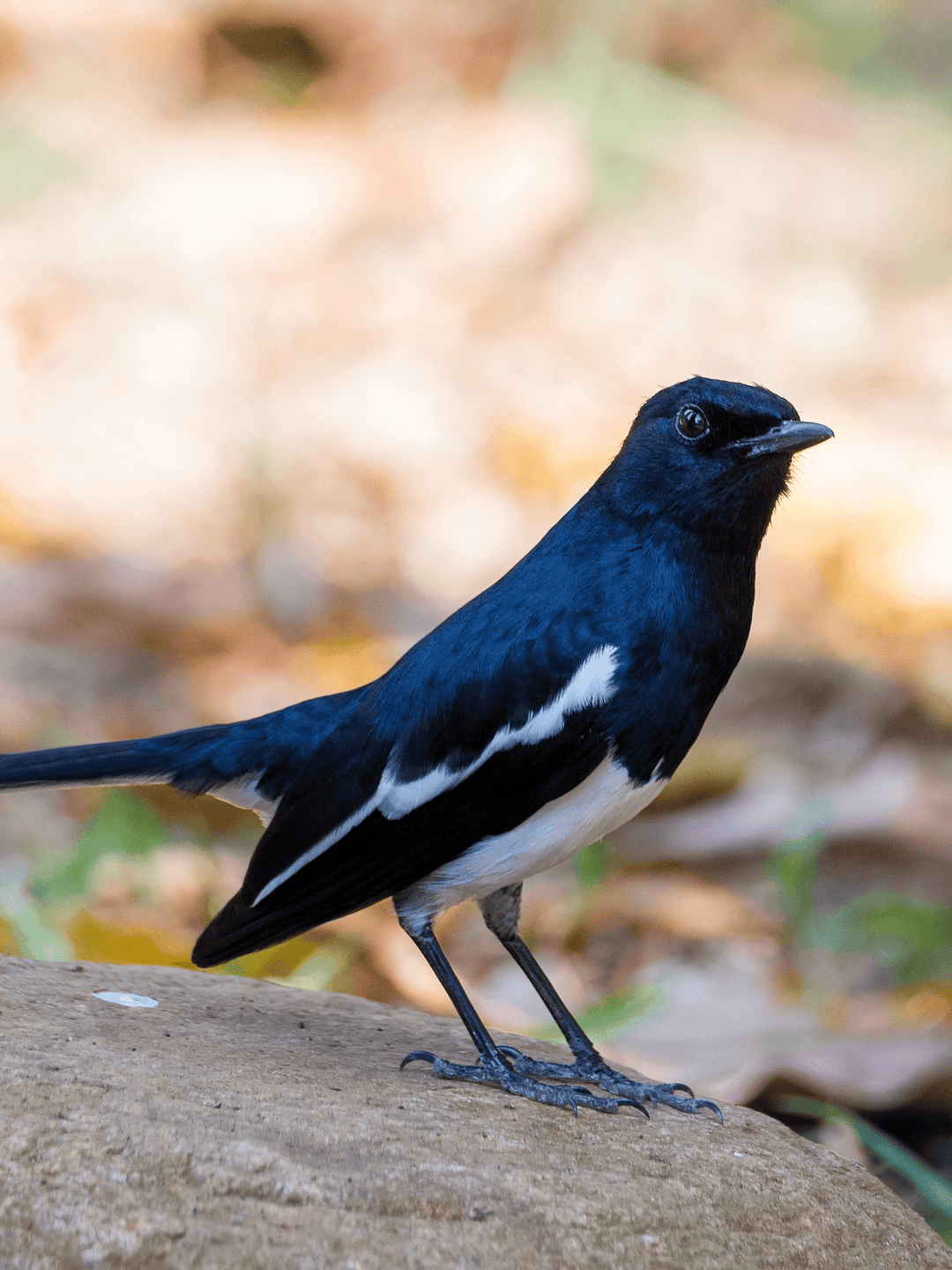
Eurasian Magpie vs Oriental Magpie
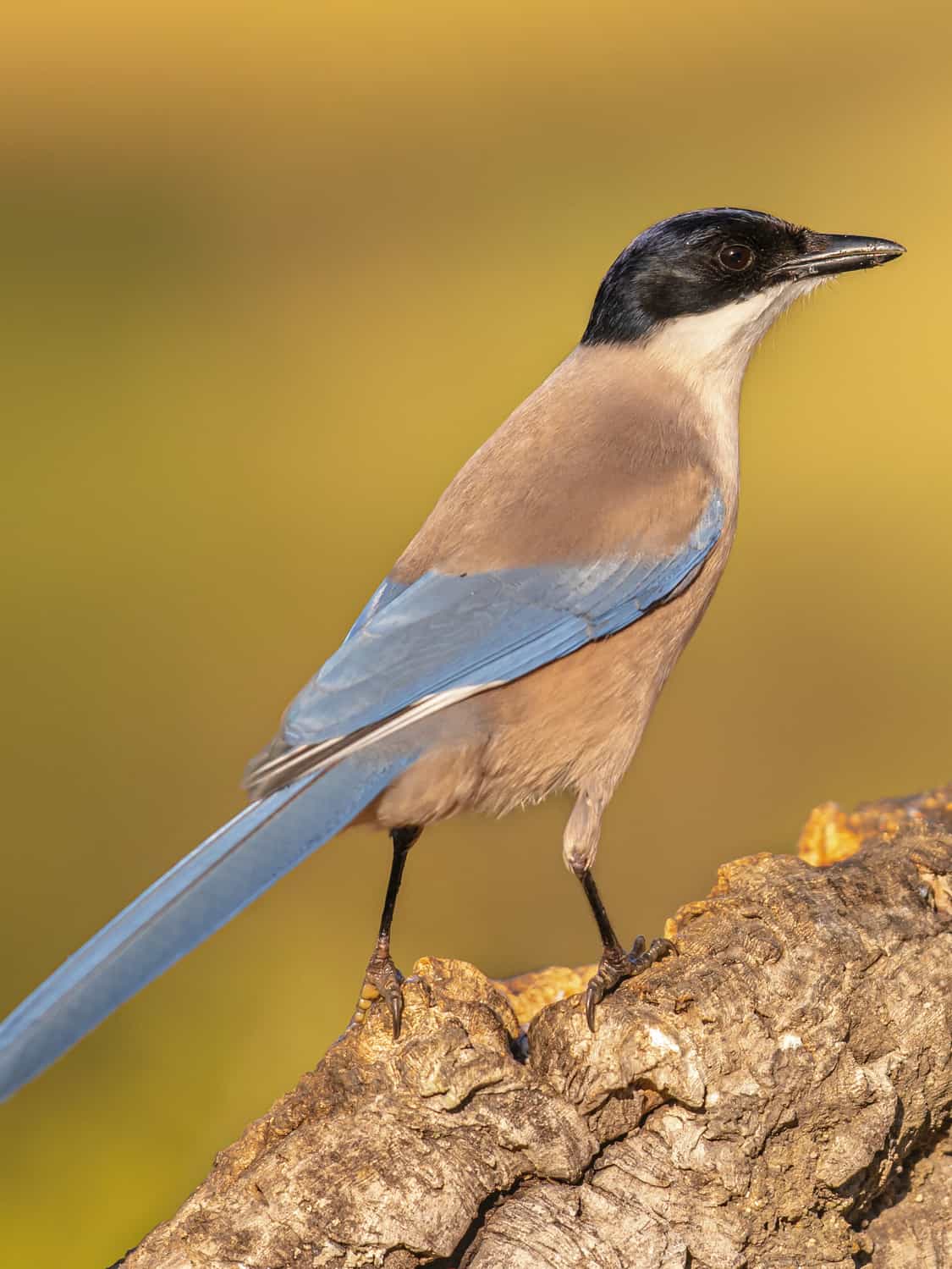
Eurasian Magpie vs Iberian Magpie
Australian Magpie vs [Select a bird]

[Select a bird]
Pick a bird to compare
Eurasian Magpie vs [Select a bird]
[Select a bird]
Pick a bird to compare