
Iberian Magpie
Iberian Magpie
Cyanopica cooki


Quick Identification guide
Quick Identification guide
Male
- •
blue wings and tail creating a striking visual contrast
- •
A buff-brown body with a more pale underbelly
- •
black cap on the head extends down to the throat
Female
- •
blue wings and tail similar to the male
- •
Duller buff-brown body with less contrast
- •
Shares the black cap and pale underbelly of the male
What does an Iberian magpie sound like?
The Iberian magpie vocalizes a variety of chatter calls, especially during flight, comprising a string of explosive 'chack' sounds mixed with squeaky notes. Its song consists of a complex array of melodious whistles, screeches, and warbles. This bird's call is characterized by its pitch and roller-coaster-like modulation, resembling the sounds of a jay or jackdaw. They also have a distinct 'peg-peg-peg' alarm call.


Description
Birds that forage together... scream together? That might not be how the adage goes but it is certainly what happens when a flock of 70 Iberian magpies get together! These super-vocal birds also nest in loose colonies, so you might be in for some noisy neighbours!
The Iberian magpie can weigh between 65to76grams and be from34to36centimeters tall.
The Iberian magpie typically lives for approximately 15 years. In comparison, its closely related species like the Eurasian magpie has a somewhat similar lifespan, ranking in the range of 15-21 years. Other relatives like the American crow, can live up to 14-24 years. These lifespans are contingent on each individual’s survival from predators, disease, and habitat destruction.
Did you know?
Most popular questions about Iberian magpie
How to recognise an Iberian magpie?
General appearance
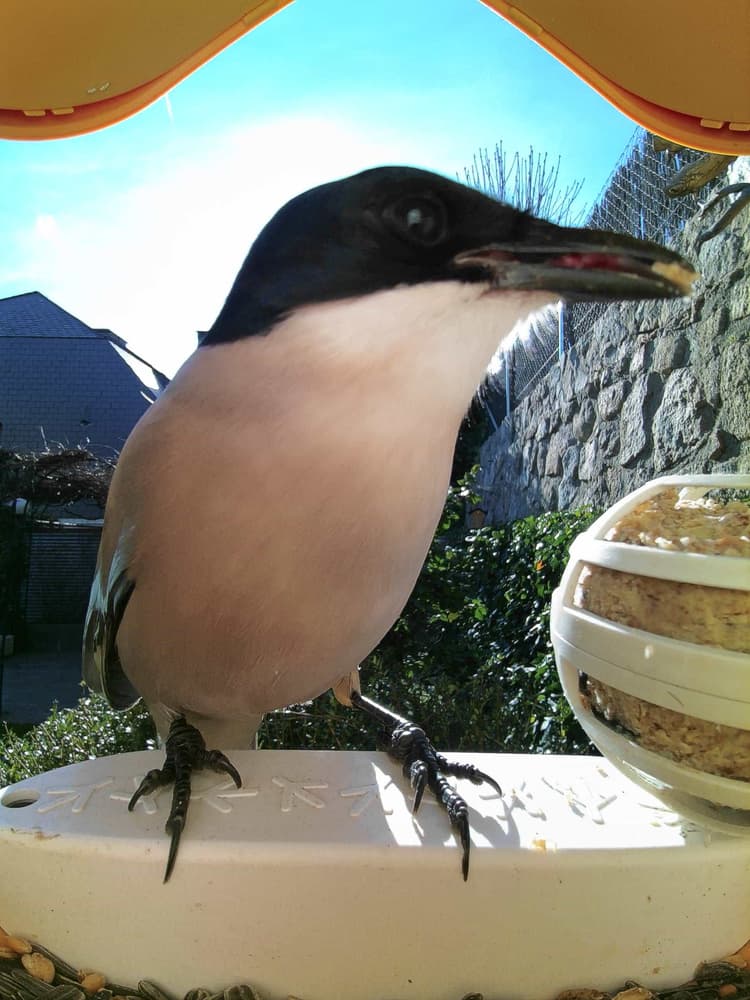
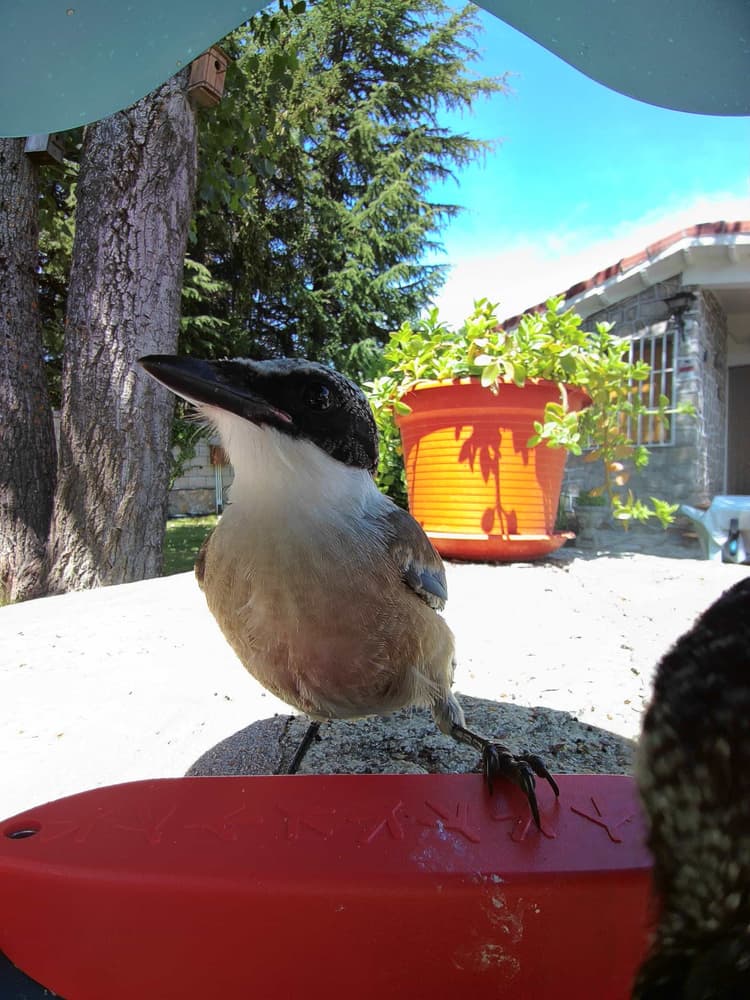
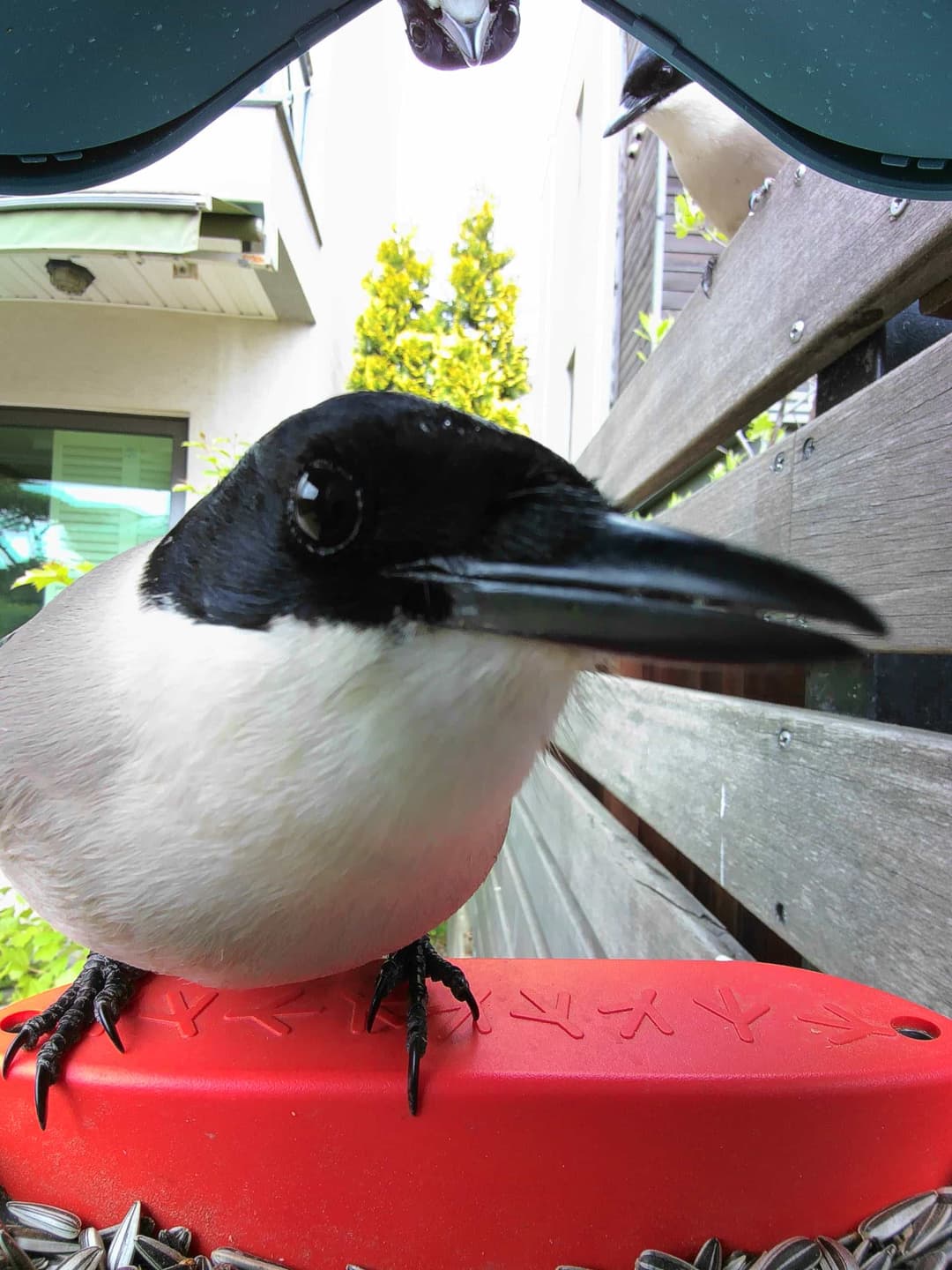
The Iberian magpie, also known as the Azure-winged magpie, is known for its striking appearance. It boasts a dark black head, chest, and tail, contrasted by a fascinating blue-green sheen on its wings which gives it its common name. Its under-parts are white or greyish-white.
Male vs female
The sexes of Iberian magpies are remarkably indistinguishable. Both males and females display a largely similar colour pattern. It is challenging to differentiate between the sexes using physical characteristics alone.
Juvenile
Juvenile Iberian magpies are similar to adults but with slightly muted colours. Additionally, their tail length is generally shorter compared to adults. After the first molt, they obtain their adult plumage.
Often mistaken for
Azure-Winged Magpie vs Iberian Magpie
Azure-Winged Magpies are similar to Iberian Magpies but are distinguished by their lighter blue wings and tail. They also have a milder contrast between their grayish body and the blue on their wings.
Breeding and nesting habits of the Iberian magpie
Mating behaviors
Iberian magpies engage in elaborate courtship displays, which include vocalizations and visual signals, such as flying in loops. Pair bonds are formed before the breeding season.
Nesting details
Nests are typically built in trees or tall shrubs using twigs, leaves, and grass. They prefer locations that provide cover from predators and potentially in gardens with dense foliage.
Eggs and chick-rearing
The female lays 5-7 eggs per clutch. Both parents participate in feeding and protecting the chicks, which fledge after approximately three weeks. Garden habitats should include native plants to attract insects for chick feeding.
What does an Iberian magpie like to eat?
Berries
Bird eggs
Birds
Fruits
Insects
Nuts
Scraps
Seeds
Snails
Spiders
Worms
Natural diet
The Iberian magpie primarily consumes a diverse diet typical of an omnivore. In its natural habitat, it feeds on insects, small invertebrates, fruits, berries, and seeds. It actively forages in woodland areas and open spaces, often searching the ground and low shrubs for beetles, caterpillars, and other insects. Additionally, during autumn and winter, it relies heavily on acorns, nuts, and wild berries to sustain itself when insect populations dwindle.
Bird feeders
At bird feeders, the Iberian magpie is often attracted to offerings such as suet, peanuts, and seeds. It is particularly fond of sunflower seeds and can sometimes be observed taking kitchen scraps and bread left out by bird enthusiasts. Despite being less common at feeders than smaller birds, when they do visit, they tend to monopolize the food, utilizing their intelligence and problem-solving skills to access a variety of food sources.
Attracting the iberian magpie: favorite snacks
The Iberian magpie has a love for fruit, insects, and grains. Apples, cherries, and berries make excellent choices for your magpie feeder. A regular supply of mealworms or Bird Buddy seeds can also draw these beautiful birds to your yard. Remember, Bird Buddy seeds, particularly loved by Iberian magpies, are expertly chosen for the season, providing the best results in attracting these Cute Critters.
Choose the right feeder
A standard bird feeder may not work for the Iberian Magpie, as they enjoy foraging on the ground or from a platform feeder. A platform feeder provides enough space for them to sort through the food and choose their favorites. Place feeders out in the open where the birds feel safe and can keep an eye out for predators.
Fun tricks to encourage iberian magpies
Iberian Magpies are intelligent birds and enjoy shiny objects. Hanging a few reflective or shiny things near your feeder could interest them enough to visit. Also, playing some Magpie birdcalls could eventually get them in your yard for a real-life sing-along!
Where can you find Iberian magpies?

Primary habitat
The Iberian magpie primarily inhabits Mediterranean forests, woodlands, and scrub in Spain and Portugal. Its preferred environments are humid areas with a mix of trees and shrubs.
Additional range
Aside from its typical range, the Iberian magpie can also be found in farming areas, orchards, and large gardens. It is resilient and adaptable to human-altered landscapes.
Do they migrate?
The Iberian magpie is primarily a sedentary bird, meaning it generally stays in one place throughout the year and does not migrate. This species is predominantly found in the Iberian Peninsula, specifically in parts of Spain and Portugal. It inhabits oak woodlands, scrublands, and other open forests within these regions. While the Iberian magpie does not engage in long-distance migration, it may exhibit some local movements in response to food availability and changes in weather conditions. These local movements are generally limited in range and do not equate to the seasonal migrations seen in many other bird species. Overall, the Iberian magpie's lifestyle is characterized by residency rather than migration, enabling it to maintain stable populations in its preferred habitats year-round. This behavior underscores its adaptation to the Mediterranean climate and the resources available within its geographic range.
What is the role of Iberian magpies in nature and how to protect them?
Conservation status
The Iberian magpie is currently classified as "Least Concern" by the IUCN, indicating it is relatively common. Key conservation efforts include habitat preservation, particularly the maintenance of oak woodlands and dehesas which are vital for their survival. Significant threats to this species include habitat loss due to deforestation and land use changes. Climate change also poses a long-term threat by altering their habitat. Despite these challenges, the Iberian magpie's population remains stable, thanks to effective conservation measures and the adaptability of the species to different environments.
Ecological role of Iberian magpies
Its role in the ecosystem
The Iberian magpie, a species exclusive to the Iberian peninsula, carries significant ecological importance. Due to its omnivorous diet, it plays a crucial role in pest control by consuming a variety of invertebrates, including harmful insects. This natural predation helps to maintain the ecological balance, reducing reliance on chemical pesticides. The magpie's foraging habit also contributes to seed dispersal, which aids in plant propagation and forest regrowth. It picks up seeds while feeding and typically discards or excretes them in different locations, thereby promoting biodiversity within its habitat. Additionally, Iberian magpies affect nutrient cycling, as their waste products contribute organic material to the soil, supporting plant growth and the overall health of the ecosystem. Thus, the Iberian magpie fulfills integral roles in the functioning and maintenance of their ecological communities.
How to help protect Iberian magpies
Preservation tips
Habitat preservation strategies
The Iberian magpie's habitat can be conserved by maintaining the ecological integrity of Iberian oak forests and limiting forest fragmentation. This includes promoting sustainable forestry practices, reducing the usage of pesticides which may harm its food sources, and implementing strict regulations around construction and development in these areas to protect the magpie’s natural habitat. Complementing this, it is important to establish protected areas and wildlife corridors.
Community science initiatives
Engage the community in conservation efforts through citizen science projects. Organize bird watching groups and 'Adopt a Magpie' initiatives, where community members monitor and report on local magpie populations, behaviour and habitat conditions. Such data can aid in scientific studies and early detection of potential threats. Implement educational programs in schools and community centres to raise awareness about the Iberian magpie and its importance to the ecosystem. Encourage local participation for a collective approach to conservation.