
Eurasian Magpie
Eurasian Magpie
Also known as: Common Magpie
Pica pica


Quick Identification guide
Quick Identification guide
- •
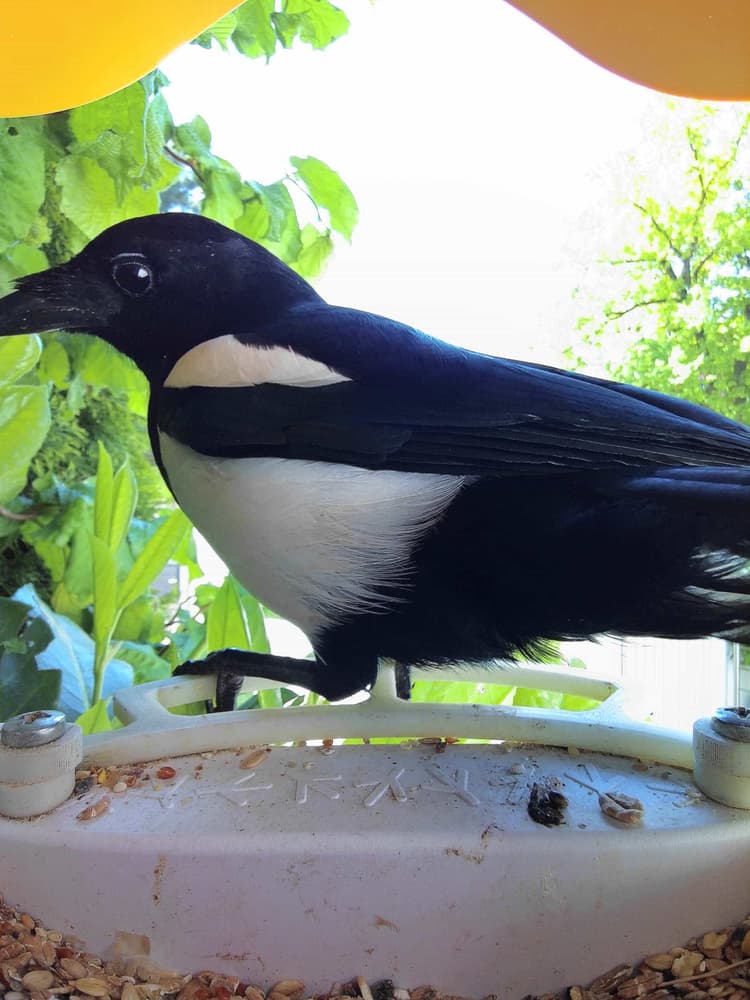
Features a distinct black and white plumage with a glossy black head, neck, and breast contrasting sharply against the white shoulders and belly
- •
Possesses a long graduated tail, with hues shifting from black to metallic green or blue in sunlight
- •
Has a straight, sturdy black beak that complements its bold facial pattern
What does a Eurasian magpie sound like?
The Eurasian Magpie is known for its wide range of vocalizations. Typically, it emits a harsh, raspy "chack chack" or "ka-ka-ka" sound. Other calls include a noisy "chacker chacker," a high pitched "yak yak," and a repetitive “mag mag mag”. Its song is a series of bubbly and melodious notes interspersed with imitations of other bird calls, car alarms, and other ambient sounds, showcasing the magpie's skill of mimicry. Vocalization is an essential aspect of its communication, used in alerting others of danger or attracting a mate.
Call
Audio by Spyros Papanastasiou


Description
Magpies have got an unfair reputation of being thieves but did you know that they are actually scared of shiny objects? They are members of the corvid family and are pretty intelligent – they can even recognise themselves in a mirror and check if their long tail – roughly the same length as their entire body! – is looking good or needs some work. If a group of magpies should visit, then you'd have a parliament of magpies in your backyard.
The Eurasian magpie can weigh between 160to270grams and be from46to50centimeters tall.
The Eurasian magpie typically lives up to 20 years in the wild. Compared to other members of the corvid family, such as the carrion crow which lives for about 14 years and the European jay with an average lifespan of 17 years, the Eurasian magpie tends to have a slightly longer lifespan. Genetic and environmental factors can influence the lifespan of these birds.
Did you know?
Most popular questions about Eurasian magpie
How to recognise a Eurasian magpie?
General appearance
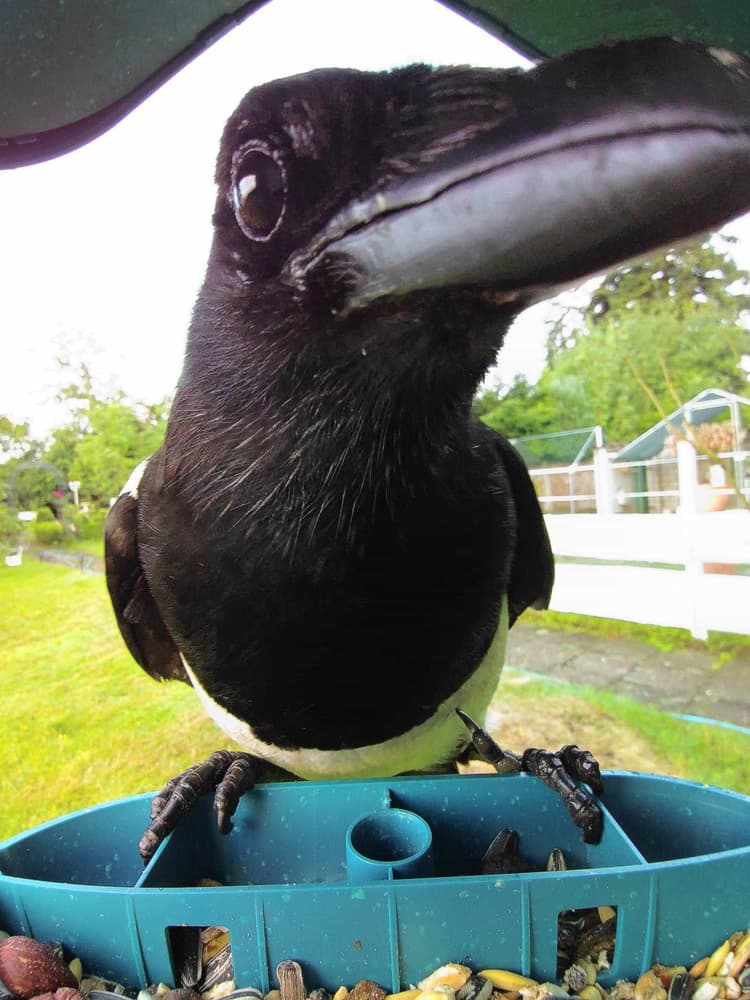
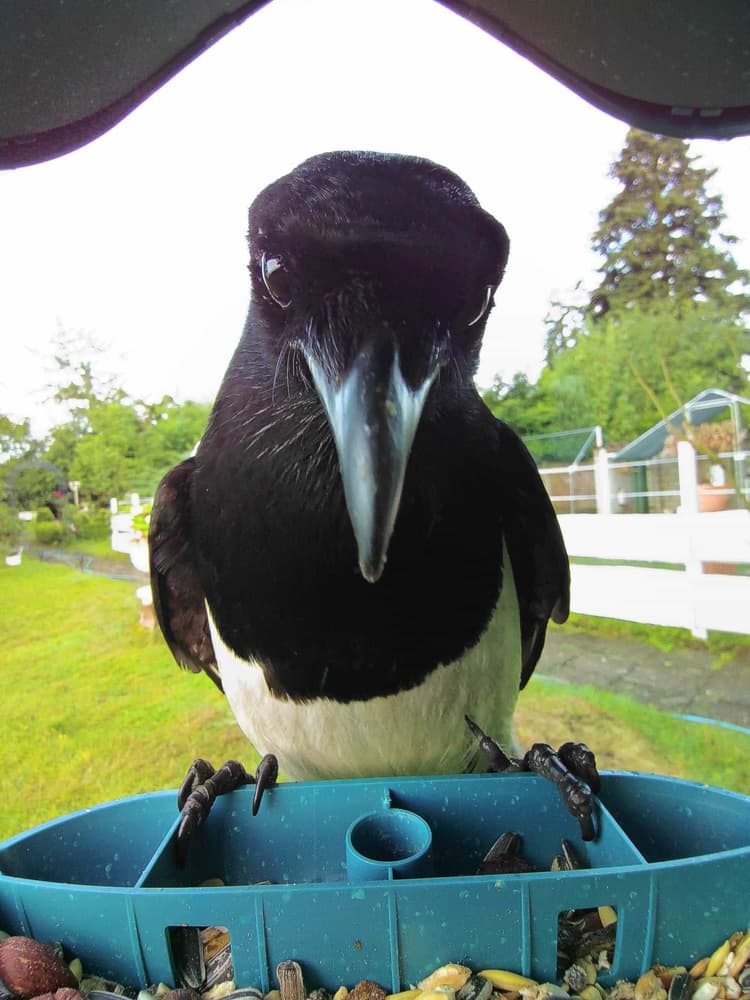
The Eurasian magpie (Pica pica) is a striking bird with a distinctive black and white coloration. Its head, neck, and breast are glossy black with iridescent hues, contrasting sharply with its white belly and shoulder patches. The long, graduated tail is black with a metallic green and blue sheen. The wings are mostly black with white primary feathers, visible in flight as bold white flashes. The magpie's robust bill and legs are black, and it exhibits a strong, purposeful flight pattern with distinctive wing beats.
Male vs female
Males and females of the Eurasian magpie species are similar in appearance, making them difficult to differentiate by sight alone. Both sexes feature the same striking black and white plumage and iridescent colors. However, males are slightly larger than females, with differences more pronounced during the breeding season when males display increased territorial behavior.
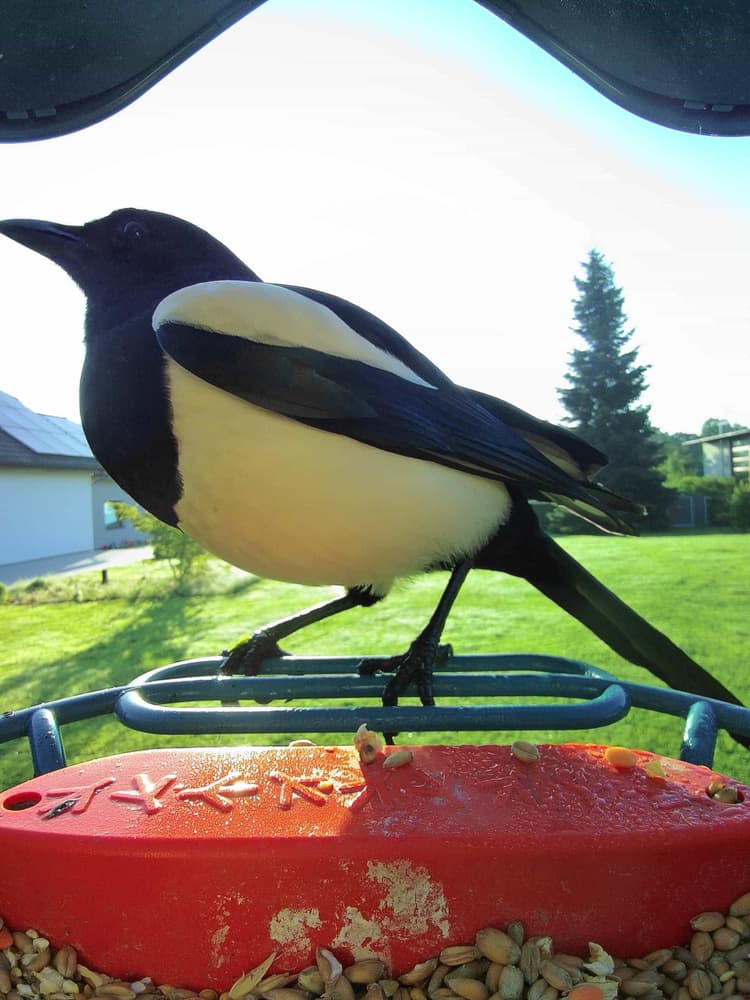
Male Eurasian Magpie
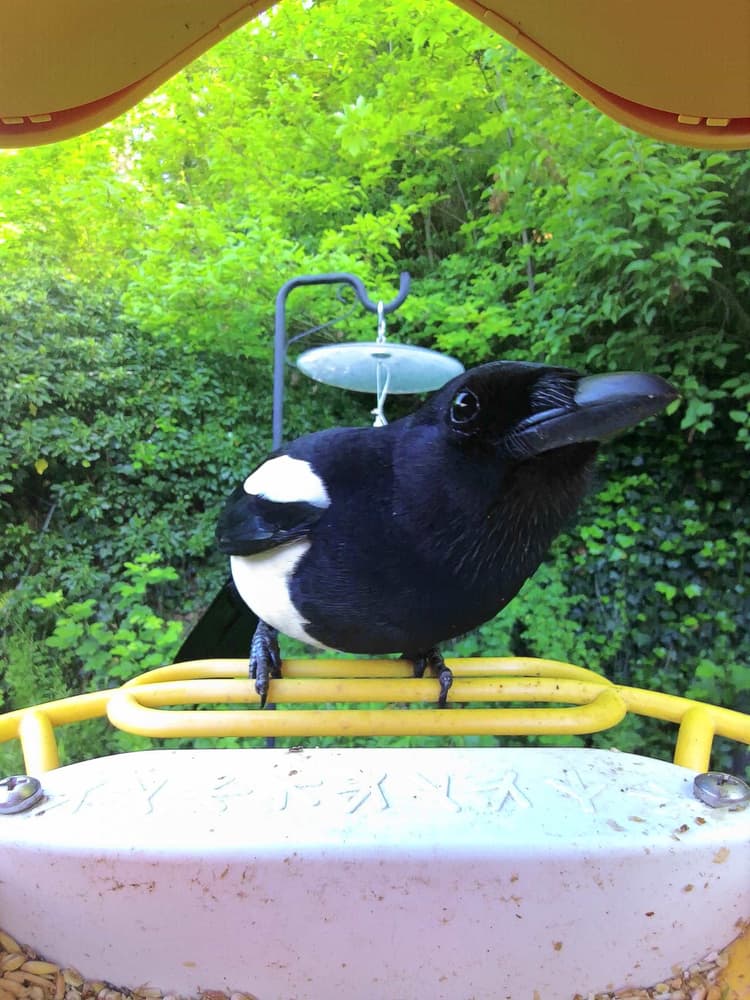
Female Eurasian Magpie
Juvenile
Juvenile magpies resemble adults but have duller plumage and lack the gloss and iridescence of mature birds. The black feathers in juveniles appear more sooty, and their tail is shorter and less graduated than in adults. Additionally, juvenile magpies' eyes are a lighter greyish-brown that darkens with age.
Often mistaken for
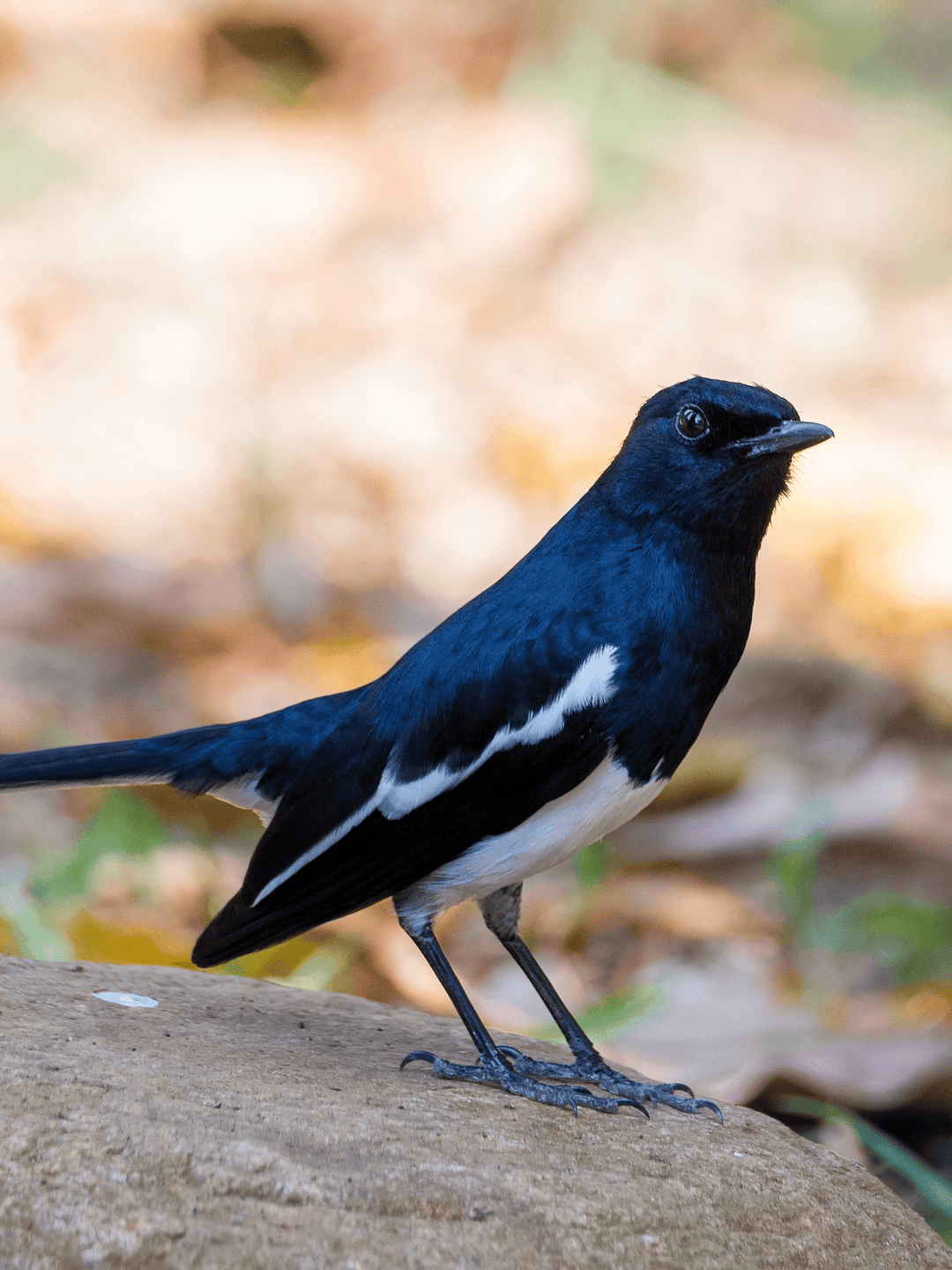
Oriental Magpie vs Eurasian Magpie
The Eurasian Magpie has a more extensive white area on its wings compared to the Oriental Magpie. While both have iridescent blue-green tails, the Oriental Magpie's tail often has a more pronounced greenish sheen. Pay attention to their vocalizations as well; the Eurasian tends to have a more complex and varied call.
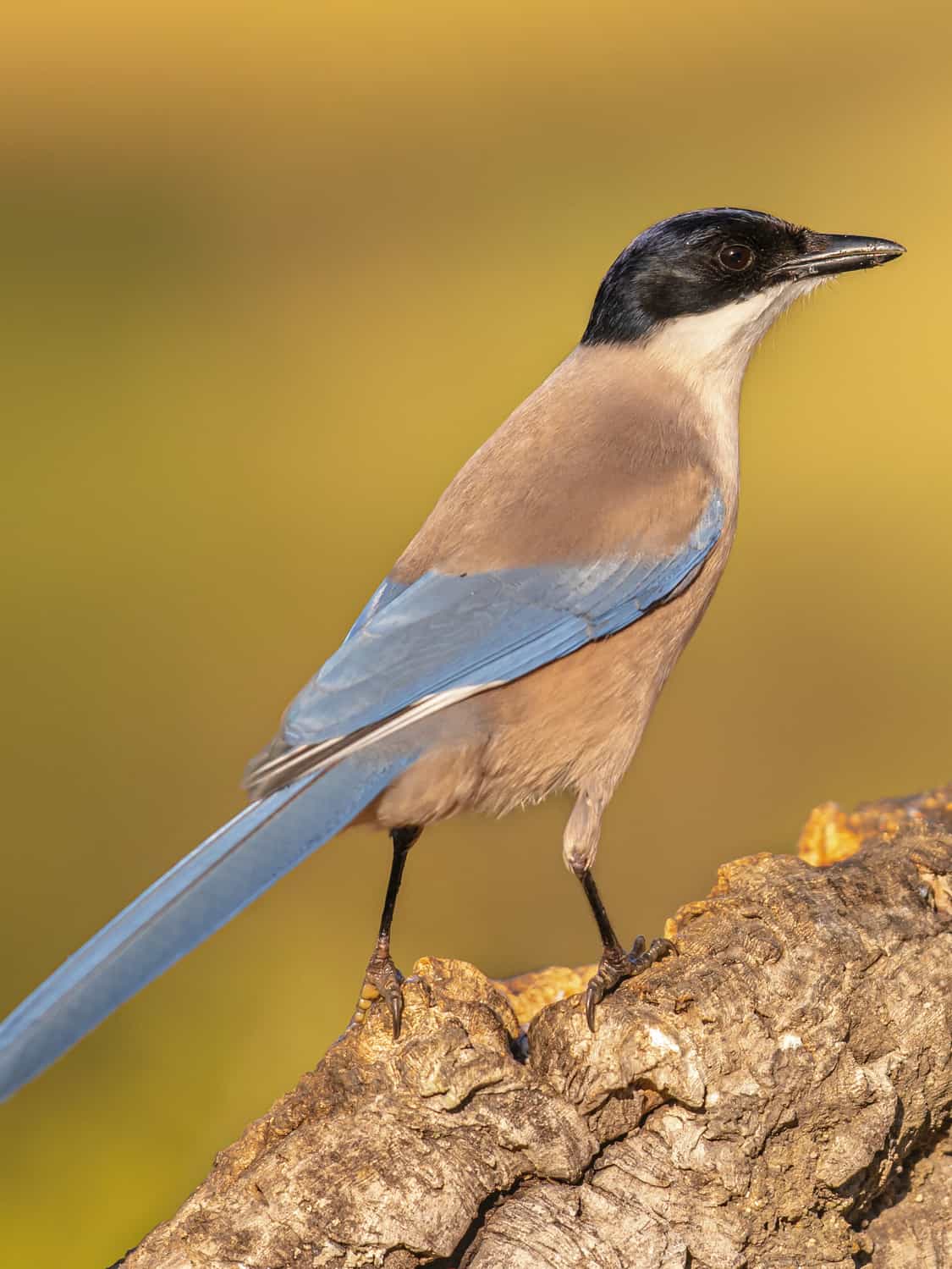
Iberian Magpie vs Eurasian Magpie
The Eurasian Magpie is more robust than the Iberian Magpie, and its markings are more pronounced. The Iberian Magpie features a bluish head that distinguishes it from the black head of the Eurasian. Additionally, the Iberian's wings and tail often display more blue, whereas the Eurasian Magpie displays a more straightforward black and white contrast.
Breeding and nesting habits of the Eurasian magpie
Mating behaviors
Eurasian magpies engage in elaborate courtship rituals involving displays of feather shuffling and tail showing. Pair bonds are often long-term, with both partners participating in nest building and chick nurturing.
Nesting details
Nests are typically constructed in the crowns of tall trees, occasionally on electrical pylons or bushes in treeless areas. Primarily made from sticks, with a domed outer structure measuring around 24 cm in diameter, leading to an interior cup. Cup is about 12 cm deep, made from mud and lined with grass, hair, and feathers. Around 25% of nests may lack a dome.
Eggs and chick-rearing
Magpies lay 5-8 eggs per clutch, incubated by the female for 21-22 days. During this period, the male provides food. Chicks are fed by both parents, leaving the nest after 24-30 days. Juveniles depend on parental care for several weeks post-fledging. Suitable habitats include gardens with tall trees and ample material for nest construction.
What does a Eurasian magpie like to eat?
Bird eggs
Birds
Carrion
Insects
Nuts
Plants
Scraps
Seeds
Small animals
Natural diet
The Eurasian magpie is an omnivorous bird with a diverse diet that includes both animal and plant matter. In the wild, its diet primarily consists of insects, small mammals, carrion, and eggs or nestlings of other birds. It also consumes a variety of plant materials such as fruits, seeds, and nuts. During the breeding season, magpies increase their intake of protein-rich foods like beetles, worms, and small rodents to meet the demands of chick rearing. Their opportunistic feeding behavior allows them to exploit a wide range of food sources available in their habitat.
Bird feeders
At bird feeders, Eurasian magpies are known to take advantage of the offerings made available by humans. They are particularly attracted to peanuts, sunflower seeds, and suet, which provide high-energy nourishment. Occasionally, they may also feed on bread, kitchen scraps, or pet food left out for other animals. Their versatility allows them to adapt to suburban and urban environments, where they encounter these supplementary foods. However, their presence can sometimes be a nuisance to other smaller bird species competing for the same food resources at feeders.
Provide enticing snacks
To attract the Eurasian magpie to your yard, first, their taste buds. These birds are omnivorous, their favorite snacks generally include fruits, nuts, and seeds. Consider setting out apples, pears, or nuts like walnuts and pecans. Try using Bird Buddy seeds, as these seeds chosen by experts for the season have shown significant results.
Suitable feeder types
Ground feeders or platform feeders are an excellent choice as Magpies prefer to forage on the ground. Make sure these feeders are sturdy enough to support their weight and low enough that they feel safe approaching.
Fun tricks to attract
Eurasian magpies are known for their intelligence and curiosity. Leaving shiny objects out can often spark their interest and draw them to your yard. You can also try playing soft bird sounds or music which they might respond to.
Create a safe environment
Creating a safe and welcoming environment is crucial. Install bird baths or small ponds, as Magpies love water. Make sure your yard is free from predators, and avoid using any kind of pesticides or harmful chemicals.
Where can you find Eurasian magpies?
Based on Birdbuddy sighting data. The heatmap shows where Birdbuddy users have spotted this species.
Embed this map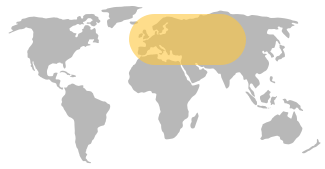
This map shows the full native range based on scientific range data.
Primary habitat
The Eurasian magpie typically inhabits openings in dense forests or woodlands. This bird prefers temperate and warm climates across Europe, western Asia, and northern Africa.
Additional range
Unexpectedly, Eurasian magpies can also be found in urban areas, adapting to environments heavily influenced by human activity.
Do they migrate?
The Eurasian magpie generally does not migrate and tends to stay in one place throughout the year. It is a highly adaptable and sedentary bird, found across Europe, much of Asia, and North Africa. Eurasian magpies prefer to inhabit open countryside with scattered trees, farmlands, parks, and gardens within both rural and urban settings. These birds maintain territories, which they defend vigorously, and often make their nests in one preferred area annually. Even in colder climates, Eurasian magpies typically endure the winter months by relying on their omnivorous diet, which includes insects, small mammals, fruits, seeds, and carrion. In some cases, however, there may be minimal local movements from higher altitudes to lower ones during harsh winter conditions, especially in more northern populations. Generally, the species' established behavior involves very limited dispersiveness unless environmental pressures or food scarcity necessitate it. Thus, the Eurasian magpie's year-round presence is well-noted across its range without significant migratory patterns.
What is the role of Eurasian magpies in nature and how to protect them?
Conservation status
The Eurasian magpie is classified as "Least Concern" by the International Union for Conservation of Nature. This status is due to its very large population size, estimated between 22.5 to 57 million individuals in Europe, its extensive range, and stable population trend. Consequently, the species is considered common rather than vulnerable or endangered. While there are no major conservation efforts specifically targeting the Eurasian magpie, habitat preservation supports its stable status. Currently, there are no significant threats impacting the species, contributing to its robust population and widespread presence throughout its range.
Ecological role of Eurasian magpies
Its role in the ecosystem
Eurasian Magpies play a substantial role in their ecosystem, including pest control and seed dispersal. Their diet is varied and includes invertebrates, which helps to hold pest populations in check. Furthermore, their vigilance against predators, such as cats, foxes, and raptors, aids in maintaining balance in the local wildlife community. The birds are also likely to contribute to plant dispersion, as many avians do, by inadvertently carrying seeds away from the parent plants and dispersing them in different locations through their droppings. Additionally, Eurasian Magpies can influence the environment structurally, as they use a variety of materials to construct their nests. Moreover, the communal activity of these birds, including their tendency to congregate in large groups, may stimulate social interactions and communication among different animal species. The monogamous and co-parenting behavior seen in Eurasian Magpies might also have long-term implications for gene diversity and population stability of the species. Therefore, Eurasian Magpies are ecologically significant with multiple roles in their habitats.
How to help protect Eurasian magpies
Preservation tips
Supporting eurasian magpie habitat conservation
To aid Eurasian magpie conservation, focus on preserving and enhancing their habitat, which often include open woodlands, forests and urban areas. Implement strategies that maintain woodland diversity and encourage the growth of native plants that attract their primary diet, consisting of insects and small animals. Protect nesting trees from logging activities.
Promoting community science initiatives
Leverage the power of community science to track and study Eurasian magpie populations. Engage local people to monitor these birds and report any changes in population size, behaviour or habitat use. This data can help scientists understand the species better and make informed conservation decisions. Promote awareness campaigns about the importance of these birds for the ecosystem.