
Woodhouse’s Scrub-Jay
Woodhouse’s Scrub-Jay
Also known as: Woodhouse's Jay
Aphelocoma woodhouseii


Quick Identification guide
Quick Identification guide
- •
Features a slim, pointed bill that is well-adapted for foraging
- •
Exhibits a pale grayish belly contrasted by a blue crown and wings, making it distinctive
- •
Lacks a crest, presenting a smooth head and a long tail that aids in identification
What does a Woodhouse's scrub-jay sound like?
The vocalizations of the Woodhouse’s scrub-jay are quite distinctive and unique. Their call is notably loud and throaty, often signaled by a "jayy?" or "jree?" sound. In flight, the bird commonly calls a long series of "check-check-check" notes. The call pattern is flat but can also rise, and the call type includes a range of sounds, such as a buzzy, rattle-like, raucous, or even a trill.


Description
Woodhouse's scrub-jays are little troublemakers! They like to steal acorns from Clark's nutcrackers any time they can. They are pretty smart in other ways, too, and often hitch a ride on the backs of mule deer to munch on parasites. Dinner and a free ride! Plus, the deer are grateful for the free spa treatment.
The Woodhouse's scrub-jay can weigh between 71to99grams and be from27to31centimeters tall.
The Woodhouse's scrub-jay typically has a lifespan of approximately 9 years. This is quite similar to its closely related species, the Florida Scrub Jay, which can live up to 11 years. Comparatively, another relative, the Western Scrub Jay, can live from 9 to 12 years. These lifespans illustrate the minimal variance in longevity within this bird family.
Did you know?
Most popular questions about Woodhouse's scrub-jay
How to recognise a Woodhouse's scrub-jay?
General appearance
The Woodhouse’s scrub-jay stands roughly 11 1/2 inches tall, about the size of a crow. Sporting a slim build and a moderately long tail, this bird presents a blend of dull blue color on its head, wings, and tail with a grayer tone in the center of its back. Its underparts are mostly light gray, with a hint of a blue chest band that sets off its slightly paler throat. Its wings are broad and rounded, while its tail can appear long, rounded, and wedge-shaped.


Male vs female
The description provided does not indicate any significant differences in size, color, or markings between male and female Woodhouse’s scrub-jays. Both genders appear to share the same general physical attributes and coloration.
Juvenile
The description provided does not provide specific details regarding the appearance of juvenile Woodhouse’s scrub-jays. Generally, juveniles may show somewhat subdued coloring compared to adults until they reach maturity.
Often mistaken for
California Scrub-Jay vs Woodhouse’s Scrub-Jay
Woodhouse’s Scrub-Jay is paler with less distinct blue and whitish underparts, while the California Scrub-Jay has bolder blue tones and contrasting dark markings on the face.

Pinyon Jay vs Woodhouse’s Scrub-Jay
Pinyon Jays are more uniform blue with a lack of distinct color separation seen in Woodhouse’s Scrub-Jay, which displays more defined blue and gray contrast.
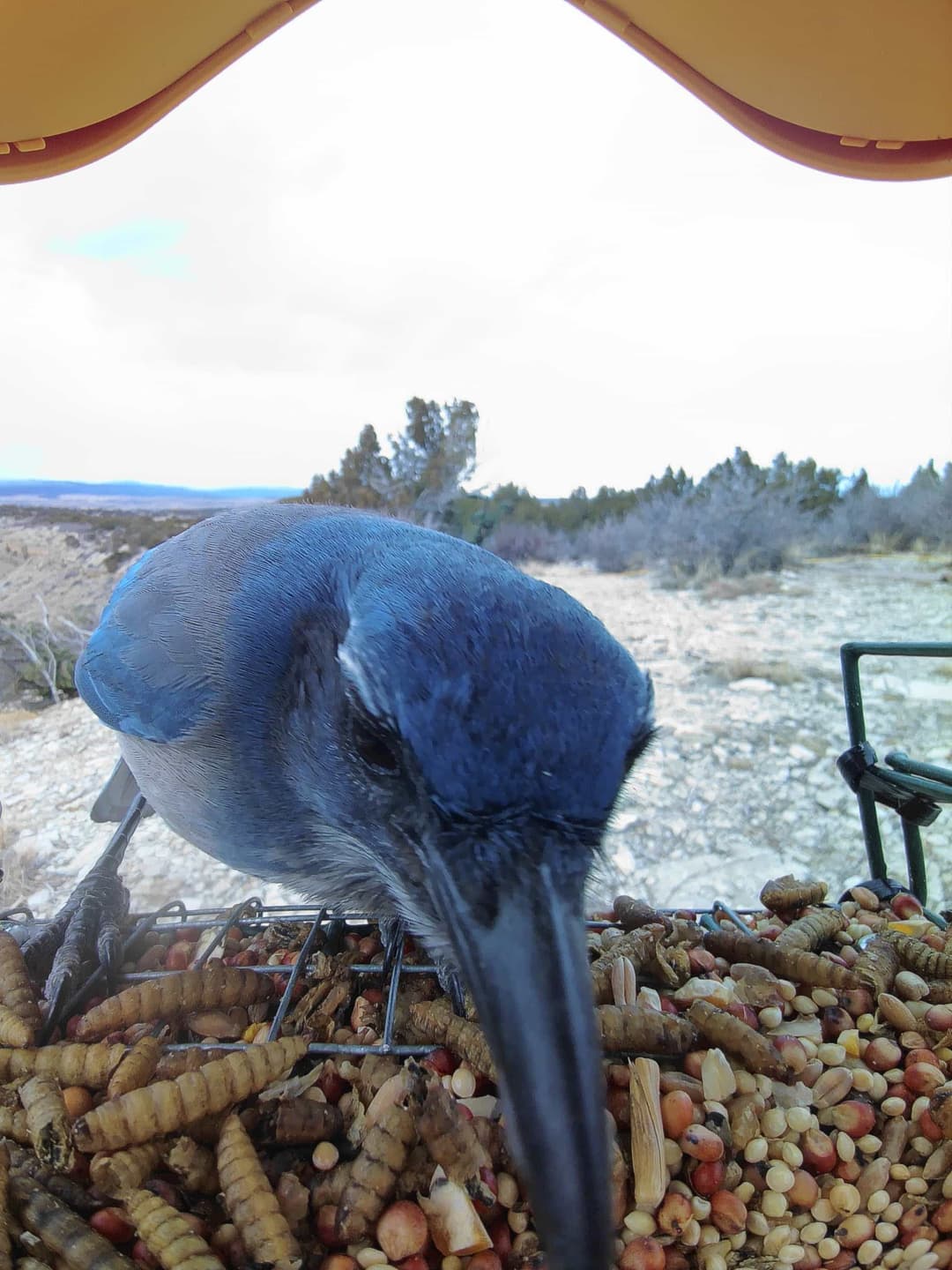
Mexican Jay vs Woodhouse’s Scrub-Jay
The Mexican Jay has a more consistent blue color overall, whereas Woodhouse’s Scrub-Jay shows a noticeable gray on its back and belly.
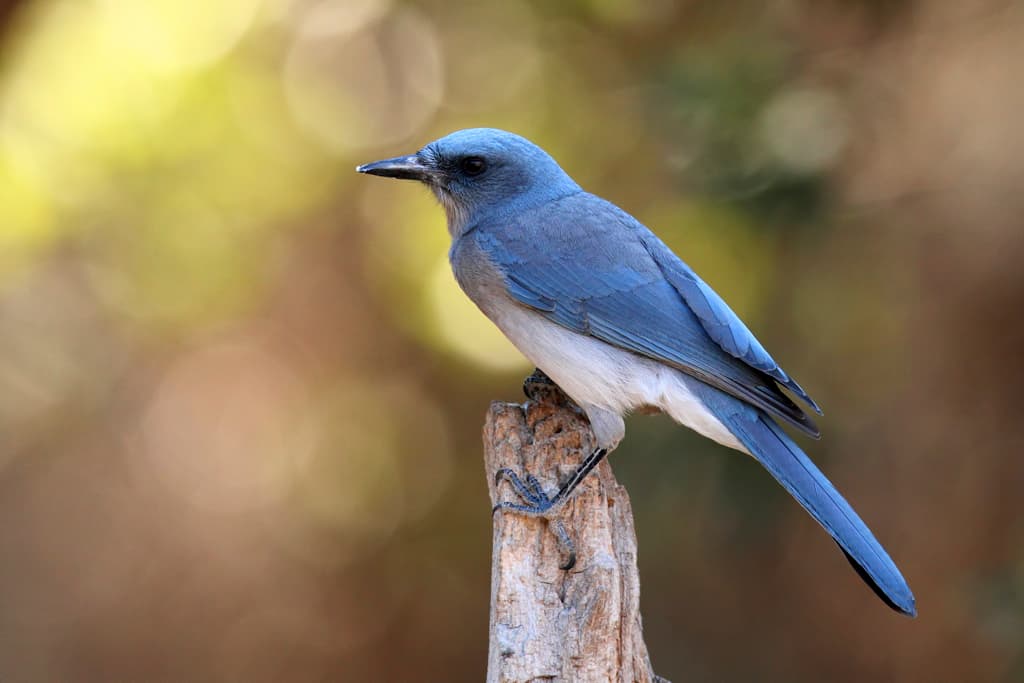
Florida Scrub-Jay vs Woodhouse’s Scrub-Jay
Florida Scrub-Jays have a more uniform blue and gray color without the distinct white throat seen in Woodhouse’s Scrub-Jay.
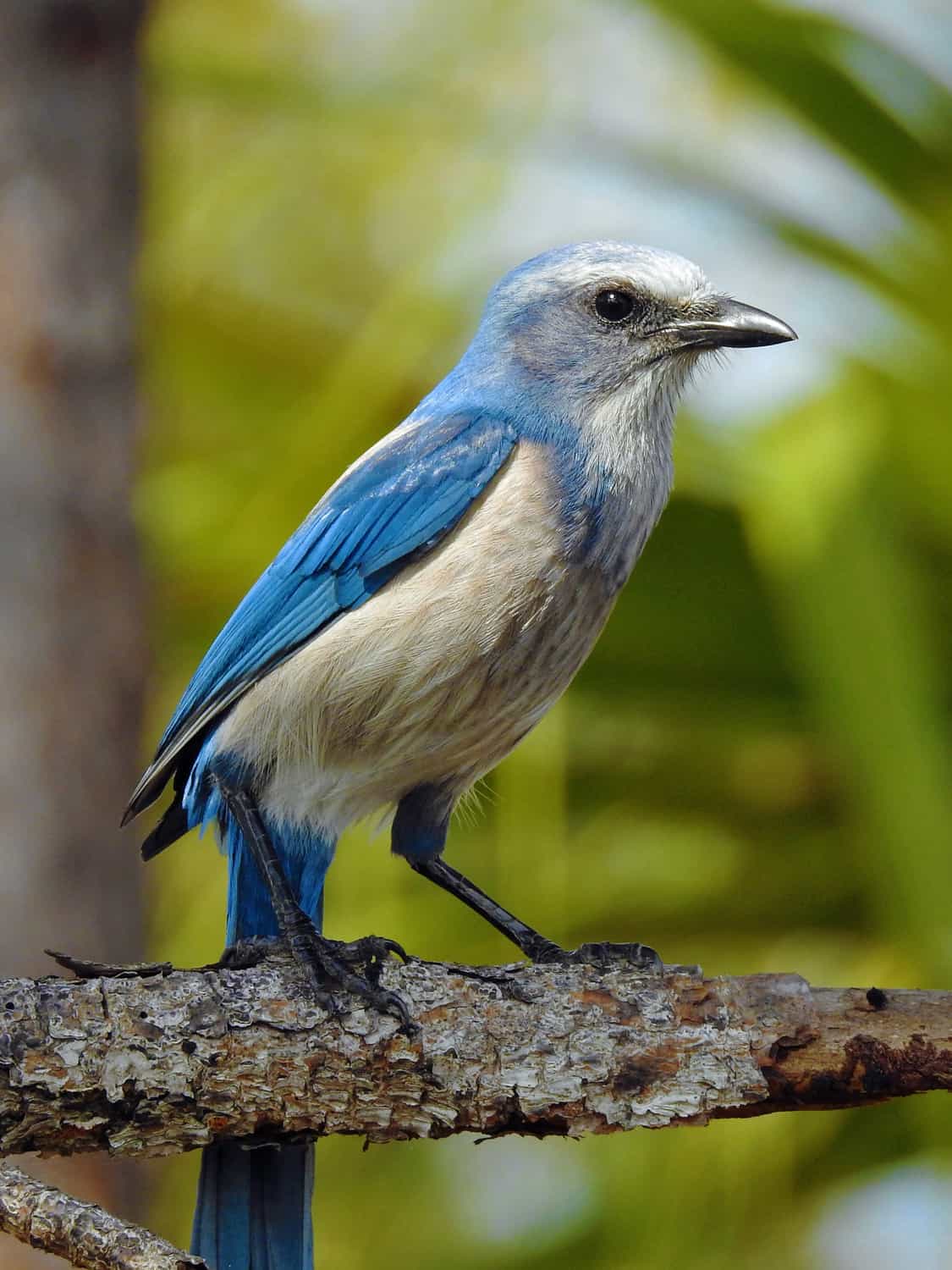
Steller’s Jay vs Woodhouse’s Scrub-Jay
Steller’s Jays have dark crests and bold black coloring, unlike the more muted colors and absence of a crest in Woodhouse’s Scrub-Jay.
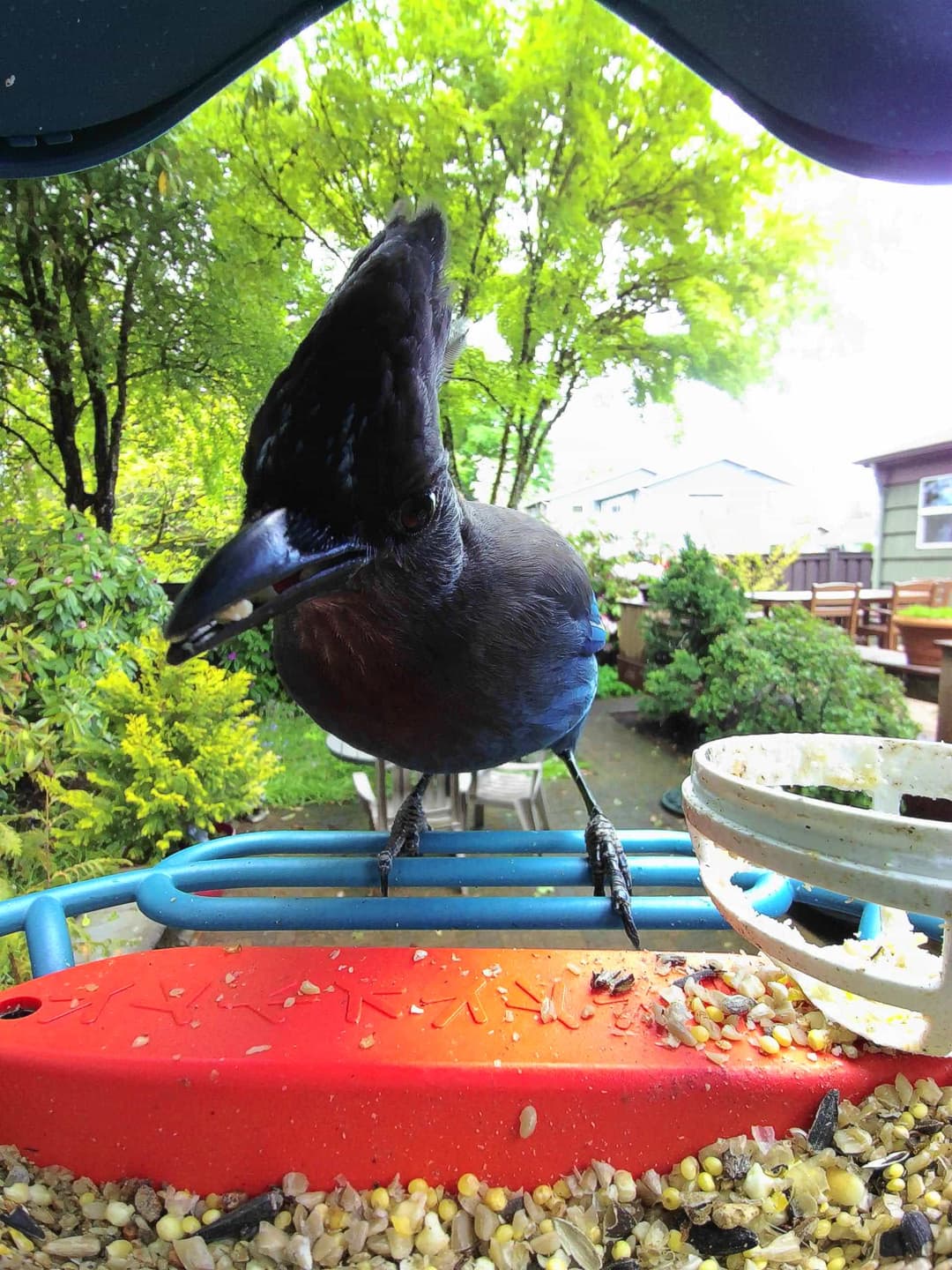
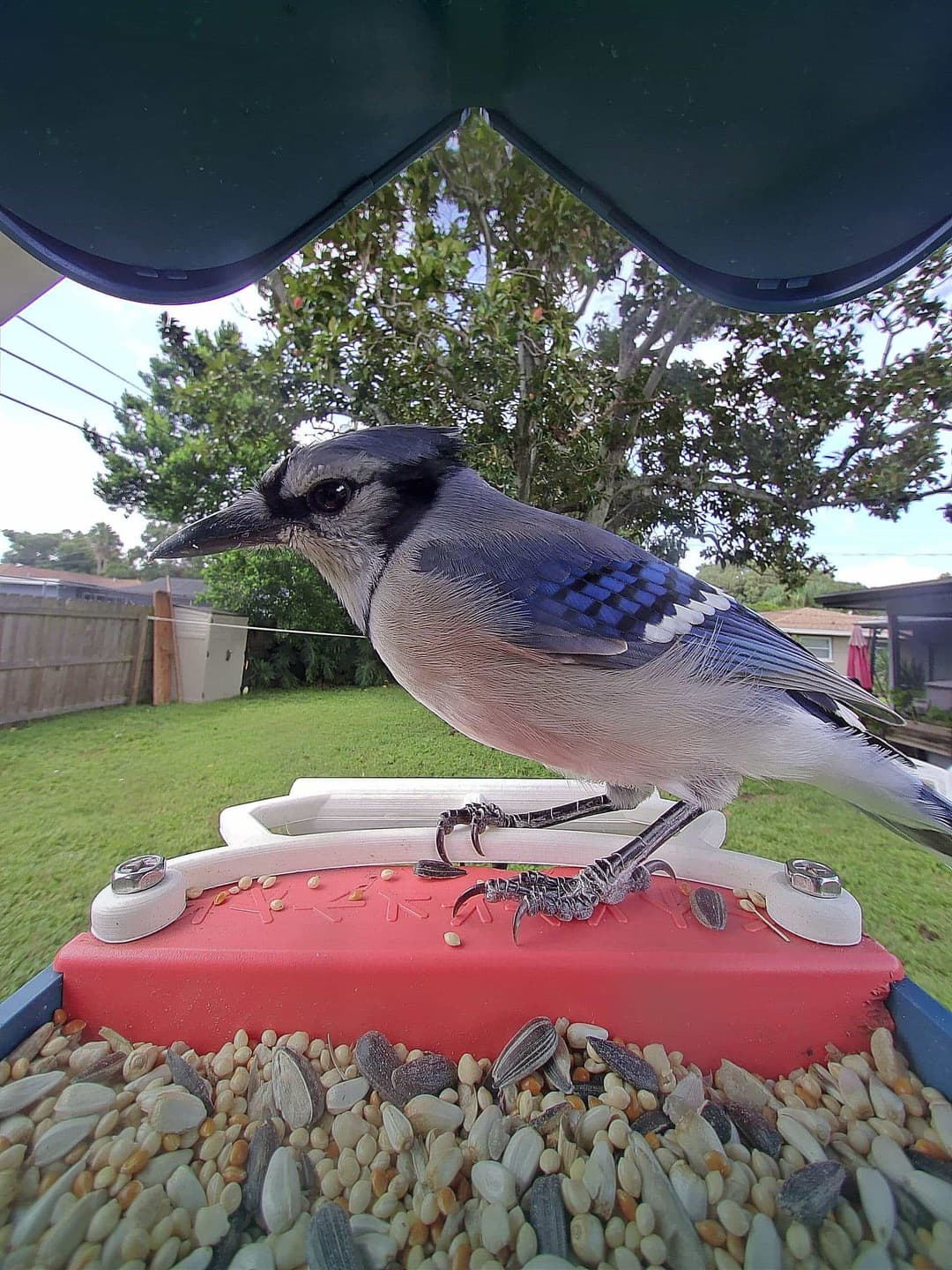
Blue Jay vs Woodhouse’s Scrub-Jay
Blue Jays are marked by their bright blue color and black necklace, which Woodhouse’s Scrub-Jay lacks, showing more muted, pale blues and grays.
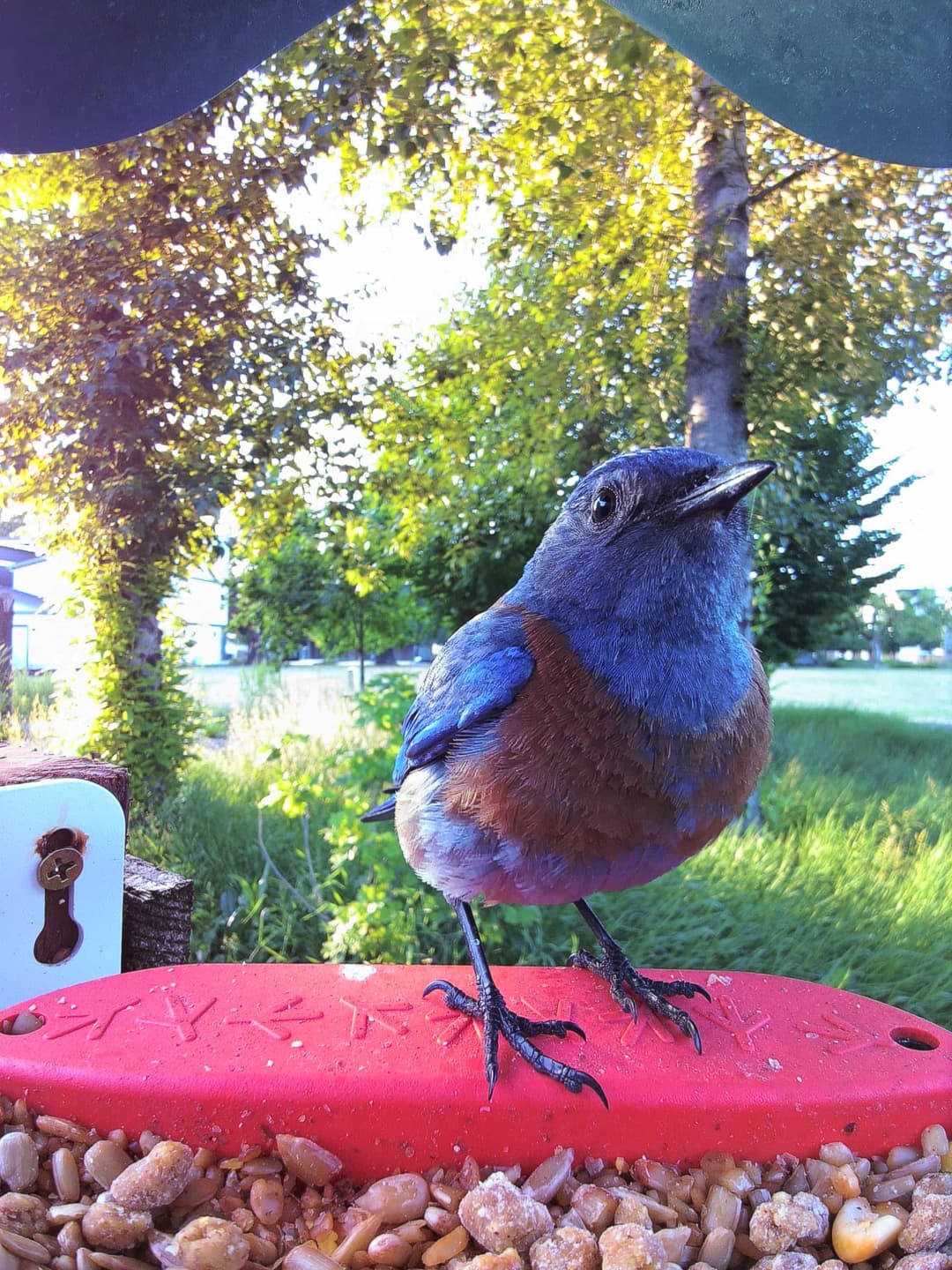
Western Bluebird vs Woodhouse’s Scrub-Jay
Western Bluebirds have a rounder profile and rusty chest contrasting with the pale gray and blue of Woodhouse’s Scrub-Jay.
Breeding and nesting habits of the Woodhouse's scrub-jay
Mating behaviors
Woodhouse's scrub-jay forms isolated pairs for breeding rather than cooperative groups. These pairs are monogamous, often staying together year-round on their territory.
Nesting details
Woodhouse's scrub-jay nests in shrubs or trees, usually 5-15 feet above ground. The nest is a sturdy cup constructed by both sexes using twigs and grass, and lined with rootlets and animal hair.
Eggs and chick-rearing
Pairs protect and rear their chicks on their permanent territories. The nest supports the eggs and growing chicks, ensuring their development in a secure environment.
What does a Woodhouse's scrub-jay like to eat?
Fruits
Insects
Nuts
Seeds
Snails
Spiders
Natural diet
The Woodhouse’s scrub-jay is omnivorous, with a diet that changes with the seasons. During summer, it consumes a wide variety of insects, including a large number of moth caterpillars for feeding its young. Additionally, it occasionally eats spiders and snails. In winter, its diet shifts predominantly to acorns and other seeds, nuts, and berries. It also eats some rodents, eggs and young of other birds, and small reptiles and amphibians.
Bird feeders
At bird feeders, Woodhouse’s scrub-jays commonly consume peanuts, sunflower seeds, and suet. They are known to be attracted to feeders offering these items due to their high-fat content and easy availability.
Attract woodhouse’s scrub-jay with the right feed
One of the quickest ways to attract a Woodhouse’s Scrub-Jay to your yard or feeder is to provide the right feed. These birds are particularly attracted to seeds, nuts, and berries. Their favorites tend to be peanuts, sunflower seeds, and small berries. As such, we recommend Bird Buddy seeds. Expertly chosen for the season, these seeds can help ensure maximum attraction for these birds.
Choose the perfect feeder for woodhouse’s scrub-jay
Two types of feeders are particularly effective for enticing a Woodhouse’s scrub-jay to your yard: platform feeders and hanging feeders. These types of feeders make it easy for the birds to see and access the seeds. Make sure the feeder is sturdy, as this type of bird likes to hop on the feeder while eating. Consider having multiple feeders to eliminate competition with other birds.
Use fun tricks to encourage woodhouse’s scrub-jay visits
Placing shiny objects around your yard or near your feeder can attract these curious birds. Mirrors, shiny ribbons, or pie tins can do the trick. You can also try playing bird song recordings to attract them. Fun fact: Woodhouse’s scrub-jays are great mimics and they might join the choir for a sing-along!
Where can you find Woodhouse’s scrub-jays?

Primary habitat
The Woodhouse’s scrub-jay primarily thrives in arid woodlands of juniper and pinyon pine, and in pine-oak woodlands and oak scrub in foothills.
Additional range
It adapts to suburban areas and parks. In winter, it disperses to lowland riverside woods.
Do they migrate?
The Woodhouse’s Scrub-Jay is mostly a permanent resident, meaning it generally stays in its established territory throughout the year. However, it may exhibit some movement during the winter months, particularly in response to environmental conditions. This species is known to disperse over some distance, especially during dry years when the availability of acorns, their primary food source, is low due to poor oak acorn production. This dispersal is not considered true migration, as it lacks a regular, predictable pattern and specific migratory routes typically associated with migratory birds. Instead, the movement is more opportunistic and local, with the birds seeking areas with better food supplies rather than traveling long distances along a set path. Key locations are generally within their established range in western United States regions, particularly where oak woodlands are abundant. The timing of their dispersal can vary but is mostly observed in the winter months when food scarcity is more pronounced. Overall, the Woodhouse's Scrub-Jay's movement is driven by resource availability rather than a traditional migratory instinct.
What is the role of Woodhouse’s scrub-jays in nature and how to protect them?
Conservation status
The Woodhouse’s scrub-jay is still widespread and fairly common, although it has experienced recent declines in some parts of its range. Its conservation status is not endangered, but ongoing surveillance is essential to monitor population trends. Key threats include habitat loss due to urban development and changes in land use. Conservation efforts focus on habitat preservation and restoration to support population stability. Maintaining healthy ecosystems is crucial for safeguarding this species and preventing further decline.
Ecological role of Woodhouse’s scrub-jays
Its role in the ecosystem
The Woodhouse’s scrub-jay plays a significant role in the ecosystem. As an omnivorous bird, it contributes to pest control by consuming a wide variety of insects, spiders, and snails, particularly in summer. Moth caterpillars constitute a substantial proportion of the diet fed to the young, implying that the scrub-jay could limit the population of these insects. During the winter, the bird eats acorns and other seeds, nuts, and berries, which indicates its role in seed dispersal. This behavior can help promote vegetation growth and diversity. The Woodhouse’s scrub-jay's consumption of rodents, eggs, and young of other birds, and small reptiles and amphibians also suggests its role in controlling the populations of these species. Its nesting behavior further underscores its ecological importance as it builds nests in shrubs or trees, possibly aiding in the aeration of the soil and influencing plant diversity.
How to help protect Woodhouse’s scrub-jays
Preservation tips
Habitat preservation strategies for woodhouse’s scrub-jay
Habitat preservation is key in supporting Woodhouse’s scrub-jay conservation. Efforts should focus on minimizing habitat disturbance, maintaining the natural environment, and implementing stipulations against deforestation. Building birdhouses imitating their natural nesting preferences can provide alternative habitats for these birds. It's critical to institute robust policies to protect the areas where this species thrives.
Community science initiatives for woodhouse’s scrub-jay conservation
Promote community science initiatives to raise awareness and involvement in conservation efforts. Encourage local community to participate in bird watching and bird counting events, especially during breeding seasons. Implement programs to educate the public about the integral role of Woodhouse’s scrub-jay in the ecosystem. Digital platforms could be useful tools for fostering such citizen science initiatives and gathering data.