
Lesser Spotted Woodpecker
Lesser Spotted Woodpecker
Dryobates minor


Quick Identification guide
Quick Identification guide
- •
Features a small, barred black and white body with a distinctive pattern
- •
The crowned head exhibits a black cap contrasting with white facial markings
- •
Its short, pointed bill fits its petite size, adept for pecking wood
What does a lesser spotted woodpecker sound like?
The lesser spotted woodpecker produces short, high-pitched, descending calls that sound like "kee-kee-kee" and are similar to a laugh or a giggle. Their drumming is quite soft, resembling tapping more than pecking. The song, often heard during courtship, is a rapid succession of distinct, quiet taps on deadwood. Their vocalizations are generally quieter and less varied than those of larger woodpeckers.


Description
Don't let their size fool you! Although they are about the size of a sparrow and are the smallest of the European woodpeckers, lesser spotted woodpeckers are impressively loud. They like to peck out a nesting hole but don't always clean up after themselves, so if you see a bunch of wood chips at the base of a tree, chances are there's a little bird that has made that place its home!
The lesser spotted woodpecker can weigh between 16to26grams and be from14to16centimeters tall.
Lesser spotted woodpeckers typically live up to 5-6 years. Compared to its relatives, it has a shorter lifespan; the great spotted woodpecker can live approximately up to 11 years and the green woodpecker up to 10 years. The lesser spotted woodpecker's longevity might be affected due to its smaller size, scarcity of food, and predation.
Did you know?
Most popular questions about lesser spotted woodpecker
How to recognise a lesser spotted woodpecker?
General appearance
The lesser spotted woodpecker is the smallest woodpecker species in Europe, measuring 14-16.5 cm in length. It displays barred black and white upperparts, with a white underbelly. The bird's wings, back, and tail possess black horizontal stripes, creating a distinctive pattern. This bird's beak is pointed and strong, aimed for its pecking habit on trees.
Male vs female
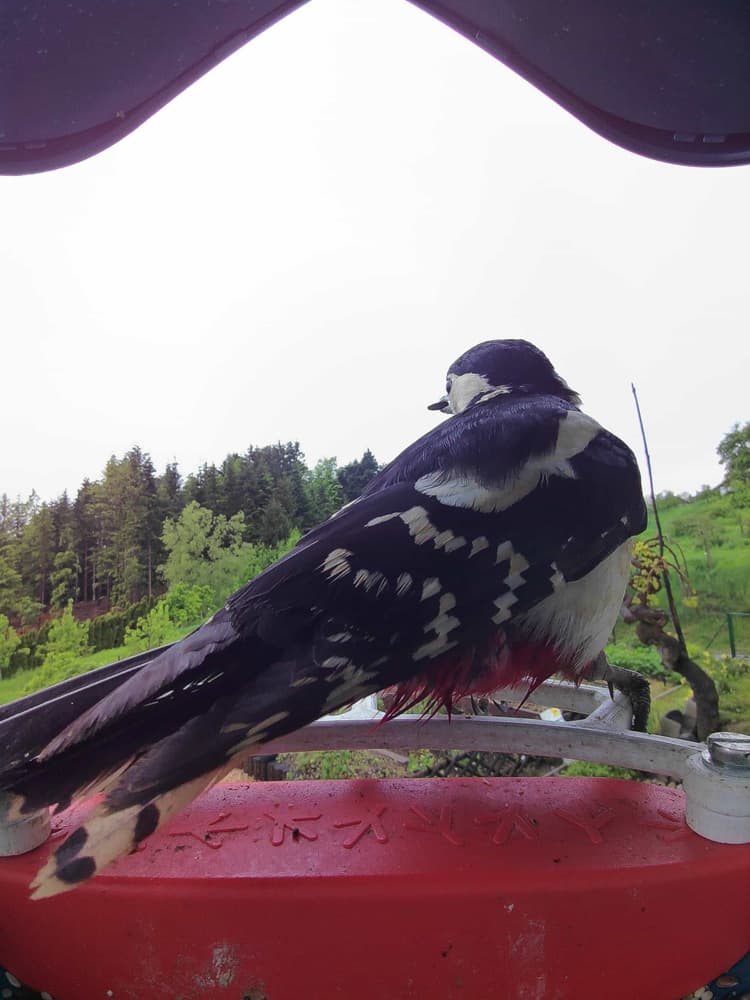
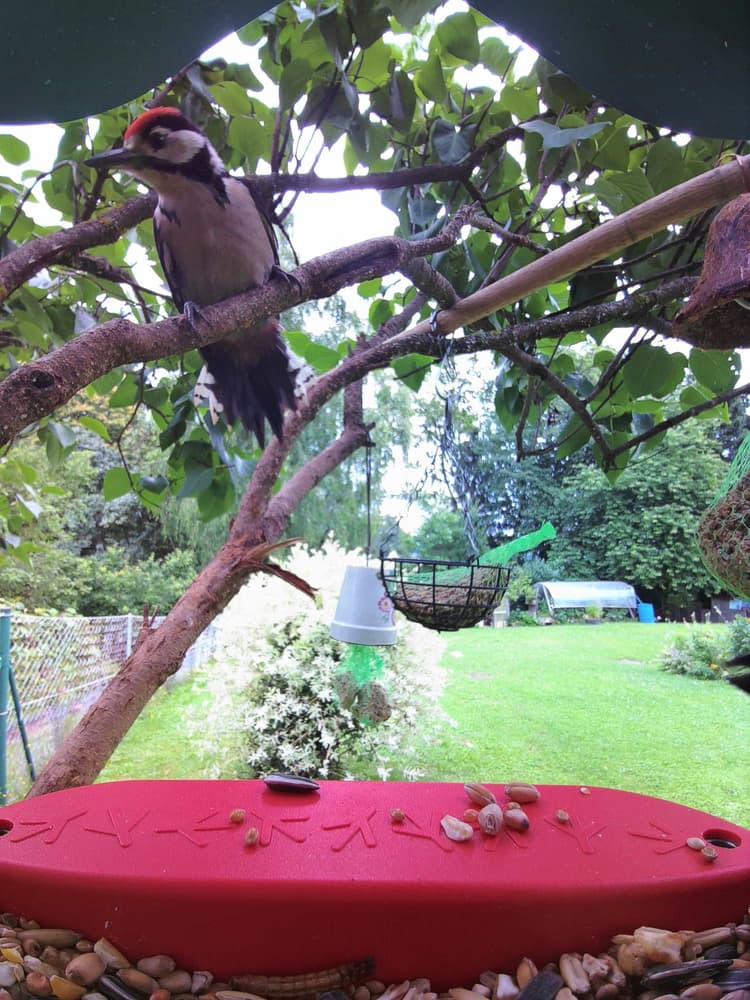
Males and females of this species show sexual dimorphism. The male has a distinctive red crown on his head, whereas the female's head is purely white. Both genders, however, have black eye-stripes extending from the beak to the back of the head.
Juvenile
Juvenile lesser spotted woodpeckers have similar markings to adults but don't possess as vivid coloration. Also, they exhibit a crimson-colored cap which extends to the nape, irrespective of gender. This color fades as they mature.
Often mistaken for
Great Spotted Woodpecker vs Lesser Spotted Woodpecker
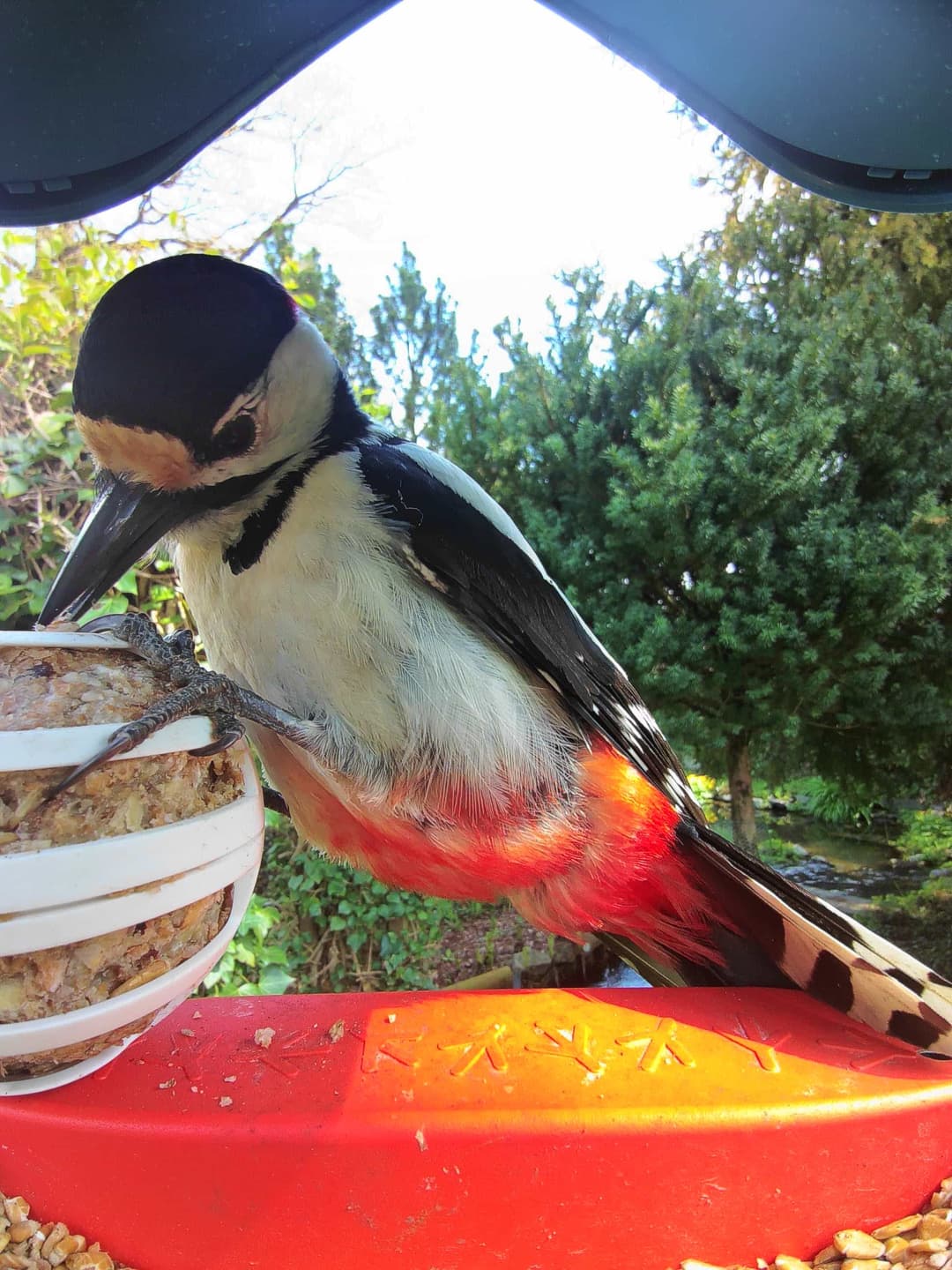
The Great Spotted Woodpecker is larger than the Lesser Spotted Woodpecker, has a more prominent black and white pattern, and possesses a striking red patch under the tail, while the Lesser Spotted Woodpecker is smaller with fine black and white barring and lacks the red under the tail.
Downy Woodpecker vs Lesser Spotted Woodpecker
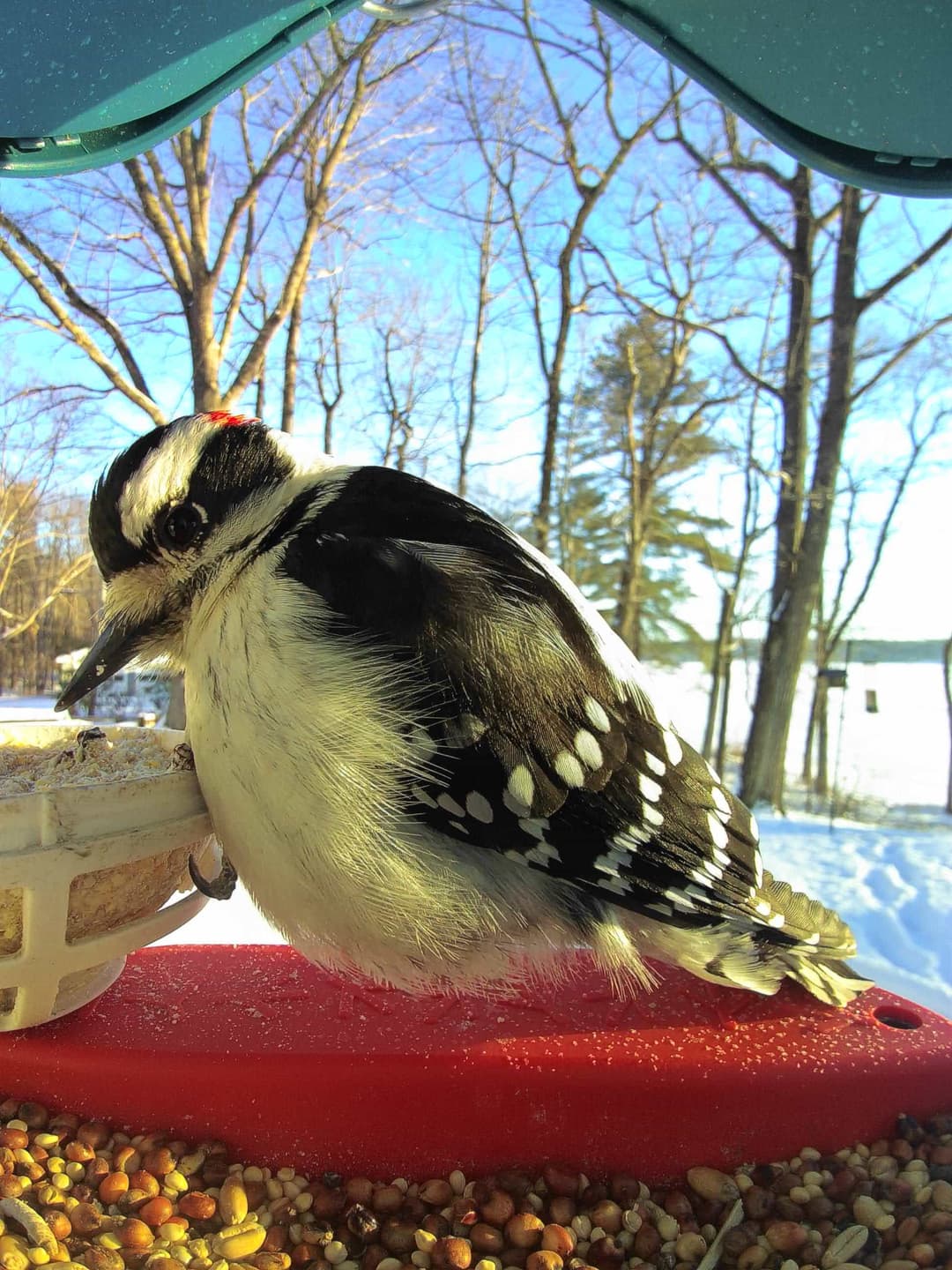
The Downy Woodpecker has a similar size and black and white color pattern as the Lesser Spotted Woodpecker but has a slightly longer bill, a thicker white bar on the wings, and a red patch at the back of the head in males.
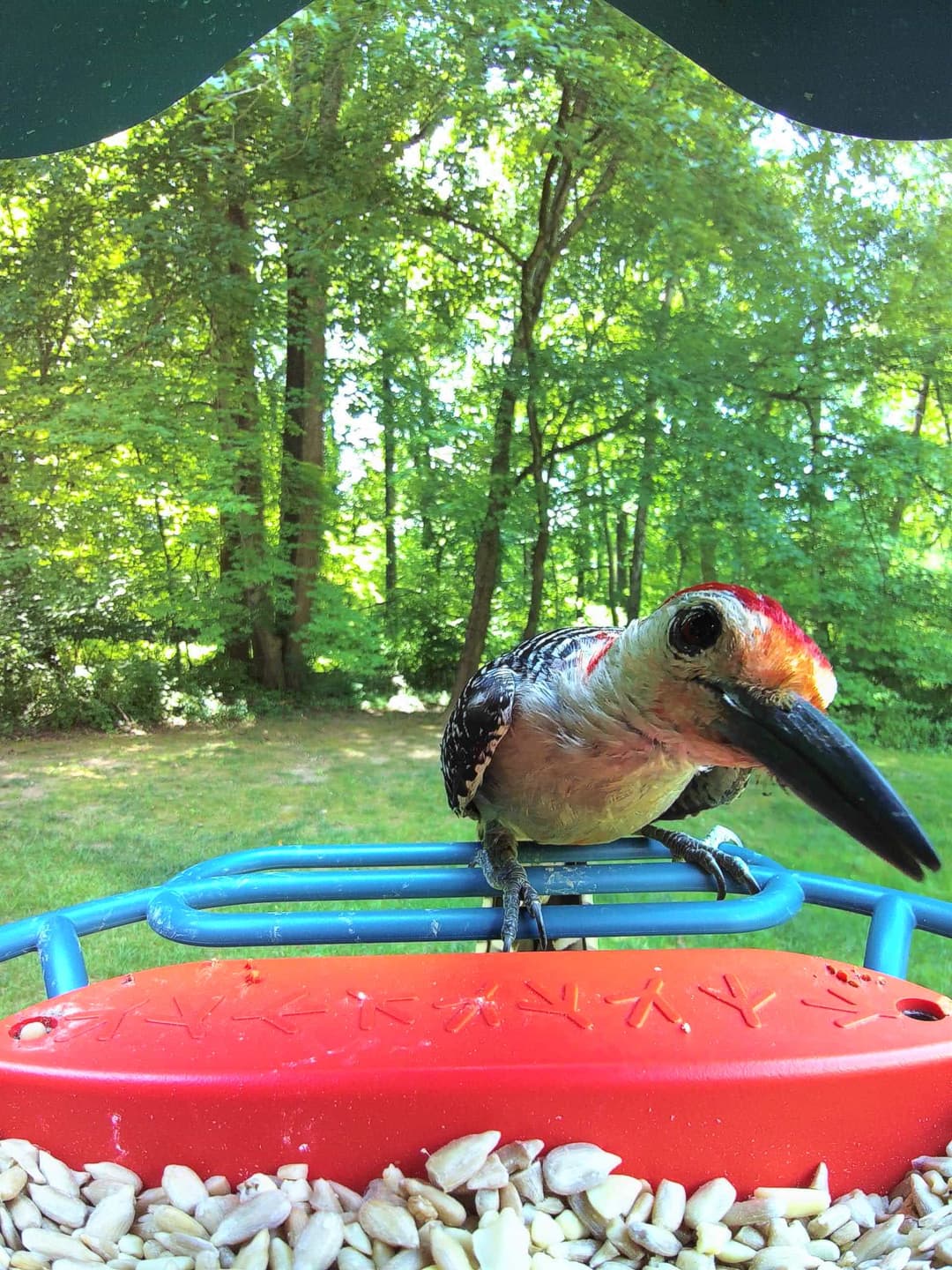
Red-Bellied Woodpecker vs Lesser Spotted Woodpecker
The Red-Bellied Woodpecker is considerably larger, with a distinctive red cap and a pale belly, unlike the smaller and uniformly barred black and white Lesser Spotted Woodpecker.
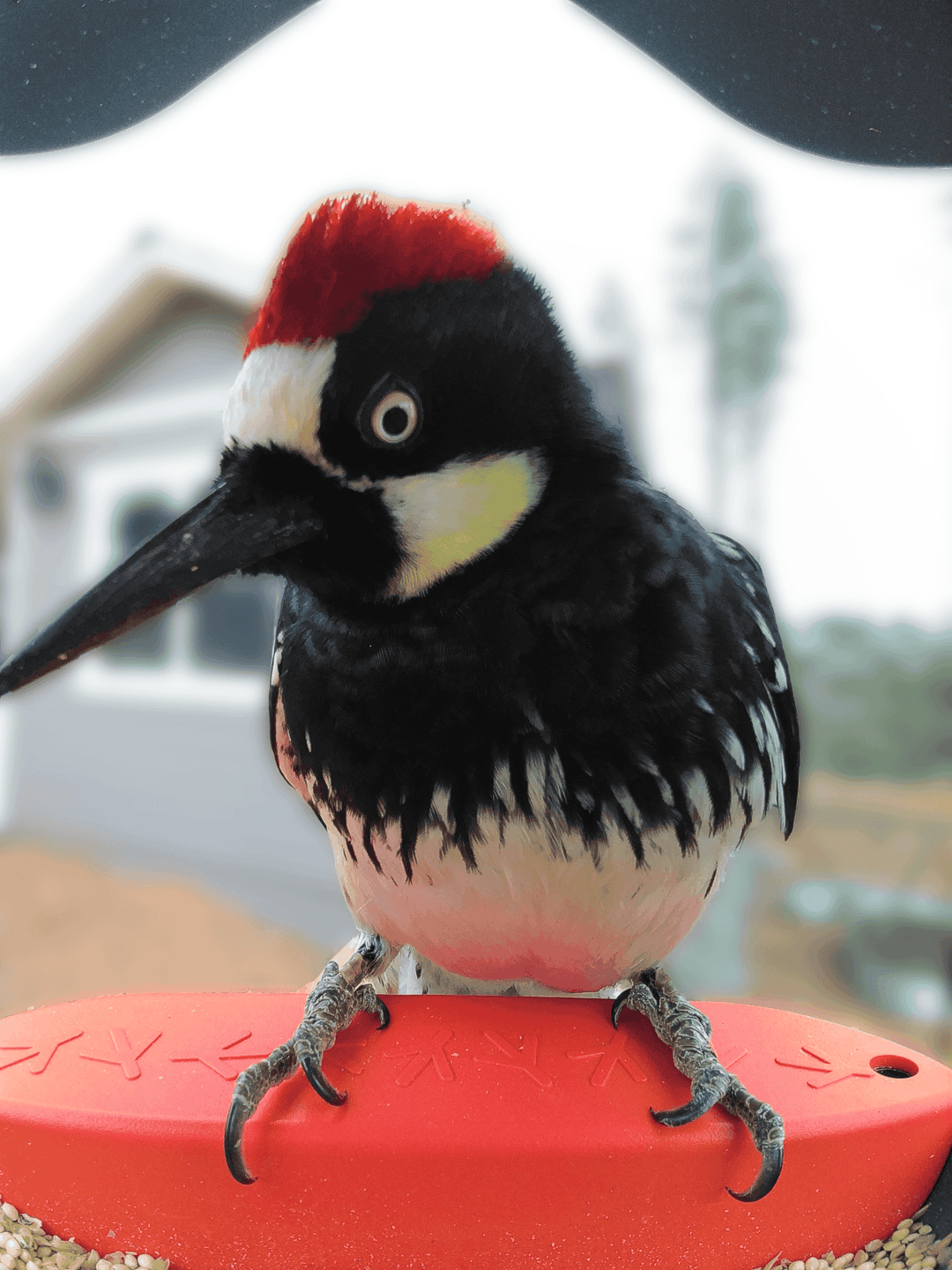
Acorn Woodpecker vs Lesser Spotted Woodpecker
The Acorn Woodpecker has a distinctive clown-like face pattern with a red cap and a black and white face, unlike the Lesser Spotted Woodpecker's barred pattern and lack of strong facial color contrast.
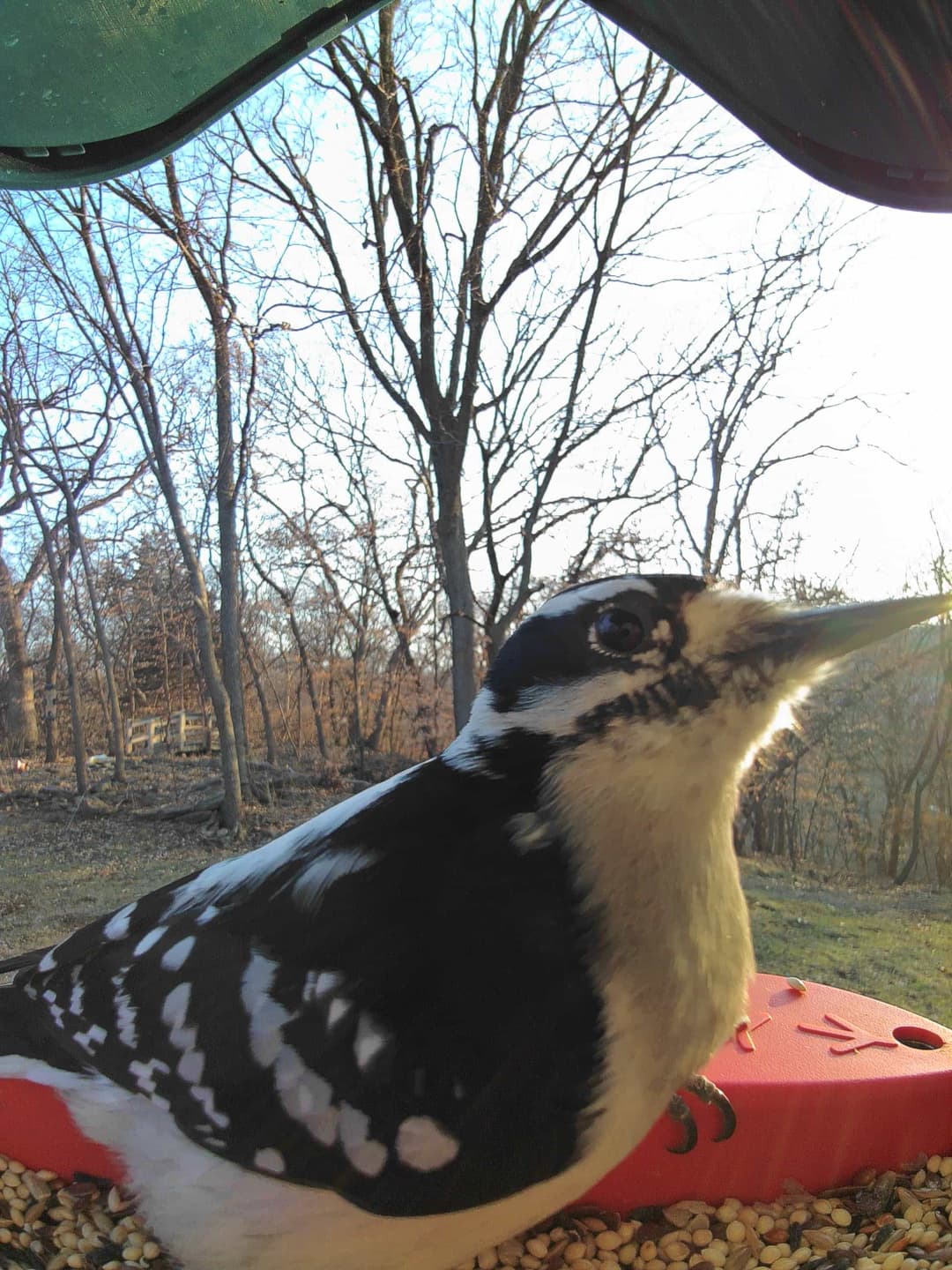
Hairy Woodpecker vs Lesser Spotted Woodpecker
Similar to the Downy Woodpecker but larger, the Hairy Woodpecker has a robust bill and more pronounced black and white coloring. In contrast, the Lesser Spotted Woodpecker is smaller and has a more even, barred pattern.
Breeding and nesting habits of the lesser spotted woodpecker
Mating behaviors
Lesser spotted woodpeckers engage in courtship through calls and drumming, with males often displaying elaborate plumage to attract females. Pair bonding occurs in late winter.
Nesting details
They prefer nesting in dead or decaying trees, carving out cavities with their beaks. Suitable woods include deciduous types. Gardens with mature trees can attract nesting pairs by ensuring available deadwood and reducing excessive pruning.
Eggs and chick-rearing
Females lay 3-5 white eggs, incubated by both parents. After hatching, chicks are fed by both adults, relying on a diet of insects until they fledge at around three to four weeks old.
What does a lesser spotted woodpecker like to eat?
Berries
Fruits
Insects
Snails
Spiders
Natural diet
The lesser spotted woodpecker primarily feeds on insects and their larvae, which it extracts from tree bark using its strong beak. It favors beetles, ants, and caterpillars. During the spring and summer seasons, it may also consume spiders and a variety of small invertebrates. Its diet can occasionally include tree sap, fruits, and seeds, providing additional nutrients and energy.
Bird feeders
At bird feeders, the lesser spotted woodpecker might consume suet, which provides necessary fats and energy, especially in colder months. It may also eat peanuts, crushed sunflower seeds, or other nuts when available. While less common than larger woodpecker species, this bird could occasionally visit feeders, especially in areas where their natural food is scarce.
Favorite snacks
Lesser Spotted Woodpeckers love insects, seeds and fruits. For the best results, we recommend Bird Buddy seeds. They are not only loved by these birds but are also expertly chosen for the season.
Feeder types
Suet feeders or seed feeders can be used to attract lesser spotted woodpeckers. Position them in a quiet and safe position, preferably close to a tree trunk or dense bush. The birds will feel more secure visiting the feeder in this setting.
Fun tricks
Creating a habitat that mimics the Lesser Spotted Woodpecker’s natural environment can make your yard more appealing. This may involve leaving a dead tree standing if it’s safe or adding a bird bath. Don't forget they love their privacy, so give them some quiet space.
Bird buddy recommendation
As the favorite among many birds, Bird Buddy seeds are recommended for attracting Lesser Spotted Woodpeckers. Their specialized blend ensures they are always seasonally appropriate, thereby attracting more birds to your yard.
Where can you find lesser spotted woodpeckers?
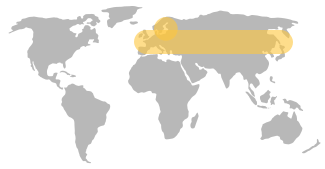
Primary habitat
The lesser spotted woodpecker prefers deciduous forests, across Europe and parts of Asia. It is fond of aged woods with a rich undergrowth.
Additional range
This species occasionally ventures into orchards and parks, and adapts to diverse climates from chilly Scandinavian forests to Mediterranean woodlands.
Do they migrate?
The lesser spotted woodpecker generally does not migrate and is largely resident throughout its range. It inhabits Europe, northern Asia, and parts of North Africa, preferring deciduous woodlands, often with a good mix of ancient trees. While it primarily stays within its breeding territory year-round, some slight local movements may occur in response to food availability, particularly outside the breeding season. In winter, the lesser spotted woodpecker may forage in mixed or coniferous woodland if food is scarce. However, these movements are not considered true migration and are usually limited to relatively short distances. Overall, this species is adapted to a sedentary lifestyle, relying on its habitat's stable ecosystem for sustenance throughout the year. Therefore, unlike some other woodpecker species, there is no established migratory route or timing for the lesser spotted woodpecker.
What is the role of lesser spotted woodpeckers in nature and how to protect them?
Conservation status
The lesser spotted woodpecker is currently classified as "Near Threatened" on a global scale. It faces significant threats due to habitat loss, primarily from the decline in deciduous woodlands and the removal of dead trees, which are crucial for nesting. Conservation efforts include habitat management, such as maintaining and restoring suitable woodland environments and encouraging deadwood retention. Population monitoring and public awareness campaigns are also vital for the species' conservation. While not yet endangered, the species' decreasing numbers warrant attention to prevent further decline.
Ecological role of lesser spotted woodpeckers
Its role in the ecosystem
The lesser spotted woodpecker plays a significant role in the ecosystem by controlling the population of harmful insects and pests. Primarily insectivores, they feed on insects living within tree bark, including beetles and their larvae, thus controlling their numbers and maintaining balance in the environment. Additionally, woodpeckers practice a behavior called 'anting', where they apply ants on their feathers to remove parasites, indirectly contributing to pest control. Apart from pest control, lesser spotted woodpeckers contribute to the ecosystem by acting as ecosystem engineers. They create cavities in trees for nesting, which other birds and mammals later utilize once vacated. Though they are not significant seed dispersers, their foraging behavior aids in decomposition and nutrient cycling by breaking down deadwood.
How to help protect lesser spotted woodpeckers
Preservation tips
Habitat preservation for lesser spotted woodpecker
Preserving and expanding woodlands, particularly old-growth forests, is crucial. Dead or decaying trees are essential for nesting, so refrain from removing these. Maintain varied tree species and age groups in forests. Support woodland management strategies focused on habitat diversity.
Community science initiatives
Get involved in local birdwatching groups or citizen science projects focusing on bird count or habitat monitoring. Record and share observations of lesser spotted woodpeckers to help track their populations. Encourage local schools to incorporate birdwatching into their curriculum, raising awareness among younger generations.