
Great Spotted Woodpecker
Great Spotted Woodpecker
Dendrocopos major


Quick Identification guide
Quick Identification guide
- •
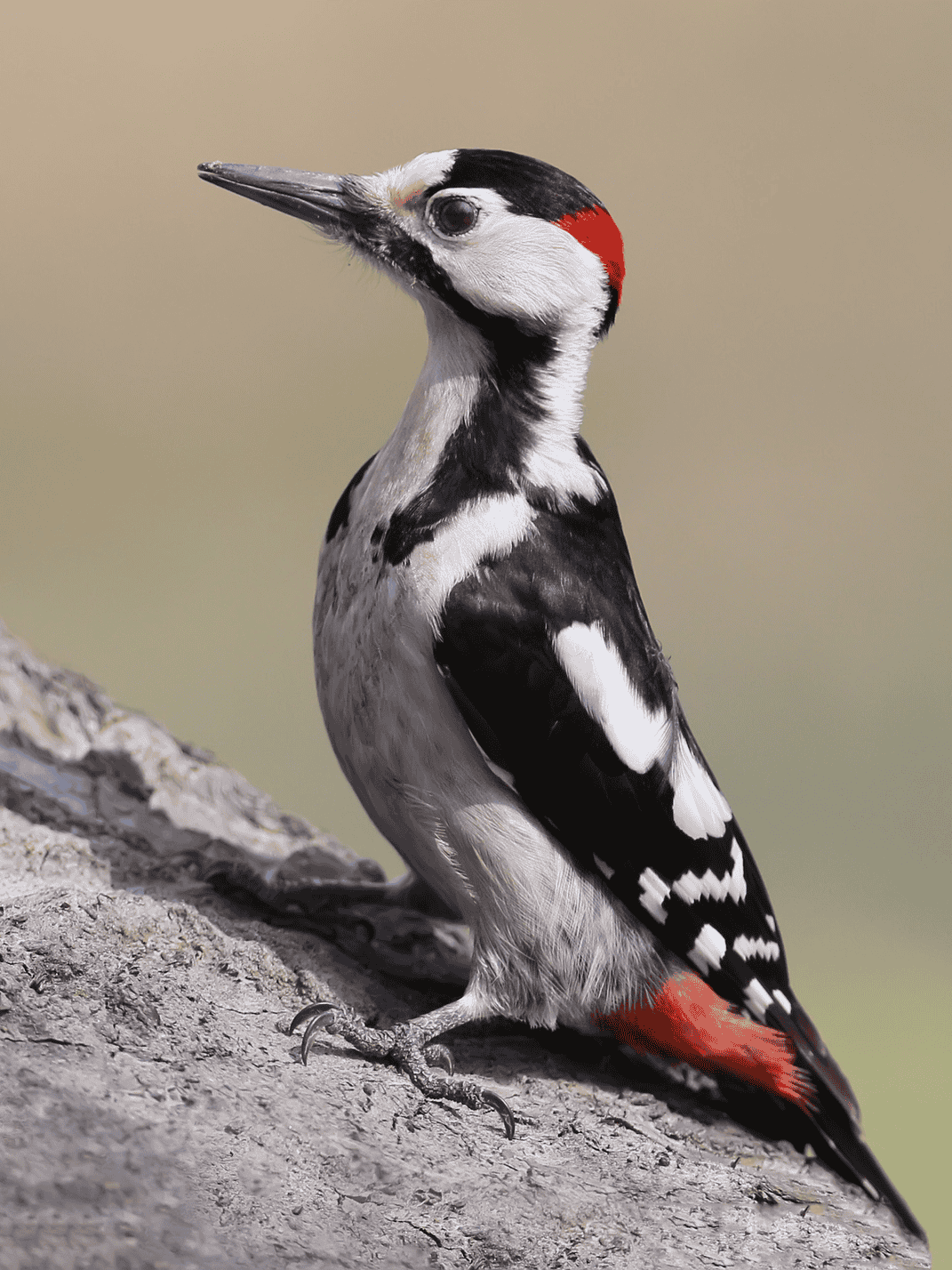
Features a distinctive black and white patterned plumage with bold white shoulder patches on the wings
- •
Displays a striking red patch on the vent (underside near the tail) and a red nape in males
- •
Has a sturdy, chisel-like beak perfect for pecking and a barred black and white back
What does a great spotted woodpecker sound like?
The great spotted woodpecker is known for its distinct "tchick" or "kik" calls which are loud, sharp, and short. Particularly during spring, these birds produce rhythmic drumming sounds by striking their beak rapidly against dead wood. They don't have a melodious song; their vocal sounds are often described as loud, high-pitched, and fast. The vocalizations are typically heard during breeding season or when the bird feels threatened.


Description
Did you know that woodpeckers drum to establish their territory? They can do that thanks to their shock-absorbent skulls! The great spotted woodpecker, the most common of the three woodpecker species found in the UK, gets his drumming on come springtime and you can most often find one clinging to a tree. Don't be surprised if they keep shifting out of sight of you, though. They are incredibly shy!
The great spotted woodpecker can weigh between 66to98grams and be from20to24centimeters tall.
The great spotted woodpecker typically lives up to 10 years. This lifespan is similar to other related species, such as the lesser spotted woodpecker with an average lifespan of 9 years. In contrast, the larger black woodpecker can live up to 11 years. However, these averages are subject to environmental conditions and availability of food resources.
Did you know?
Most popular questions about great spotted woodpecker
How to recognise a great spotted woodpecker?
General appearance
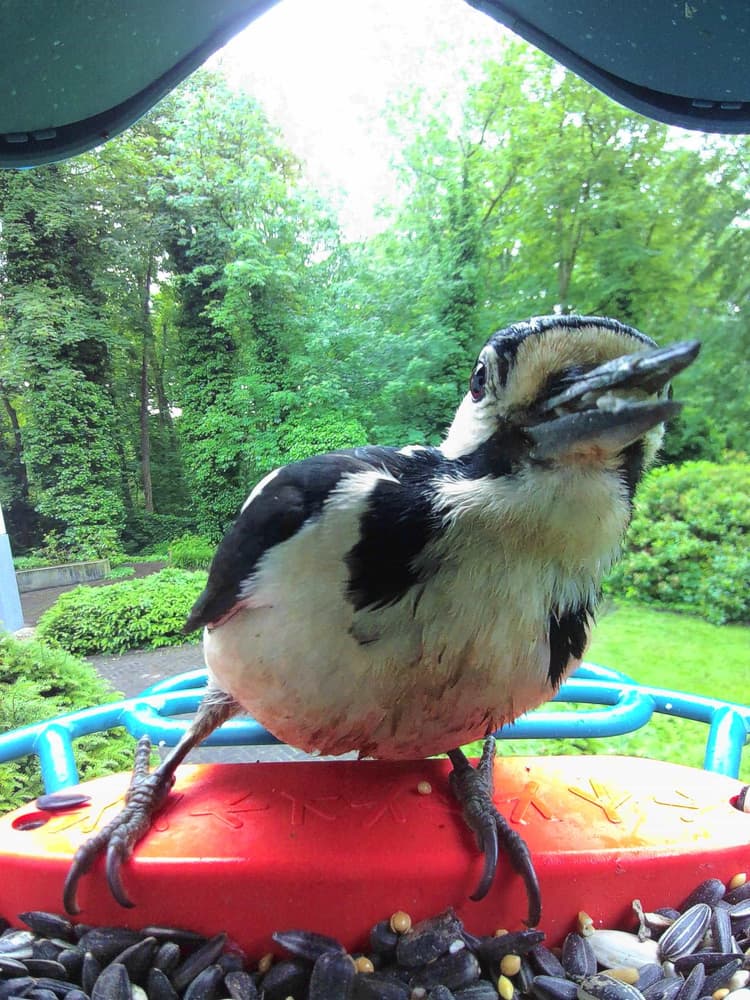
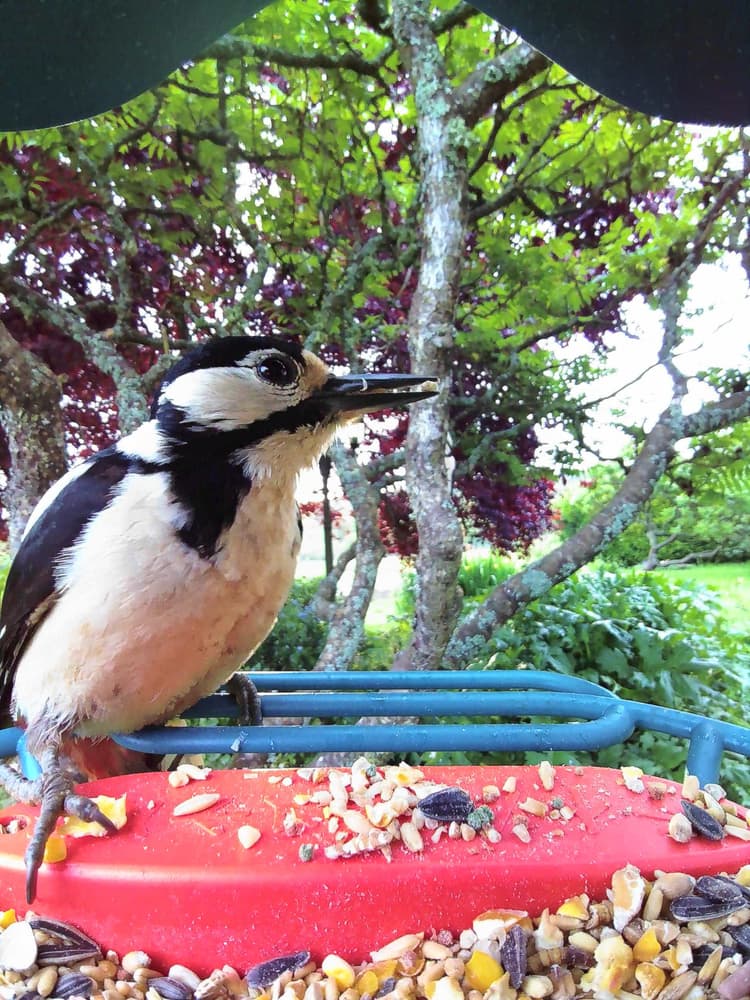
The great spotted woodpecker is a medium-sized bird, characterized by its distinct black, white, and red coloration. Its physical features include a large black stripe on its white sides, white underparts, and a large black patch on its upper parts. A red under tail can also be seen. It has a long, strong beak used for drilling into tree bark in search of insects.
Male vs female
The males are distinguishable from the females through the bright red patch they bear on the nape of their neck, which females lack. Both genders share the same size and general coloration. However, during the breeding season, both male and female develop brighter plumage, making them easier to spot.
Juvenile
Juvenile great spotted woodpeckers significantly differ from the adults. They have less distinct markings and are generally duskier in color. Unlike the adults, the juveniles have a red crown, which fades to black as they mature.
Often mistaken for
Lesser Spotted Woodpecker vs Great Spotted Woodpecker
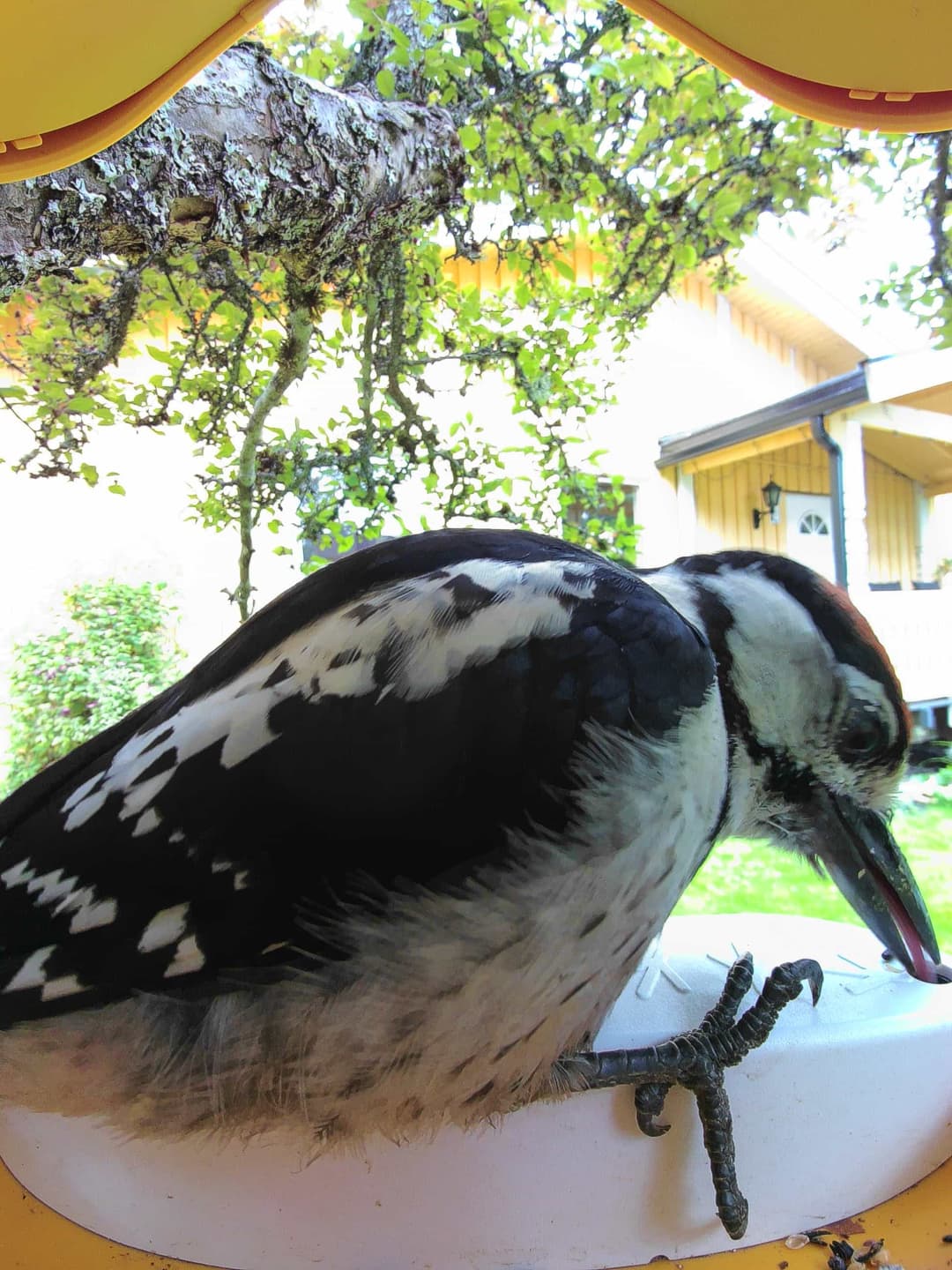
The Lesser Spotted Woodpecker is smaller in size compared to the Great Spotted Woodpecker. It has a more subtle red on its crown (only males), lacks the red under the tail, and has black and white barring on its wings and back.
Middle Spotted Woodpecker vs Great Spotted Woodpecker
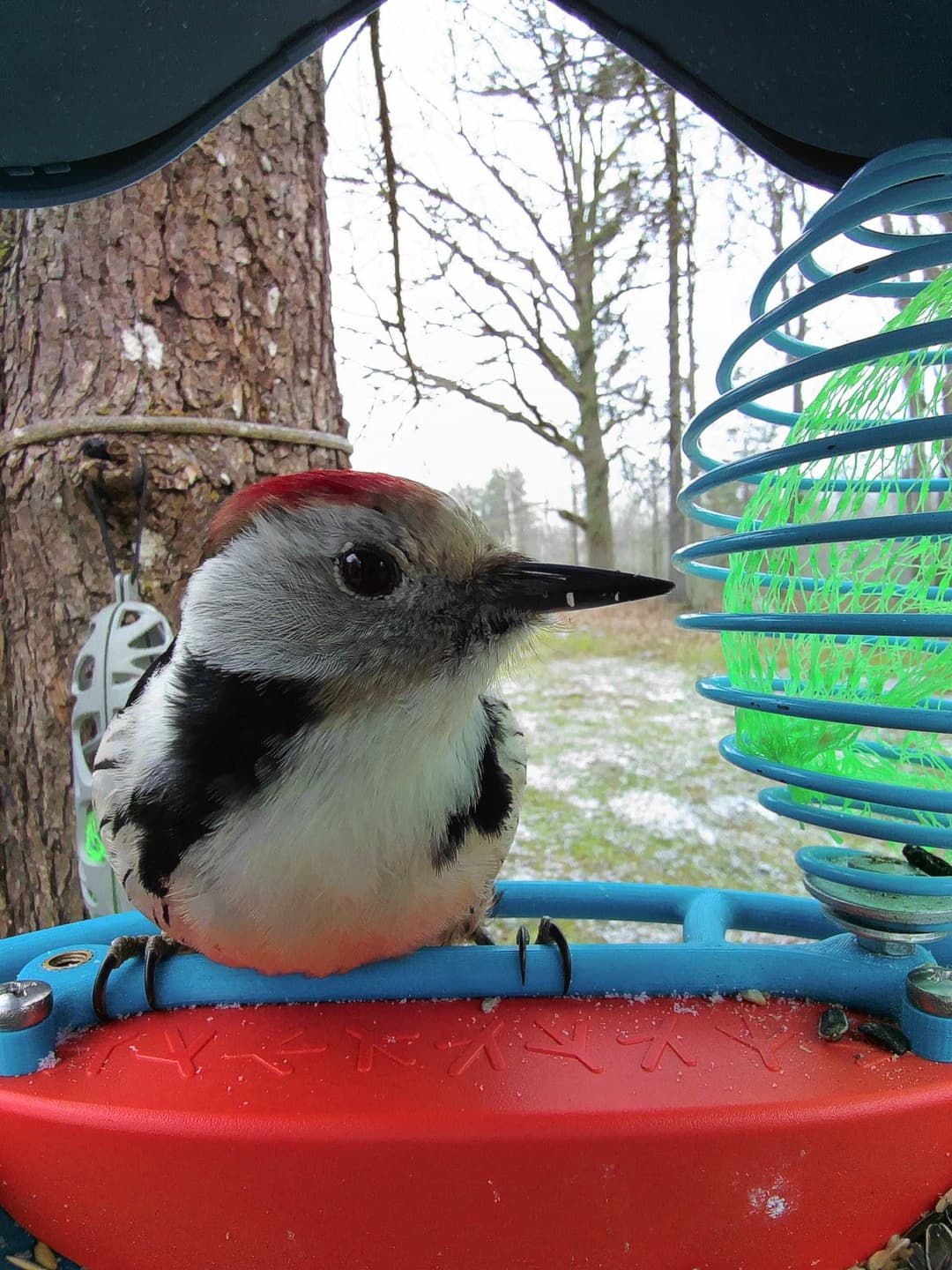
The Middle Spotted Woodpecker is similar in appearance but can be distinguished by a red crown, white cheeks and a lack of the black moustachial stripe found on the Great Spotted Woodpecker.
Syrian Woodpecker vs Great Spotted Woodpecker
The Syrian Woodpecker resembles the Great Spotted Woodpecker but can be differentiated by the absence of white bars across the shoulders and a less pronounced moustachial stripe.
Breeding and nesting habits of the great spotted woodpecker
Mating behaviors
Great spotted woodpeckers engage in courtship through drumming, which is rapid tapping on a resonant object, and calling. Males may also display by opening their wings and showing their distinctive plumage to attract a mate.
Nesting details
Nesting occurs in tree cavities that both sexes excavate. Preferred locations include deciduous trees, especially those with softer wood. The entrance hole is small to prevent predator access. Suitable materials around the cavity are typically left unlined.
Eggs and chick-rearing
Females lay 4-7 glossy white eggs. Both parents incubate for about 10-12 days until hatching. Chicks are altricial, requiring extensive care. Parents feed them regurgitated insects. After 3 weeks, the fledglings leave the nest but continue to be fed by parents.
What does a great spotted woodpecker like to eat?
Bird eggs
Birds
Carrion
Insects
Nuts
Scraps
Spiders
Suet
Natural diet
The great spotted woodpecker primarily feeds on insects and their larvae, such as beetles and ants, which it extracts from tree bark using its sharp bill. It also consumes tree sap, fruits, nuts, particularly acorns, and seeds. During breeding season, it may prey on eggs and chicks of other birds.
Bird feeders
At bird feeders, the great spotted woodpecker commonly eats peanuts, suet, sunflower seeds, and fat balls. These high-energy foods are especially important during winter when natural food sources are scarce.
Choose the right feeder
To attract great spotted woodpeckers to your yard, the right feeder is key. They prefer hanging feeders that they can easily cling onto. Suet feeders in particular are a great choice, as these birds love pecking at suet cake.
Provide their favorite foods
Great spotted woodpeckers are partial to a variety of foods, including insects, seeds, berries, and nuts. Supplementing their diet with Bird Buddy seeds can be particularly effective, as these bird seeds are seasonally selected by experts to guarantee the best results.
Create a woodpecker-friendly habitat
To further entice these woodpeckers, maintain a natural, woodsy habitat with old trees and large branches. They love to have something to peck at! Remember, a quiet place with less activity will make them feel safe and at home.
Include a water source
Birds love water, and woodpeckers are no exception! Incorporate a bird bath or water feeder in your yard to quench their thirst, and watch them flock to your space.
Have a daily feeding schedule
To establish your yard as a consistent source of food, try to stick to a regular feeding schedule. This will help make your yard a part of the woodpecker's daily routine.
Where can you find great spotted woodpeckers?
Primary habitat
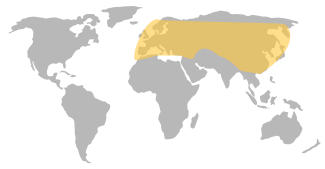
The great spotted woodpecker prefers deciduous and mixed woodlands across Europe and Asia. It favors areas with mature trees for nesting and foraging.
Additional range
This bird can also be found in parks, gardens, and even urban areas. It adapts to a range of climates, from temperate to subarctic regions, occasionally occupying coniferous forests.
Do they migrate?
The great spotted woodpecker is primarily a resident species, generally staying in one place year-round. It is found across much of Europe and parts of Asia. While it does not engage in long-distance migration like some songbirds, limited local movements may occur, especially in areas with harsher winter conditions. In regions where winter food supplies become scarce, such as northern or higher-altitude areas, some individuals might move to lower elevations or more southern localities to find sufficient food. However, these movements are not extensive and don't follow specific migratory routes as seen in true migratory species. Throughout their range, great spotted woodpeckers inhabit deciduous and mixed woodlands, preferring areas with mature trees for foraging and nesting. During the non-breeding season, they may be attracted to gardens and parks where supplemental food such as bird feeders are available. Overall, the species is highly adaptable, enabling it to survive in a variety of habitats without needing long migrations.
What is the role of great spotted woodpeckers in nature and how to protect them?
Conservation status
The great spotted woodpecker is generally considered a common and widespread species, with a stable population across much of Europe and Asia. It is not classified as vulnerable or endangered. Key conservation efforts include the preservation of mature woodlands and mixed forests, which provide essential habitats. While no significant threats impact the species globally, local populations may be affected by deforestation and habitat loss. Conservation strategies focus on sustainable forestry practices and protecting natural habitats to support their continued stability.
Ecological role of great spotted woodpeckers
Its role in the ecosystem
The Great Spotted Woodpecker plays a critical role in maintaining the ecological health of the forest ecosystems. This bird species is an effective pest controller, feeding mainly on wood-boring insects which if unchecked, could cause considerable harm to trees. By preying on these insects, the woodpecker helps to regulate their populations and prevent any detrimental effects on tree health. The woodpecker also contributes to seed dispersal by carrying seeds stuck on its beak or feet and dropping them off in different locations. Furthermore, their tree cavities, created by their pecking actions, provide nesting sites for various other bird and mammal species, thus enhancing biodiversity. The woodpeckers also play a role in nutrient recycling by breaking down wood and promoting decay. Therefore, the Great Spotted Woodpecker is an integral part of its ecosystem, contributing to pest control, seed dispersal, habitat creation, and nutrient recycling.
How to help protect great spotted woodpeckers
Preservation tips
Habitat preservation strategy for great spotted woodpecker
Ensure the preservation and restoration of woodland habitats where the species thrives. The strategy should include retaining old and dead trees which are essential for their nesting and foraging. Strict prohibition of deforestation activities, in areas where these species inhabit, could have a significant positive impact.
Promotion of community science initiatives
Promote local engagement by setting up community science initiatives focused on the conservation of the species. This could involve observing, recording and sharing information about the bird's behaviour, number and health status. Such initiatives not only increase awareness and care for wildlife but also provide valuable data for conservation scientists.