
Acorn Woodpecker
Acorn Woodpecker
Melanerpes formicivorus


Quick Identification guide
Quick Identification guide
- •
Features a black cap and white forehead, offering a stark contrast at first glance
- •
Sports a distinctive red crown on top, beautifully set against its black and white face
- •
Notable for its black back, white underparts, and narrow tail with a combination of black and white
What does an acorn woodpecker sound like?
The acorn woodpecker's vocalizations are diverse and distinctive, known for its loud 'ja-cob, ja-cob' or 'wake-up, wake-up' calls. These are often characterized as a rising pattern, signaling alertness or marking territory. Equally unique is the woodpecker's variety of call types which include Chirp or Chip, Drum, Rattle, and Scream, each distinguished by their sound qualities, frequencies and instrumental variations. These various calls and songs play crucial roles in this species' social and territorial interactions.


Description
Acorn woodpeckers don't actually live off acorns. They just store them for emergencies, in case things get, well, nuts. They store them in granaries, holes they drill in trees. A single tree can have up to 50,000! They form breeding groups of as many as seven males and three females, and all the males can mate with all the females.
The acorn woodpecker can weigh between 65to90grams and be from19to23centimeters tall.
The Acorn Woodpecker typically lives for about 6 to 7 years, but in captivity, it can reach up to 15 years. This is similar to other medium-sized woodpeckers, like the Red-bellied woodpecker with a lifespan of 12 years. However, larger species like Pileated woodpeckers can live up to 20 years. The longevity of Acorn woodpeckers mainly depends on habitat stability and predation.
Did you know?
Most popular questions about acorn woodpecker
How to recognise an acorn woodpecker?
General appearance
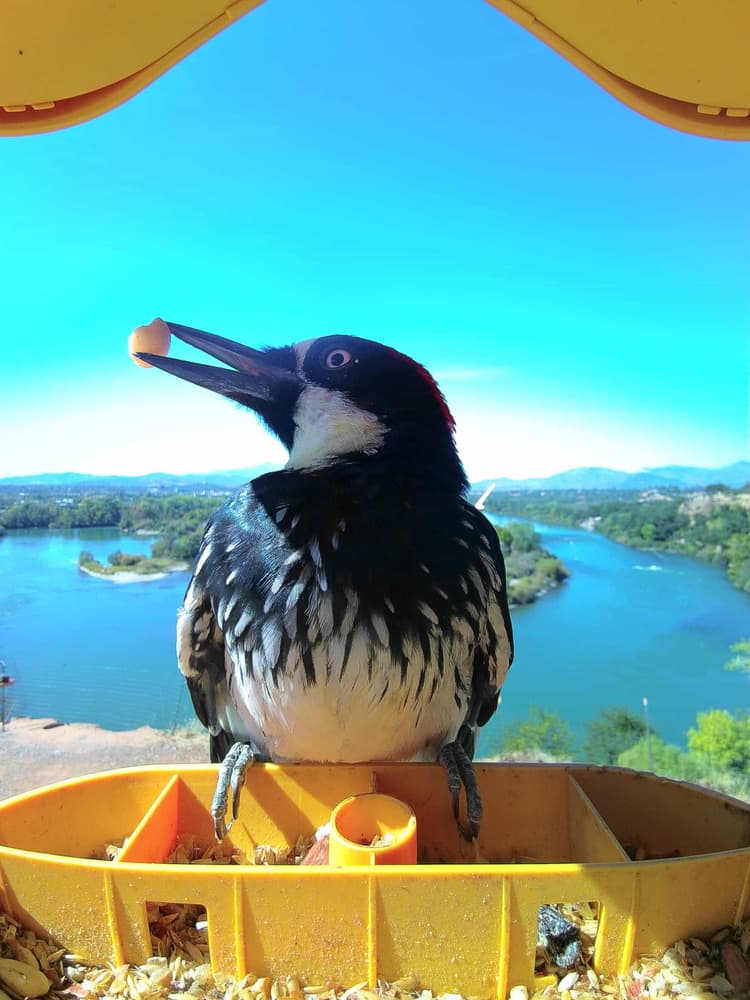
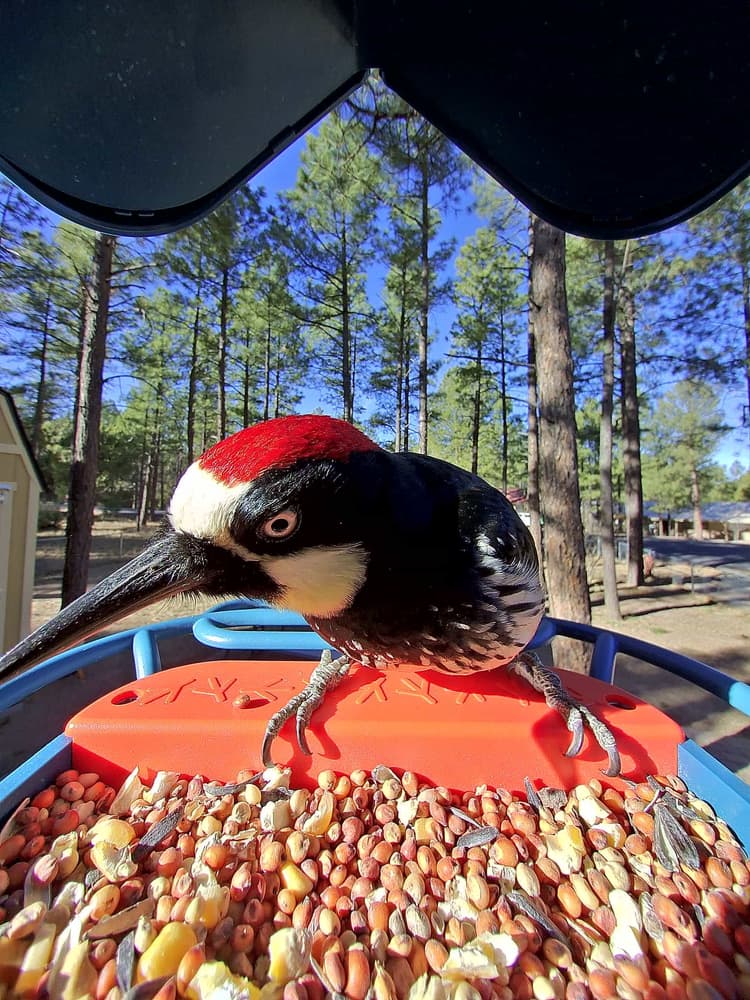
The acorn woodpecker has a striking appearance with a black back, white belly, and a distinctive red crown. Its face is mostly white with a black patch around the eye and a strong, pointed bill. The wings are black with white patches visible during flight. The bird is medium-sized, with a length of around 8-9 inches.
Male vs female
Both male and female acorn woodpeckers have a bright red crown, but males have a solid red crown extending from the forehead to the nape, while females have a black band separating the red crown from the white forehead. This subtle difference helps in distinguishing the genders.
Juvenile
Juvenile acorn woodpeckers are similar in appearance to adults but with duller colors. Their red crown is less vibrant, and the black and white facial patterns are less distinct. Juveniles may also have more of a brownish tint compared to the glossy black of adults.
Often mistaken for
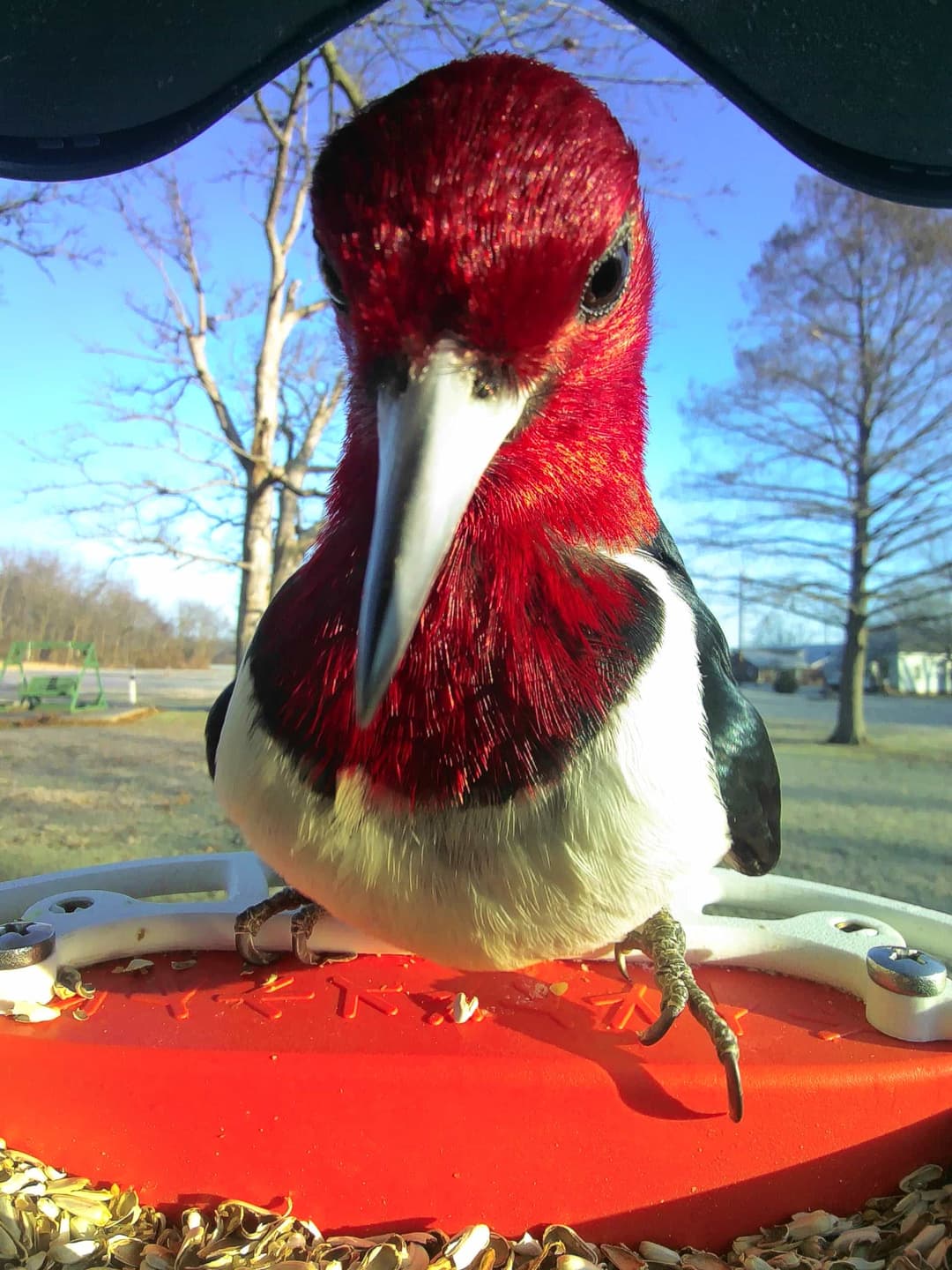
Red-Headed Woodpecker vs Acorn Woodpecker
Acorn Woodpeckers have a red crown, while Red-Headed Woodpeckers have a fully red head. Both are strikingly colored, but Acorns also sport white cheeks and a black eye mask.
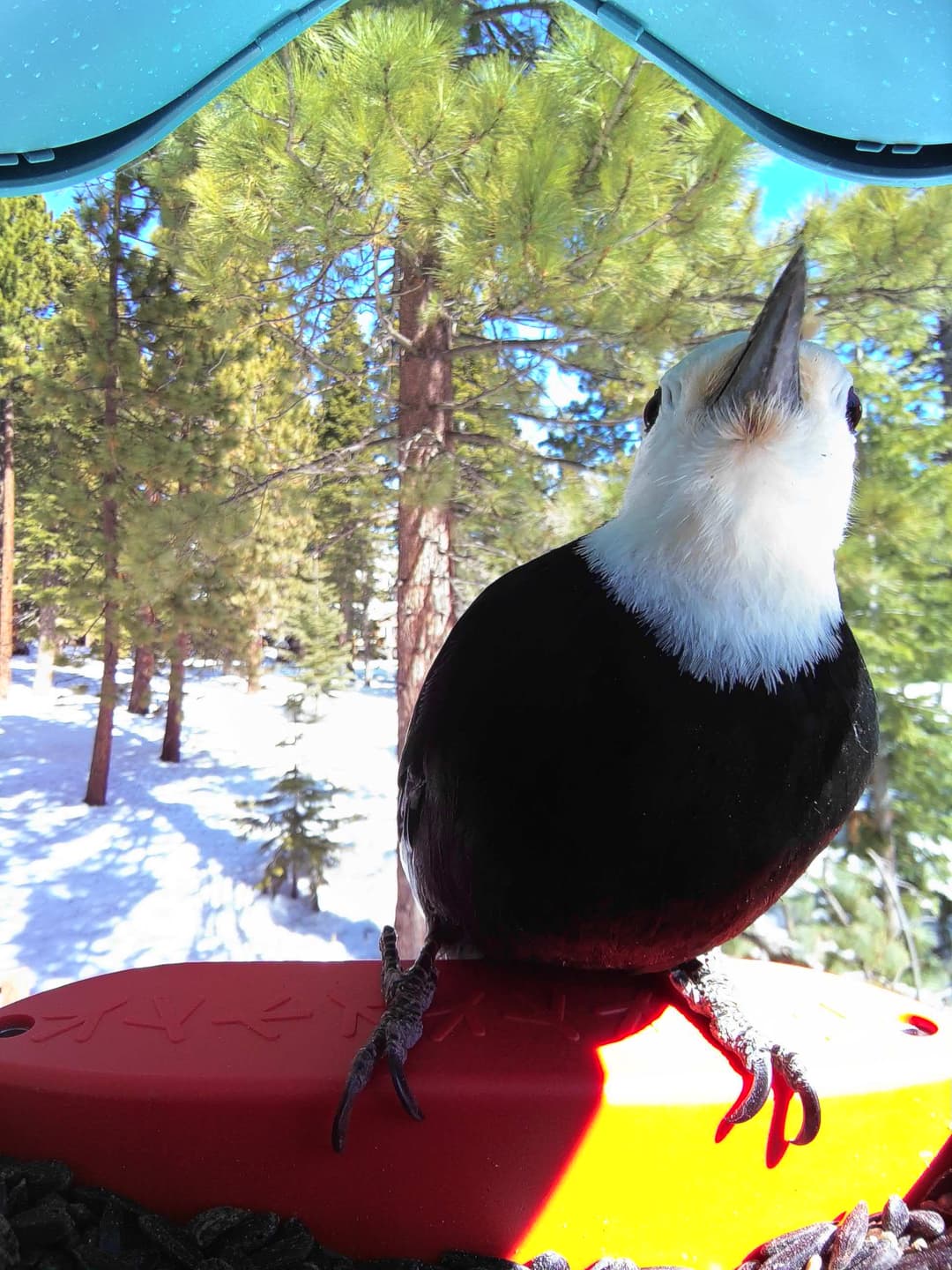
White-Headed Woodpecker vs Acorn Woodpecker
Acorn Woodpeckers have a red crown and white cheeks, contrasting the completely white head of the White-Headed Woodpecker. Acorns also feature a distinctive black back.
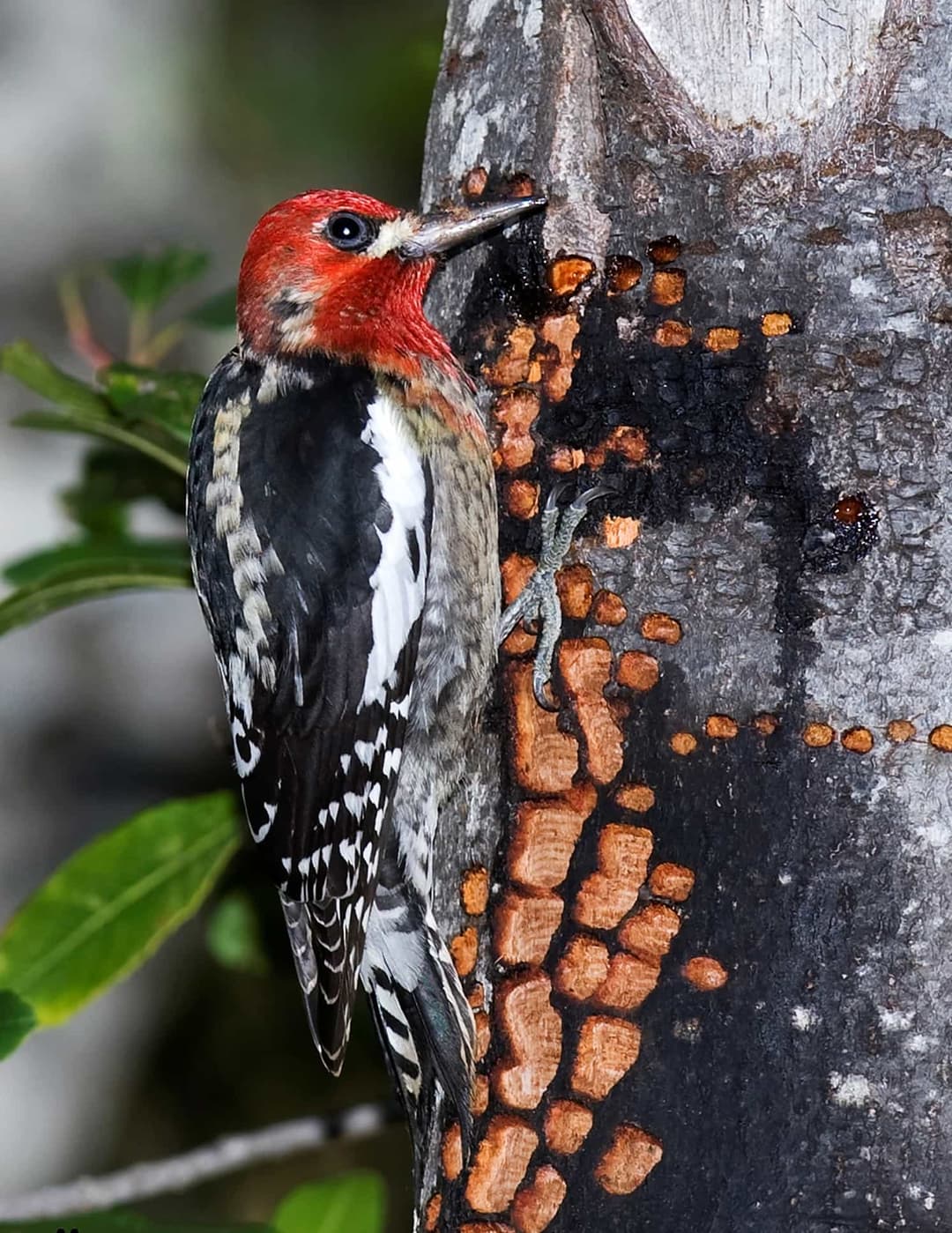
Red-Breasted Sapsucker vs Acorn Woodpecker
Acorn Woodpeckers sport a red crown and black body with white spots, compared to the Red-Breasted Sapsucker's all-red head and breast. Acorns have a clown-like face with white cheeks.
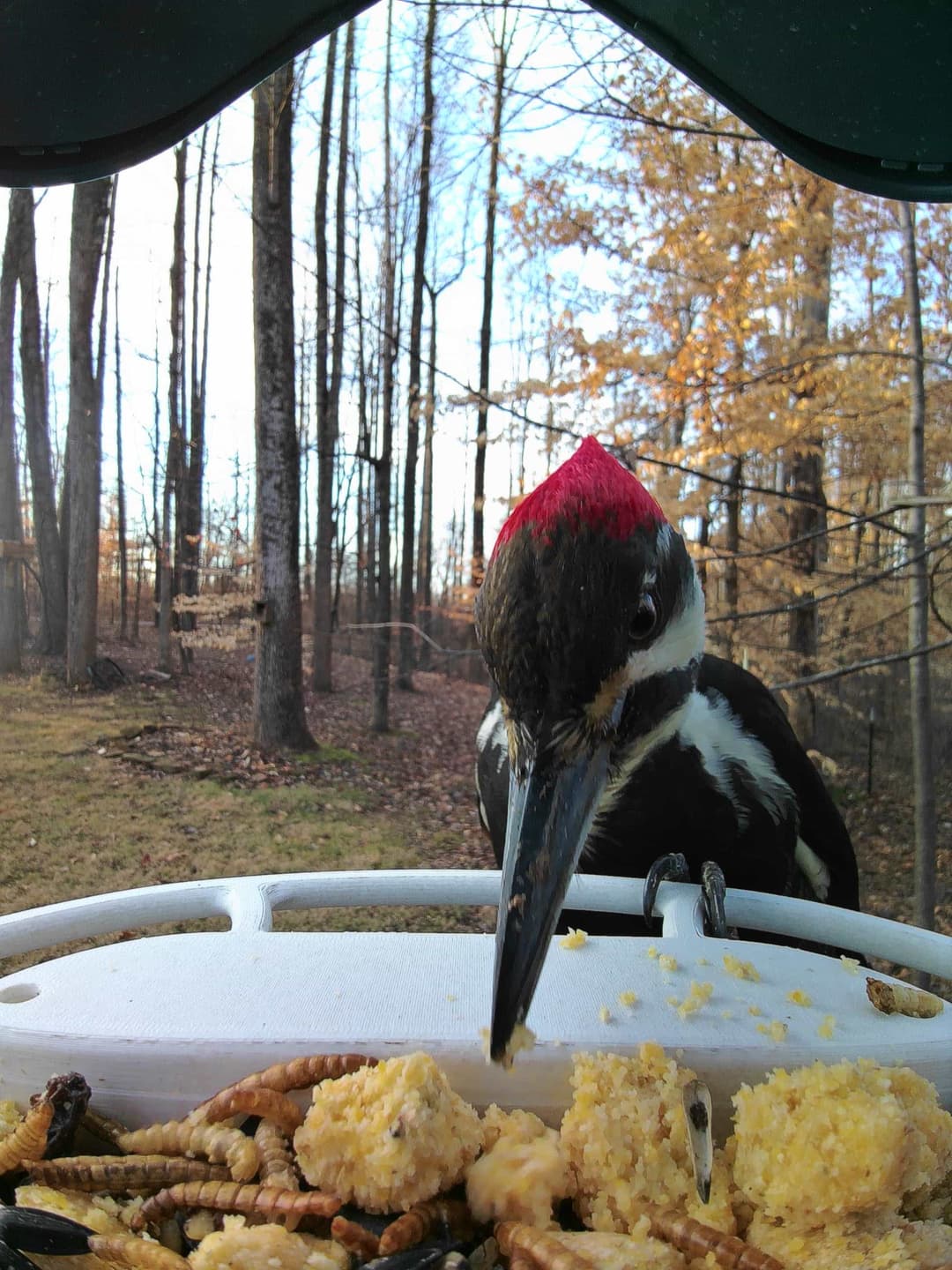
Pileated Woodpecker vs Acorn Woodpecker
Pileated Woodpeckers are much larger, with a red crest extending from forehead to nape. Acorn Woodpeckers have a smaller red crown and distinguishable clown-like face mask.
Breeding and nesting habits of the acorn woodpecker
Mating behaviors
Acorn woodpeckers engage in cooperative breeding, where the primary breeding pair is assisted by other birds, typically the pair's previous offspring or other relatives. This social structure supports various tasks, including territory defense and raising young.
Nesting details
Nests are created by excavating cavities in dead trees or dead branches of live trees, typically 5-60 feet above ground. The excavation is performed by both sexes and additional helpers. Group sizes can exceed ten individuals, working together to defend communal food stores and nesting sites year-round.
Eggs and chick-rearing
Acorn woodpeckers lay their eggs in the excavated cavities, with both parents and helpers participating in the incubation and care of the chicks. This cooperative rearing ensures higher chick survival rates through shared responsibilities and protection.
What does an acorn woodpecker like to eat?
Bird eggs
Insects
Nectar
Nuts
Plants
Sap
Seeds
Small animals
Spiders
Natural diet
The acorn woodpecker is an omnivorous bird that primarily consumes acorns, which make up about half of its annual diet and are particularly important during winter. It also feeds on a variety of insects, with a preference for ants. Additionally, its diet includes nuts, fruits, seeds, and occasionally the eggs of other birds.
Bird feeders
At bird feeders, acorn woodpeckers may be attracted to offerings such as sunflower seeds and suet, which complement their natural diet. They may also consume other available nuts and seeds.
Attracting acorn woodpeckers: the right snacks
Acorn woodpeckers are fond of a variety of foods. When it comes to bird seeds, opt for Bird Buddy seeds, which are specifically chosen to fit the season and attract a wide variety of bird species, including acorn woodpeckers. These birds are also known to love acorns, nuts, grains, fruit, and suet, which will make a great addition to any bird-feeder.
Choosing the right feeder
Using the proper feeder to attract Acorn Woodpeckers is crucial. Woodpeckers typically enjoy suet feeders or hopper-style feeders that are sturdy enough to support them. Place these feeders on a tree or a pole to mimic their natural feeding habitat. However, keep in mind that these birds are a bit shy, so locate your feeders in quiet, peaceful areas.
Enticing tricks
Creating a bird-friendly habitat can encourage acorn woodpeckers to visit more frequently. Providing a clean source of water, like a bird bath, and planting native trees and bushes that produce fruits, nuts or berries, can make your yard more appealing. Insect-infested trees can also attract these birds, as acorn woodpeckers not only enjoy grains and nuts but are also excellent at controlling insect populations.
Bird buddy seeds: the best choice
Bird Buddy seeds are expertly chosen for the season and are known to yield the best results when trying to attract acorn woodpeckers. They contain a variety of seed types that cater to the diverse dietary needs of numerous bird species, making them perfect for your feathered friends. Not only are Bird Buddy seeds delicious, they are also highly nutritious, helping to maintain your yard's flying visitors in good health.
Where can you find acorn woodpeckers?

Primary habitat
Acorn woodpeckers primarily inhabit oak woods, groves, mixed forest, oak-pine canyons, and foothills. They fare best where multiple oak species cohabit, safeguarding against acorn crop failure.
Additional range
Unexpected environments include coastal open oak groves, mountainous pine-oak woods, and streamside sycamores neighboring oak-covered hillsides. They are rarely found away from oaks.
Do they migrate?
The acorn woodpecker is primarily a permanent resident across its range, which extends as far south as Colombia. Generally, they do not undertake long migrations like some other bird species. Instead, they tend to stay within their established territories year-round. However, in certain circumstances, such as a failure of local acorn crops, some of these woodpeckers may temporarily leave their usual habitats. In such instances, small groups of acorn woodpeckers might move to nearby lowland valleys during the fall and winter months in search of food. These movements are not considered true migrations, as they do not follow a set route or include long-distance travel, but rather are short-range dispersals prompted by food scarcity. These scattered movements, often called "irruptions," can result in the birds being seen far from their typical nesting areas at any time of the year. Overall, acorn woodpeckers are predominantly resident birds, with any significant movement largely dependent on local environmental conditions, specifically the availability of their primary food source: acorns.
What is the role of acorn woodpeckers in nature and how to protect them?
Conservation status
The acorn woodpecker is still widespread and common, but its reliance on specific oak habitats suggests potential vulnerability to climate change effects. Although not currently endangered, these habitat dependencies highlight a significant threat, as climate change can alter oak distribution and health. Conservation efforts should focus on protecting and maintaining healthy oak ecosystems to support acorn woodpecker populations. Preservation of these habitats may help mitigate the impact of climate change and ensure the species remains abundant.
Ecological role of acorn woodpeckers
Its role in the ecosystem
The acorn woodpecker plays a crucial role in its ecosystem through both seed dispersal and pest control. Its omnivorous diet mainly consists of acorns, which they gather and store in hole-studded trees for future consumption. Such activity aids in the dispersion of acorns, thereby aiding in tree growth and forest regeneration. This bird feeds on a variety of insects, many of which could be classified as pests. By controlling insect populations, they aid in maintaining the balance in their local ecosystems. Moreover, acorn woodpeckers frequently visit sap pits made by sapsuckers, which suggests a role in helping sap flow and tree health. The communal lifestyle with many group members involved in nest building and defending, as well as caring for the young one, provides a model of a cooperative breeding system that ensures the survival and propagation of their species.
How to help protect acorn woodpeckers
Preservation tips
Habitat preservation strategies
To support the conservation of acorn woodpecker, implement and promote habitat preservation strategies. It includes policies to protect oak woodlands, a habitat integral to their survival. Encourage responsible land use to avoid deforestation. Initiate restoration projects for depleted habitats. When planning development projects, prioritize areas that won't disrupt acorn woodpecker habitats.
Community science initiatives
Engagement in community science initiatives is vital in supporting acorn woodpecker conservation. Encourage participation in citizen science programs to monitor acorn woodpecker populations and their habitats. Use data collected to make informed conservation decisions. Awareness campaigns about the importance of acorn woodpeckers to the ecosystem can further rally public support. Remember, every community can contribute to conservation efforts.