
Nuttall’s Woodpecker
Nuttall’s Woodpecker
Dryobates nuttallii


Quick Identification guide
Quick Identification guide
- •
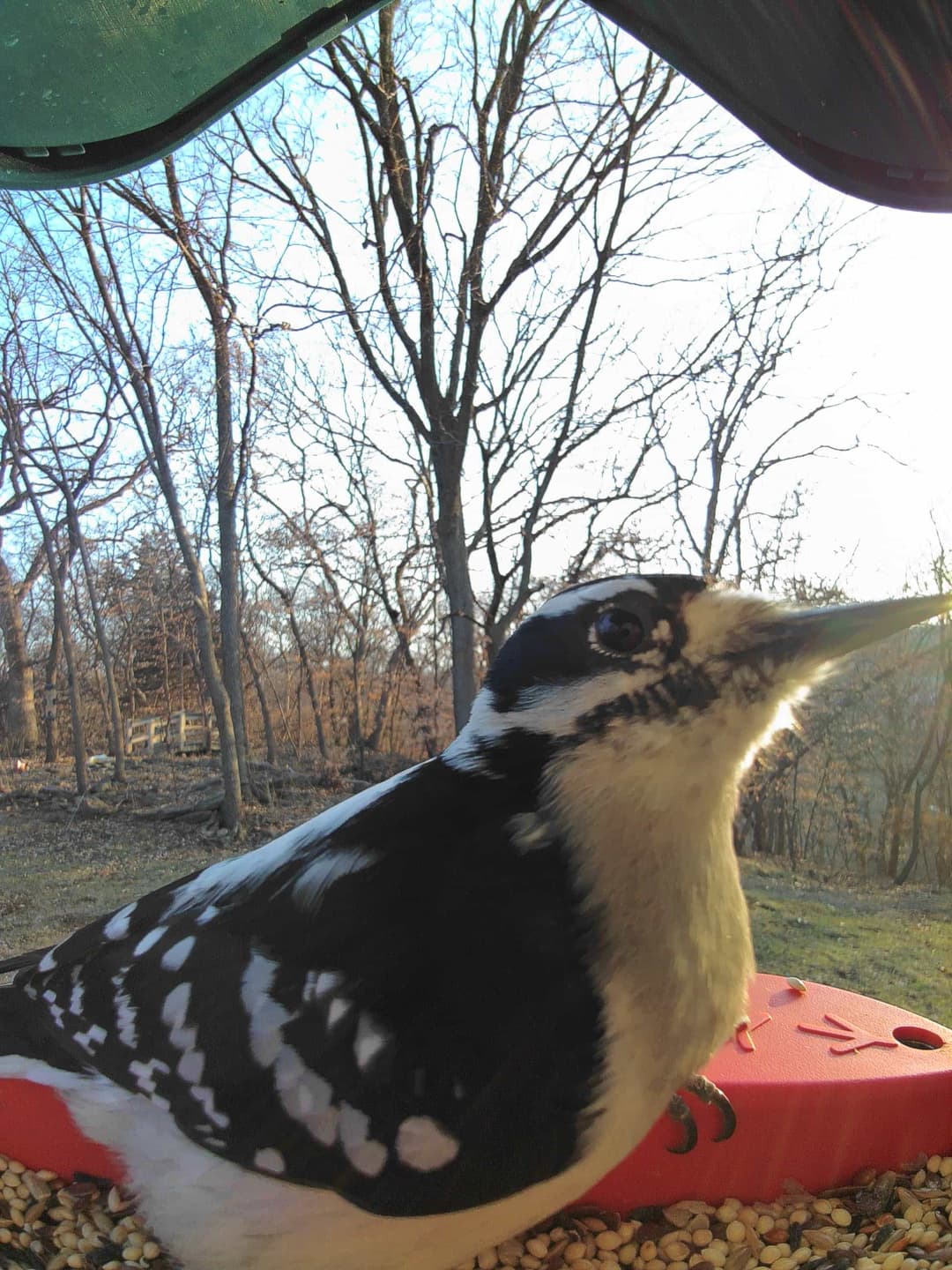
Features a black-and-white striped back and a plain white underbelly, giving it a distinctive pattern
- •
The head is adorned with a black cap, while males boast a small red patch on the back of the crown
- •
Exhibits a straight, sharp black beak and short, stout build characteristic of woodpeckers
What does a Nuttall's woodpecker sound like?
The Nuttall’s woodpecker displays a dynamic vocalization pattern. Common calls include a rolling, flat call, often noted as a "prreep," or a distinct "pit-it" sound. Additionally, its call repertoire encompasses a variety of types including Chirp/Chip, Drum, Rattle, and Trill. These calls and songs are typical vocalizations, eliciting a vibrant mix of sounds that characterize this species.


Description
Did you know that Nuttall's woodpeckers live almost exclusively in oak forests but don't eat acorns? That's what I call ironic. Their name pays homage to naturalist Thomas Nuttall, who inspired the creation of The Nuttall Ornithological club, the first North American organisation dedicated to birds!
The Nuttall's woodpecker can weigh between 32to47grams and be from16to18centimeters tall.
The Nuttall’s woodpecker typically can live up to 6 years in the wild. Life expectancy is relatively similar to related species such as the Downy woodpecker which has a lifespan of about 1-2 years less. Natural logevities can be impacted by threats like habitat loss or predation. Longer lifespans tend to be recorded in captivity due to controlled environments.
Did you know?
Most popular questions about Nuttall's woodpecker
How to recognise a Nuttall's woodpecker?
General appearance
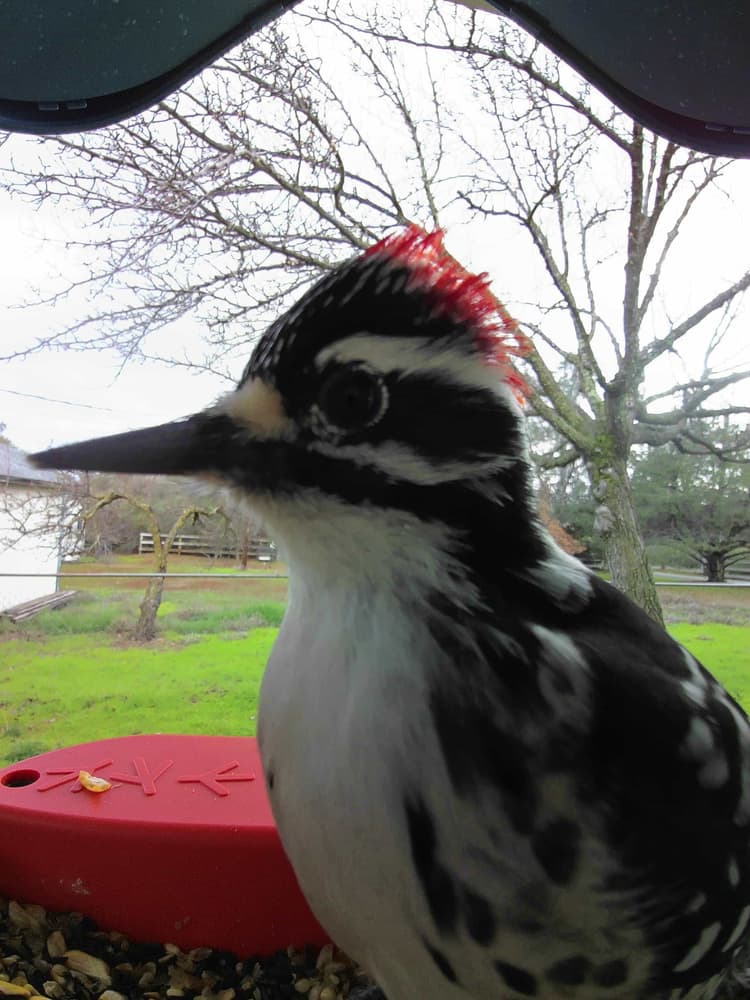
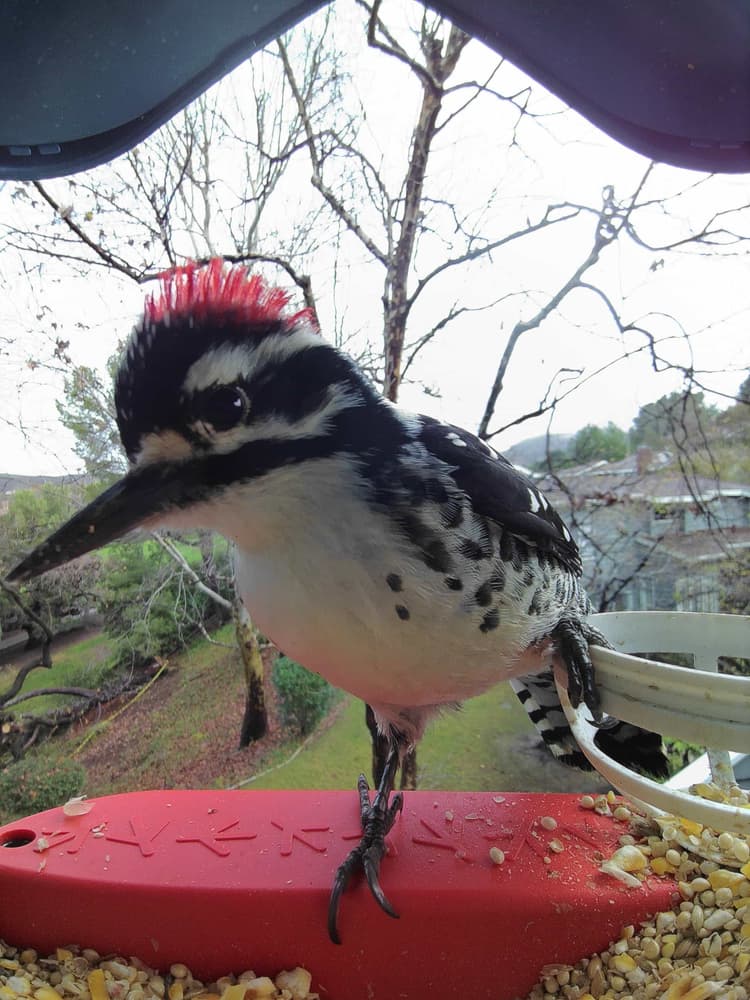
The Nuttall's woodpecker is a small bird primarily black and white. It features a distinctive black and white barred pattern on its back and wings, while the underparts are white with subtle black streaks on the sides. The face has a black and white pattern, with a white stripe running below the eye. The small size and intricate patterning help distinguish it from other woodpecker species.
Male vs female
Males have a small red patch on the back of the head, which is absent in females. Females have a similar black and white barring and streaking pattern but lack the red coloring entirely. Both genders share the same habitat and range, making the red patch a key identifier for males.
Juvenile
Juveniles resemble adults but are generally duller in coloration. They may have some brownish tones in their plumage, and the streaking on the underparts is less defined. Juvenile males might show a smaller or more indistinct red patch compared to adult males. As they mature, their plumage becomes more vivid and defined.
Often mistaken for
Ladder-Backed Woodpecker vs Nuttall’s Woodpecker
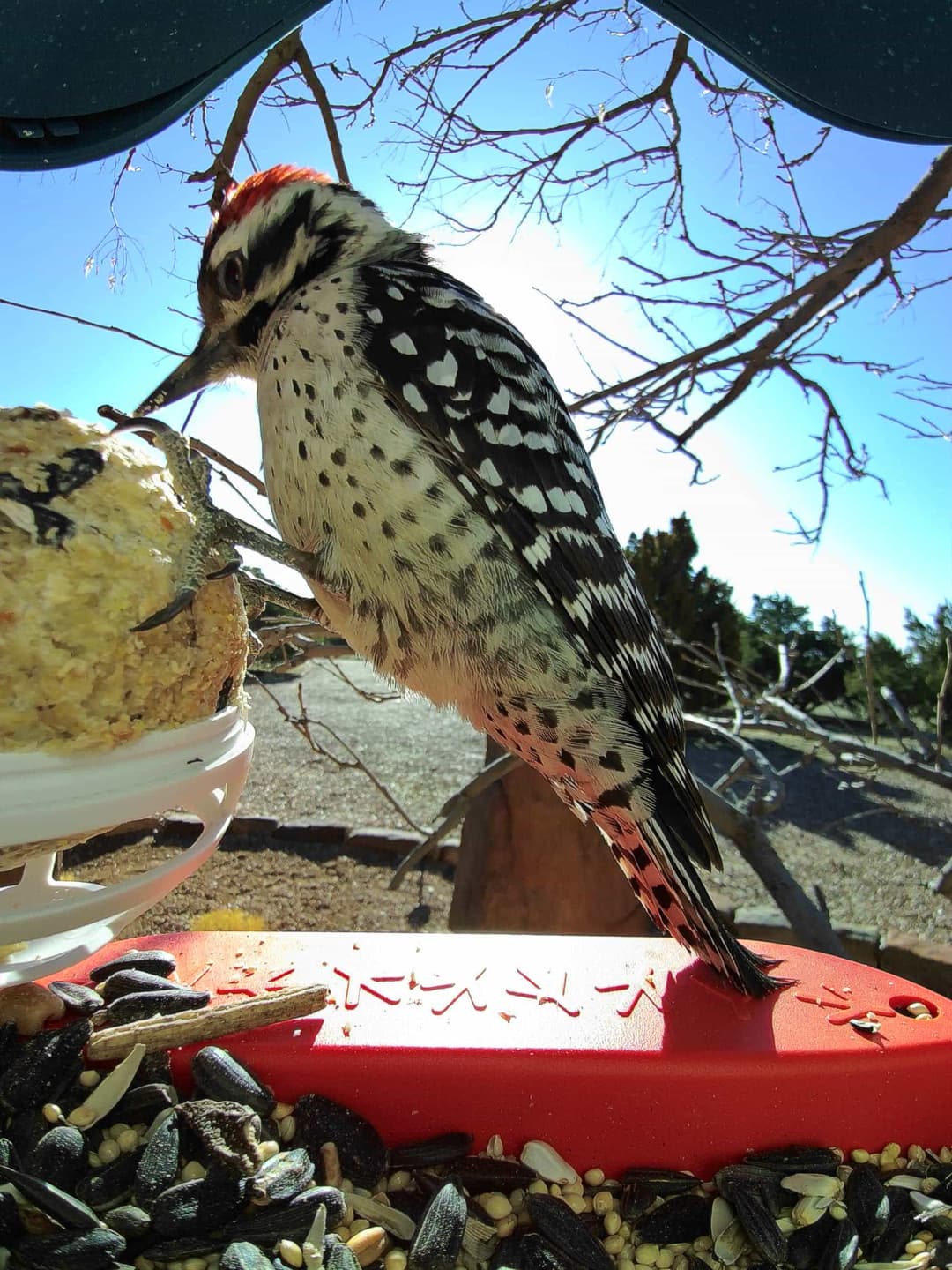
Nuttall’s Woodpecker and Ladder-Backed Woodpecker are similar in size and coloring. Look for the Nuttall’s solid black back with white spotting, unlike the Ladder-Backed's more uniform ladder-like black and white stripes across the back.
Downy Woodpecker vs Nuttall’s Woodpecker
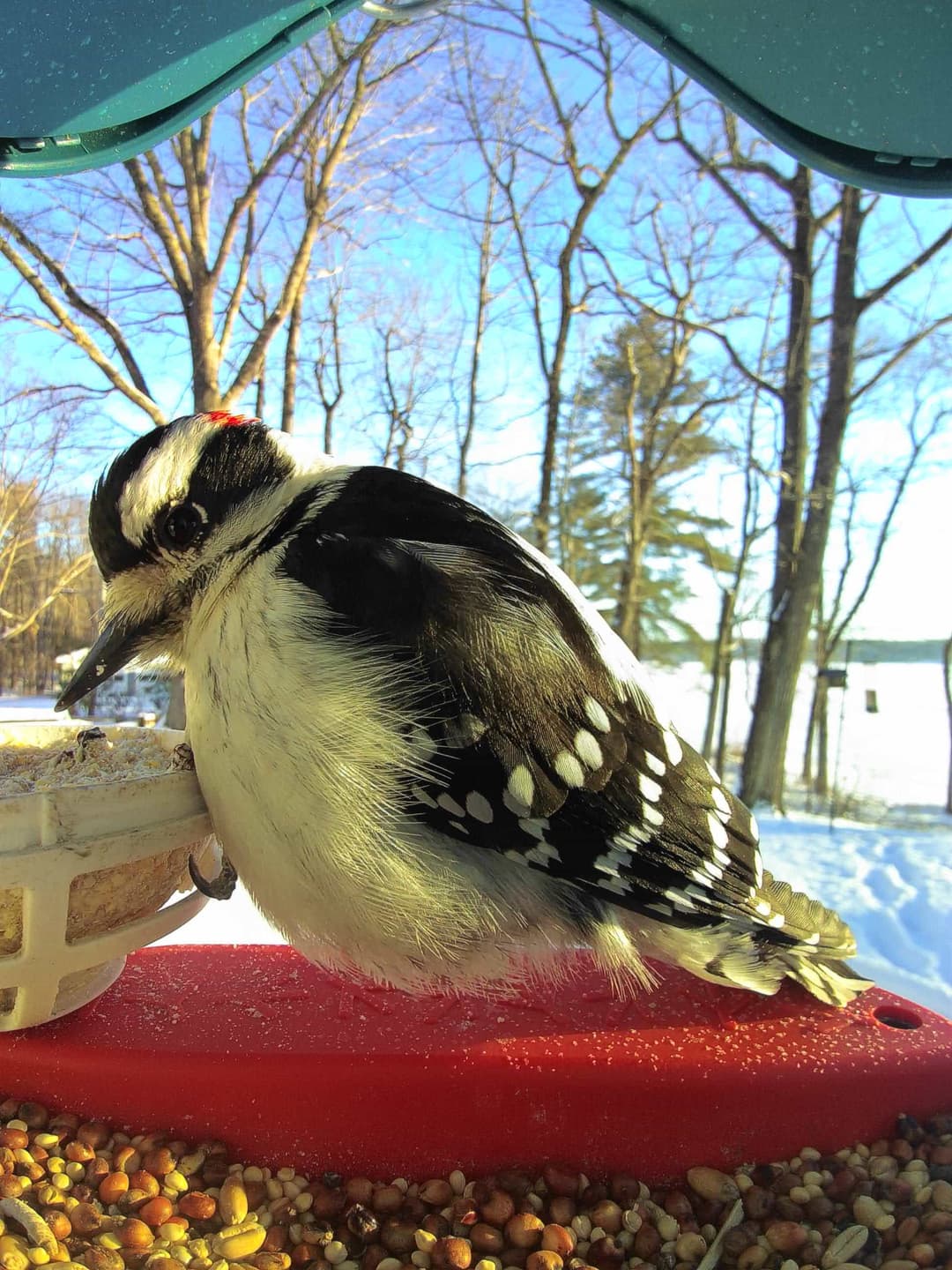
Nuttall’s Woodpecker resembles the Downy Woodpecker, but the Nuttall’s has a distinctive black and white barred pattern along its back compared to the Downy’s more sporadic black markings. Also, check for Nuttall’s lack of a white outer tail striping.
Hairy Woodpecker vs Nuttall’s Woodpecker
The Nuttall’s Woodpecker is smaller than the Hairy Woodpecker. Note the Nuttall’s black and white striped face and distinct lack of a hairy’s larger, mostly white outer tail feathers. Nuttall's is also more adapted to scrubby woodlands.
Breeding and nesting habits of the Nuttall's woodpecker
Mating behaviors
Members of a pair may maintain a bond year-round. Courtship displays involve raising head feathers, moving the head side to side, and a distinctive fluttering flight.
Nesting details
Nuttall's Woodpecker typically nests in cavities in live or dead trees including cottonwood, willow, or sycamore, often near oak woods. Occasionally, they use holes in utility poles or fence posts. The cavity is usually 3-35 feet off the ground, with potential heights reaching 60 feet or more. The male primarily excavates a new cavity each year.
Eggs and chick-rearing
Information on egg-laying and chick-rearing is not provided. To encourage nesting, maintain mature trees and create a habitat with a mix of tree species, prioritizing those commonly used for nesting.
What does a Nuttall's woodpecker like to eat?
Fruits
Insects
Nuts
Seeds
Natural diet
The Nuttall's woodpecker primarily feeds on insects, making them the cornerstone of its diet. It shows a particular preference for beetles, but it also consumes caterpillars, ants, and true bugs, among other insects. In addition to insects, the woodpecker's diet includes some plant material such as nuts, seeds, fruits, and berries. Although it is closely associated with oak trees, it rarely eats acorns, only a small number.
Bird feeders
Common foods for Nuttall's woodpecker at bird feeders typically include suet and sunflower seeds, which mimic the plant-based food sources the bird consumes in the wild.
Setting up the right bird feeder
Nuttall's Woodpeckers are attracted to suet feeders. Choose a sturdy, ideally cage-style feeder that provides plenty of area for them to cling. A good tip is to place the feeder near a tree or against a backdrop of vegetation to make it more attractive to the bird.
Choosing the right snacks
Nuttall's Woodpeckers are fond of a variety of insects, berries, acorns, and seeds. Suet is particularly loved by them, making it an excellent choice for feeder food. Additionally, using Bird Buddy seeds can be extremely effective as they're chosen by experts for the season, attracting a variety of birds, including the Nuttall's Woodpecker.
Create an inviting environment
Adding elements such as a birdbath or a birdhouse can make your yard more appealing to Nuttall's Woodpeckers. They tend to prefer nesting in dead trees or dead parts of live trees, so if you have those in your yard, it’s a bonus. Integrate these elements along with your feeder setup, and you might find these birds dropping by and maybe even staying for a sing-along!
Where can you find Nuttall’s woodpeckers?

Primary habitat
The Nuttall’s woodpecker typically dwells in wooded canyons and foothills, particularly those populated by oaks. It is also found in pine-oak woods and river woods.
Additional range
In Southern California, it can be found in riverside cottonwoods, sycamores, and willows, even in the absence of oaks. On the eastern edge of its range, it ventures into mesquite or other dry woods.
Do they migrate?
The Nuttall’s woodpecker is a permanent resident throughout its range and does not migrate. This bird species is known for remaining in the same general area year-round, rarely wandering far from its nesting sites. They prefer staying close to their established territories, which are primarily located in California's oak woodlands and riparian corridors. This sedentary behavior means that the Nuttall’s woodpecker does not undertake any long-distance migrations typical of some other bird species. Instead, they focus on maintaining their territories in their preferred habitats, where they can find food and suitable nesting locations. This non-migratory pattern is consistent with their behavior as a species that thrives in a specific ecological niche, emphasizing the importance of conserving their natural habitats to ensure their continued survival.
What is the role of Nuttall’s woodpeckers in nature and how to protect them?
Conservation status
The Nuttall’s woodpecker is considered a common species, with populations appearing to be stable. It is not currently classified as vulnerable or endangered. Key conservation efforts focus on habitat preservation, especially in oak woodlands and riparian areas where they thrive. Significant threats include habitat loss due to urban development and deforestation. Conservationists emphasize the importance of protecting these habitats to ensure the continued stability of the Nuttall’s woodpecker population.
Ecological role of Nuttall’s woodpeckers
Its role in the ecosystem
The Nuttall’s woodpecker plays a significant role in the ecosystem as it contributes to the natural control of pest populations. Its diet consists mostly of various insects, particularly beetles, caterpillars, ants, and true bugs. By feeding on these insects, the woodpecker helps in keeping the insect population in check, consequently preventing potential damage to the vegetation in their habitat. Furthermore, their different foraging behavior between sexes diversify their impact on ecosystems. Another role of the Nuttall’s woodpecker is seed dispersal. Even though it eats small numbers of acorns, its occasional consumption and consequent excretion of seeds can contribute to the dispersion and germination of certain plants in the ecosystem. They also contribute to reforestation, as their abandoned cavities provide nesting sites for other species. Last but not least, since they create a new nest cavity every year in live or dead trees, they contribute to the decomposition process of dead trees and the nutrient cycle.
How to help protect Nuttall’s woodpeckers
Preservation tips
Habitat preservation strategies for nuttall’s woodpecker
To support Nuttall's Woodpecker conservation efforts, preserve habitats containing oak-pine mixtures to encourage nesting and feeding. Existing nests should be left undisturbed, and the use of insecticides should be minimized as they can reduce the woodpecker's food source.
Community science initiatives for nuttall’s woodpecker conservation
Encourage community involvement in conservation through citizen science projects. This can include bird census activities to monitor population trends and health. Report sightings to ebird.org or the local Audubon society to better track and understand their range and population. Educate the community about the importance of conserving the local ecosystem to support this species.