Veery or Wood Thrush?
Here's how to tell the difference
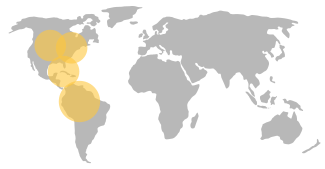
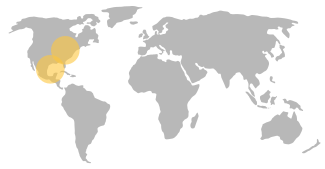

Veery
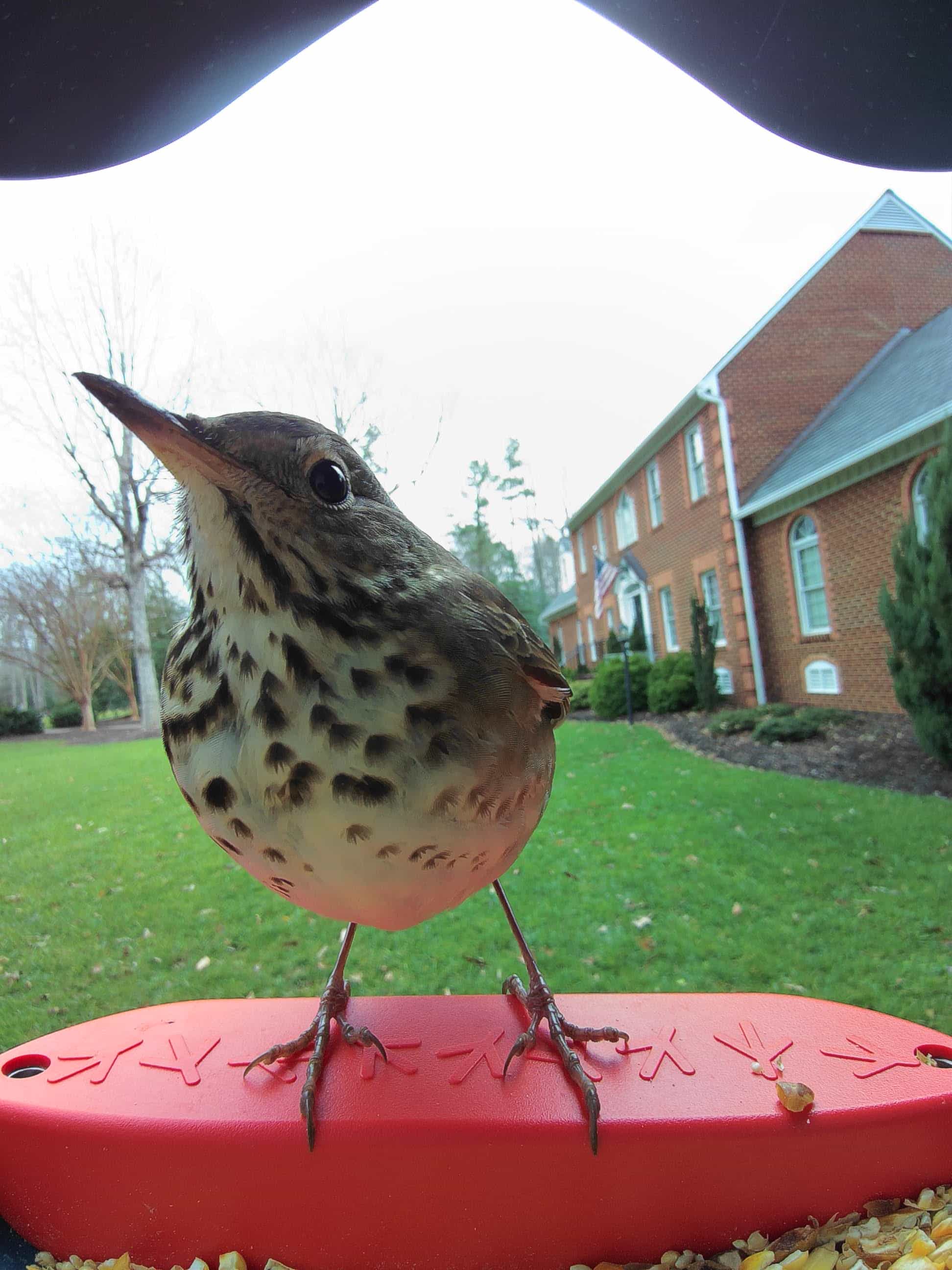


Wood Thrush
Veery
Catharus fuscescens
Also known as: Wilson's Thrush, Tawny Thrush
General appearance
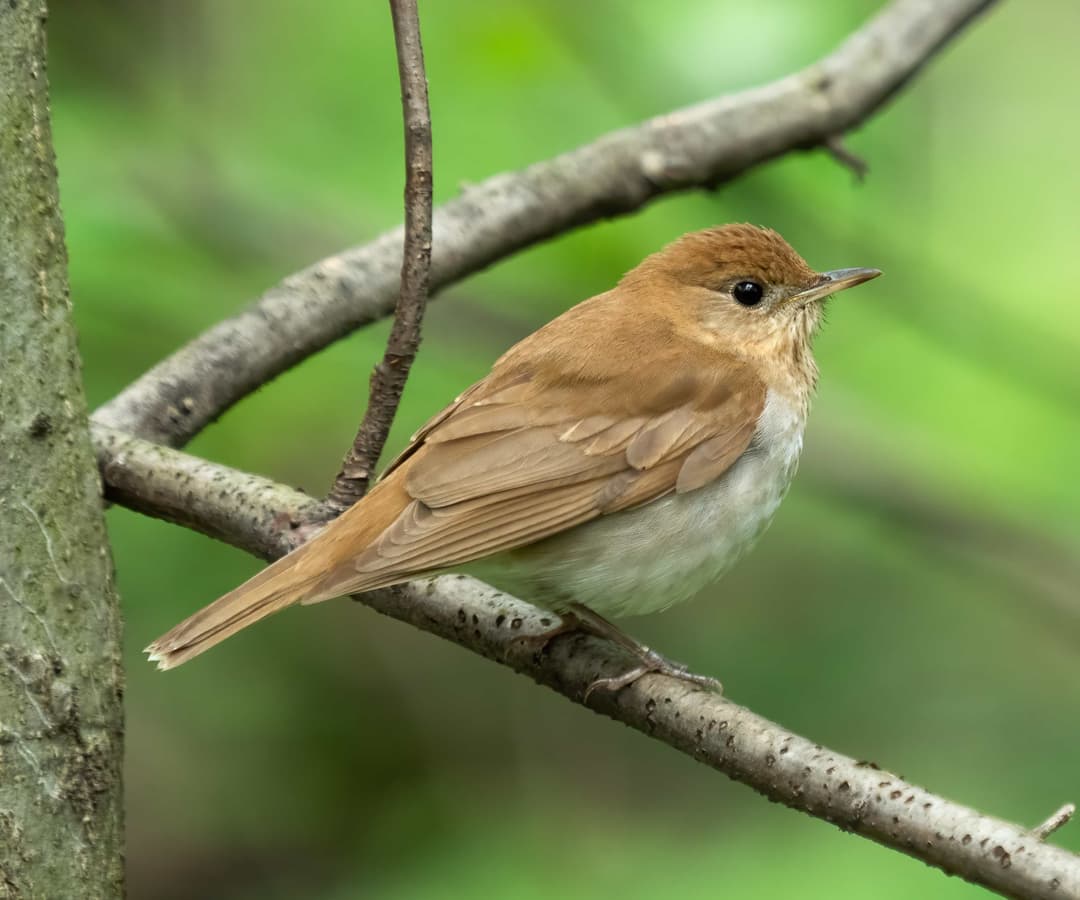
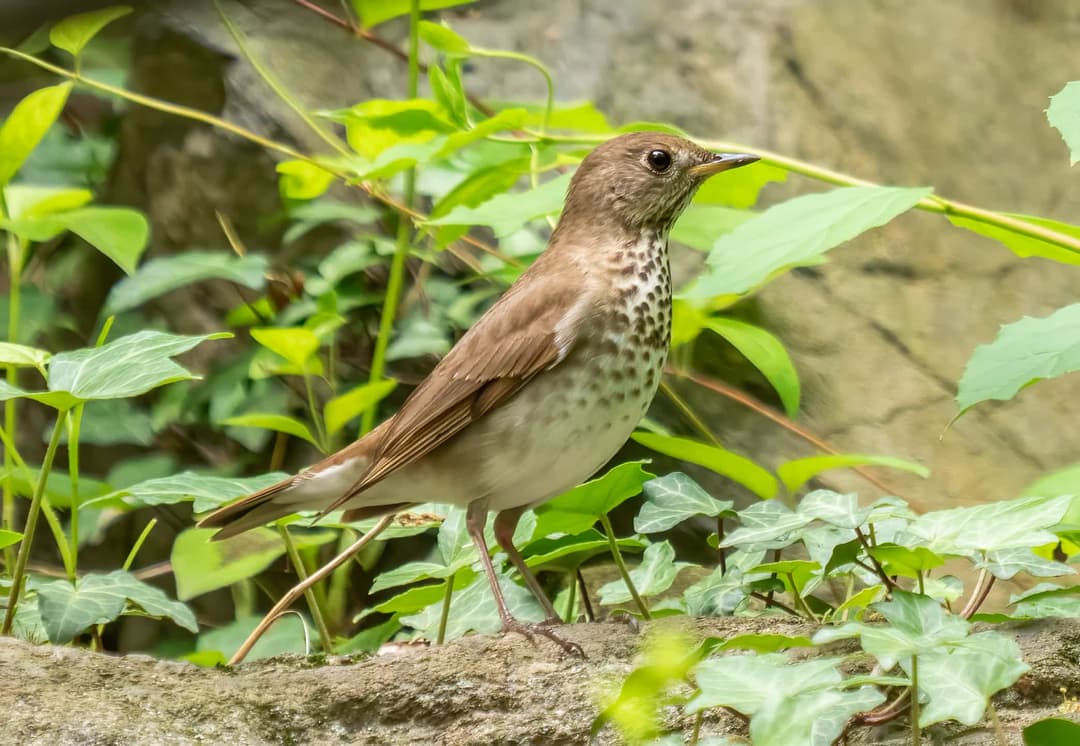
The veery (Catharus fuscescens) is a medium-sized thrush with warm, cinnamon-brown upperparts and a subtly spotted pale tawny breast. It has a white underbelly and distinct buffy eye-ring. Its song is a spiraling, fluty series of notes, distinctive during its breeding season.
Male vs female
The veery shows minimal sexual dimorphism, meaning males and females have very similar appearances. Both sexes share the same coloration and size, usually around 16-18 cm long with a wingspan of about 28 cm. Behavioral cues and song patterns, notable in males, are often used for differentiation.
Juvenile
Juvenile veeries resemble adults but typically exhibit more pronounced spotting on the chest. Their plumage is generally duller, aiding in camouflage. As they mature, they attain smoother, more uniform coloration. They take up the adult's distinctive appearance as they prepare for migration and the upcoming breeding seasons.
Size
6.7 - 7.1 in/0.9 - 1.4 oz
There's more to learn about Veery
View full detailsWood Thrush
Hylocichla mustelina
General appearance
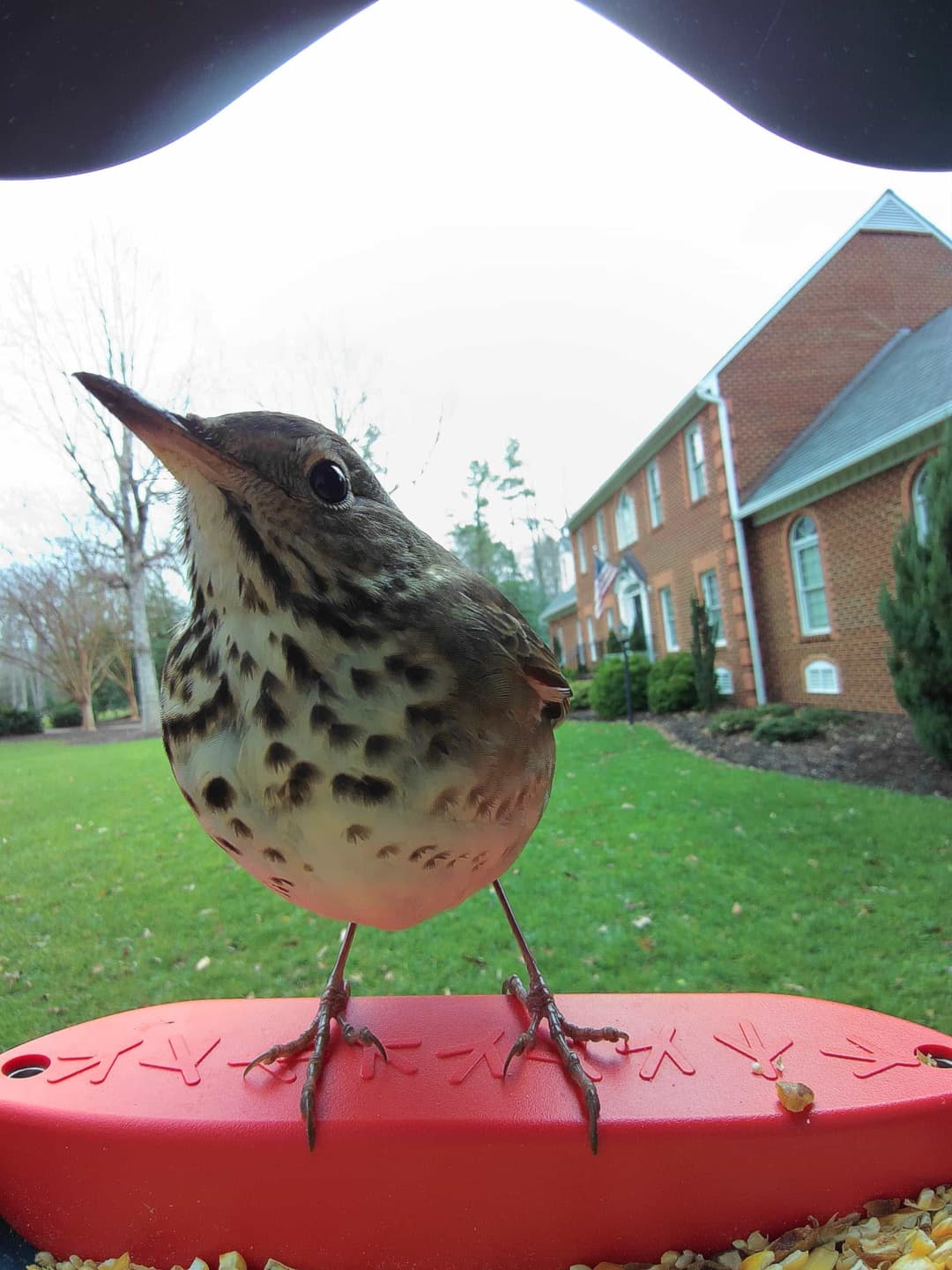
The wood thrush boasts a brown upper body that shades into a more vivid reddish-brown on the head. A stark contrast is formed by round black spots that adorn its white chest. This species flaunts a bold eye-ring and shows stronger markings than other brown thrushes. The variable tail can be notched, rounded, or squared-off, and the wings are pointed in shape. Its overall size is resemblant of a robin.
Male vs female
The wood thrush does not exhibit significant physical differences between genders. Both males and females share the same coloration and physical traits, including the brown upper body, reddish-brown head, black-spotted white chest, bold eye-ring, pointed wing shape, and notched or squared-off tail.
Juvenile
Juvenile wood thrushes maintain a similar appearance to adults, albeit with milder tones. Their brown coloration is lighter, and their black spots less pronounced. Notably, they differ from the brown thrasher species, which is striped rather than spotted, has yellow eyes, sports a longer tail, and exhibits colour akin to a sparrow.
Size
7.5 - 8.5 in/1.4 - 1.8 oz
There's more to learn about Wood Thrush
View full detailsHow to tell the Veery from the Wood Thrush
Visual differences
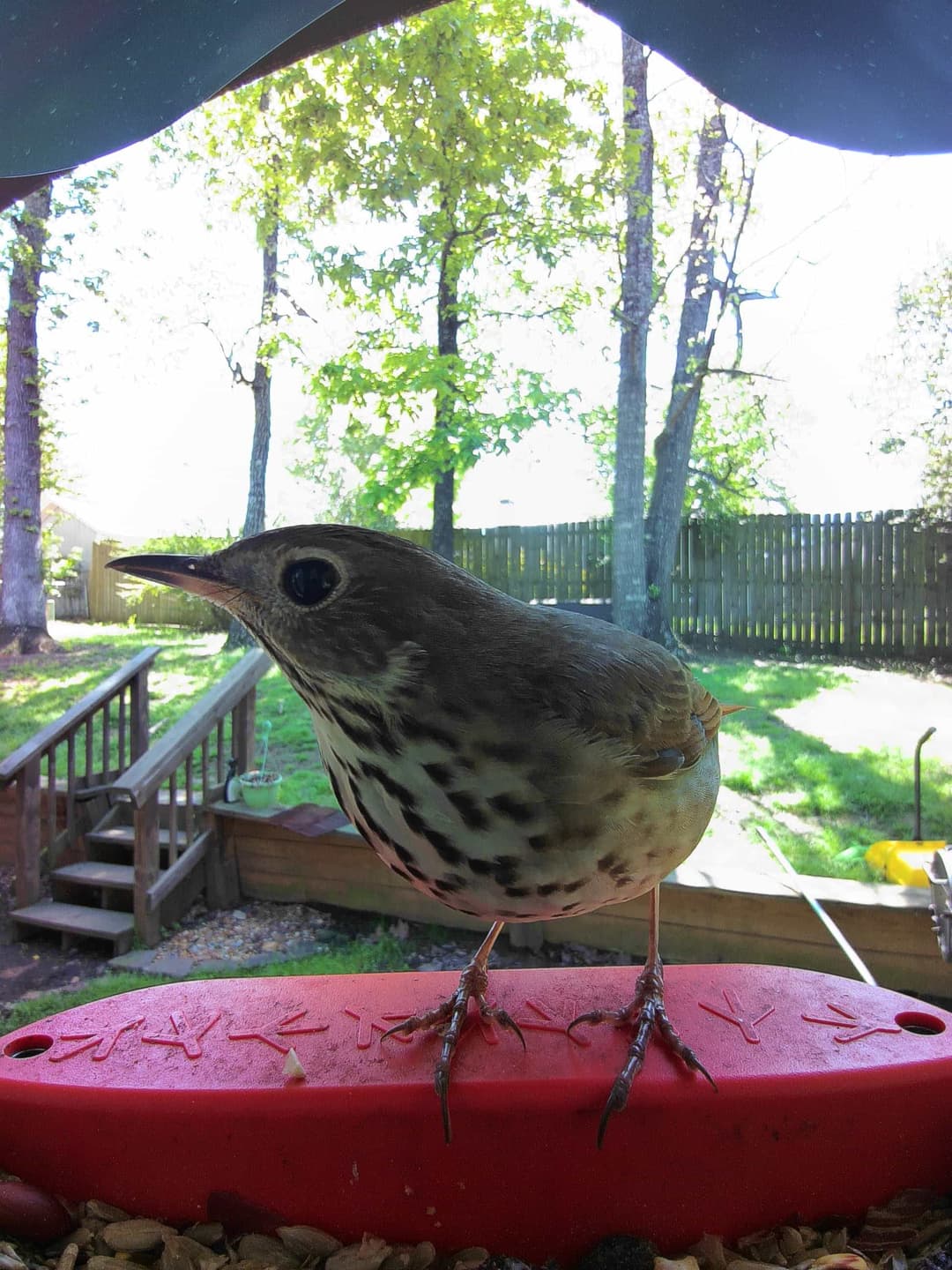
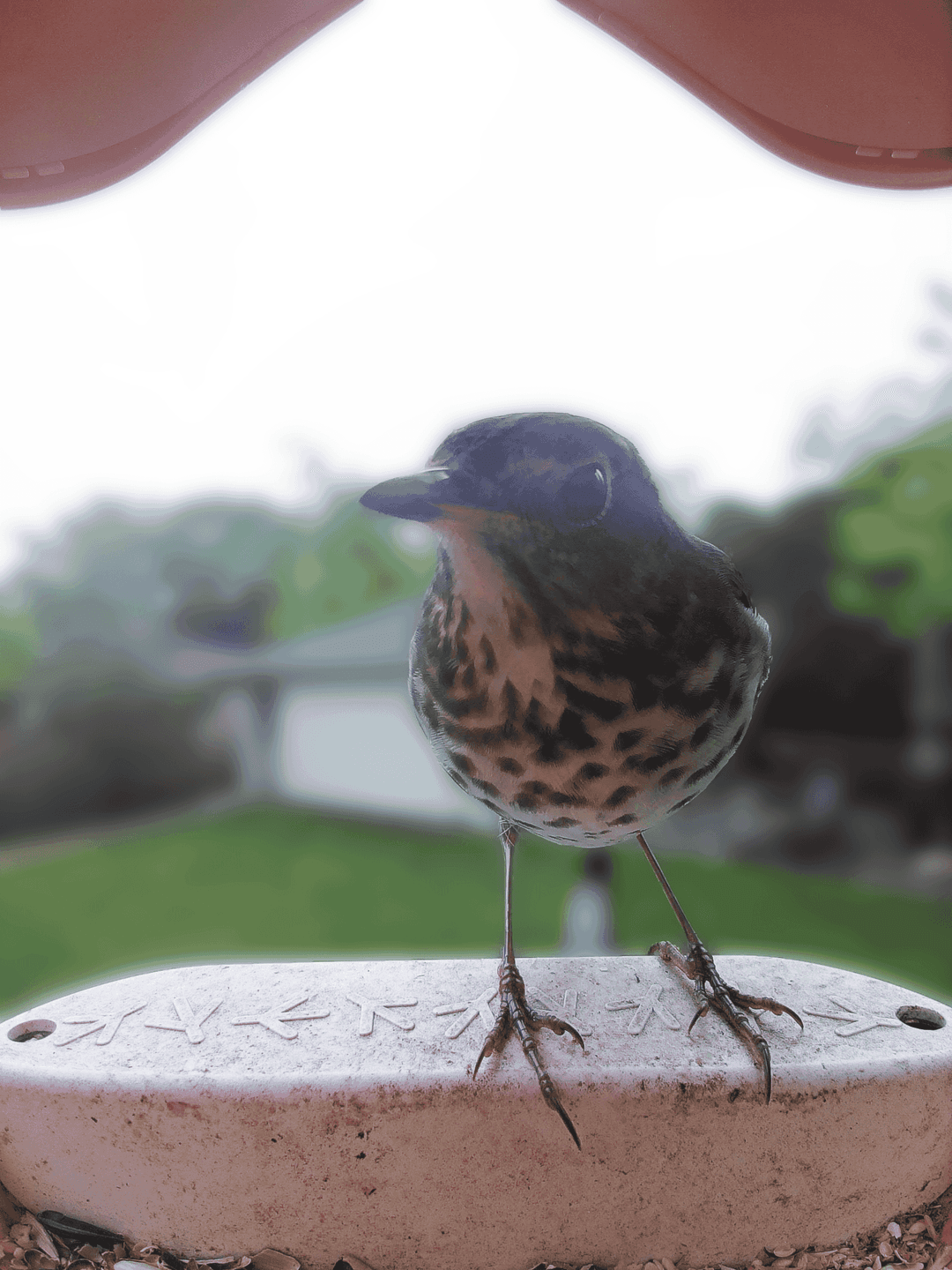
The Veery (6.5-7 inches in length) features warm, cinnamon-brown upperparts, a subtly spotted pale tawny breast, a white underbelly, and a buffy eye-ring. In contrast, the Wood Thrush (7.5-8.5 inches) displays a brown upper body transitioning to a vivid reddish-brown head, a black-spotted white chest, and a bold eye-ring. The Wood Thrush is slightly larger with a more vivid head color and pronounced black spots, while the Veery is smaller and more uniformly cinnamon-brown with less distinct breast spots.
Key differences and behavior
Veery and Wood Thrush exhibit distinct behavioral and habitat preferences. Both inhabit damp deciduous forests, but Veery favors dense understory near water, while Wood Thrush prefers tall trees and mixed vegetation. Veery migrates nocturnally, calling to each other in flight, and is known for vocal duets in courtship compared to the solo yet duet-capable song of the Wood Thrush. Veery nests low in shrubby areas, while Wood Thrush prefers higher branches. Both birds are monogamous during breeding seasons and share parental duties. Their diets largely overlap, consisting of insects and berries; however, Veery may occasionally eat small amphibians, while Wood Thrush is known for its seasonal, varied insect intake. Neither typically visits feeders. Veerys are slightly smaller (6.7-7.1 inches, 0.88-1.4 oz) than Wood Thrushes (7.5-8.5 inches, 1.4-1.8 oz).
Still not sure? Here are more lookalikes!
Veery vs [Select a bird]

[Select a bird]
Pick a bird to compare
Wood Thrush vs [Select a bird]
[Select a bird]
Pick a bird to compare