Patagonian Mockingbird or Northern Mockingbird?
Here's how to tell the difference
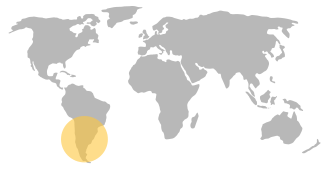

Patagonian Mockingbird


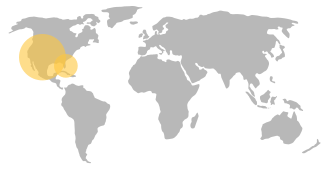
Northern Mockingbird
Patagonian Mockingbird
Mimus patagonicus
General appearance
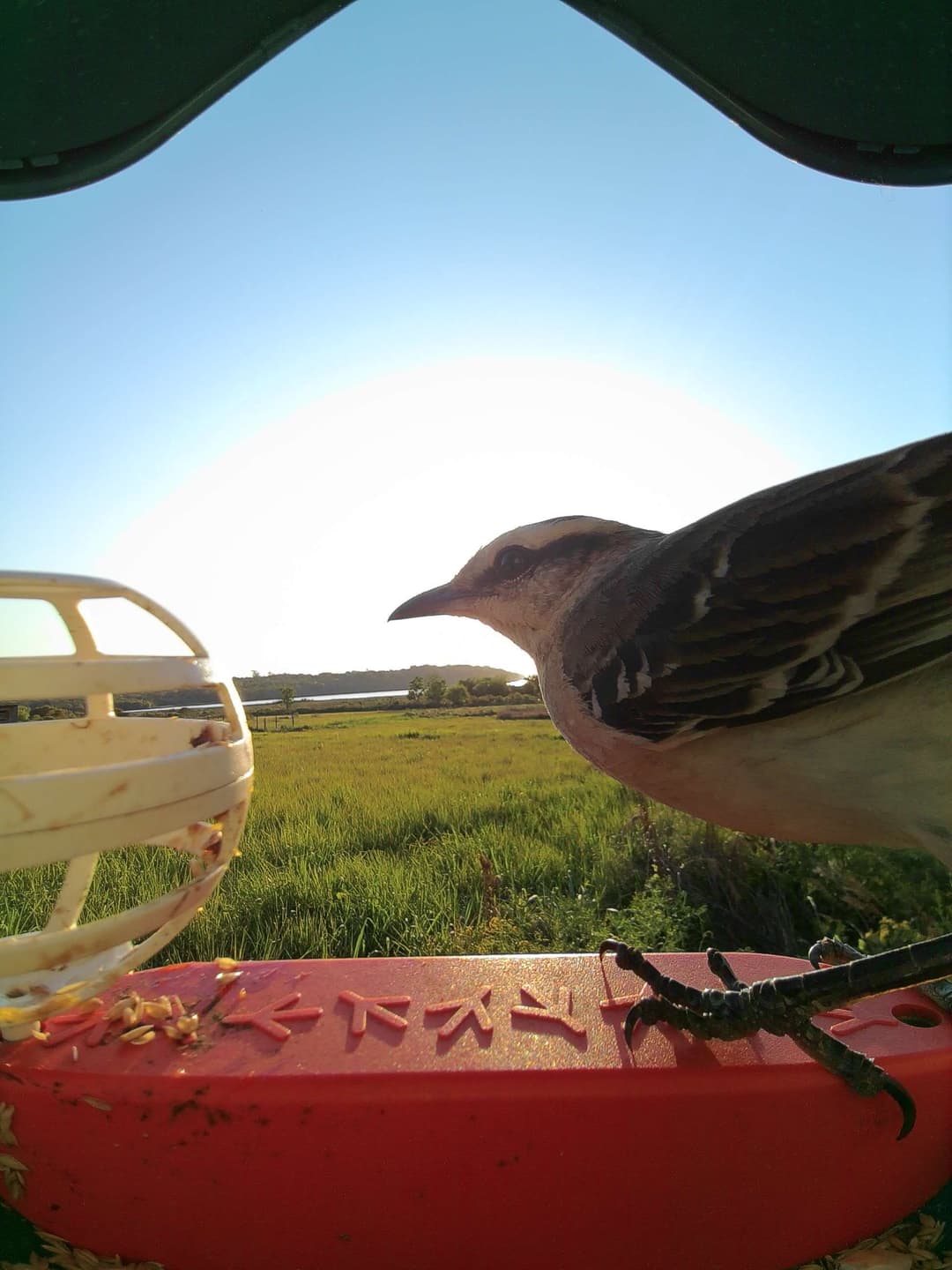
The Patagonian Mockingbird is a medium-sized bird characterized by its sleek and elegant appearance. It has a soft brownish-grey plumage that covers its back and wings, providing excellent camouflage in its natural habitat. The underbelly features a subtle cream color, leading into paler shades. Its long, sturdy tail adds to its balanced physique and is often held high. A distinctive white eye-stripe gives this bird a keen, intelligent expression, complemented by its bright black eyes.
Male vs female
Both male and female Patagonian Mockingbirds share similar physical traits, making them hard to differentiate visually. Their plumage coloration and patterns are alike, and both genders display the distinctive white eye-stripe and the glossy black eyes. Their similar behaviors and song further make distinguishing between the two sexes challenging by sight alone. Observers might note that during breeding seasons, males tend to sing more frequently, which can be a subtle hint of distinction.
Juvenile
Juvenile Patagonian Mockingbirds bear a resemblance to adult birds, though their plumage is generally duller. Young birds may have buff-toned feathers in place of the cream underbelly seen in adults. Their eye-stripe, although present, is less pronounced, contributing to a less defined facial expression. As they mature, their plumage brightens, and the characteristic white eye-stripe becomes more vivid. Observers often notice that juveniles are a bit smaller in stature compared to their adult counterparts.
Size
8.7 - 9.8 in/1.6 - 2.3 oz
There's more to learn about Patagonian Mockingbird
View full detailsNorthern Mockingbird
Mimus polyglottos
General appearance
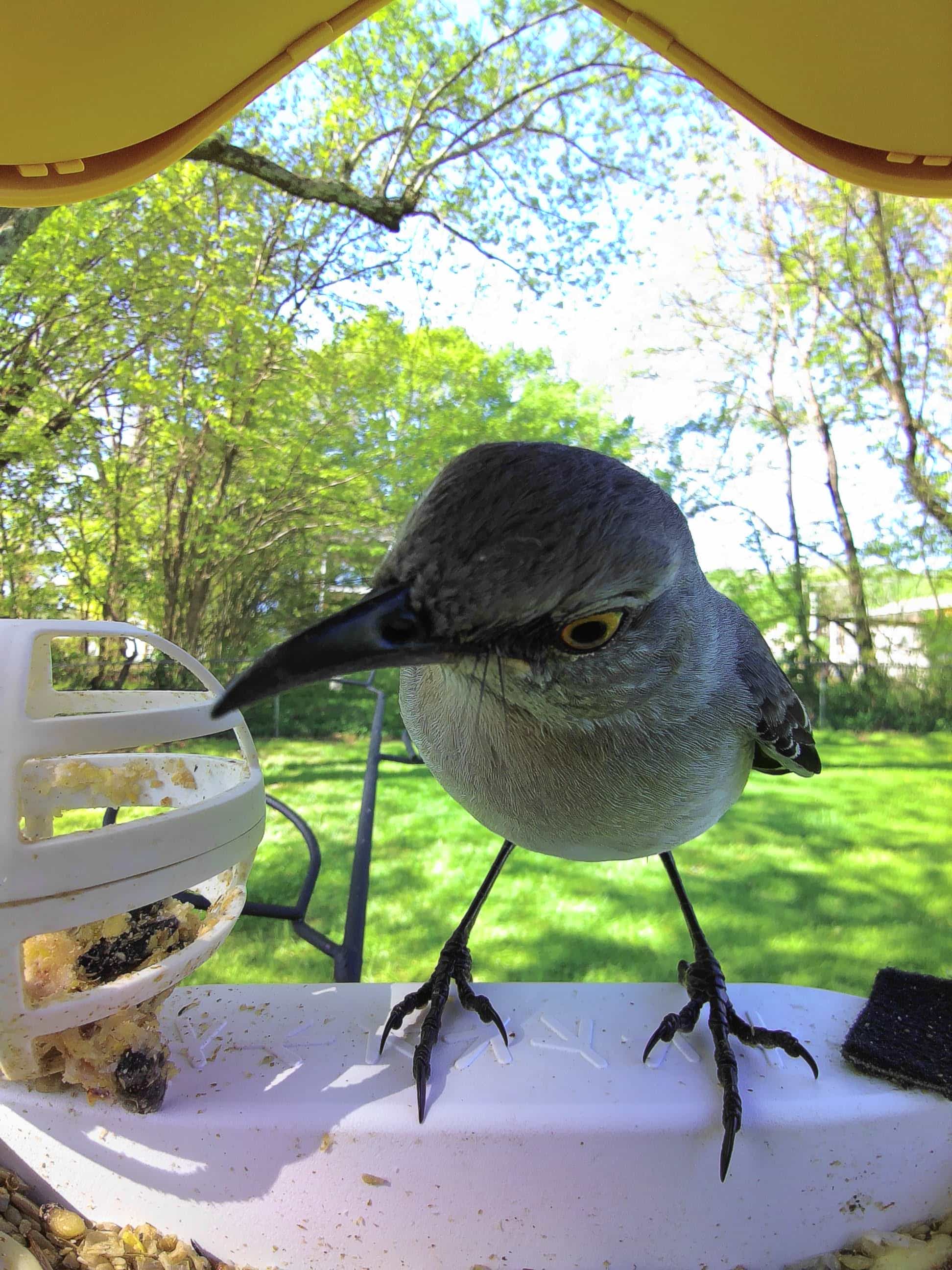
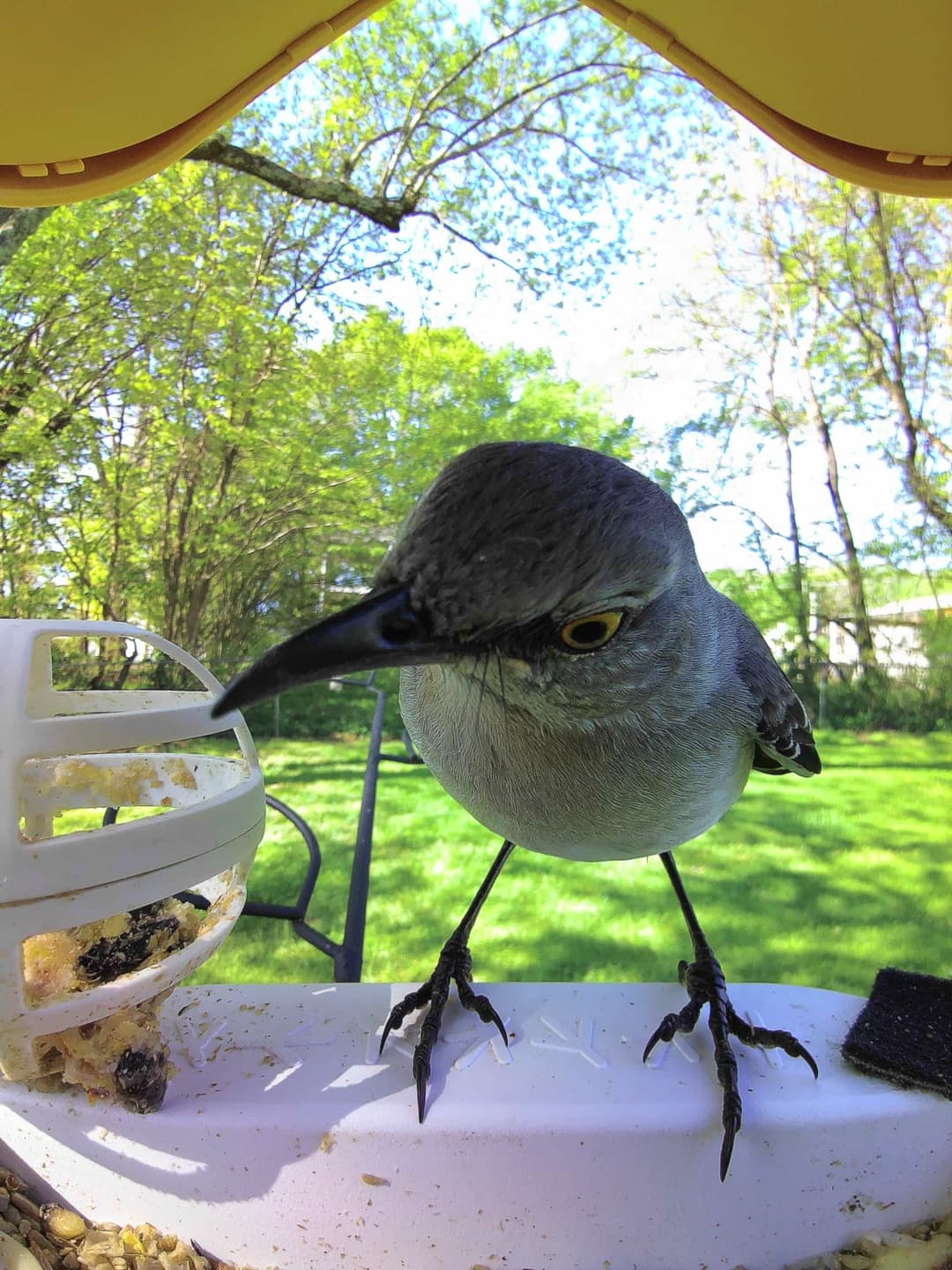
The northern mockingbird is a slim, long-tailed bird standing at a size of about 9-11 inches (23-28 cm), comparable to a robin. It showcases a pale grey coloration, with prominent white wing patches that are especially discernable when in flight. Furthermore, the bird has white outer tail feathers that contribute to its distinctive sleek appearance. The tail shape can be variously described as long, rounded, or wedge-shaped.
Male vs female
Both male and female northern mockingbirds bear similar characteristics in terms of size, color, and other physical traits. They both have slim bodies, white wing patches, and long tail feathers. Therefore, distinguishing between males and females solely based on physical traits may be challenging.
Juvenile
Young northern mockingbirds, or juveniles, share the same basic coloration and size as adults. However, they can be distinguished due to unique traits found prominently during their early stages. A juvenile mockingbird has darker streaks on their chest and somewhat darker eyes compared to adult birds. Moreover, their wing patches may not be as pronounced.
Size
8.1 - 10.2 in/1.4 - 2.0 oz
There's more to learn about Northern Mockingbird
View full detailsHow to tell the Patagonian Mockingbird from the Northern Mockingbird
Visual differences
The Patagonian Mockingbird (8.7-9.8 inches, 1.6-2.3 oz) has a brownish-grey plumage with a cream underbelly, a long tail, and a white eye-stripe. The Northern Mockingbird (9-11 inches, 1.4-2 oz) features pale grey plumage, prominent white wing patches, and white outer tail feathers. Both species show similar male and female appearance, but Northern Mockingbird juveniles have darker chest streaks. The Patagonian's plumage offers better camouflage, while the Northern's bold white markings stand out in flight.
Key differences and behavior
The Patagonian Mockingbird (Mimus patagonicus) and Northern Mockingbird (Mimus polyglottos) share singing prowess, yet differ behaviorally and ecologically. Both sing prolifically, but while Patagonian Mockingbirds perform complex duets for bonding, Northern Mockingbirds focus on mimicking diverse sounds, with males learning up to 200 songs. Habitat-wise, Patagonians prefer arid shrublands of southern South America, forming family groups year-round, whereas Northerns inhabit suburban gardens and open farms in the Southern U.S. and Mexico. In feeding, Patagonians consume more nectar compared to Northerns. Breeding in dense foliage, both engage in cooperative nesting, but Patagonians stay monogamous during breeding while Northerns engage in chase as courtship.
Still not sure? Here are more lookalikes!
Patagonian Mockingbird vs Chalk-Browed Mockingbird

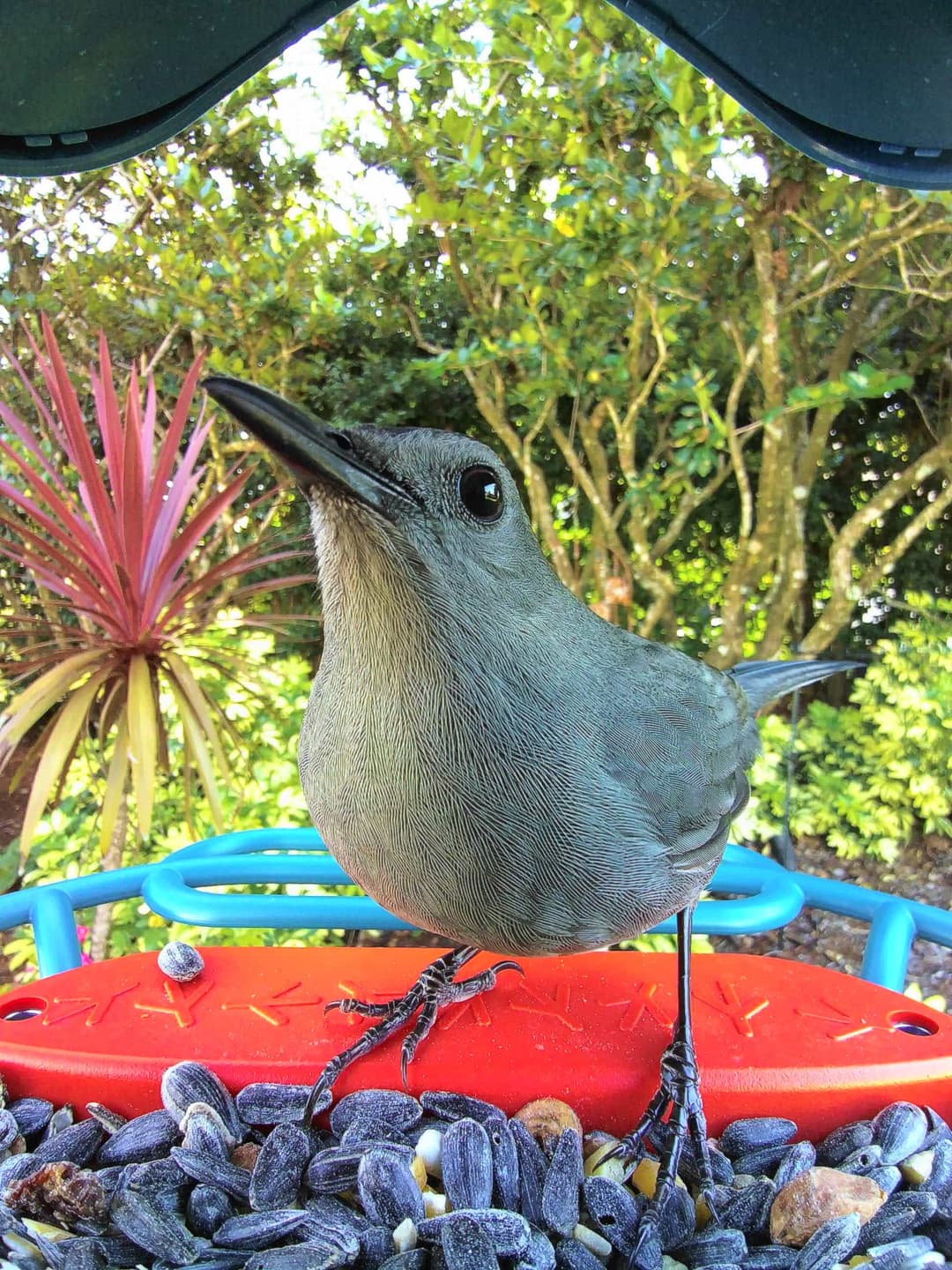
Northern Mockingbird vs Gray Catbird
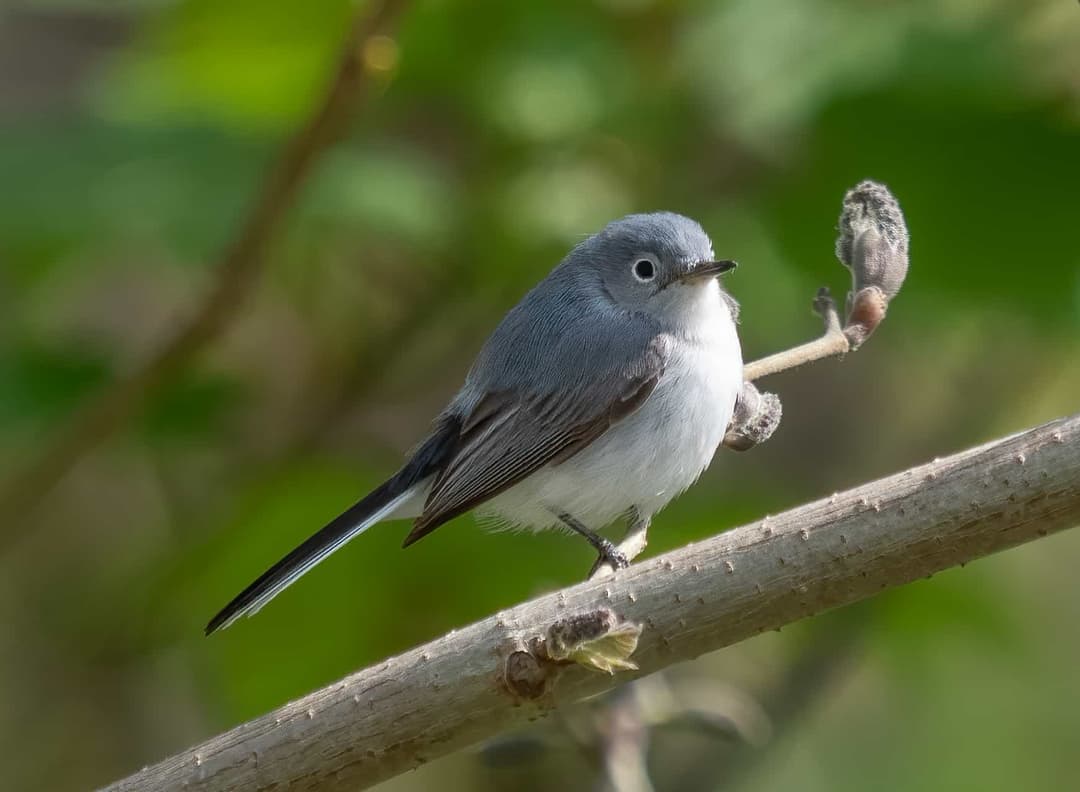
Northern Mockingbird vs Blue-Gray Gnatcatcher
Patagonian Mockingbird vs [Select a bird]

[Select a bird]
Pick a bird to compare
Northern Mockingbird vs [Select a bird]
[Select a bird]
Pick a bird to compare