
Blue-Gray Gnatcatcher
Blue-Gray Gnatcatcher
Also known as: Blue-Grey Gnatcatcher
Polioptila caerulea
Quick Identification guide
Quick Identification guide
- •
Displays a slender blue-gray body with distinctive white underparts
- •
Features a long, slender tail with white edges that is often held upright
- •
Possesses a thin, pointed beak and a distinctive eye ring, enhancing its delicate appearance
What does a blue-gray gnatcatcher sound like?
The blue-gray gnatcatcher vocalizes using diverse calls and songs dominated by a distinctive, nasal pzzzz. Its common patterns are complex, consisting of a flat and undulating melody. The calls can be described as buzzes, chirps or chips, screams, trills, and whistles. The gnatcatcher's song style is best defined as a thin, melodic warble, displaying a unique charm and cowboy-like swagger.
Description
Did you know that blue-grey gnatcatchers are known as little mockingbirds? You can probably guess why! These masters of imitation are also masters of nest-building; a pair can build up to seven in a breeding season. They're crafty, too, and tend to reuse materials from previous nests. Just don't get too close... They can get pretty territorial and males have been known to chase rivals as far as 70 feet away.
The blue-gray gnatcatcher can weigh between 5to7grams and be from10to11.5centimeters tall.
The Blue-gray Gnatcatcher typically lives up to 7 years. This lifespan is relatively long when compared with other small songbird species. Other gnatcatchers, such as the California Gnatcatcher and Black-tailed Gnatcatcher, have similar lifespans. Despite its small size, the Blue-gray Gnatcatcher's longevity can be attributed to its agile flight and adaptability.
Did you know?
Most popular questions about blue-gray gnatcatcher
How to recognise a blue-gray gnatcatcher?
General appearance
The blue-gray gnatcatcher is a small, slender songbird, measuring about 4-5 inches in length with a wingspan of 6-7 inches. It has a distinctive blue-gray upper body, white underparts, and a long, thin black tail with white edges. Its narrow bill is adapted for catching insects, and the bird exhibits constant flicking of its tail, which serves as a key identifier in the wild.
Male vs female
During the breeding season, males exhibit a black line above the eye that extends to a distinct black 'V' on the forehead, enhancing their contrast and appeal. Females lack the black facial markings and are slightly duller in color, which aids in camouflage while nesting.
Juvenile
Juvenile blue-gray gnatcatchers resemble females but are typically even paler, with less pronounced blue-gray coloring. They lack the distinct black markings found on adult males, and their tails are more brownish with less defined white edges. As they mature, they slowly gain the adult plumage.
Often mistaken for
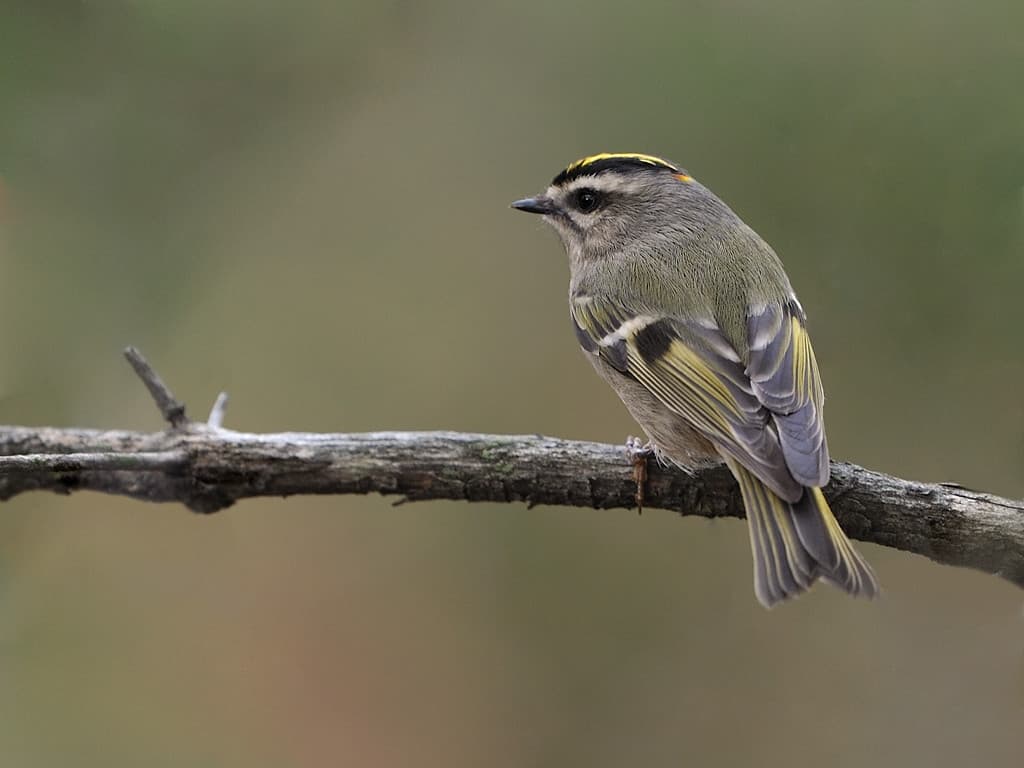
Golden-Crowned Kinglet vs Blue-Gray Gnatcatcher
The Blue-Gray Gnatcatcher has a mostly blue-gray plumage with a long, thin tail often held upright, whereas the Golden-Crowned Kinglet is more olive-green with distinct black and white head stripes and a bright golden crown. Gnatcatchers lack the kinglet's bold head pattern.
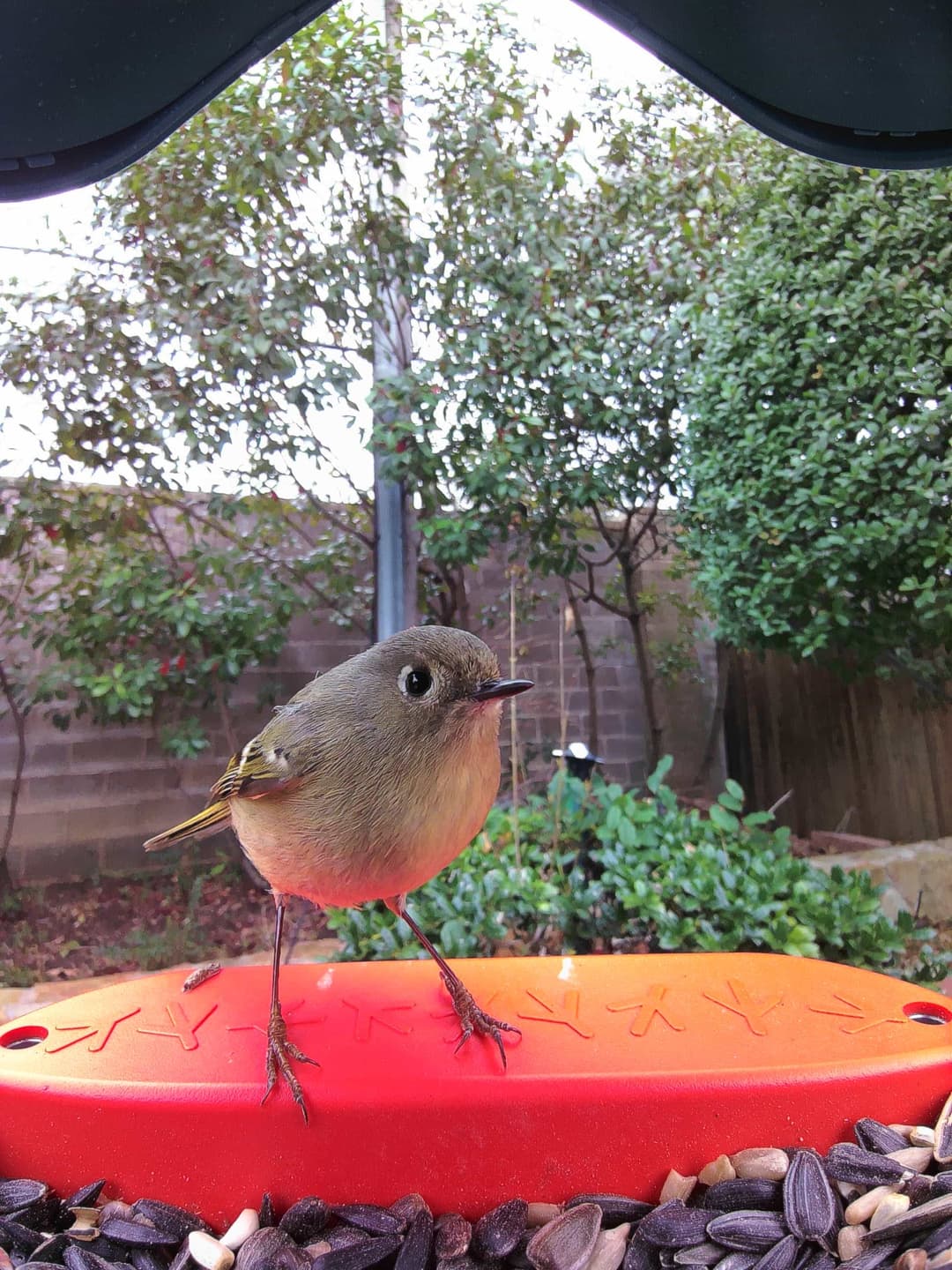
Ruby-Crowned Kinglet vs Blue-Gray Gnatcatcher
Blue-Gray Gnatcatchers are slim with blue-gray feathers and a white eye ring, while Ruby-Crowned Kinglets are slightly stockier, olive-colored, and have a noticeable eye ring and sometimes a ruby crown patch that's often hidden. Gnatcatchers have a longer tail.
Breeding and nesting habits of the blue-gray gnatcatcher
Mating behaviors
Male blue-gray gnatcatchers arrive first in breeding areas and sing to defend territory and attract a mate. Courtship involves the male leading the female around to potential nest sites.
Nesting details
Nests are built by both sexes in trees, typically deciduous, often on a horizontal limb 20-40' above ground. The nest is a compact open cup made of grass, weeds, plant fibers, and bark strips, lined with plant down, animal hair, and feathers. It is camouflaged with spiderwebs and lichen.
Eggs and chick-rearing
The blue-gray gnatcatcher lays 3-5 eggs per clutch. Both parents participate in feeding and caring for the chicks until they fledge.
What does a blue-gray gnatcatcher like to eat?
Insects
Spiders
Natural diet
The blue-gray gnatcatcher predominantly feeds on a diverse range of small insects and arachnids. Its diet includes leafhoppers, treehoppers, plant bugs, leaf beetles, caterpillars, flies, and small wasps. Spiders are also a significant part of its dietary intake. These protein-rich food sources are typically found in the bird's natural habitat, where it actively forages among foliage to capture its prey.
Bird feeders
The blue-gray gnatcatcher does not commonly visit bird feeders. Its diet primarily consists of live insects and spiders, which are not typically provided at feeders. Bird feeders usually offer seeds, nuts, or suet, which are not preferred by gnatcatchers. They rely on foraging in natural environments to fulfill their dietary needs rather than supplementing their intake with typical feeder offerings.
Attracting the blue-gray gnatcatcher to your yard
To attract the delightful blue-gray gnatcatcher, there are a few simple tips to follow. As these birds are mainly insectivores, ensure your garden is a welcoming environment for insects. Minimize the use of pesticides and create habitats such as compost piles to attract insects. Natural settings like meadows and streams are also appealing to these birds.
Feeding preferences of the blue-gray gnatcatcher
While the blue-gray gnatcatcher does not typically eat seeds, the use of a feeder stocked with Bird Buddy seeds can still attract these birds, as they can be a source of food for insects. The seeds are chosen by experts for each season, ensuring they will always attract insects and, therefore, gnatcatchers. As well as insects, these birds also enjoy small berries and fruit, so planting berry-bearing shrubs and trees can also attract them.
Fun tips and tricks to encourage blue-gray gnatcatchers
Provide a water source, such as a birdbath or fountain, as gnatcatchers are attracted to moving water. Planting native trees and shrubs will provide them with places to nest and hide from predators. If you want to enjoy a sweet sing-along, try mimicking their songs and calls. They're known to be quite curious and may come closer to investigate!
Where can you find blue-gray gnatcatchers?

Primary habitat
The blue-gray gnatcatcher primarily inhabits open woods, oaks, and pines. Its breeding habitat varies, favoring deciduous forest with oak, ash, or maple in the east and more scrubby environments like pinyon-juniper woods, chaparral, and oak forest
Additional range
In special conditions, the gnatcatcher may dwell in southern pine woods with oak understory and streamside trees. During winters, it typically resides in wooded or brushy areas, usually near water sources.
Do they migrate?
The blue-gray gnatcatcher is primarily migratory in North America, with distinct populations moving seasonally between breeding and wintering grounds. During the migration periods, which peak in April and September, the bird travels largely north-south between its breeding habitats in the United States and its wintering areas in the southern parts of the U.S., Mexico, the Caribbean, and Central America. While most are migratory, some populations in Mexico and the Bahamas may consist of permanent residents that do not migrate. The northward spring migration occurs in April, with birds moving from their southern wintering territories to their northern breeding grounds in the U.S. In contrast, the southward autumn migration peaks in September, when the gnatcatchers return to their warmer wintering areas to escape the harsh northern winters. During travel, they may migrate by day, taking advantage of warmer temperatures and plentiful food sources. Key locations along their migration route include stopovers in various southern U.S. states, where they refuel before continuing. Breeding grounds range throughout the U.S., and wintering areas extend into Mexico and the Bahamas, with a potential overlap in these regions for some permanent residents.
What is the role of blue-gray gnatcatchers in nature and how to protect them?
Conservation status
The blue-gray gnatcatcher has expanded its breeding range significantly throughout the northeastern United States during the 20th century. Its population is likely stable or increasing, indicating that it is currently a common species. There are no immediate indications of vulnerability or endangerment. Conservation efforts have not been explicitly highlighted, suggesting that the species does not currently face significant threats. Monitoring the population and habitat may help ensure its continued stability amidst potential environmental changes.
Ecological role of blue-gray gnatcatchers
Its role in the ecosystem
The blue-gray gnatcatcher plays a significant role in maintaining the ecological balance of its environment. Throughout its active feeding behavior, it assists in natural pest control by feeding on a wide array of small insects which include treehoppers, leaf beetles, and small wasps among others. With its diet also including many spiders, it helps regulate various insect populations, thus preventing possible outbreaks. The gnatcatcher's nest building practice also plays an essential role in this ecosystem. By using grass, weeds, plant fibers, and strips of bark for its nest, it contributes to the circulation of these materials throughout its territory. These nests are also often built at varying heights which could influence the vertical distribution of various resources within the ecosystem. Furthermore, by decorating the outside of the nests with pieces of lichen, gnatcatchers may participate in the dispersal of this symbiotic organism. While there is no direct mention of seed dispersal, given the bird's foraging nature, it's possible that it may inadvertently contribute to this ecological process as well.
How to help protect blue-gray gnatcatchers
Preservation tips
Habitat preservation strategies
The blue-gray gnatcatcher thrives in mature, diverse forests. Prioritize the protection of these habitats from deforestation and fragmentation. When possible, enhance these habitats by ensuring a diverse mix of native tree species. Avoid using pesticides and ensure clean water sources in their habitats. Support policies and organizations that enforce habitat protection.
Community science initiatives
Educate the community on the importance of the blue-gray gnatcatcher and the threats it faces. Encourage participation in bird monitoring programs to track population trends. Share open platforms where sightings of the blue-gray gnatcatcher can be reported, for example, eBird. More data can contribute to planning more effective conservation strategies.