Patagonian Mockingbird or Chalk-Browed Mockingbird?
Here's how to tell the difference

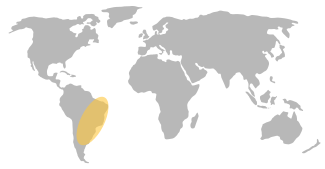

Patagonian Mockingbird


Chalk-Browed Mockingbird
Patagonian Mockingbird
Mimus patagonicus
General appearance
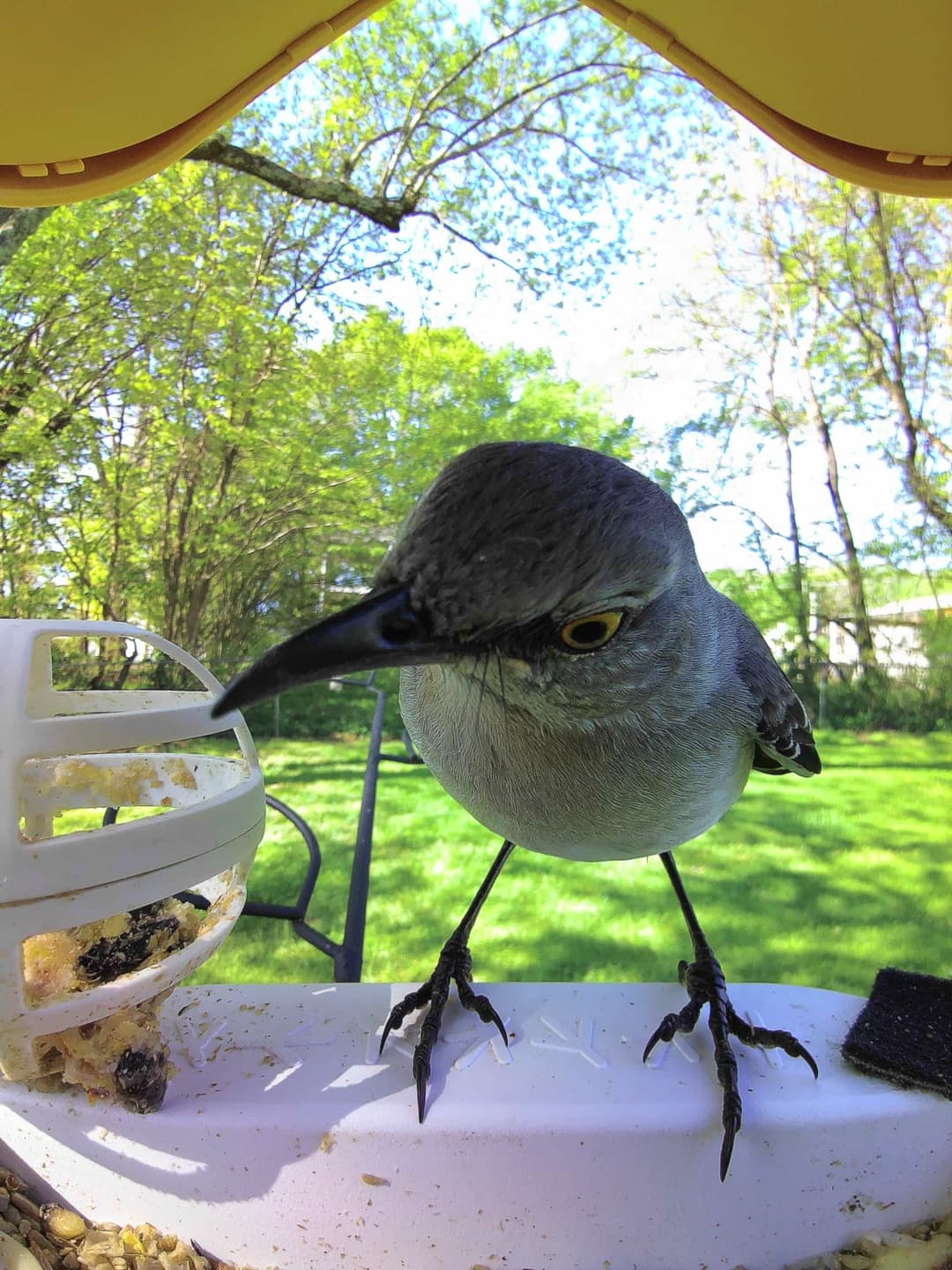
The Patagonian Mockingbird is a medium-sized bird characterized by its sleek and elegant appearance. It has a soft brownish-grey plumage that covers its back and wings, providing excellent camouflage in its natural habitat. The underbelly features a subtle cream color, leading into paler shades. Its long, sturdy tail adds to its balanced physique and is often held high. A distinctive white eye-stripe gives this bird a keen, intelligent expression, complemented by its bright black eyes.
Male vs female
Both male and female Patagonian Mockingbirds share similar physical traits, making them hard to differentiate visually. Their plumage coloration and patterns are alike, and both genders display the distinctive white eye-stripe and the glossy black eyes. Their similar behaviors and song further make distinguishing between the two sexes challenging by sight alone. Observers might note that during breeding seasons, males tend to sing more frequently, which can be a subtle hint of distinction.
Juvenile
Juvenile Patagonian Mockingbirds bear a resemblance to adult birds, though their plumage is generally duller. Young birds may have buff-toned feathers in place of the cream underbelly seen in adults. Their eye-stripe, although present, is less pronounced, contributing to a less defined facial expression. As they mature, their plumage brightens, and the characteristic white eye-stripe becomes more vivid. Observers often notice that juveniles are a bit smaller in stature compared to their adult counterparts.
Size
8.7 - 9.8 in/1.6 - 2.3 oz
There's more to learn about Patagonian Mockingbird
View full detailsChalk-Browed Mockingbird
Mimus saturninus
General appearance
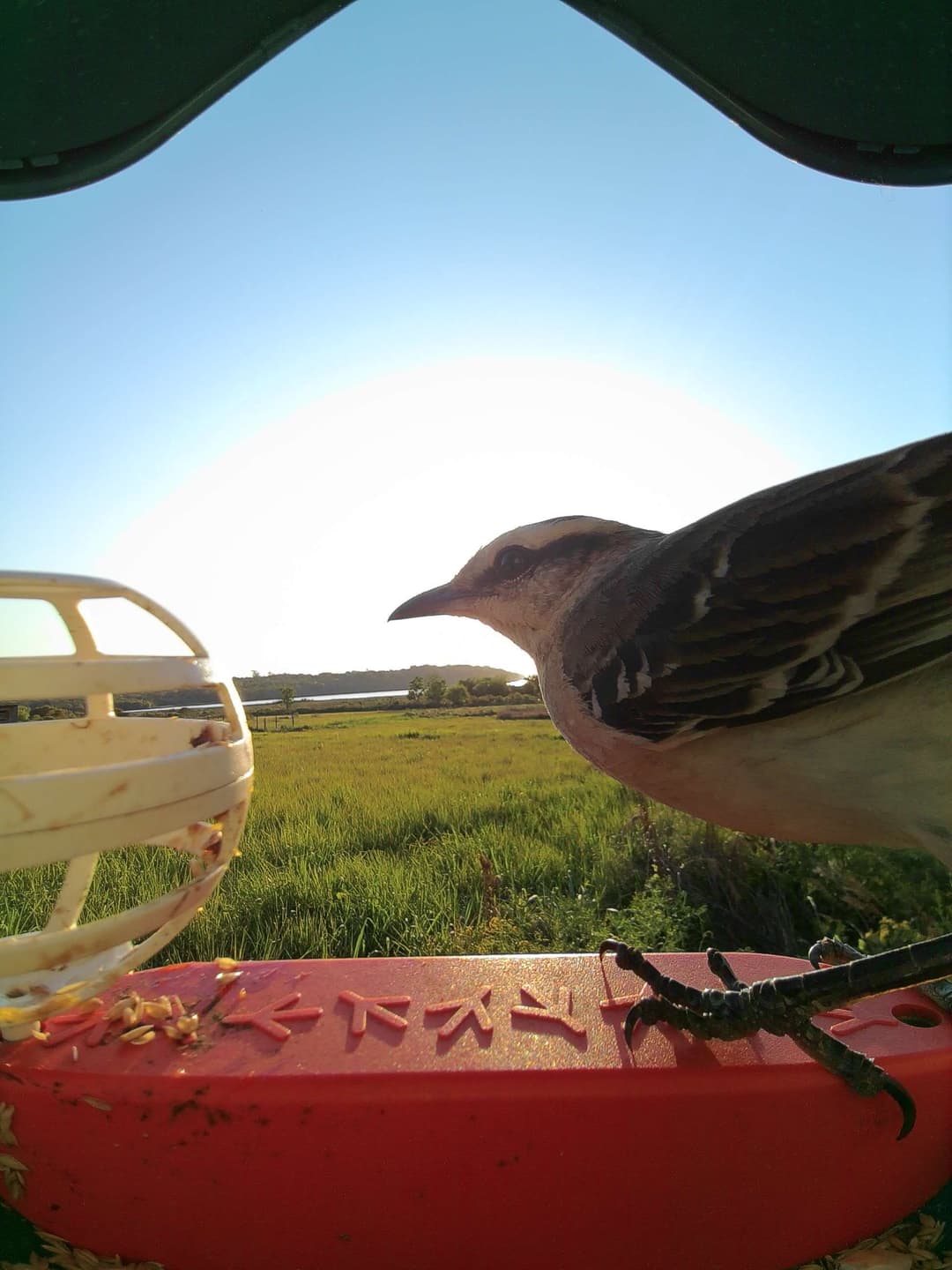
Meet the lively and stunning chalk-browed mockingbird! Sporting a cream-colored belly and an ash-grey back, these birds demonstrate a fashion-sense worth raving about. Their stunning white eyebrow, reminiscent of a streak of chalk, crowns their dark eyes elegantly, hence their name.
Male vs female
Male and female chalk-browed mockingbirds turn heads in equal measure! In an amazing display of equality, both sexes share similar sizes and colours, making it quite the task to tell them apart. The uniform beauty of their charcoal grey upper-parts and pale underparts really is a sight to behold.
Juvenile
Thinking the adults are cute? Wait till you see the juveniles! Young chalk-browed mockingbirds are notably duller than adults, donning a slightly downy brown coat. However, they already possess that distinctive chalked brow as a birthright, promising brighter adult plumage as they mature. Spotting a juvenile in the wild is a promise of enchantment to come!
Size
9.3 - 10.2 in/1.9 - 2.6 oz
There's more to learn about Chalk-Browed Mockingbird
View full detailsHow to tell the Patagonian Mockingbird from the Chalk-Browed Mockingbird
Visual differences
The Patagonian Mockingbird (8.7-9.8 inches) is slightly smaller than the Chalk-Browed Mockingbird (9.3-10.2 inches). Both sport distinctive white eye-stripes, but the Patagonian has a sleeker look with a brownish-grey back and cream underbelly, while the Chalk-Browed boasts an ash-grey back and cream-colored belly. The Patagonian's tail is notably longer and often raised. Chalk-Browed juveniles have a downy brown coat, whereas Patagonian juveniles appear duller with buff-toned feathers. Both birds exhibit similar size and plumage among males and females, with bright black eyes.
Key differences and behavior
The Patagonian Mockingbird (Mimus patagonicus) and Chalk-Browed Mockingbird (Mimus saturninus) both exhibit territorial behavior and vibrant vocalizations. However, the Patagonian Mockingbird is renowned for continuous singing and prefers arid regions in southern South America, including Argentina and Chile, where it resides in family groups year-round. In contrast, the Chalk-Browed Mockingbird thrives in semi-open areas and forests in Brazil, engaging in cooperative breeding behavior, often assisting relatives and neighbors with chick care. Dietary preferences are similar, with both species consuming insects, fruits, and seeds, but the Patagonian Mockingbird adapts more to feeders in suburban settings. Patagonian Mockingbirds participate in cooperative nesting and constant chicks care, while Chalk-Browed Mockingbirds are targeted by brood parasitism from cowbirds. Patagonian pairs are monogamous, with parental care extending beyond fledging. Both species utilize duet singing in courtship, but Chalk-Browed Mockingbirds have a distinct helping behavior in communities.
Still not sure? Here are more lookalikes!
Patagonian Mockingbird vs Northern Mockingbird

Patagonian Mockingbird vs [Select a bird]

[Select a bird]
Pick a bird to compare
Chalk-Browed Mockingbird vs [Select a bird]
[Select a bird]
Pick a bird to compare