Laughing Gull or Lesser Black-Backed Gull?
Here's how to tell the difference
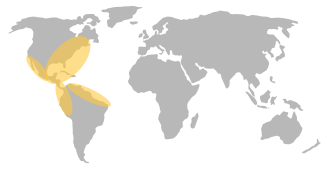
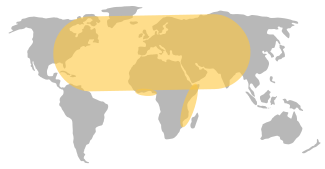

Laughing Gull


Lesser Black-Backed Gull
Laughing Gull
Leucophaeus atricilla
General appearance
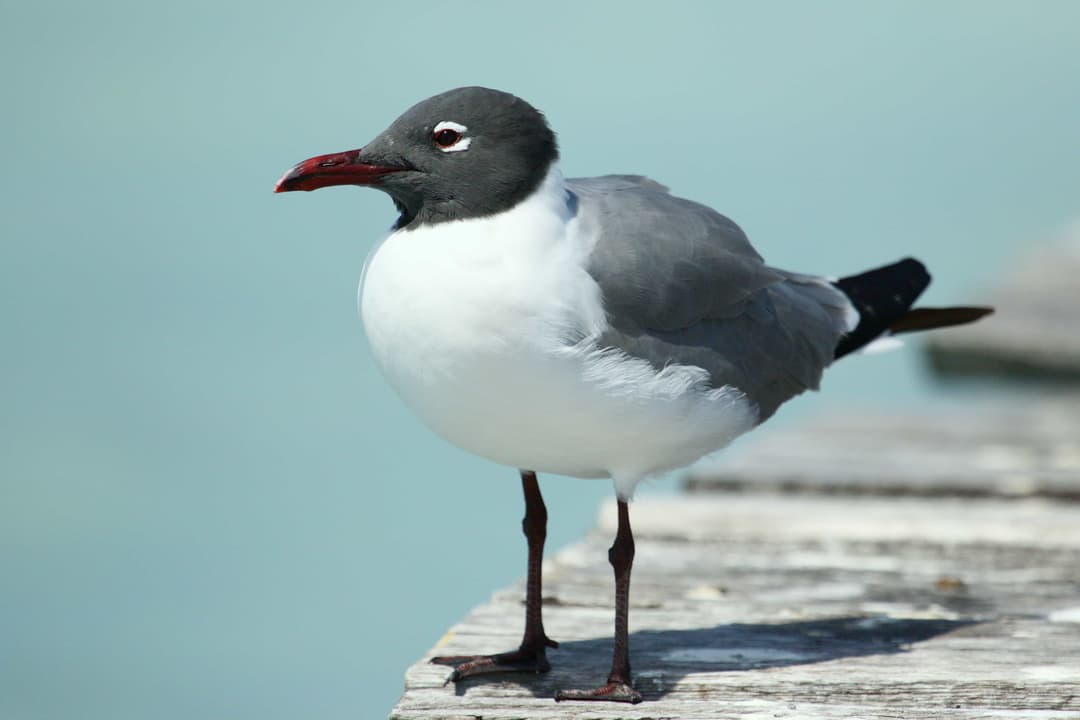
The Laughing Gull is approximately the size of a crow, with a length of 15-17 inches. It exhibits a long, pointed, swept, and tapered wing shape. The back is dark gray, fading into black wingtips. The bird's bill and legs are usually dark, often with a strong red tinge. The tail shape is typically rounded, short, and square-tipped.
Male vs female
The Laughing Gull shows no sexual dimorphism, meaning males and females have similar physical appearances. Both genders sport the same dark gray back fading into black wingtips, along with the dark bill and legs which often come with a red tinge.
Juvenile
Juvenile Laughing Gulls initially present a scaly brown pattern which transitions into a gray back by their first winter. A dark leg color and a particularly shaped bill, along with their relative size to a crow, aids in identifying juveniles of this species. Variations in their coloration and physical attributes become less distinctive as they age into adulthood.
Size
15.4 - 18.1 in/10.6 - 12.3 oz
There's more to learn about Laughing Gull
View full detailsLesser Black-Backed Gull
Larus fuscus
General appearance
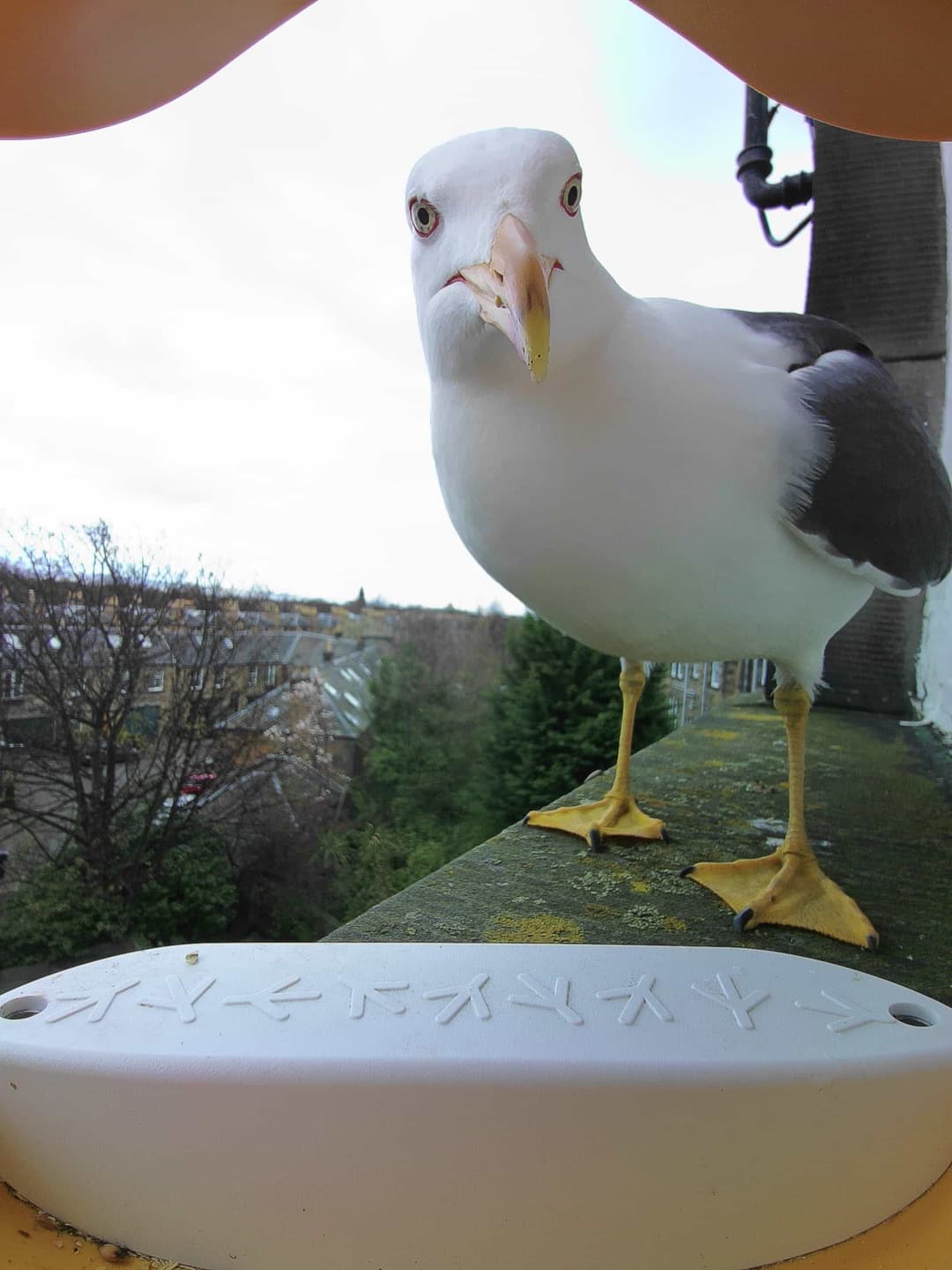
The Lesser Black-backed Gull is about the size of a Mallard or Herring Gull, with a length of 23 inches (58 cm). It features distinctly darker grey back and wings, with a coloration of black, brown, red, white, and yellow. Its legs are yellow and wings are long, pointed, narrow and tapered. The tail appears rounded, short, and square-tipped.
Male vs female
The Lesser Black-backed Gull does not present significant sexual dimorphism, meaning males and females look similar. Both exhibit dark gray back and wings with yellow legs. Hence, distinguishing between males and females relies mainly on behavioral observations rather than physical differences.
Juvenile
Juvenile Lesser Black-backed Gulls closely resemble young Herring Gulls until their darker back color starts to develop. This transformation phase represents the most noticeable change from their earlier youthful appearance. Therefore, the identification of juveniles, before the changes in their back color, is often challenging due to their strong resemblance with the Herring Gulls' young ones.
Size
20.1 - 24.0 in/19.4 - 42.3 oz
There's more to learn about Lesser Black-Backed Gull
View full detailsHow to tell the Laughing Gull from the Lesser Black-Backed Gull
Visual differences
The Laughing Gull is smaller (15-17 inches; crow-sized) with a dark gray back fading to black wingtips, and a dark bill and legs often tinged with red. Its wings are long and tapered. The Lesser Black-backed Gull is larger (23 inches; mallard-sized) with a distinctly darker gray back and yellow legs. Its wings are also long and tapered. The Laughing Gull has a rounded, short, square-tipped tail, while both gulls show little sexual dimorphism. Juveniles of both resemble adults but start with different hue patterns before maturing.
Key differences and behavior
Laughing Gulls and Lesser Black-Backed Gulls exhibit key behavioral differences in their feeding, habitat, and breeding. Laughing Gulls, around 15-17 inches long, are highly opportunistic and aggressive feeders often seen stealing from pelicans or scavenging human scraps. They thrive in coastal regions, occasionally venturing inland in places like Florida, and breed in large colonies on beaches. In contrast, the 23-inch Lesser Black-Backed Gulls employ a more varied omnivorous diet and inhabit coastal areas, garbage dumps, and inland lakes. Their nesting isn't common in North America, but when they do nest, they share parental duties like Laughing Gulls. While both species form colonies and show no sexual dimorphism, Laughing Gulls are more sociable and vocal, making them distinct in behavior.
Still not sure? Here are more lookalikes!
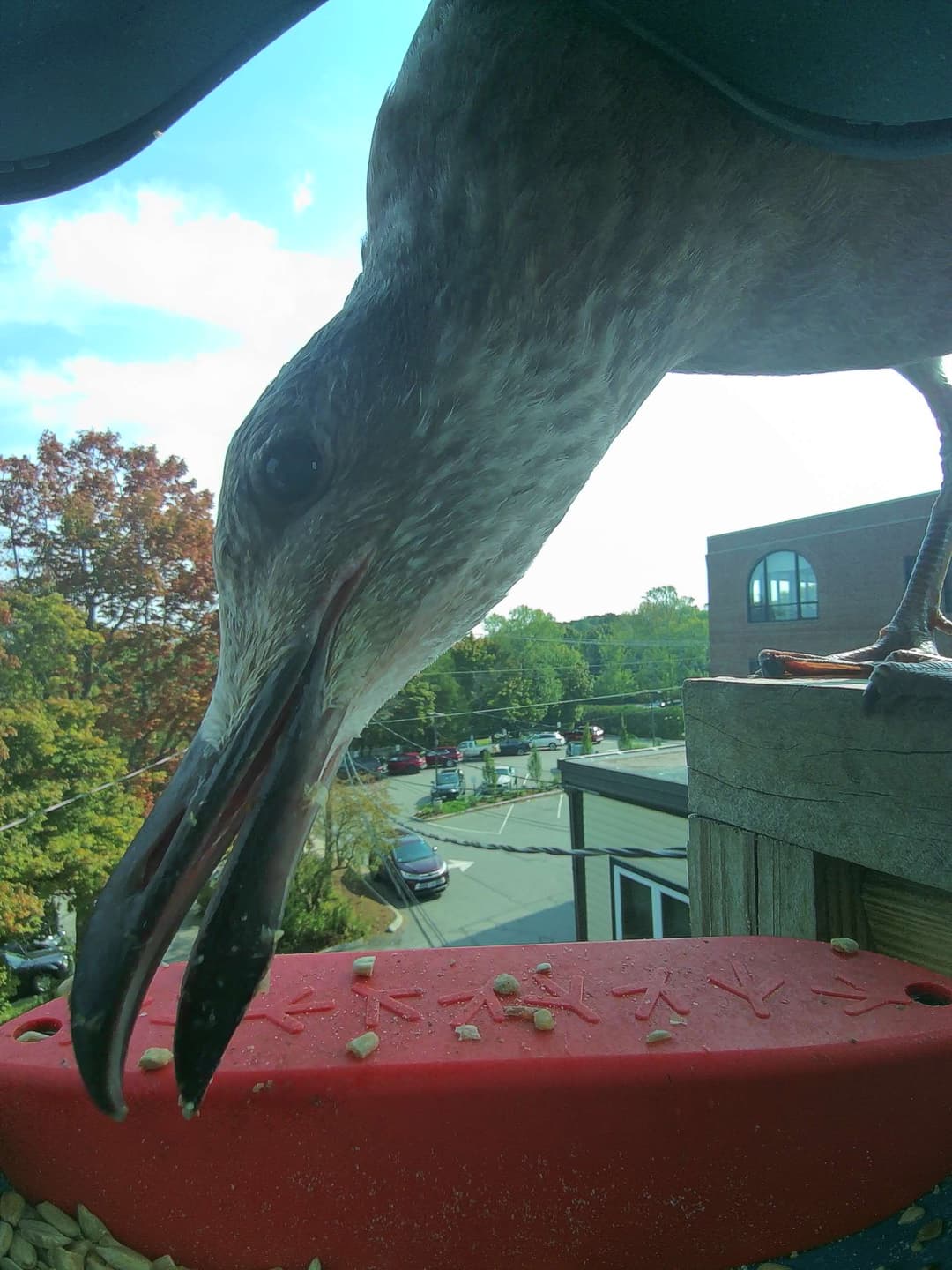
Lesser Black-Backed Gull vs American Herring Gull
Laughing Gull vs [Select a bird]

[Select a bird]
Pick a bird to compare
Lesser Black-Backed Gull vs [Select a bird]
[Select a bird]
Pick a bird to compare