
American Herring Gull
American Herring Gull
Also known as: Smithsonian Gull
Larus smithsonianus


Quick Identification guide
Quick Identification guide
- •
Features a robust body with a wingspan of around 55 inches, displaying a pale gray back and white underparts
- •
Possesses a yellow, stout beak often with a faint red spot on the lower mandible
- •
Exhibits pink legs and feet, with black-tipped wingtips that are visible in flight
What does a American herring gull sound like?
The American Herring Gull, often just called a seagull, has a variety of vocalizations. Its typical call is a harsh, raucous "ha-ha-ha-haaaah" sound. They often emit long, repeated cries when flying and squawking calls when threatened. In the mating season, the gulls perform "long-call" displays which are composed of guttural sounds followed by high-pitched notes. Herring Gulls don't have traditional "songs" like some birds, but their call repertoire is still diverse and complex.


Description
You're probably already familiar with these feathered troublemakers from one of your trips to the beach, where you might have referred to them simply as seagulls. They might have even swooped in and stolen some (or all) of your fries! They have a big appetite, and are apparently born with it. Before fledging, each chick will eat up to half a pound of food every day. For mum and dad that means feeding the kids pretty much non-stop.
The American herring gull can weigh between 600to1650grams and be from53to65centimeters tall.
The typical lifespan of an American herring gull is up to 20 years in the wild. Compared to its relatives, it outlives the Mew gull but is surpassed in longevity by the Great black-backed gull, which can live 25+ years.
Did you know?
Most popular questions about American herring gull
How to recognise a American herring gull?
General appearance
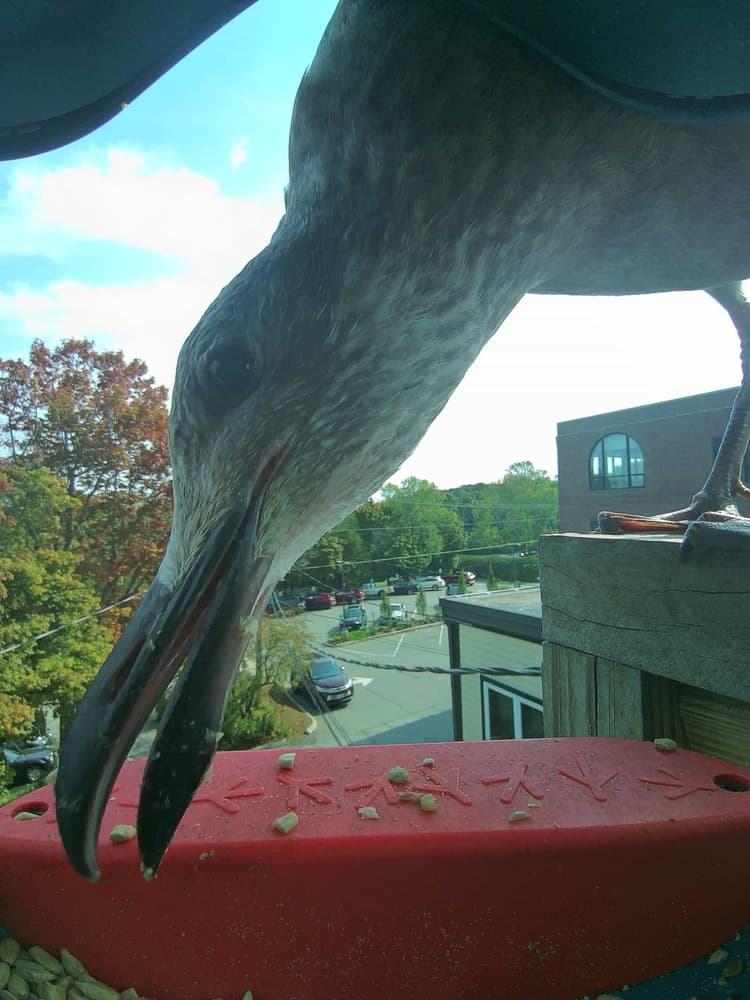
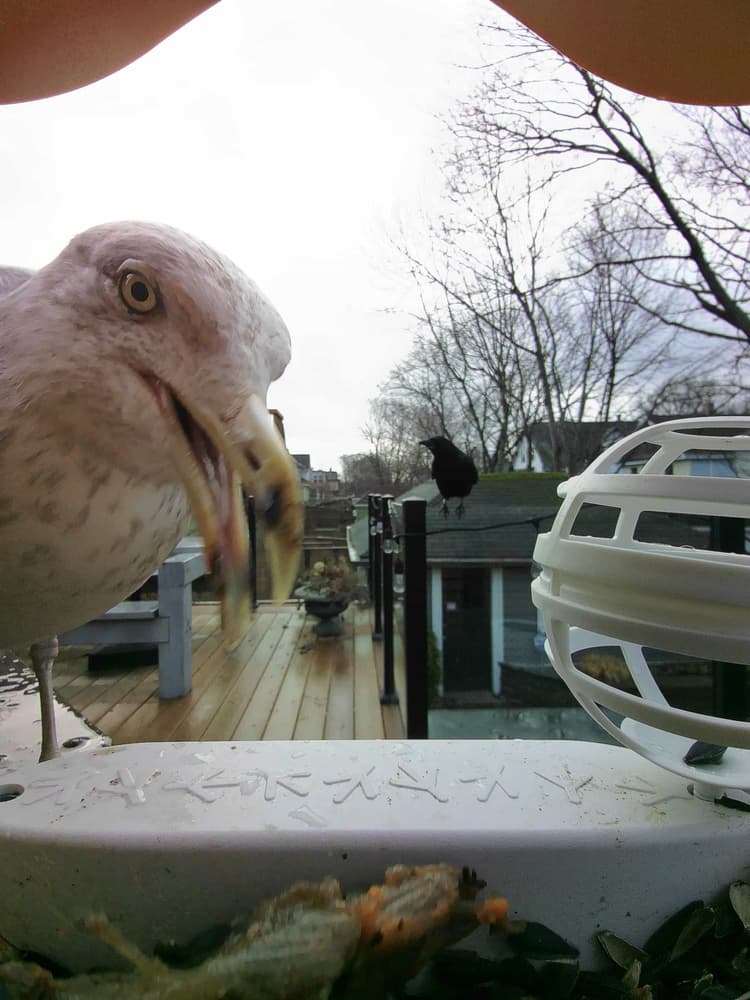
The American herring gull is a large gull species, displaying a distinctive silver-gray back and wings with black wingtips adorned with white spots. It features a white head, neck, and underparts, with a robust yellow bill marked by a red spot on the lower mandible. Its legs are generally pink, contributing to its recognizable silhouette.
Male vs female
There is minimal sexual dimorphism in American herring gulls. Males are slightly larger compared to females, although both sexes share similar plumage, making it challenging to differentiate them based solely on appearance without measuring body size.
Juvenile
Juvenile herring gulls differ significantly from adults, exhibiting mottled brown plumage with heavily streaked heads and bodies. They have dark bills and eyes, and their legs may appear more on the brownish side. Over the course of four years, they progressively attain adult plumage, with gradual changes in coloration.
Often mistaken for
Lesser Black-Backed Gull vs American Herring Gull
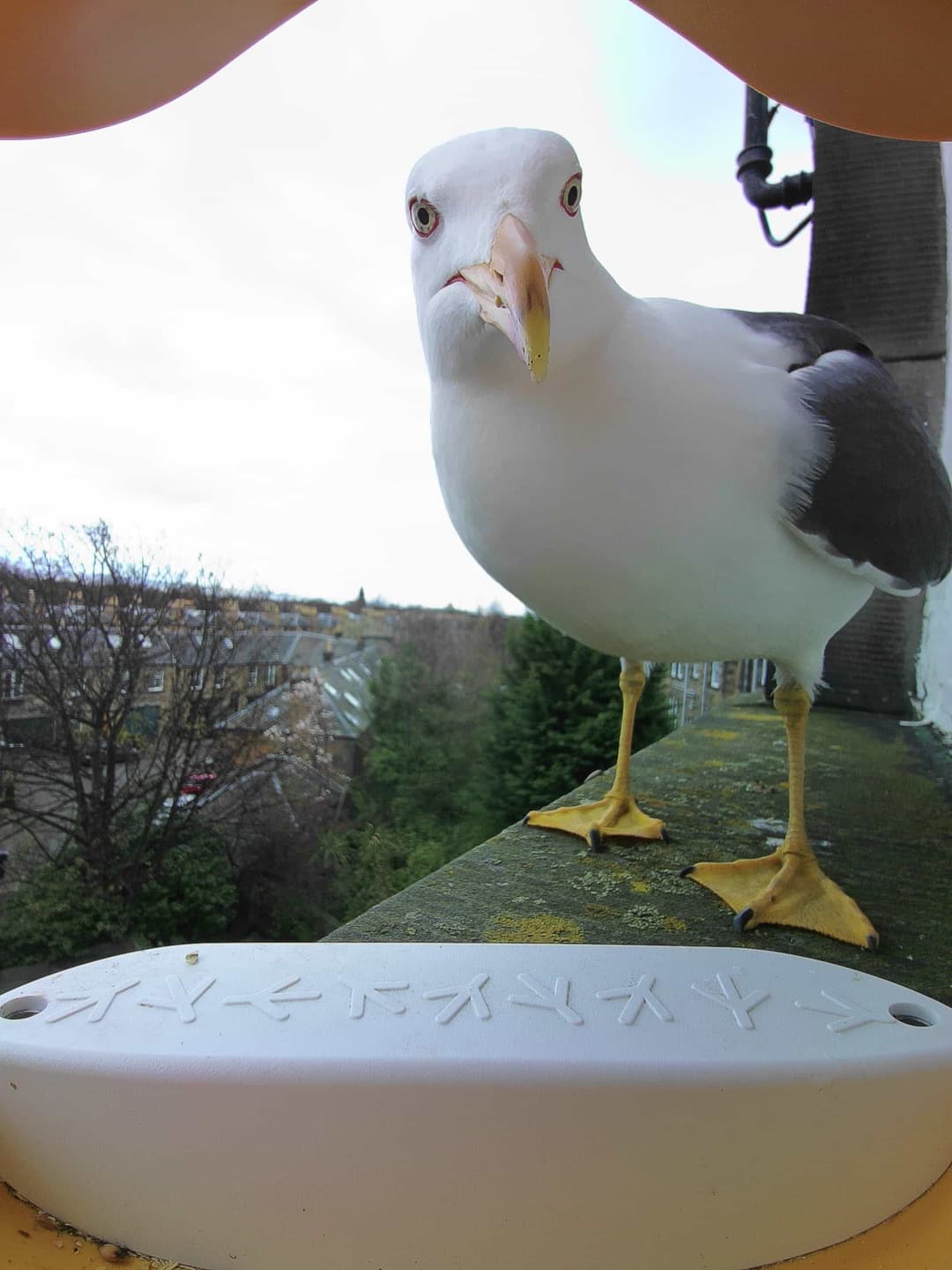
The American Herring Gull and Lesser Black-Backed Gull can look similar, but key differences exist. The Herring Gull is larger, with a bulkier build and a more robust bill. It has pinkish legs compared to the yellow legs of the Lesser Black-Backed Gull. The mantle and back of the Herring Gull are grey and lighter in shade, while the Lesser Black-Backed Gull has a darker slate-grey back. In flight, Herring Gulls show more white in their wingtips. For insider tips, observe the eye color; Herring Gulls usually have pale eyes, whereas Lesser Black-Backed Gulls have dark eyes. Pay attention to calls; they have distinct vocalizations.
Breeding and nesting habits of the American herring gull
Mating behaviors
American Herring Gull pairs select their nesting site together, emphasizing areas in soft soil, sand, or short vegetation.
Nesting details
Nests are often placed next to natural structures like rocks or logs to shield them from winds and predators. In rocky environments, crevices serve as nest sites. Pairs create several depressions, selecting one as the final nest, lining it with materials like vegetation, feathers, or synthetic items. Some sand nests remain sparsely lined.
Eggs and chick-rearing
Pairs prepare scrapes several days before egg-laying. After laying, the pair continuously adds vegetation during the monthlong incubation. Eggs are laid in the chosen depression, and both parents typically participate in incubation.
What does a American herring gull like to eat?
Aquatic animals
Bird eggs
Birds
Carrion
Crustaceans
Insects
Scraps
Small animals
Worms
Natural diet
American Herring Gulls are versatile and opportunistic feeders with diverse natural diets. They prey on marine invertebrates, including mussels, crabs, sea urchins, and crayfish along rocky shores. On mudflats, they consume worms, small clams, and mussels. In open water, they follow large predators and fishing boats to scavenge small fish, squid, and zooplankton. On land, especially in newly plowed fields, they eat earthworms and other invertebrates. Additionally, they are known to prey on insects, smaller seabirds, and even the adults, young, and eggs of other gulls. Gulls also scavenge on fish, carrion, and human trash. Individual gulls often specialize in a specific type of food.
Bird feeders
American Herring Gulls typically do not visit bird feeders as their natural food sources are varied and abundant in their native habitats. Their diet primarily consists of marine invertebrates and food obtained through scavenging, which aligns more with natural foraging behaviors than with visiting human-provided feeders.
Feeder selection for american herring gulls
American Herring gulls usually prefer open platform feeders, which have ample space for landing. You can place these feeders in wide open outdoor spaces, preferably spots that are visible from the sky. This will allow them to see the feed points and land safely.
Favorite snacks of american herring gulls
American Herring gulls are omnivorous and have a varied diet. They enjoy insects, fish, grains, and Garbage but they especially love fatty food. Copying their natural diet, you could include minced meat, fish pieces, or pet food in their feeder. However, our best results have been observed with Bird Buddy seeds. Chosen by experts for the season, they seem to attract the gulls effectively.
Fun tricks to attract american herring gulls
An interesting trick to attract these gulls would be to create a 'gull song' using their distinct shrieking calls. You can easily find recordings of their call online. Play the sound intermittently, especially during feeding time to grab their attention. Do bear in mind that these birds are clever and may quickly understand if the sound is a ruse, so intersperse it with actual feeding sessions. Another trick can be to regularly scatter some Bird Buddy seeds around the yard to create a trail leading to the feeder.
Where can you find American herring gulls?
Primary habitat
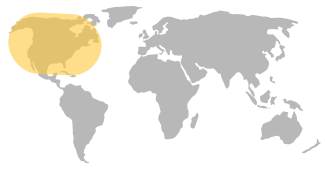
The American Herring Gull typically occupies coastal shorelines, beaches, and refuse dumps. Large open spaces near water are commonly used as winter hangouts.
Additional range
Their range covers the north Atlantic Coast, the Great Lakes, and the southern Alaskan coast. Elsewhere, mainly nonbreeding adults and immature gulls are found.
Do they migrate?
The American herring gull exhibits partial migratory behavior. In North America, these gulls breed primarily in Alaska, Canada, and the northern United States. During the winter, they migrate southwards to coastal and inland areas across the United States, reaching as far south as Mexico and the Caribbean. Migration typically begins in late summer to early fall, with timing varying depending on the geographical location of specific populations. Gulls in the northernmost breeding areas may start migrating as early as August, while others might begin in September or October. Key migratory routes include the Atlantic and Pacific Flyways, with significant stopping points along large bodies of water such as the Great Lakes and major river systems. During migration and in winter months, they are often found in large numbers at coastal locations, urban areas, and landfills. Return journeys northward start as early as February, peaking in March or April as they head back to their breeding grounds to nest and raise young. Therefore, the American herring gull’s movements are strongly tied to seasonal changes, seeking optimum environmental conditions and food availability.
What is the role of American herring gulls in nature and how to protect them?
Conservation status
The American Herring Gull is common but experiencing a steep decline, with populations decreasing by about 3.0% annually from 1966 to 2021, resulting in an 82% cumulative decline. It is not listed as vulnerable or endangered. Conservation efforts have reduced exploitation, and changes in fishing practices once aided recovery. However, threats remain, including overfishing, oil pollution, and pesticide contamination. Shifts in fishing practices have decreased available food sources and human activities continue to threaten local populations. Despite its large range, the species is of concern due to significant long-term declines.
Ecological role of American herring gulls
Its role in the ecosystem
The ecological significance of the American herring gull lies in its scavenging behavior. These birds control waste levels by consuming scraps and leftovers found on shorelines, around fishing boats, garbage dumps and bigger marine creatures like whales, dolphins or large fishes. Their predilection for invertebrates and small prey from tide flats, as well as their habit of breaking open and eating shellfish, also help suppress populations of these species, creating a more balanced ecosystem. By 'loafing', or spending long hours inactive around food sources, they might aid in nutrient cycling. Additionally, their mating behavior of returning to same breeding territories every season can contribute to maintaining the land or water body ecosystem in that breeding region. Hence, herring gulls contribute to waste control, prey population control and maintenance of their breeding habitats.
How to help protect American herring gulls
Preservation tips
Habitat preservation strategies
Ensure the preservation of American herring gull habitats including coastal areas, islands, and reservoirs by advocating for protected status. Lobby against the development of these areas, which may destroy nesting sites. Encourage stricter regulations against water pollution to protect their food supply. Maintain a safe distance from nested areas during breeding season to avoid disturbing the birds.
Community science initiatives
Engage the local community in conservation efforts. Organize clean-up drives and educational campaigns about the American herring gull. Promote citizen science programs where locals can participate in data collection and monitoring of the gull population. This not only helps in conservation efforts but also increases public awareness and appreciation for these birds.