
Laughing Gull
Laughing Gull
Leucophaeus atricilla
Quick Identification guide
Quick Identification guide
- •
Features a black head and red bill during breeding season, making it easy to identify
- •
Possesses grey wings and back with a contrast of white underparts
- •
Displays long, slender wings with pronounced black tips visible during flight
What does a laughing gull sound like?
The vocalizations of the laughing gull are characterized by loud, high-pitched calls that follow a rhythmic, ha-ha-ha-ha-haah-haah-haah-haah-haah pattern. These calls are usually flat but can undulate, perhaps depending on the situation the bird finds itself in. The sound resonates with a raucous quality, similar to a scream. This description helps define the distinctive and notably loud laughter-like call for which this gull is renowned.
Description
These resourceful, loud and sociable birds have got just about one thing on their minds: food! They are not picky about what qualifies as sustenance, and will stop at almost nothing to get it. Plus, they are pretty resourceful, and have been spotted sitting on the backs of pelicans and stealing the catch right out of their mouth!
The laughing gull can weigh between 300to350grams and be from39to46centimeters tall.
The lifespan of the laughing gull typically ranges up to 15-20 years. Although exact lifespans of related species vary slightly, most medium-sized gulls, like the herring gull, also generally live around 15-20 years. Therefore, laughing gulls' lifespans are relatively standard when compared to related species.
Did you know?
Most popular questions about laughing gull
How to recognise a laughing gull?
General appearance
The Laughing Gull is approximately the size of a crow, with a length of 15-17 inches. It exhibits a long, pointed, swept, and tapered wing shape. The back is dark gray, fading into black wingtips. The bird's bill and legs are usually dark, often with a strong red tinge. The tail shape is typically rounded, short, and square-tipped.
Male vs female
The Laughing Gull shows no sexual dimorphism, meaning males and females have similar physical appearances. Both genders sport the same dark gray back fading into black wingtips, along with the dark bill and legs which often come with a red tinge.
Juvenile
Juvenile Laughing Gulls initially present a scaly brown pattern which transitions into a gray back by their first winter. A dark leg color and a particularly shaped bill, along with their relative size to a crow, aids in identifying juveniles of this species. Variations in their coloration and physical attributes become less distinctive as they age into adulthood.
Often mistaken for
Lesser Black-Backed Gull vs Laughing Gull
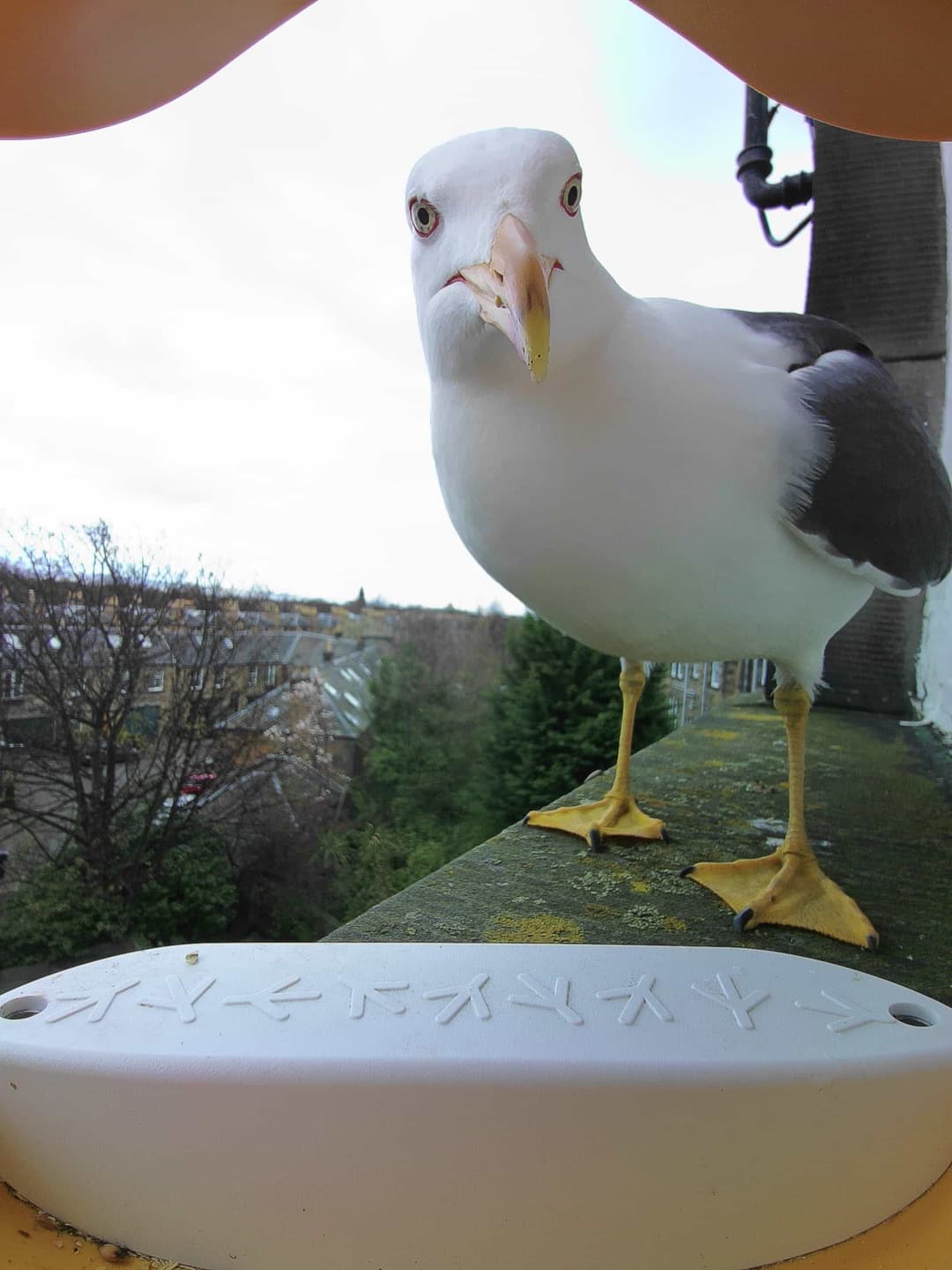
Laughing Gulls are smaller with a more slender build than Lesser Black-Backed Gulls. They have a distinctive black head in breeding plumage and a white eye ring, whereas the Lesser Black-Backed has a grayish back and yellow legs. Laughing Gulls also have a more buoyant flight pattern.
American Herring Gull vs Laughing Gull
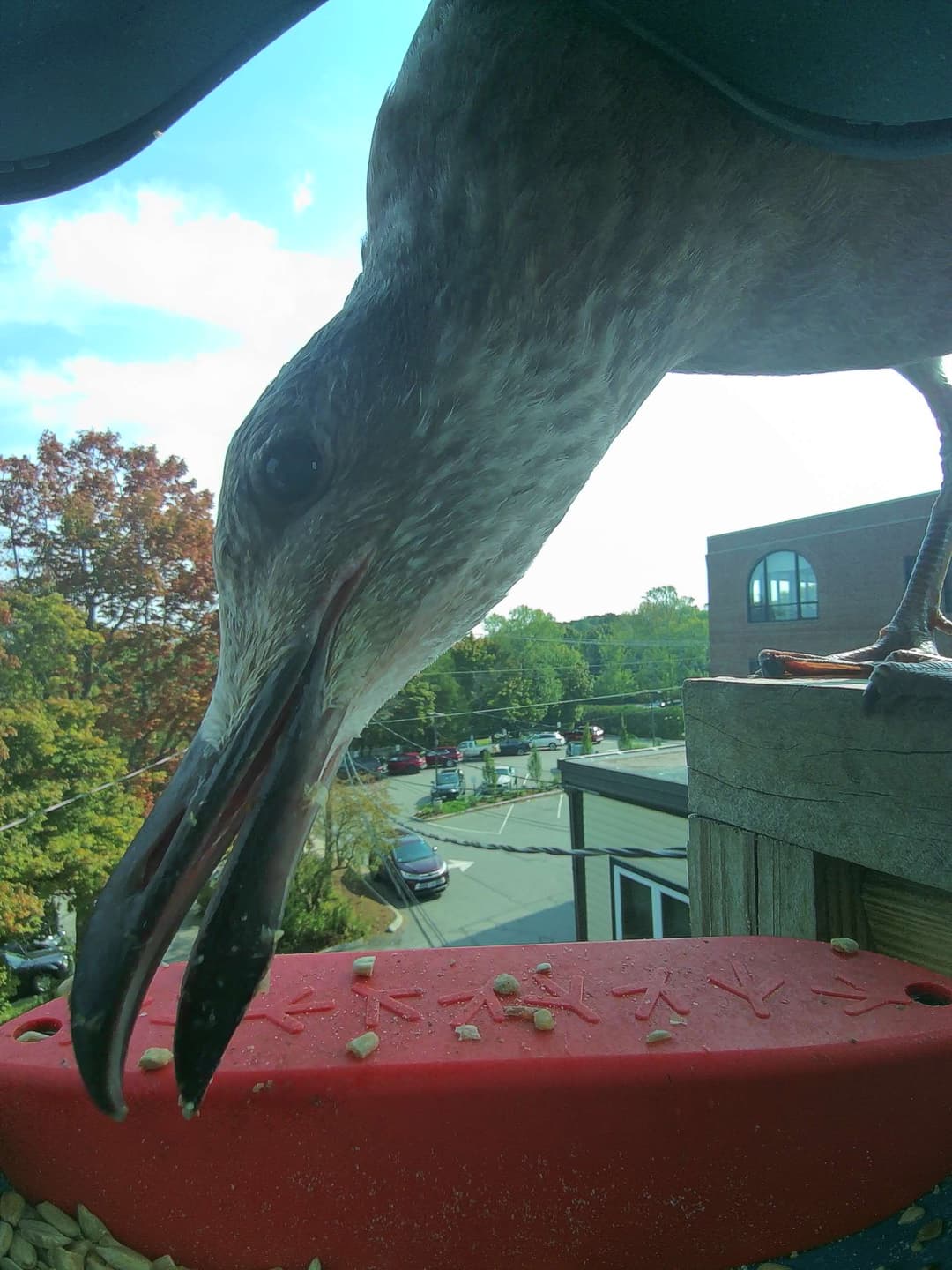
Laughing Gulls are smaller and have a dark, unmarked head in breeding season compared to the American Herring Gull's light head with streaks. The Laughing Gull's bill is thinner and red, while the American Herring Gull has a heavier, yellow bill. Laughing Gulls have a more agile and graceful flight.
Breeding and nesting habits of the laughing gull
Mating behaviors
Laughing gulls engage in courtship rituals often observed near nesting colonies. These behaviors help strengthen pair bonds and involve various displays by both sexes to attract mates.
Nesting details
Laughing gulls breed in colonies, sometimes consisting of thousands of nests. They may associate with other gull or tern species. Nests are typically located on the ground among grass or bushes. In southern areas, they may choose sites under shrubs or vines to protect from the sun. Nests, constructed by both sexes, may range from simple ground scrapes lined sparsely, to shallow cups made of grass, sticks, and debris, often lined with finer grass.
Eggs and chick-rearing
Laughing gulls lay their eggs in the constructed nests, with both parents involved in incubation. Adults may continue adding materials to the nest throughout this period. After hatching, both parents are responsible for feeding and caring for the young until they are ready to fledge.
What does a laughing gull like to eat?
Aquatic animals
Bird eggs
Crustaceans
Insects
Natural diet
The laughing gull has a diverse diet consisting of crustaceans, insects, and fish, which varies depending on location and season. Common natural food sources include small fish, crustaceans, insects, earthworms, and snails. During late spring, laughing gulls gather to consume the eggs of horseshoe crabs. They also eat eggs and occasionally the young of other birds, particularly Royal Terns.
Bird feeders
Laughing gulls are opportunistic feeders and may consume food scraps or refuse found near human habitation, but they are not common visitors to bird feeders specifically designed for small songbirds.
Attracting laughing gulls with food
Laughing Gulls are fond of both natural food sources and human leftovers. They usually eat insects, fish, and marine invertebrates but will also feast on garbage and discarded food. A tasty and healthy option to attract these birds to your yard or feeder is by using Bird Buddy seeds. Chosen by experts as the most suitable for different seasons, these seeds would definitely draw the attention of eager, food-searching Laughing Gulls.
Suitable feeder types
As a type of sea gull, Laughing Gulls are more accustomed to feeding on the ground or in the water. Hence, instead of using traditional hanging feeders, we recommend placing a ground feeder in your yard. An open, low, platform-style feeder would be most inviting to these ground-feeding birds.
Fun tricks to welcome laughing gulls
Playing bird songs can be an excellent method to attract Laughing Gulls, as they respond well to auditory cues. Try playing Laughing Gull calls, which are distinctive and easily recognizable. Also, don't forget to maintain a clean feeding area as these gulls are very protective of their feeding and nesting places. Show them that your yard is a safe and fun haven, perfect for a sing-along.
Where can you find laughing gulls?
Primary habitat
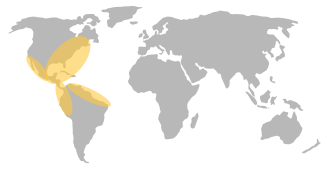
Laughing gulls favor coastal regions, common around beaches, salt marshes, coastal bays, and piers. They can range several miles inland to rivers, fields, and dumps.
Additional range
In addition to coastal areas, laughing gulls are found well inland in Florida and at Salton Sea, California. They nest on beaches and dredge spoil islands among grass and bushes.
Do they migrate?
The laughing gull is a migratory bird that withdraws from northern regions during winter. It primarily breeds along the Atlantic coast of North America, from Maine to northern South America. As winter approaches, many laughing gulls migrate southward, traveling as far as northern South America. This migration typically involves moving along the coastal areas, avoiding extensive journeys into inland regions. Key locations along their migration route include the coastal areas of the southeastern United States, the Gulf of Mexico, and the Caribbean. Some gulls also winter in Central America. The timing of migration is generally observed in the fall, with gulls departing their breeding grounds by late summer to early autumn, and returning in the spring as temperatures rise. During their journey, laughing gulls are rarely seen straggling far inland, as they tend to adhere closely to coastal habitats. This coastal preference ensures access to food sources like fish and marine invertebrates, which are abundant in these environments. The migration strategy of the laughing gull highlights its adaptability and reliance on coastal ecosystems throughout its life cycle.
What is the role of laughing gulls in nature and how to protect them?
Conservation status
The laughing gull is currently abundant and widespread. Its numbers were severely reduced in the 19th century due to hunting for the feather trade but recovered well in the early 20th century. Although there has been some decline at northern colonies due to competition with larger gulls, the overall population remains stable. Some colonies face localized threats, but there are no indications that the species as a whole is vulnerable or endangered. Conservation efforts generally focus on managing specific regional threats and maintaining healthy habitats to ensure their continued abundance.
Ecological role of laughing gulls
Its role in the ecosystem
The Laughing Gull plays an important role in the ecosystem, contributing to pest control by consuming a diet rich in insects and crustaceans. Their consumption of numerous small fish assists in the regulation of fish populations. They indirectly help in waste management as they also consume refuse. Their feeding behavior can impact other species, as evidenced by their stealing food from the Brown Pelican, which can affect balance of food sources. Laughing Gulls also have impact on plant ecology, as they may assist in seed dispersal through their feeding and excretion. Their nesting habitats influence and contribute to the grass and shrub ecosystems, assisting in their nourishment and development. Further, their occasional consumption of other birds' eggs and young can impact other bird populations in the ecosystem, demonstrating their role as both a predator and an influencer of biodiversity.
How to help protect laughing gulls
Preservation tips
Habitat preservation strategies
To support the conservation of the Laughing Gull, habitat preservation is vital. The nesting and breeding areas along coastlines should be protected from human activity and development. Legislation could be enforced to limit disturbances in these areas, especially during breeding season. This includes control of potential invasive species and effective waste management to maintain the habitat's cleanliness.
Community science initiatives
Community members can participate in science initiatives by reporting sightings of Laughing Gulls to a local Audubon Society or bird observatory. Schools and organizations can also organize educational activities about the importance of these birds and how to support their conservation. Sponsor or participate in local cleanup projects to maintain the cleanliness and viability of the gulls' habitats. Furthermore, promote responsible tourism practices to mitigate human-related disturbances to the species.