
Lesser Black-Backed Gull
Lesser Black-Backed Gull
Larus fuscus


Quick Identification guide
Quick Identification guide
- •
Features slate-gray to dark black wings and back contrasting with its white head, neck, and underparts
- •
Possesses a yellow beak with a red spot near the tip, distinctive in adults
- •
Exhibits a medium-sized build with a streamlined body and long, pointed wings
What does a lesser black-backed gull sound like?
The Lesser Black-backed Gull produces a strident 'kyow' which is deeper than the Herring Gull's call. The call pattern is flat and undulating, giving it a raucous sound, characteristic of this species. This provides a distinctive audio signature, assisting in identification even when the bird is not visually spotted. Its sounds represent a varying harmony of intense and penetrating calls, making it a truly unique species in terms of vocalization.


Description
There is absolutely nothing lesser about these fellas! They are reasonably big birds that can live a whopping 26 years, and in certain cases travel up to 4600 miles. Huh, must be all that seaside living! Did you know they practice something called leapfrog migration? The more up north they live, the farther south they travel.
The lesser black-backed gull can weigh between 550to1200grams and be from51to61centimeters tall.
The lifespan of the Lesser Black-backed Gull typically reaches up to 15 years. However, some individuals have been recorded to live over 34 years. Compared to other gulls in the Larus genus like the Herring Gull or the Great Black-backed Gull, its lifespan is relatively similar. The differences mostly occur in the maximum ages reached.
Did you know?
Most popular questions about lesser black-backed gull
How to recognise a lesser black-backed gull?
General appearance
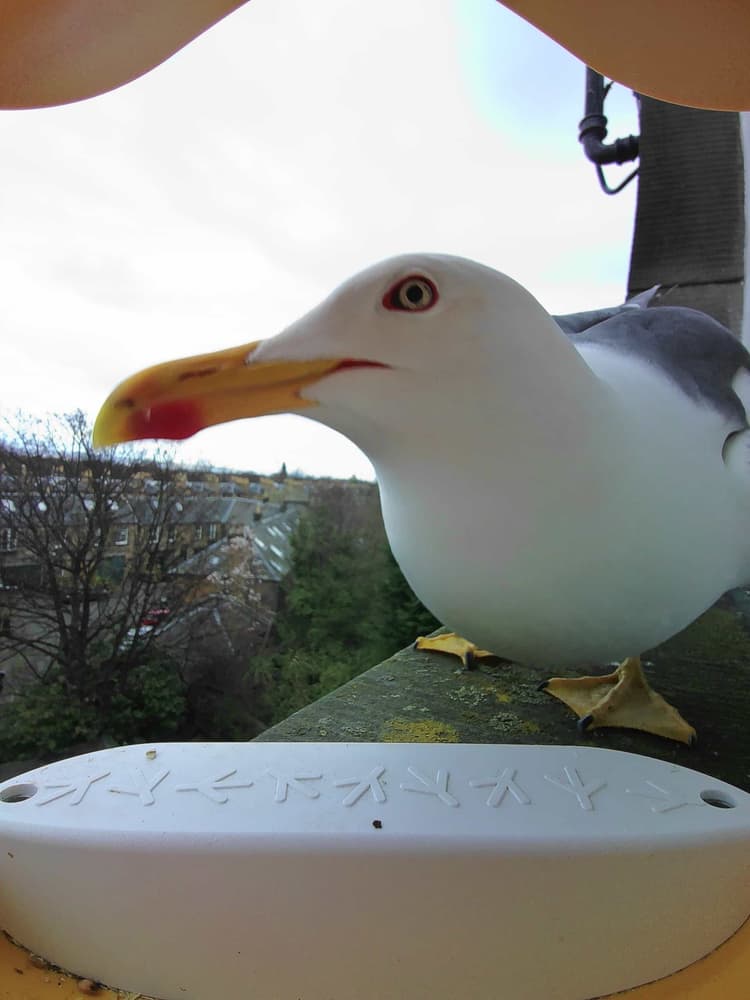
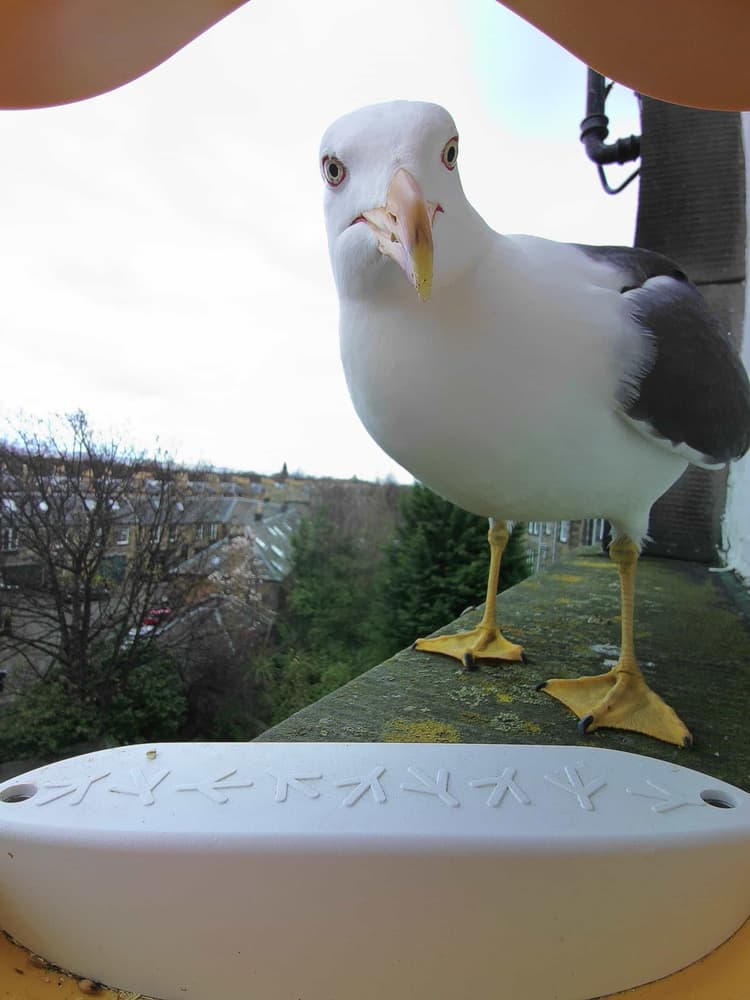
The Lesser Black-backed Gull is about the size of a Mallard or Herring Gull, with a length of 23 inches (58 cm). It features distinctly darker grey back and wings, with a coloration of black, brown, red, white, and yellow. Its legs are yellow and wings are long, pointed, narrow and tapered. The tail appears rounded, short, and square-tipped.
Male vs female
The Lesser Black-backed Gull does not present significant sexual dimorphism, meaning males and females look similar. Both exhibit dark gray back and wings with yellow legs. Hence, distinguishing between males and females relies mainly on behavioral observations rather than physical differences.
Juvenile
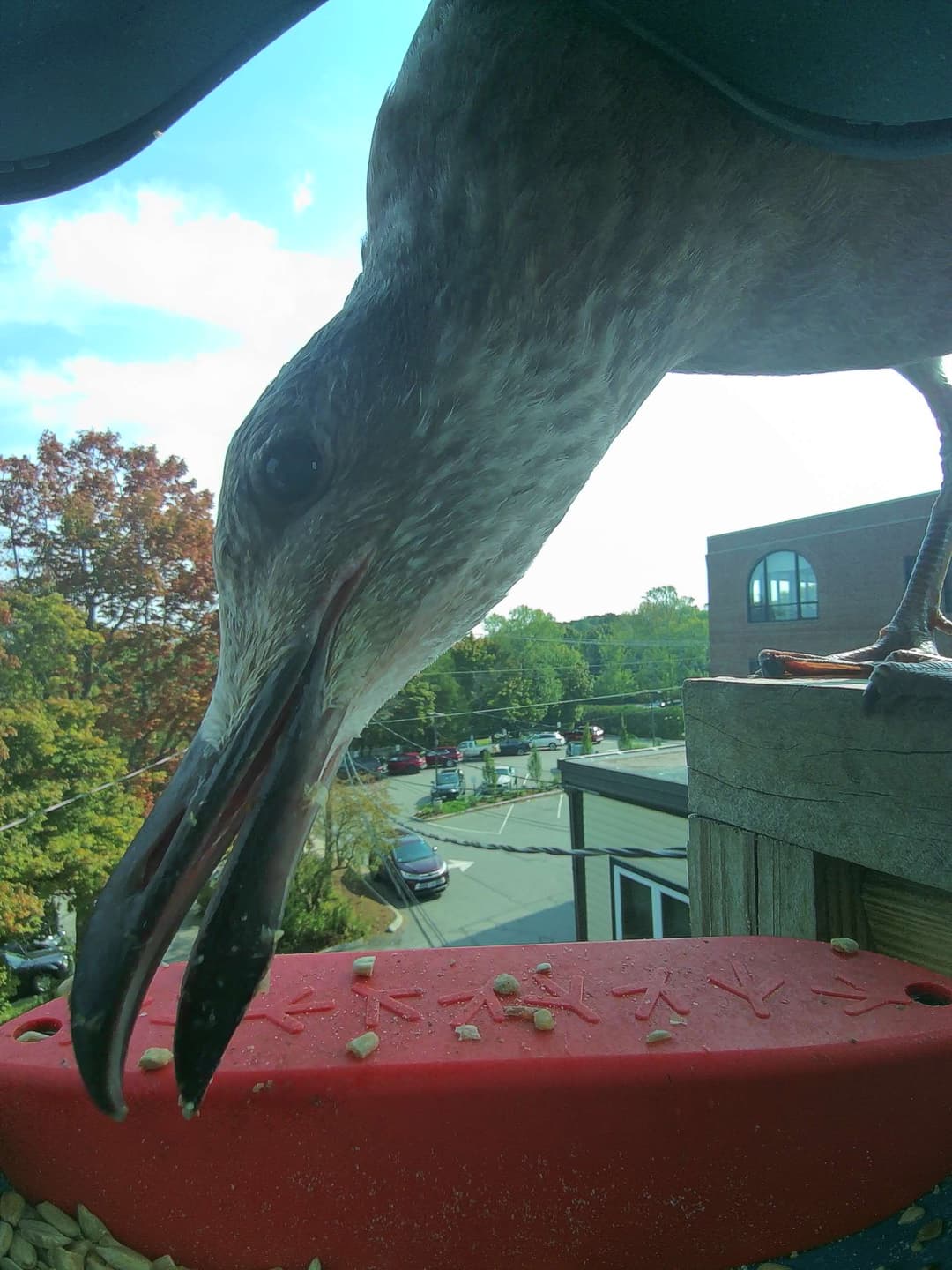
Juvenile Lesser Black-backed Gulls closely resemble young Herring Gulls until their darker back color starts to develop. This transformation phase represents the most noticeable change from their earlier youthful appearance. Therefore, the identification of juveniles, before the changes in their back color, is often challenging due to their strong resemblance with the Herring Gulls' young ones.
Often mistaken for
American Herring Gull vs Lesser Black-Backed Gull
The Lesser Black-Backed Gull is smaller and more slender than the American Herring Gull. It features a darker slate-gray to black back and wings, while the Herring Gull has a lighter gray back. The Lesser Black-Backed Gull has bright yellow legs, contrasting with the pink legs of the Herring Gull. In terms of behavior, the former is often seen in the company of other gull species during migration and wintering, whereas the Herring Gull is more solitary. Look for the yellow bill with a red spot on the lower mandible, which is a key giveaway for identifying the Lesser Black-Backed Gull.
Breeding and nesting habits of the lesser black-backed gull
Mating behaviors
Lesser black-backed gulls typically begin breeding at four years old and are not yet established as a nesting bird in North America. They form colonies for nesting and have been observed pairing with Herring Gulls. Courtship involves mutual displays and vocalizations to strengthen pair bonds.
Nesting details
Nesting occurs in colonies, with sites on the ground, cliff ledges, or building roofs. Both sexes participate in building the nest, which consists of a mound made from grasses, seaweed, and debris, with a shallow depression lined with fine materials.
Eggs and chick-rearing
Information on eggs and chick-rearing is limited for North America. However, in general, gulls lay two to three eggs per clutch, and both parents share incubation duties and care for the chicks until they fledge. There is no indication of the species nesting in gardens; thus, no practical advice for creating a garden habitat is provided.
What does a lesser black-backed gull like to eat?
Aquatic animals
Berries
Bird eggs
Carrion
Scraps
Small animals
Natural diet
The lesser black-backed gull has an omnivorous diet that includes a wide variety of natural food sources. These include fish, insects, mollusks, crustaceans, marine worms, small birds, nestlings, eggs, and rodents. The gull also consumes plant-based sources such as berries, seeds, and seaweed. Additionally, it is known to scavenge from garbage dumps.
Bird feeders
Though the lesser black-backed gull primarily relies on natural food sources, it may occasionally visit bird feeders if they are nearby. Common food items it might consume at feeders include breadcrumbs, suet, and various types of seeds. However, it is not a frequent visitor to bird feeders.
Setting up the perfect stage for lesser black-backed gull
Creating a welcoming environment for the lesser black-backed gull starts with setting up the right type of feeder. These birds are larger than your common backyard varieties, so they prefer platform feeders where they can easily land and eat. You can place the feeders near water sources, as these birds love to swim and forage for food near water.
Serving the favorite menu
Lesser black-backed gulls like a mix of insects, fish, earthworms, and crustaceans. So, an assemblage of Bird Buddy seeds - chosen by birding experts for the season - would serve as a perfect snack for them. Bird Buddy seeds have the ideal balance of nutrients these gulls need for their diet. Spread a generous amount of seeds on your platform feeder daily to tempt them into visiting regularly.
Fun ways to encourage visit
To encourage these fun-loving birds to stay a little longer and perhaps give you a charming little concert, consider installing a birdbath or a small splash pool. The sight of water often attracts these birds. Make sure to keep the water clean. Lastly, keeping the surroundings quiet and peaceful will also contribute to making your yard or feeder a favourite spot for these gulls.
Where can you find lesser black-backed gulls?
Primary habitat
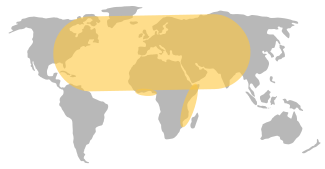
The lesser black-backed gull mainly occupies coastal areas, especially beaches, bays, and estuaries, including coastal islands.
Additional range
Other unexpected environments it inhabits are garbage dumps, fishing harbors, and inland lakes, particularly around the Great Lakes and other northeastern locations. These settings offer ample food sources.
Do they migrate?
The lesser black-backed gull exhibits migratory behavior as it is found in different regions depending on the time of year. While it can be found in North America throughout the year, the largest numbers are observed during the winter months. This suggests a migration pattern where the gull moves from its breeding grounds to wintering grounds. In North America, the lesser black-backed gull primarily winters in more temperate and southerly locations. During winter, many individuals move quite far south, being common in Florida, and regularly seen in coastal Texas and parts of the Caribbean. This indicates a southward migration for the winter season. Most of the lesser black-backed gulls that winter in North America likely originate from breeding populations in Iceland and Greenland. They migrate from these northern regions to take advantage of milder climates and abundant food resources in southern locations during the harsher winter months. Overall, the migration route for the lesser black-backed gull primarily involves a shift from northern breeding areas in Iceland and Greenland to wintering areas further south in North America, including states like Florida and regions like coastal Texas and parts of the Caribbean.
What is the role of lesser black-backed gulls in nature and how to protect them?
Conservation status
The lesser black-backed gull is currently considered to be of least concern due to its expanded numbers and distribution over the last century. It is a common species with no immediate threat of being vulnerable or endangered. However, key conservation efforts focus on habitat protection and monitoring populations to prevent potential future declines. Significant threats include habitat degradation, pollution, and human disturbances, which could impact their food sources and nesting grounds. Maintaining healthy coastal and inland habitats is vital for the continued stability of this species.
Ecological role of lesser black-backed gulls
Its role in the ecosystem
The Lesser Black-backed Gull plays a crucial ecological role. As an omnivore, its diet helps regulate populations of many organisms, from fish, insects, mollusks, crustaceans, and marine worms to small birds, nestlings, eggs, and rodents, thus acting as a pest controller. Its feeding behavior also influences the structure of these species through predation. In turn, it provides a food source for predators higher up the food chain. Additionally, this gull contributes to the dispersion of seeds, aiding plant propagation. When foraging on the sea surface or the ground, the gull picks up seeds ingested while eating berries. These seeds then get dispersed through the gull's excrement, often at great distances from their origin. Furthermore, the gull's scavenging behavior in garbage dumps helps in the decomposition and recycling of organic materials, contributing to nutrient cycling in the ecosystem. Despite not being a native nesting bird in North America, the Lesser Black-backed Gull's tendency to pair up with Herring Gulls at colonies might influence local bird populations and behaviors.
How to help protect lesser black-backed gulls
Preservation tips
Habitat preservation strategies
Promote the conservation of wetland and coastal areas where lesser black-backed gulls commonly breed and forage. Limit human activities in these regions during breeding season to minimize disturbance. Support policies encouraging sustainable fishing practices, as overfishing could reduce their food resources. Participate in clean-up initiatives to reduce pollution and maintain the gulls' habitat health.
Community science initiatives
Encourage community engagement in local bird watching groups and citizen science projects tracking lesser black-backed gull populations. Educate the public about the importance of these gulls to the ecosystem. Report injured gulls to local wildlife rescue organizations. Organize community events focused on the protection of this bird species and its habitat. Advocate for the incorporation of conservation topics in local school curricula.