American Herring Gull or Lesser Black-Backed Gull?
Here's how to tell the difference
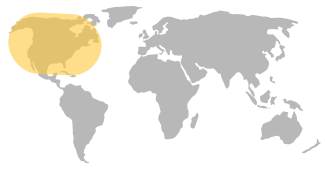
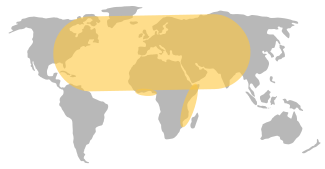


American Herring Gull


Lesser Black-Backed Gull
American Herring Gull
Larus smithsonianus
Also known as: Smithsonian Gull
General appearance
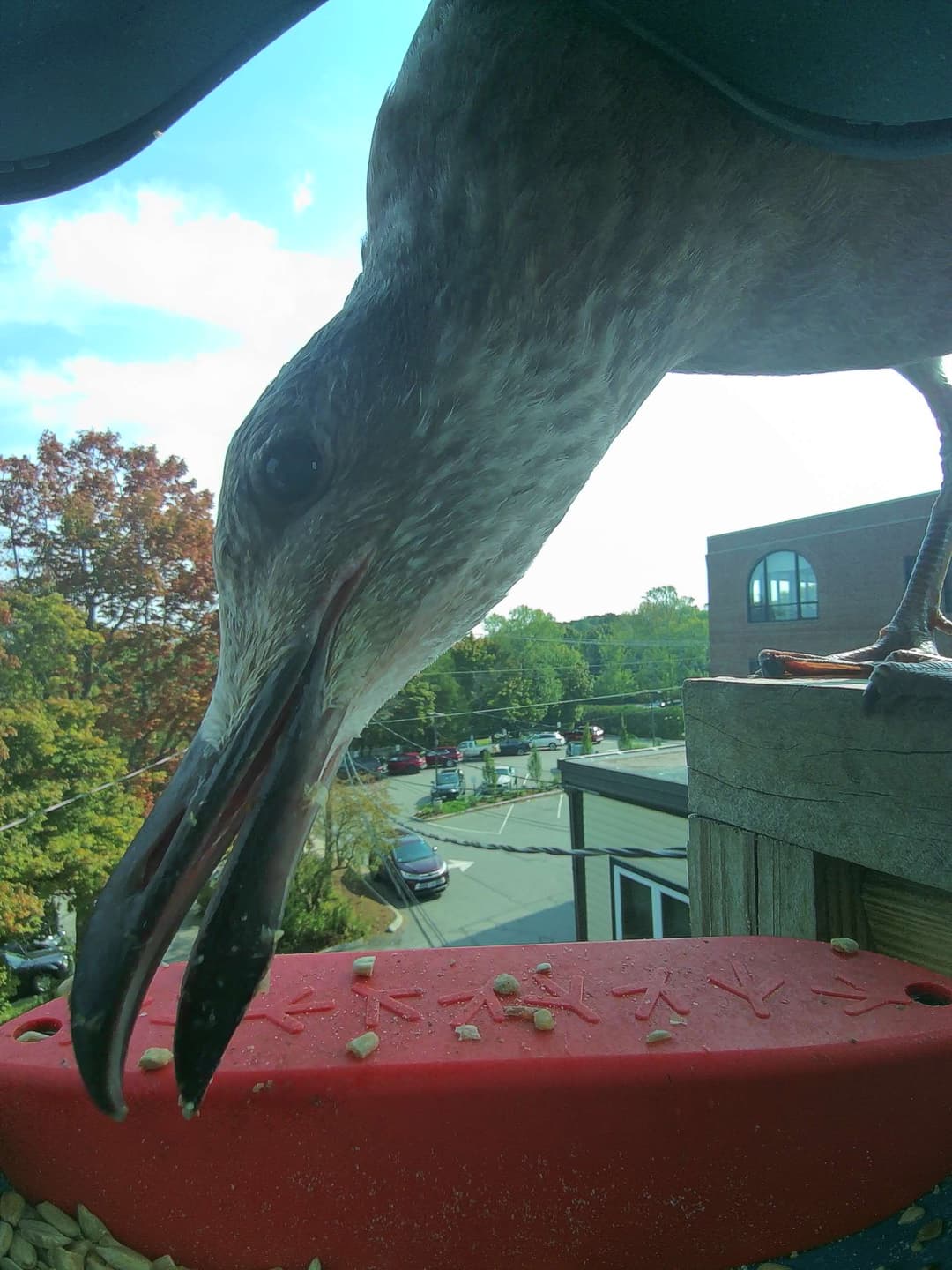
The American herring gull is a large gull species, displaying a distinctive silver-gray back and wings with black wingtips adorned with white spots. It features a white head, neck, and underparts, with a robust yellow bill marked by a red spot on the lower mandible. Its legs are generally pink, contributing to its recognizable silhouette.
Male vs female
There is minimal sexual dimorphism in American herring gulls. Males are slightly larger compared to females, although both sexes share similar plumage, making it challenging to differentiate them based solely on appearance without measuring body size.
Juvenile
Juvenile herring gulls differ significantly from adults, exhibiting mottled brown plumage with heavily streaked heads and bodies. They have dark bills and eyes, and their legs may appear more on the brownish side. Over the course of four years, they progressively attain adult plumage, with gradual changes in coloration.
Size
20.9 - 25.6 in/21.2 - 58.2 oz
There's more to learn about American Herring Gull
View full detailsLesser Black-Backed Gull
Larus fuscus
General appearance
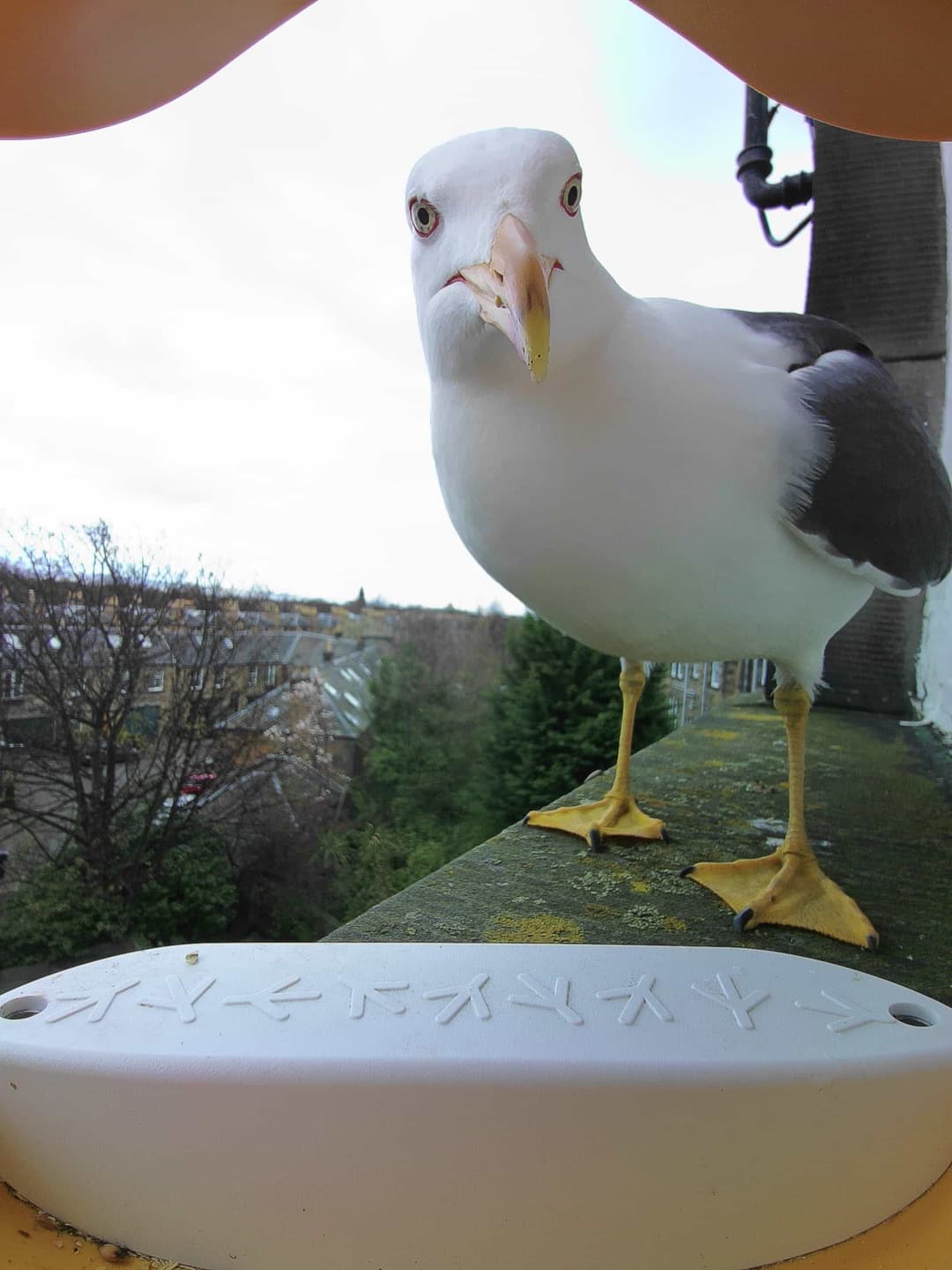
The Lesser Black-backed Gull is about the size of a Mallard or Herring Gull, with a length of 23 inches (58 cm). It features distinctly darker grey back and wings, with a coloration of black, brown, red, white, and yellow. Its legs are yellow and wings are long, pointed, narrow and tapered. The tail appears rounded, short, and square-tipped.
Male vs female
The Lesser Black-backed Gull does not present significant sexual dimorphism, meaning males and females look similar. Both exhibit dark gray back and wings with yellow legs. Hence, distinguishing between males and females relies mainly on behavioral observations rather than physical differences.
Juvenile
Juvenile Lesser Black-backed Gulls closely resemble young Herring Gulls until their darker back color starts to develop. This transformation phase represents the most noticeable change from their earlier youthful appearance. Therefore, the identification of juveniles, before the changes in their back color, is often challenging due to their strong resemblance with the Herring Gulls' young ones.
Size
20.1 - 24.0 in/19.4 - 42.3 oz
There's more to learn about Lesser Black-Backed Gull
View full detailsHow to tell the American Herring Gull from the Lesser Black-Backed Gull
Visual differences
The American Herring Gull is larger, featuring a silver-gray back and wings with black wingtips, and pink legs. Its robust yellow bill is marked by a red spot on the lower mandible. In contrast, the Lesser Black-backed Gull has a darker gray back, yellow legs, and a pointed, tapered wing shape. Both species have similar-sized bodies, but the Herring Gull generally appears bulkier at 21-26 inches in length compared to the Lesser Black-backed Gull's 20-24 inches. Juveniles are challenging to differentiate until plumage matures.
Key differences and behavior
The American Herring Gull (Larus smithsonianus) and Lesser Black-Backed Gull (Larus fuscus) differ notably in behavior and habitat preferences. Herring Gulls are opportunistic scavengers found along coastlines and refuse dumps, with a broader North American range. They consume a diverse diet, including marine invertebrates and human scraps, often specializing in specific food types. In contrast, Lesser Black-Backed Gulls, residing mainly in coastal areas, bays, and garbage dumps, exhibit leapfrog migration and occasionally visit bird feeders. Both species form colonies, but Lesser Black-Backed Gulls are not established nesters in North America. Herring Gulls build nests by natural structures using varied materials, while Lesser Black-Backed Gulls opt for ground, ledge, or roof sites. Both share incubation and chick-rearing duties, but Herring Gulls have a more prominent presence in North America.
American Herring Gull vs [Select a bird]

[Select a bird]
Pick a bird to compare
Lesser Black-Backed Gull vs [Select a bird]
[Select a bird]
Pick a bird to compare