Nuttall’s Woodpecker or Hairy Woodpecker?
Here's how to tell the difference


Nuttall’s Woodpecker


Hairy Woodpecker
Nuttall’s Woodpecker
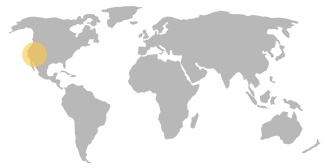
Dryobates nuttallii
General appearance
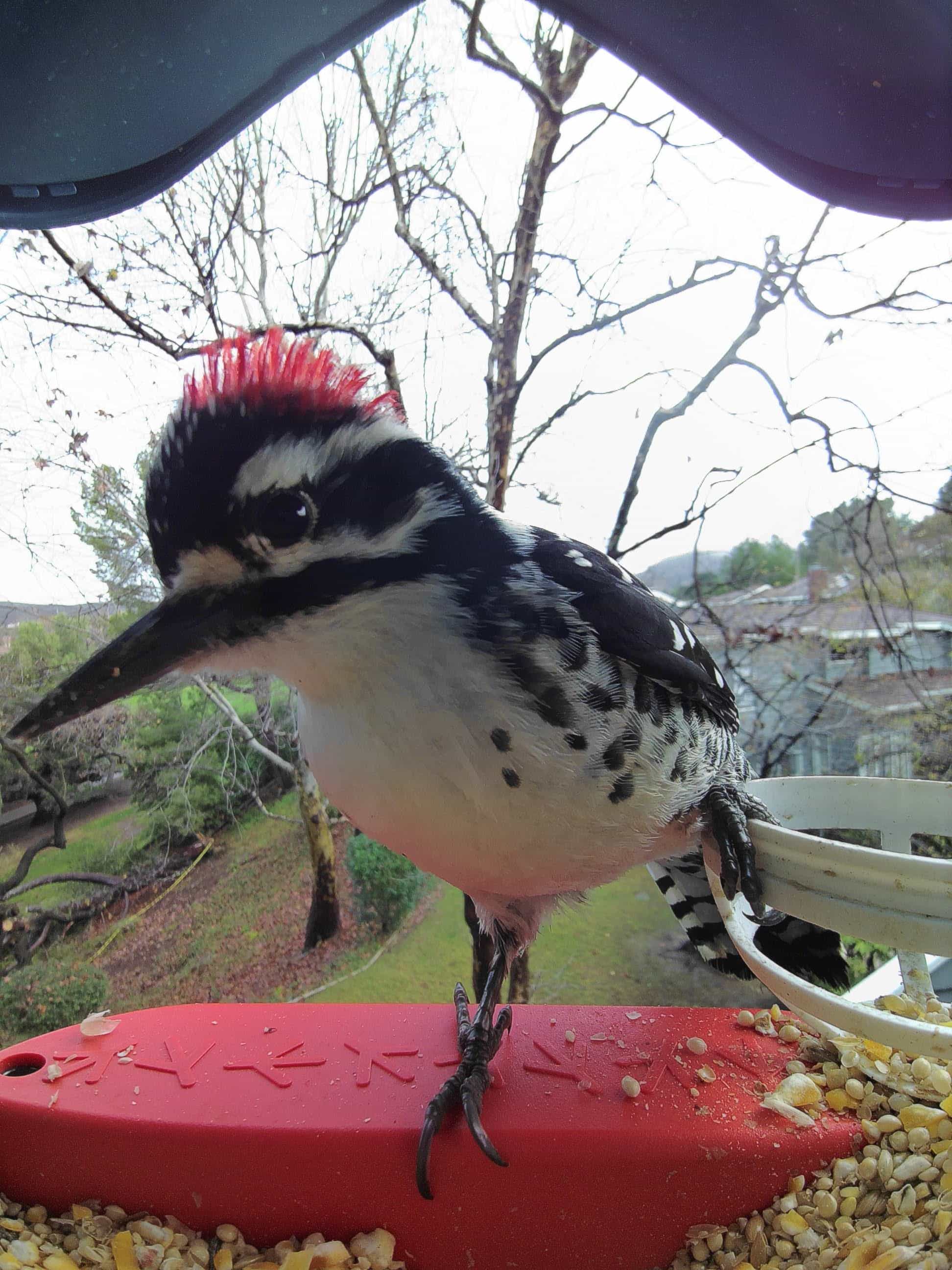
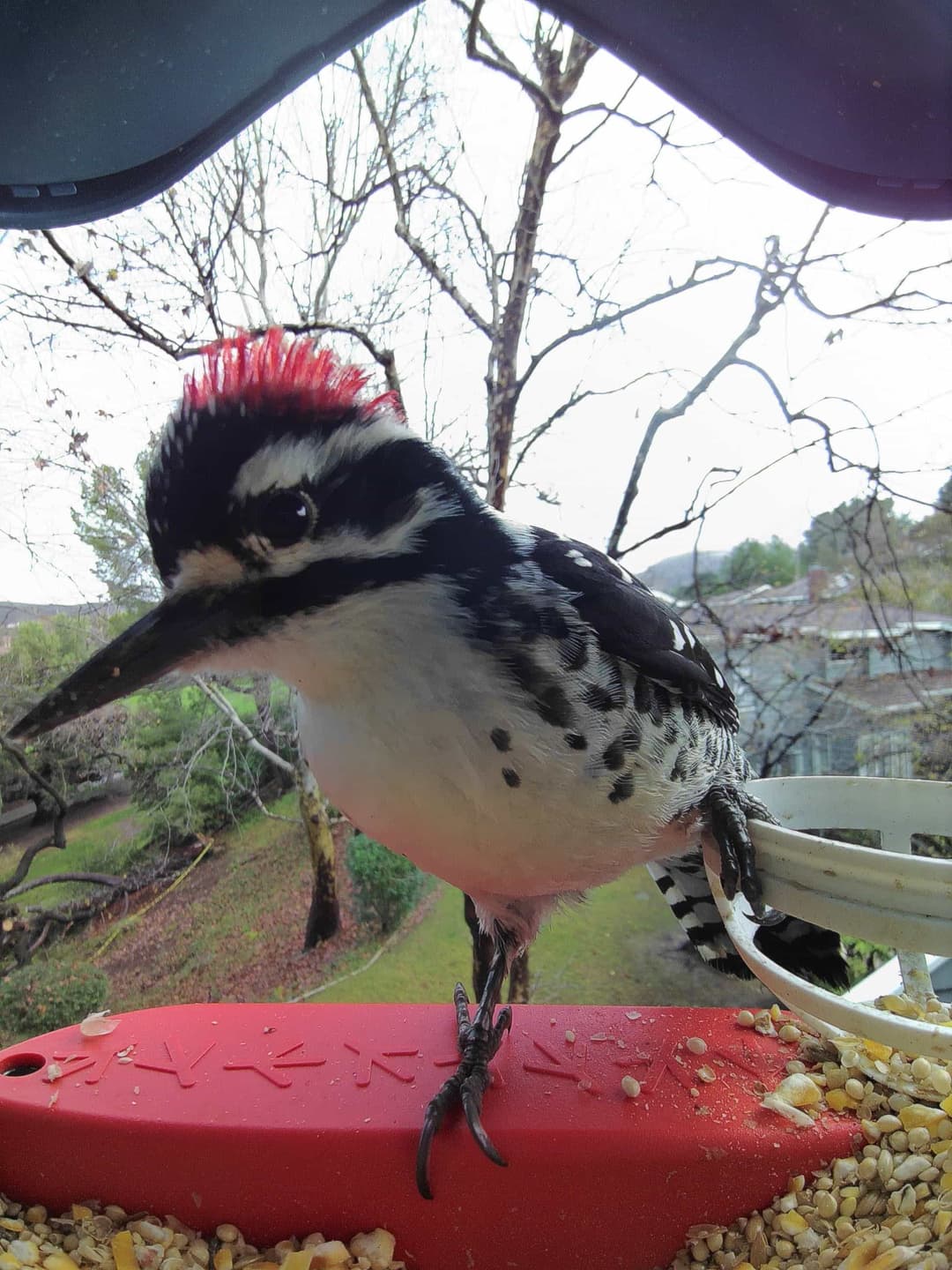
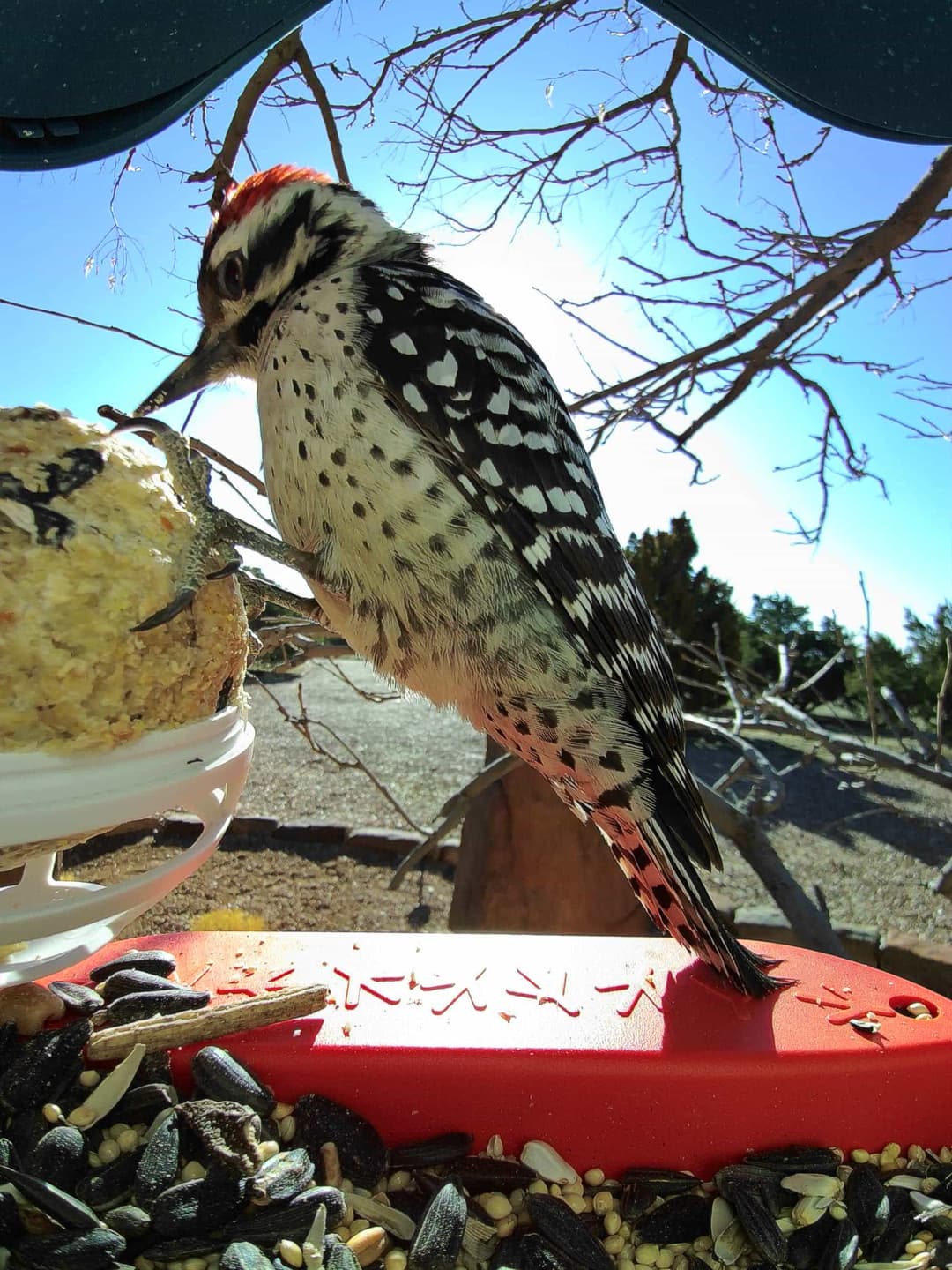
The Nuttall's woodpecker is a small bird primarily black and white. It features a distinctive black and white barred pattern on its back and wings, while the underparts are white with subtle black streaks on the sides. The face has a black and white pattern, with a white stripe running below the eye. The small size and intricate patterning help distinguish it from other woodpecker species.
Male vs female
Males have a small red patch on the back of the head, which is absent in females. Females have a similar black and white barring and streaking pattern but lack the red coloring entirely. Both genders share the same habitat and range, making the red patch a key identifier for males.
Juvenile
Juveniles resemble adults but are generally duller in coloration. They may have some brownish tones in their plumage, and the streaking on the underparts is less defined. Juvenile males might show a smaller or more indistinct red patch compared to adult males. As they mature, their plumage becomes more vivid and defined.
Size
6.3 - 7.1 in/1.1 - 1.7 oz
There's more to learn about Nuttall’s Woodpecker
View full detailsHairy Woodpecker
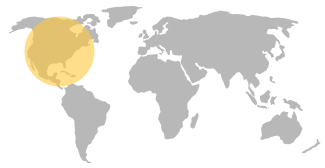
Leuconotopicus villosus
General appearance
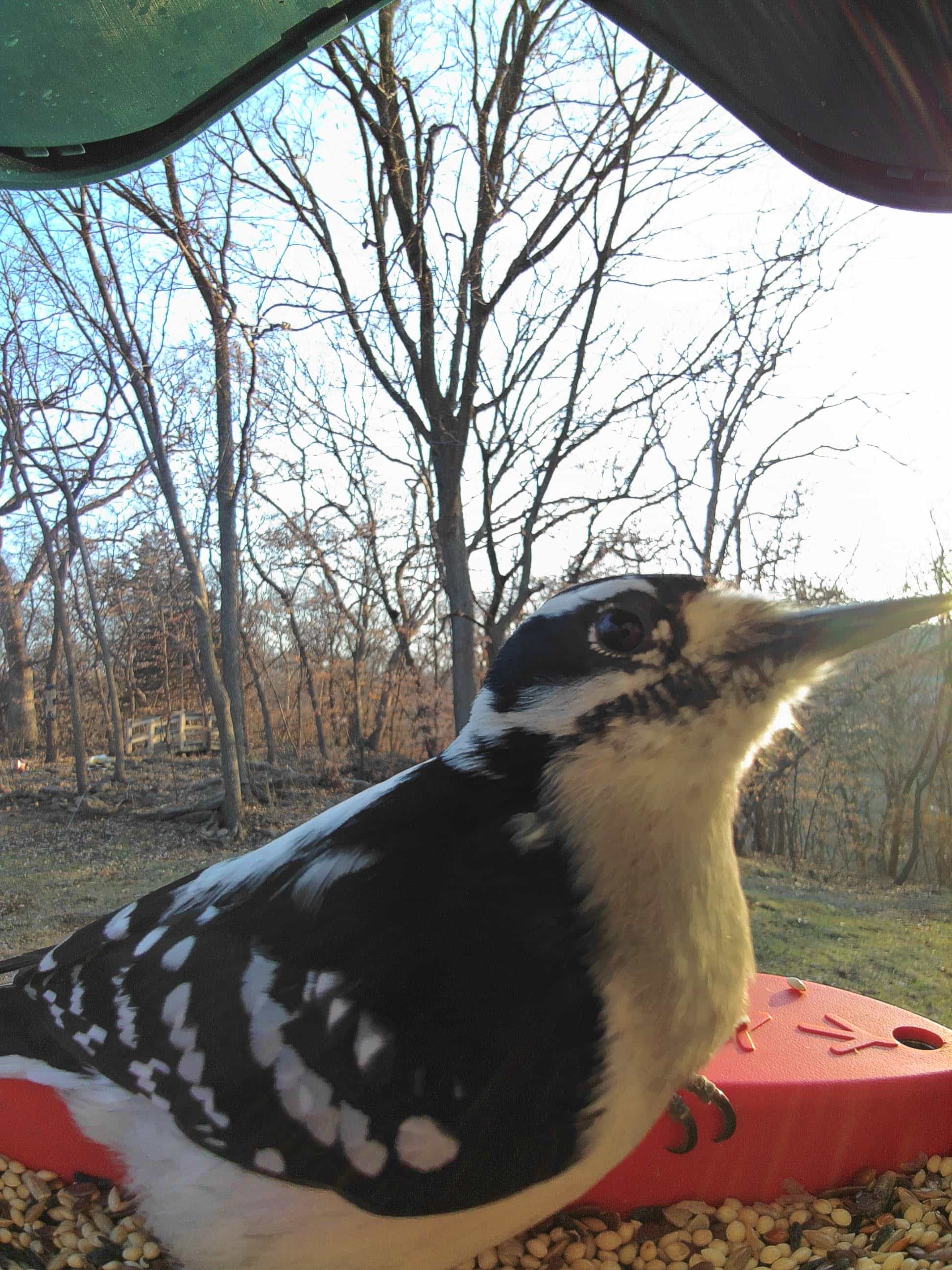
The hairy woodpecker is a medium-sized bird, featuring black and white plumage. Its back is predominantly black with white undersides and a white patch running down the center. The woodpecker's head is marked by bold black and white stripes. Hairy woodpeckers have a sharp, pointed beak, ideal for pecking into wood, and robust claws for gripping tree trunks.
Male vs female
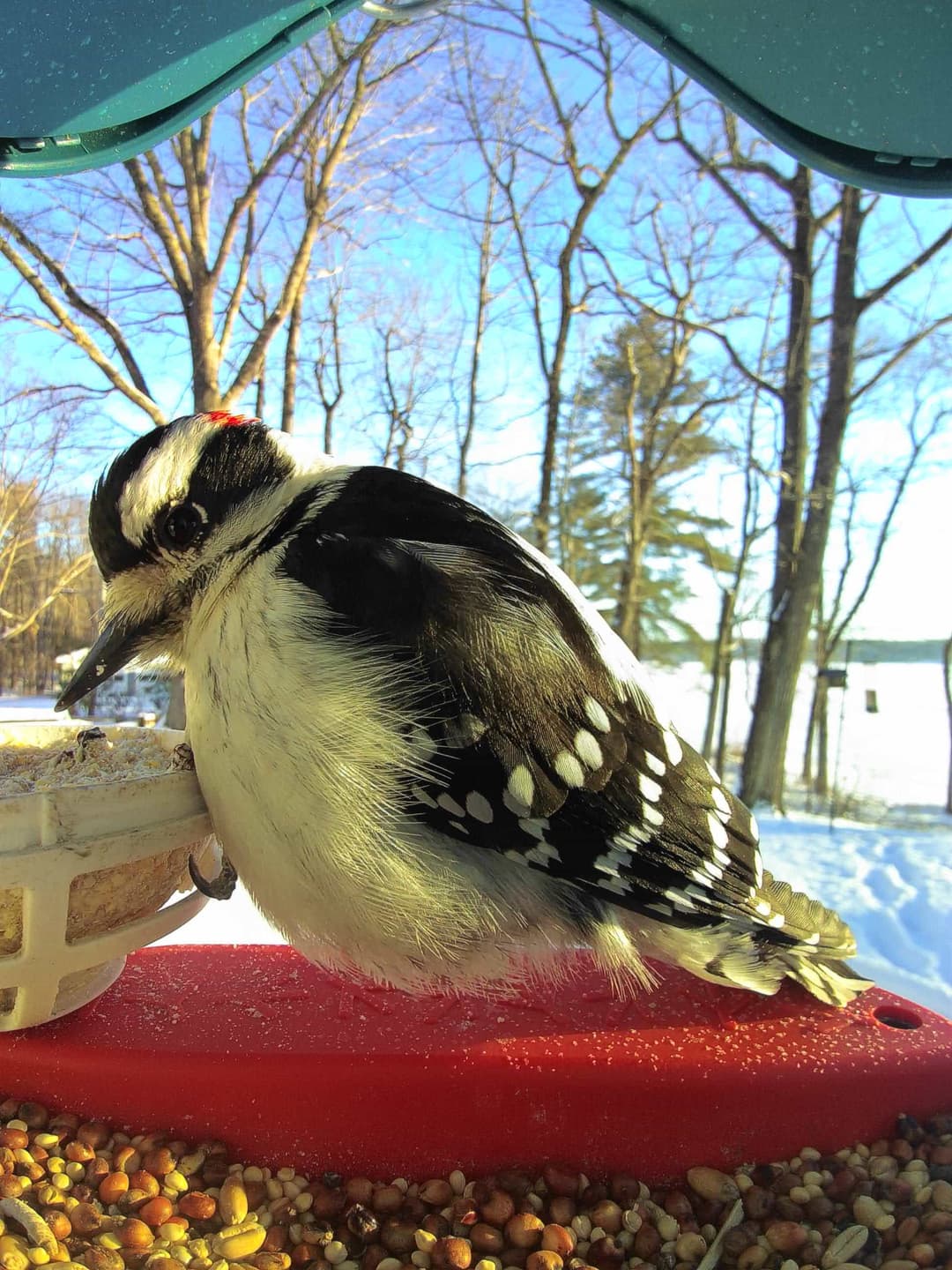
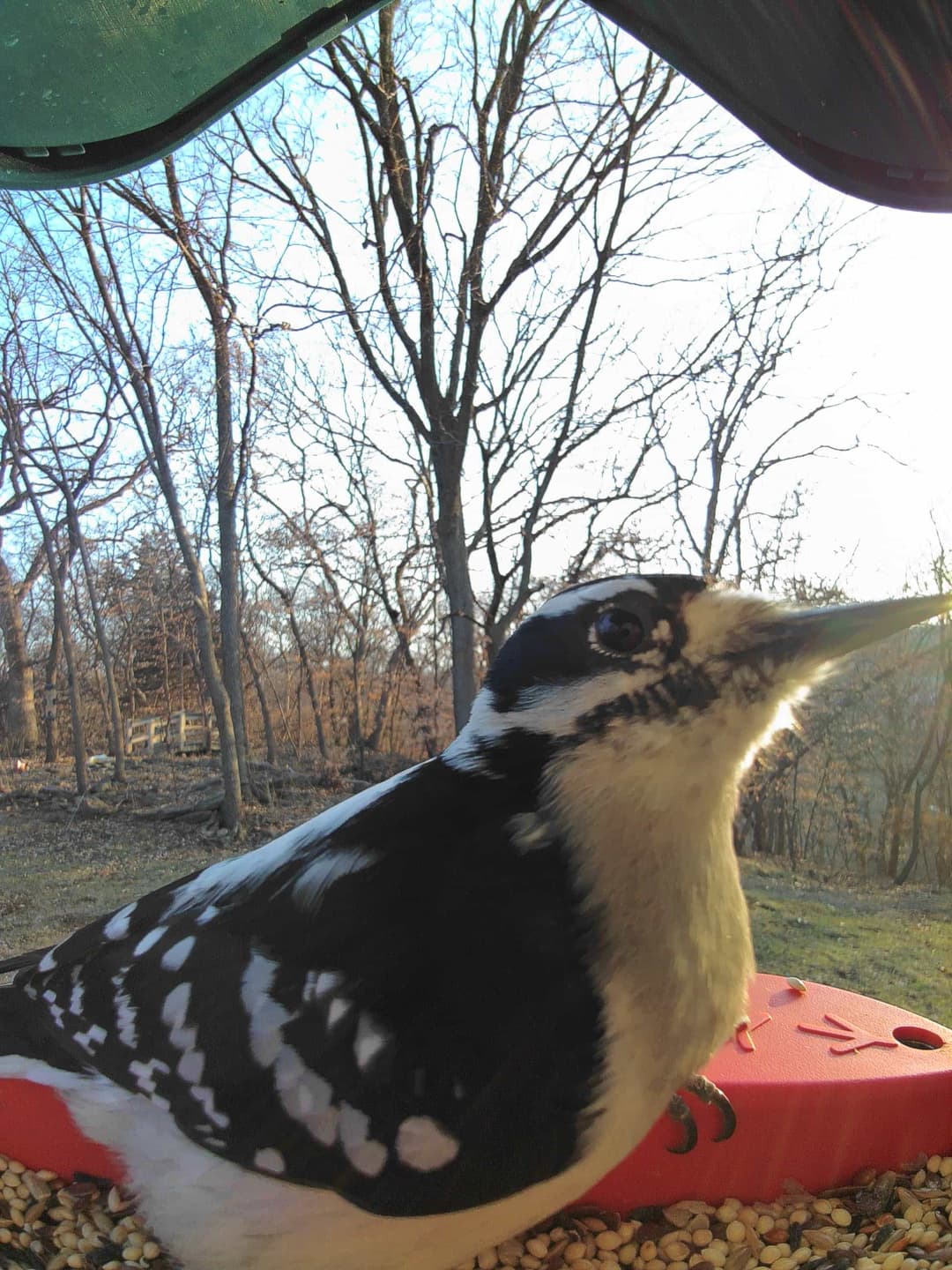
Males and females are similar in size and coloration; however, a key difference is the presence of a red patch on the back of the male's head, something females lack. In addition, the male's 'mustache' stripe tends to be black, while it is often gray or absent in females.
Juvenile
Juvenile hairy woodpeckers closely resemble adults, but they exhibit a red crown during their first year. As they mature, the red crown recedes, retained only by males as a small red patch on the back of the head. Apart from this, juveniles share the same black and white coloration as adults.
Size
7.1 - 10.2 in/1.4 - 3.4 oz
There's more to learn about Hairy Woodpecker
View full detailsHow to tell the Nuttall’s Woodpecker from the Hairy Woodpecker
Visual differences
Nuttall's Woodpecker is smaller (6.3-7.1 inches, 1.1-1.7 oz) than the Hairy Woodpecker (7.1-10.2 inches, 1.4-3.4 oz). Nuttall's has black-and-white barred wings with subtle black streaks on the sides, while Hairy has a solid black back with a white central patch. Nuttall's males have a smaller red nape patch, whereas Hairy's juveniles have a red crown and males a larger red nape patch. Hairy Woodpecker's beak is longer and stouter compared to Nuttall's. The "mustache" stripe in Hairy's males is black, often gray in females.
Key differences and behavior
Nuttall's and Hairy Woodpeckers differ in behavior, habitat, and diet, assisting in field identification. Nuttall's are oak forest specialists in the U.S. West, while Hairy Woodpeckers frequent diverse forests across North America, including urban areas. Nuttall's form year-round pair bonds with courtship displays, nesting in trees near oaks, contrary to Hairy Woodpeckers' adaptable nesting in dead trees within varied habitats, employing drumming and calls for courtship. Both are insectivorous, but Nuttall's occasionally consumes plant material, rarely acorns, whereas Hairy actively supplements its diet with fruits, nuts, and seeds. At feeders, both prefer suet, though Hairy also consumes high-energy nuts and seeds. Behaviorally, these differences highlight Nuttall's focus on a specific ecosystem versus Hairy's adaptable nature.
Still not sure? Here are more lookalikes!
Nuttall’s Woodpecker vs Ladder-Backed Woodpecker
Nuttall’s Woodpecker vs Downy Woodpecker
Hairy Woodpecker vs Downy Woodpecker
Nuttall’s Woodpecker vs [Select a bird]

[Select a bird]
Pick a bird to compare
Hairy Woodpecker vs [Select a bird]
[Select a bird]
Pick a bird to compare