Spot-Winged Pigeon or Common Wood Pigeon?
Here's how to tell the difference

Spot-Winged Pigeon


Common Wood Pigeon
Spot-Winged Pigeon
Patagioenas maculosa
Spot-Winged Pigeon Characteristics
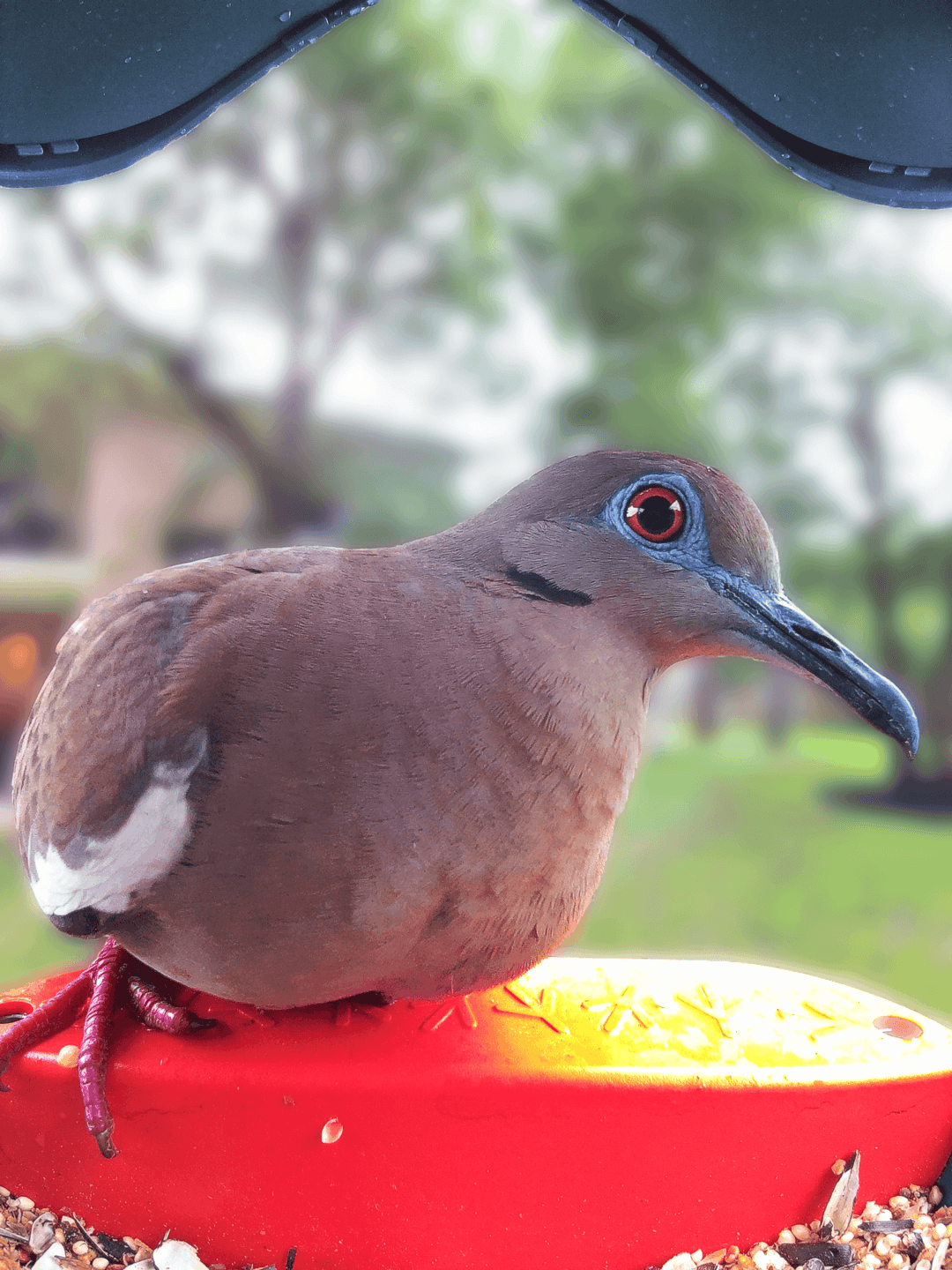
General appearance - The Spot-Winged Pigeon is distinguished by its medium size and robust body. Its plumage is predominantly a bluish-grey, with a distinctive blotched pattern of white and light grey spots on the wings, giving the bird its name. The head is a darker grey, while the throat and breast transition to a slightly paler shade. The undercarriage is more uniform in color, providing a sharp contrast to the patterned wings. The eyes are bright and vibrant, often appearing orange-red in adults, with a standard pigeon-shaped bill and a relatively long tail. Male vs female - There are minimal visual differences between male and female Spot-Winged Pigeons. Both sexes showcase similar coloration and patterns, making them challenging to distinguish in the field. Males may appear slightly larger and more robust, but this distinction is only noticeable upon close observation, and often both sexes are indistinguishable to the casual observer. Juvenile - The juveniles of the Spot-Winged Pigeon appear more subdued in coloration compared to adults. The distinct spots on the wings are less pronounced and may appear as mottled grey. The overall plumage tends towards a duller grey or brownish hue, lacking the sheen that adults possess. The eyes of juveniles may be a darker brown rather than the bright orange-red seen in adults, gradually shifting in coloration as they mature.
Size
12.6 - 13.0 in/10.9 - 12.2 oz
There's more to learn about Spot-Winged Pigeon
View full detailsCommon Wood Pigeon
Columba palumbus
Also known as: Wood Pigeon, Cushat
General appearance
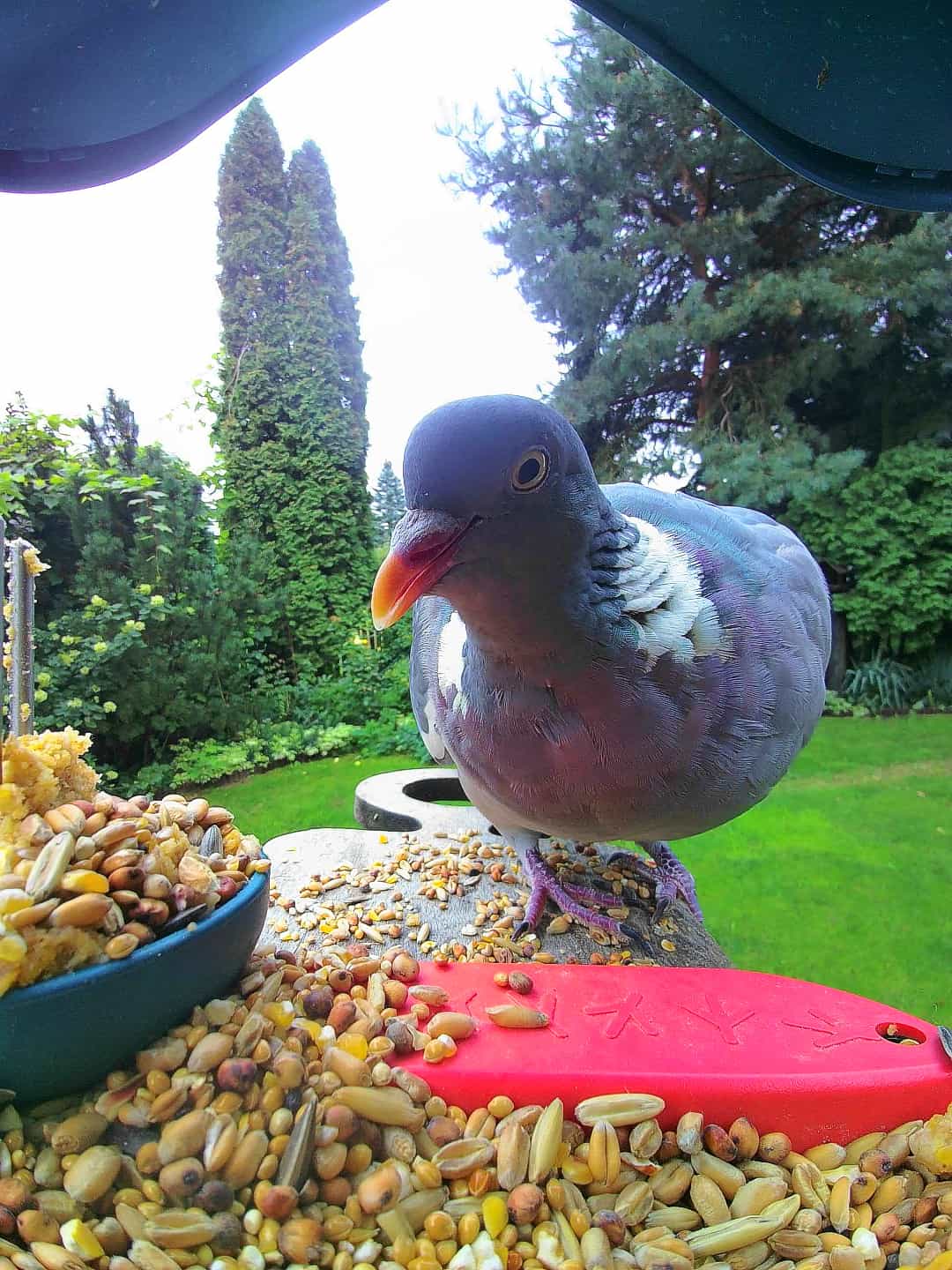
The Common Wood-Pigeon is a large, robust bird with a low, growling song. Its coloration is primarily subtle shades of lilac and gray. However, adults also have noticeable white or tan neck patches that are trimmed with green iridescence. A key identifying feature is the broad white bands in the wing that become evident in flight.
Male vs female
The text does not provide specific distinctions between male and female Common Wood-Pigeons. In many bird species, males are often more brightly colored or larger than females. However, precise differences in this species would require further research and observation.
Juvenile
Information on juvenile Common Wood-Pigeons isn't provided in the text. However, in common with many bird species, juveniles may lack the full adult coloration and distinctive markings, such as the white neck patches and wing bands. Further detail on these young birds would need more study.
Size
16.1 - 17.7 in/10.0 - 24.3 oz
There's more to learn about Common Wood Pigeon
View full detailsHow to tell the Spot-Winged Pigeon from the Common Wood Pigeon
Visual differences
The Spot-Winged Pigeon is smaller, measuring 12.6–13 inches and weighing 0.68–0.76 lbs. Its wings feature distinctive spots. The Common Wood Pigeon is larger, at 16.1–17.7 inches and 0.63–1.52 lbs, with broad white wing bands and a white neck patch with green iridescence. The Spot-Winged Pigeon is primarily brownish, whereas the Common Wood Pigeon displays shades of lilac and gray. These differences aid in visually distinguishing the two species.
Key differences and behavior
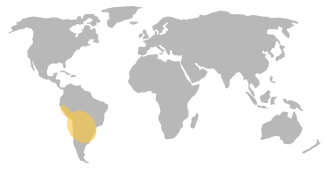
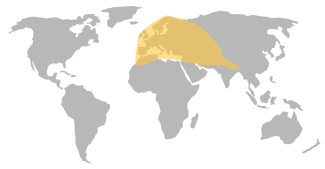
The Spot-Winged Pigeon and Common Wood Pigeon, though similar, exhibit distinct behaviors. Spot-Winged Pigeons favor mountaineering habitats in South America, adapting well to both natural and urban environments, whereas Common Wood Pigeons are prevalent in Europe's temperate woodlands and urban areas. Spot-Winged Pigeons thrive in moderately warm climates, often foraging on the ground with other pigeons and consuming mostly fruits and seeds. Conversely, Common Wood Pigeons are notorious for feeding on agricultural crops and adapt well to feeders, consuming grains and plant materials. During breeding, Spot-Winged Pigeons perform elaborate displays and nest primarily in wooded areas, while Common Wood Pigeons favor head-bobbing and wing-clapping displays, building simple nests in trees around 6 feet high. Although Spot-Winged Pigeons share incubation duties for about 15-17 days, Common Wood Pigeons incubate eggs slightly longer, at 17-19 days, and their fledglings depend on parents for around 30 days.
Still not sure? Here are more lookalikes!
Spot-Winged Pigeon vs White-Winged Dove

Spot-Winged Pigeon vs Mourning Dove

Common Wood Pigeon vs Mourning Dove
Common Wood Pigeon vs White-Winged Dove
Common Wood Pigeon vs Eurasian Collared Dove
Spot-Winged Pigeon vs [Select a bird]

[Select a bird]
Pick a bird to compare
Common Wood Pigeon vs [Select a bird]
[Select a bird]
Pick a bird to compare