Red-bellied Grackle or Boat-Tailed Grackle?
Here's how to tell the difference
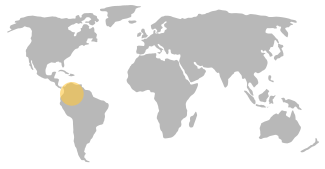

Red-bellied Grackle


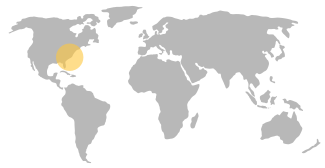
Boat-Tailed Grackle
Red-bellied Grackle
Hypopyrrhus pyrohypogaster
Red-bellied Grackle Guide
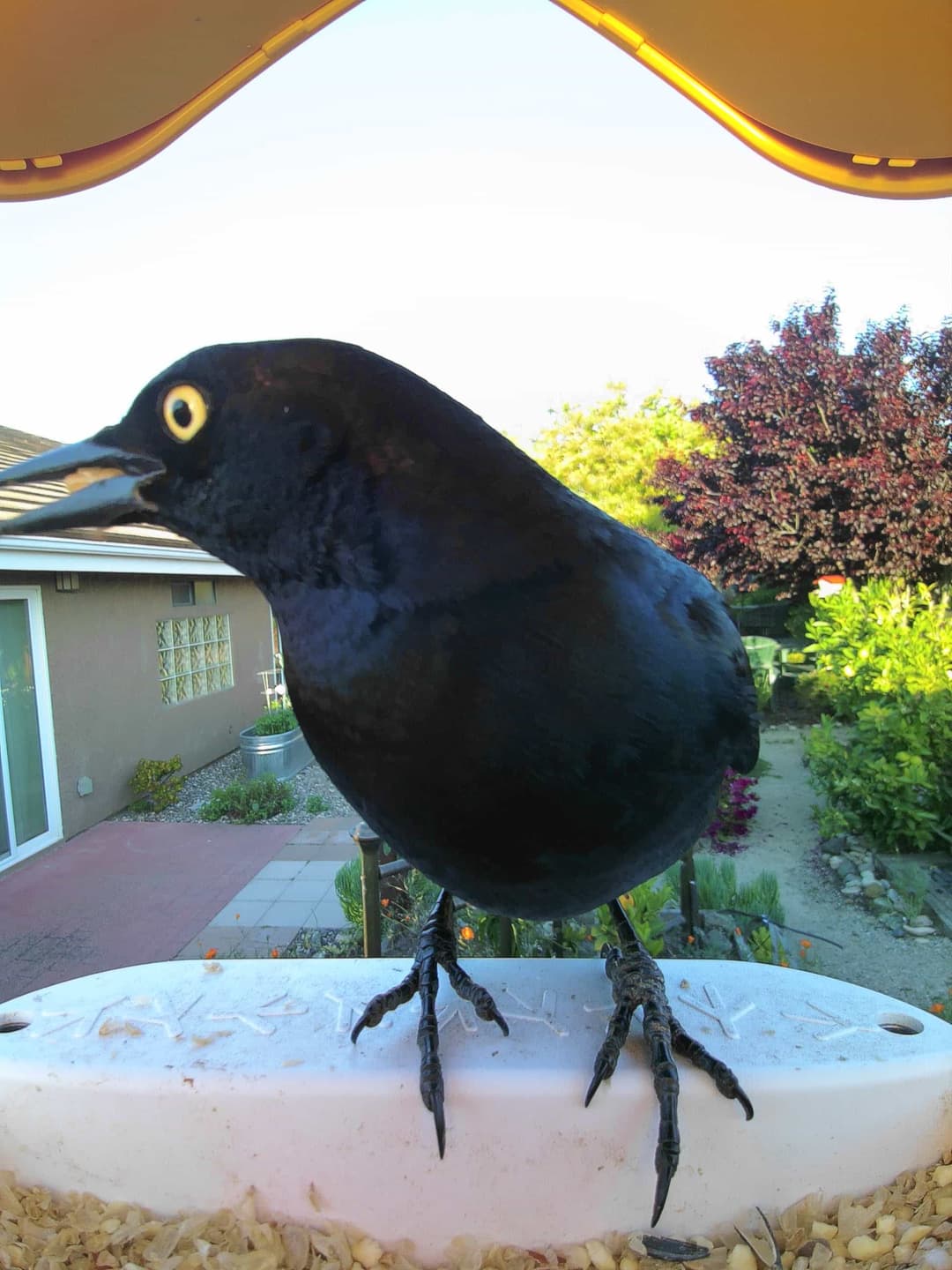
General appearance: The Red-bellied Grackle is a medium-sized bird characterized by its glossy black plumage that shimmers with iridescent hues of green and purple under sunlight. As its name suggests, it has a distinct red belly that contrasts sharply with its dark body. This species also displays a slightly curved beak and bright, expressive yellow eyes that enhance its elegant appearance. Male vs female: Both male and female Red-bellied Grackles possess similar plumage, making them difficult to distinguish based on coloration alone. However, males are generally slightly larger and may have a more prominent red belly compared to their female counterparts. Despite these subtle differences, both sexes share the same dynamic appearance. Juvenile: Juvenile Red-bellied Grackles differ from adults primarily in plumage color. Young birds initially lack the species' iconic red belly, instead having mottled black and brown feathers. As they mature, the distinct coloration gradually emerges. Juveniles also tend to have a slightly less glossy sheen compared to adults, and their eyes are typically a duller yellowish-brown. Over time, they develop the striking features characteristic of the mature Red-bellied Grackle.
Size
10.6 - 12.6 in/2.8 - 3.2 oz
There's more to learn about Red-bellied Grackle
View full detailsBoat-Tailed Grackle
Quiscalus major
General appearance
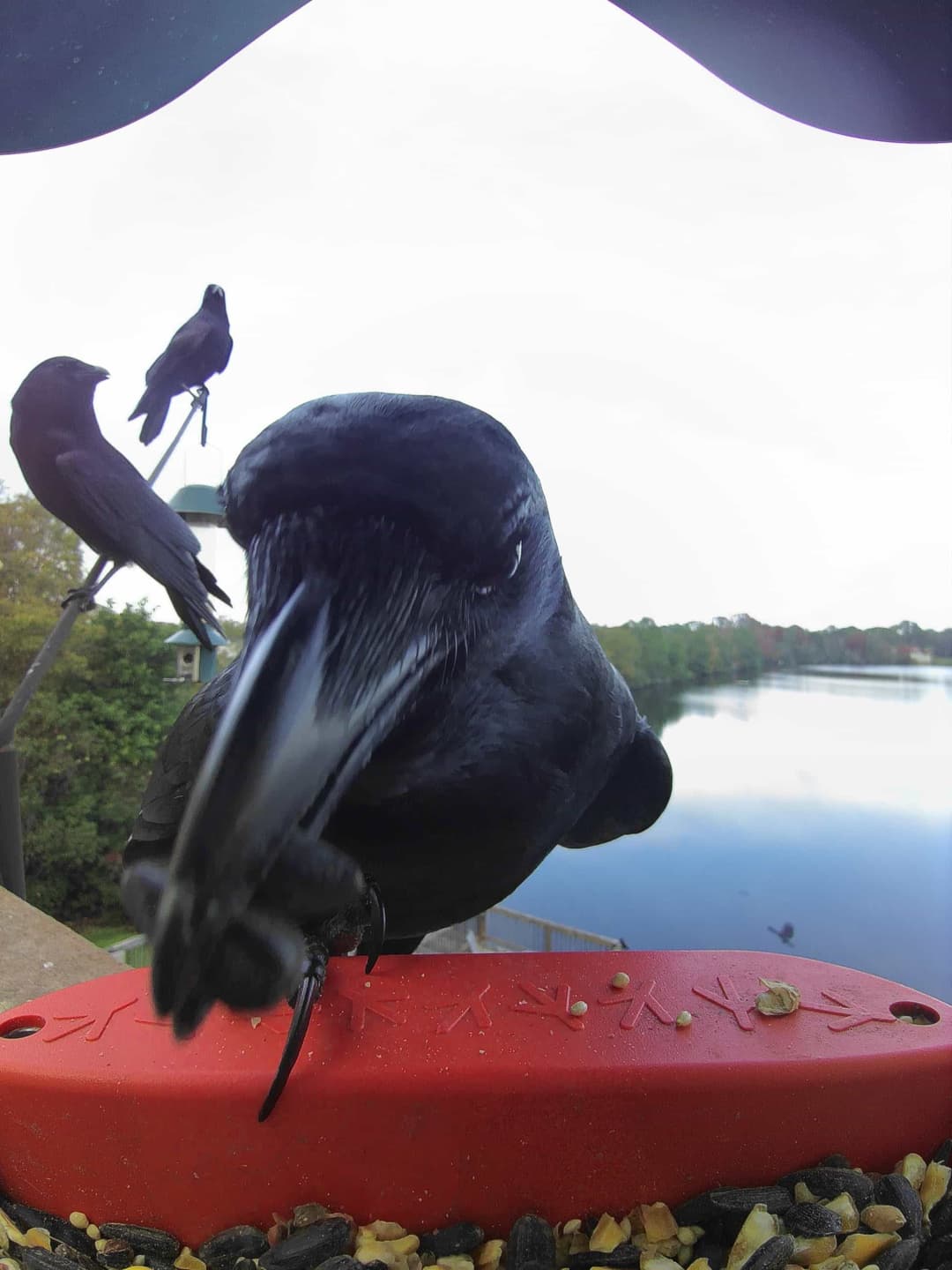
Boat-tailed Grackles are about the size of a crow, possessing a black, brown, and tan color. They feature rounded wings and have a long, rounded, or wedge-shaped tail, resembling a Great-tailed Grackle but with a shorter tail and rounder head. Differences can be noted in their eye color depending on the geographical location. In Texas-Louisiana coast overlap region, Boat-tails have dark eyes.
Male vs female
Size variations exist between male and female boat-tailed grackles. Males measure between 41 and 43 cm, while females are notably smaller, ranging between 33 and 35 cm. As such, males are generally larger than the females.
Juvenile
Interestingly, young Boat-tails, much like their Great-tail counterparts, have dark eye color. It's important to note that Boat-tails found north from northeast Florida possess yellow eyes. This characteristic sets them apart and could be useful in identification.
Size
14.6 - 16.9 in/3.5 - 8.5 oz
There's more to learn about Boat-Tailed Grackle
View full detailsHow to tell the Red-bellied Grackle from the Boat-Tailed Grackle
Visual differences
The Red-bellied Grackle, 10.6-12.6 inches in length, has a striking black plumage with a red belly, while the Boat-tailed Grackle, measuring 14.6-16.9 inches, lacks the red belly and appears black, brown, and tan. Red-bellied Grackles have more uniform coloration, contrasting with the Boat-tailed's iridescent sheen. Both feature rounded wings, but the Boat-tailed has a longer, rounded or wedge-shaped tail. The Boat-tailed's males are larger, 16.1-16.9 inches, compared to its females, and it shows variation in eye color regionally.
Key differences and behavior
The Red-bellied Grackle and Boat-tailed Grackle exhibit distinct behaviors and habitats. The Red-bellied Grackle thrives in Colombia's montane forests, forming small, sociable groups focused around fruit-rich areas, adapting even to altered landscapes like coffee plantations. Their breeding is monogamous, with shared parental duties. In contrast, the Boat-tailed Grackle inhabits marshes and coastal areas in the U.S., often forming larger communities and readily adapting to human-altered environments. They exhibit complex, territorial courtship behaviors, with males primarily guarding territories while females care for the young. Dietary habits also differ: Red-bellied Grackles prefer fruits and insects, while Boat-tailed Grackles lead a predominantly aquatic diet, supplemented by coastal grains and seeds. Both adapt to bird feeders, but Boat-tailed Grackles are known for their opportunistic feeding near humans.
Still not sure? Here are more lookalikes!
Red-bellied Grackle vs Common Grackle

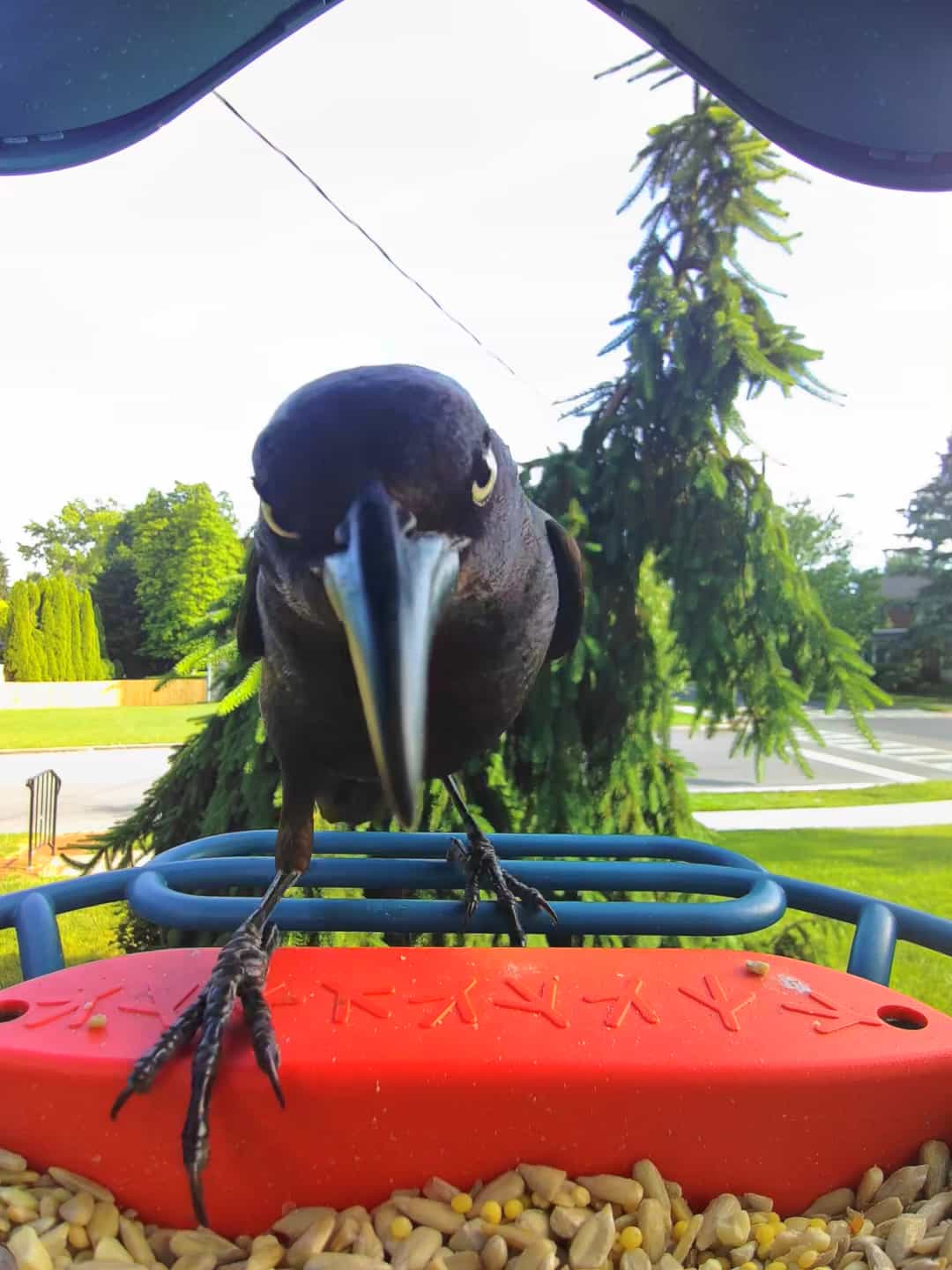
Boat-Tailed Grackle vs Great-Tailed Grackle
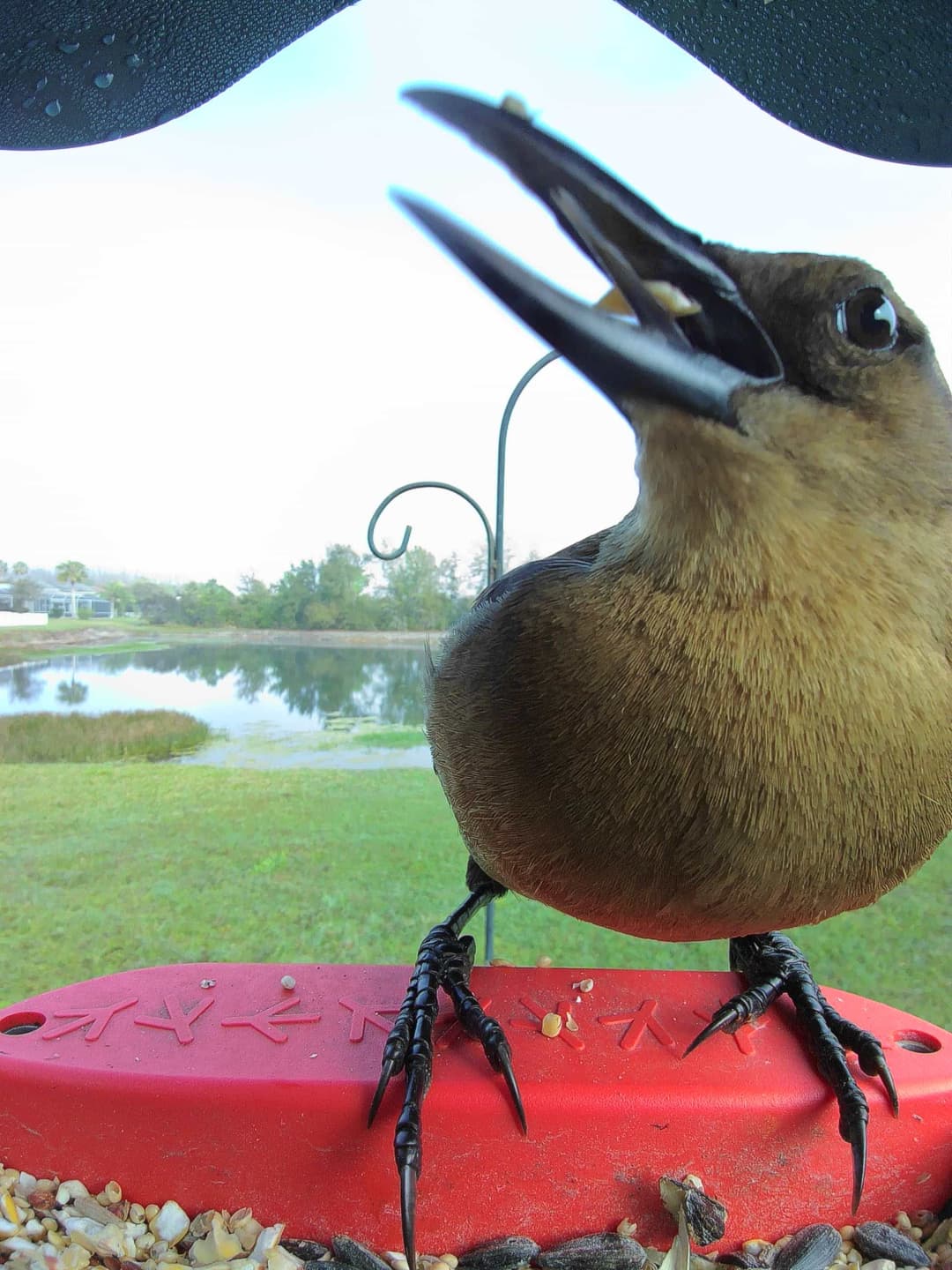
Boat-Tailed Grackle vs Common Grackle
Red-bellied Grackle vs [Select a bird]

[Select a bird]
Pick a bird to compare
Boat-Tailed Grackle vs [Select a bird]
[Select a bird]
Pick a bird to compare