Blue-Necked Tanager or Blue-and-Yellow Tanager?
Here's how to tell the difference
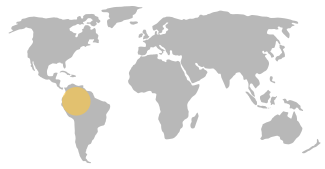


Blue-Necked Tanager


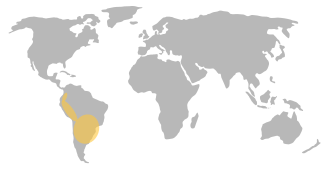
Blue-and-Yellow Tanager
Blue-Necked Tanager
Stilpnia cyanicollis
General appearance
The blue-necked tanager is a medium-sized bird characterized by striking, vibrant colors. Its name derives from its royal blue throat and chest. The rest of the body is mainly turquoise and green with varying shades. Its beak is short and quite sharp.
Male vs female
In the case of the blue-necked tanager, both males and females share a similar appearance with no significant differences. Both sexes exhibit the same bright blue neck and chest, and multicolored body. There's little to no sexual dimorphism, making them difficult to differentiate in the wild.
Juvenile
Juvenile blue-necked tanagers have a duller coloration compared to adults, often appearing more green than blue. While they share the same basic color pattern, their feathers lack the vibrant shine and intense colors of the adults. As they mature, their plumage will gradually brighten to match that of the adult birds.
Size
4.3 - 5.1 in/0.6 oz
There's more to learn about Blue-Necked Tanager
View full detailsBlue-and-Yellow Tanager
Rauenia bonariensis
General appearance
The blue-and-yellow tanager is a small, vibrant bird with striking coloration. It features a cobalt blue head and back, contrasted by a bright yellow belly and chest. The wings have a mix of dark blue and green, and its tail is predominantly blue. The bird's eyes are dark, and its beak is short and conical.
Male vs female
Males generally have a more vivid coloration compared to females. While both sexes share the blue and yellow pattern, the females tend to have duller shades and may appear slightly greener. This sexual dimorphism is subtle, often requiring close observation in natural light to distinguish.
Juvenile
Juvenile blue-and-yellow tanagers resemble adult females but are even less vibrant. The young birds are often more greenish-blue on the head and back, with a paler yellow belly. As they mature, the coloration intensifies. In the wild, juveniles can be seen following adults, gradually adopting the adult plumage without significant seasonal variation.
Size
6.1 - 7.5 in/0.9 - 1.6 oz
There's more to learn about Blue-and-Yellow Tanager
View full detailsHow to tell the Blue-Necked Tanager from the Blue-and-Yellow Tanager
Visual differences
The Blue-Necked Tanager is smaller (4.3-5.1 inches, 0.56-0.63 ounces) with a vibrant turquoise and green body accented by a royal blue throat and chest. It has a short, sharp beak. The Blue-and-Yellow Tanager is larger (6.1-7.5 inches, 0.86-1.64 ounces), featuring a cobalt blue head and back contrasted with a bright yellow chest and belly. Its beak is short and conical. The Blue-Necked Tanager shows little sexual dimorphism, whereas the Blue-and-Yellow Tanager males are more vividly colored than the females.
Key differences and behavior
The Blue-Necked Tanager (Stilpnia cyanicollis) and Blue-and-Yellow Tanager (Rauenia bonariensis) exhibit distinct behaviors, aiding field distinction. The Blue-Necked Tanager inhabits tropical lowlands and often visits gardens, while the Blue-and-Yellow Tanager prefers forest edges but adapts to urban areas. While both species perform vivid courtship displays, the Blue-Necked Tanager, involving family in chick rearing, differs socially from the Blue-and-Yellow, commonly foraging in pairs or small groups. The Blue-Necked diet emphasizes fruits and insects, often utilizing fruit feeders, mirroring the Blue-and-Yellow’s preference for fruits and seeds. Breeding involves similar nesting: cup-shaped, in dense foliage, but the Blue-Necked relies on cooperative care. Both use fruits and insects for feeding chicks. Size contrasts are striking, the Blue-Necked being 0.4-0.5 oz (4.5-5.0 inches), while the Blue-and-Yellow varies significantly; 0.9-1.6 oz (6.1-7.5 inches), influencing energy requirements and visibility.
Still not sure? Here are more lookalikes!
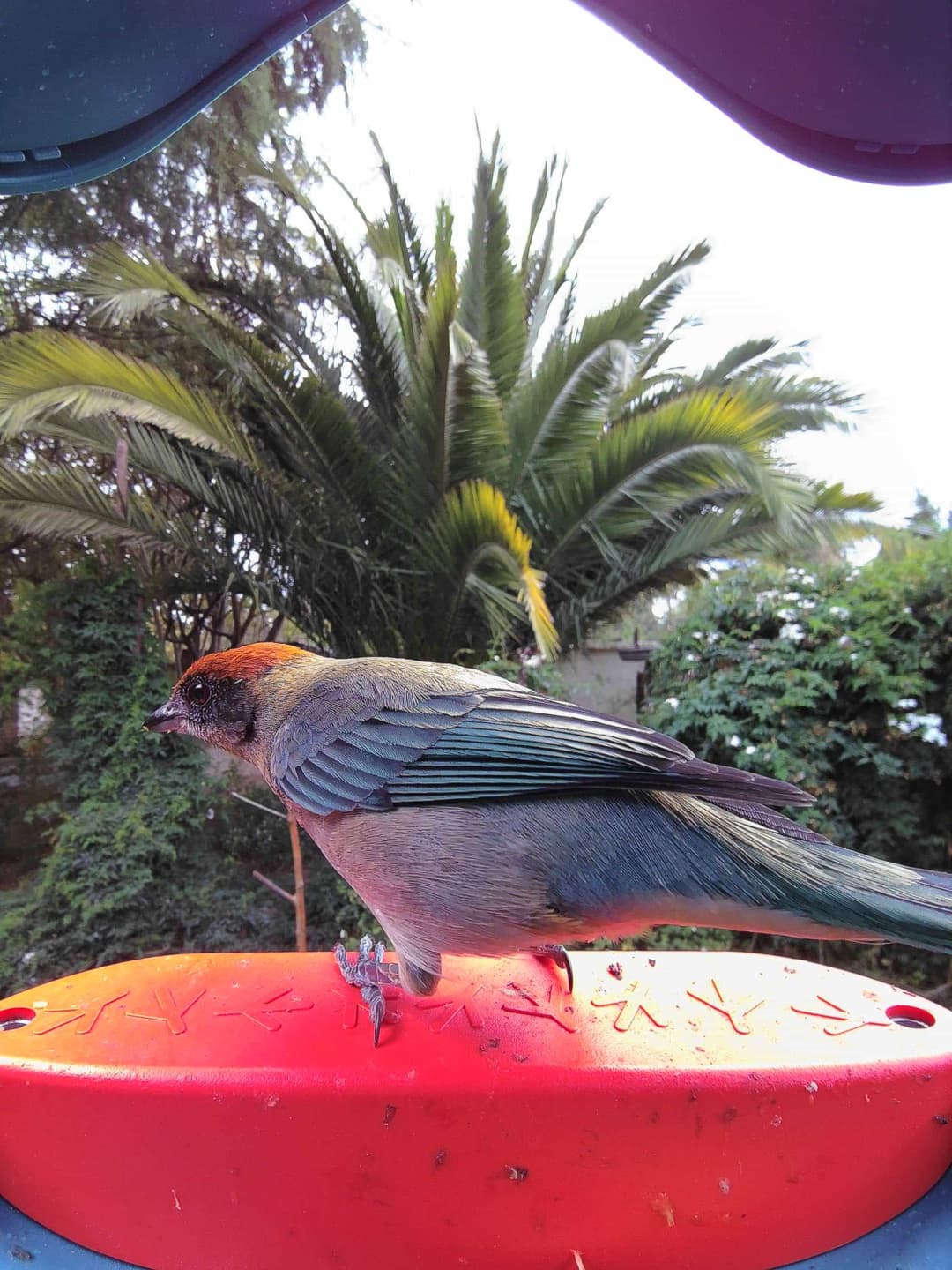
Blue-Necked Tanager vs Scrub Tanager
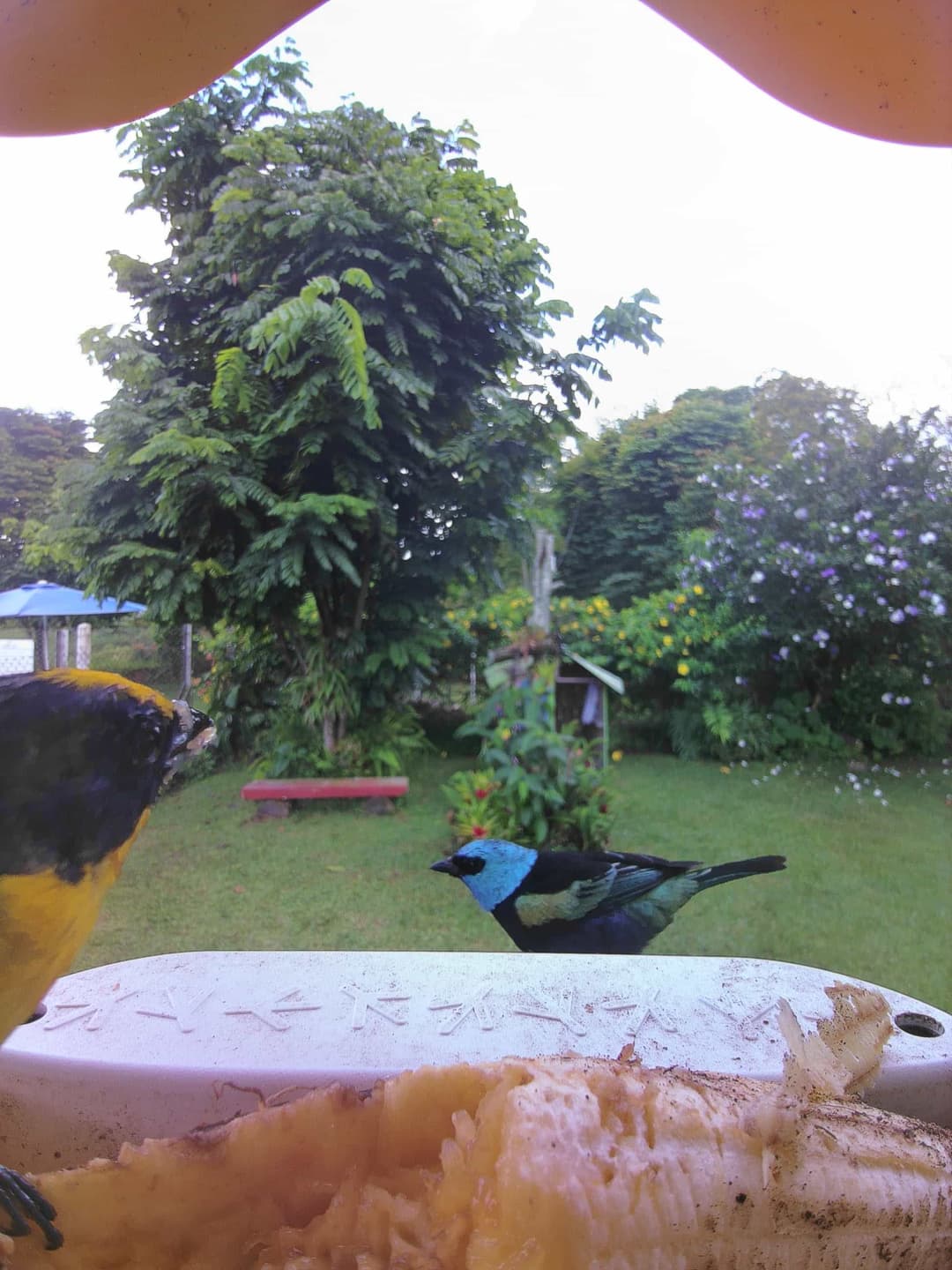
Blue-Necked Tanager vs Golden-Chevroned Tanager
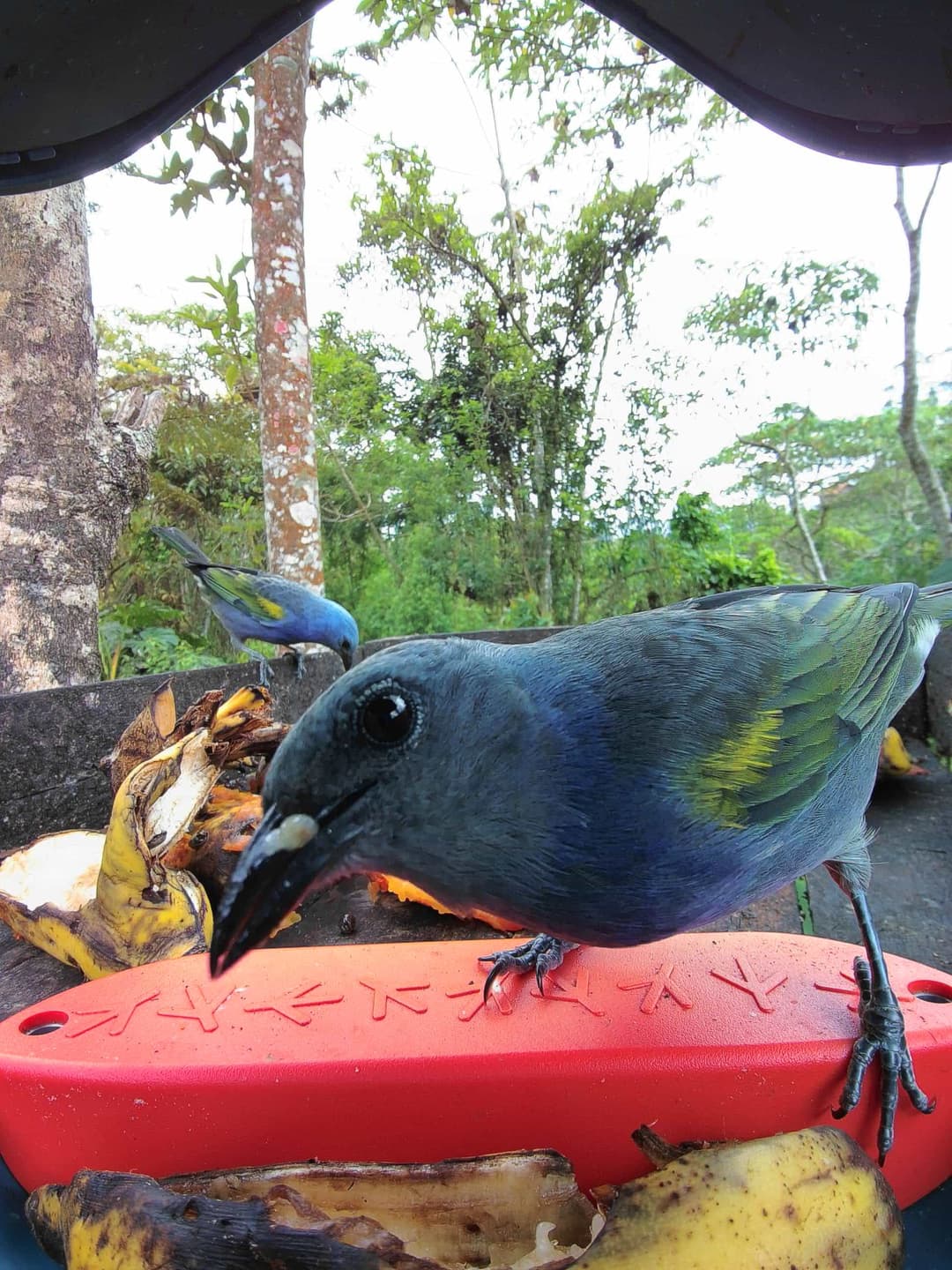
Blue-Necked Tanager vs Sayaca Tanager
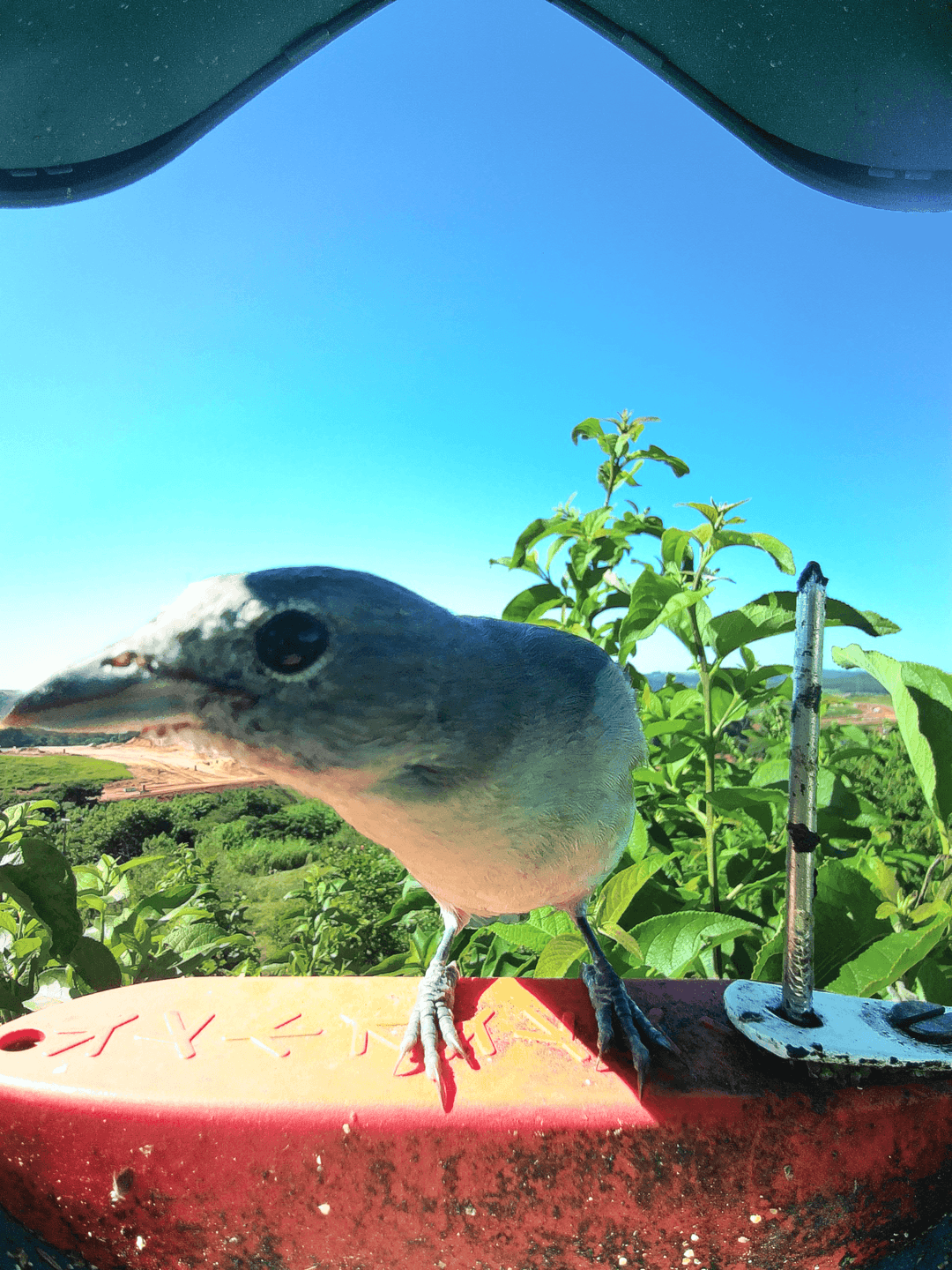
Blue-Necked Tanager vs [Select a bird]

[Select a bird]
Pick a bird to compare
Blue-and-Yellow Tanager vs [Select a bird]
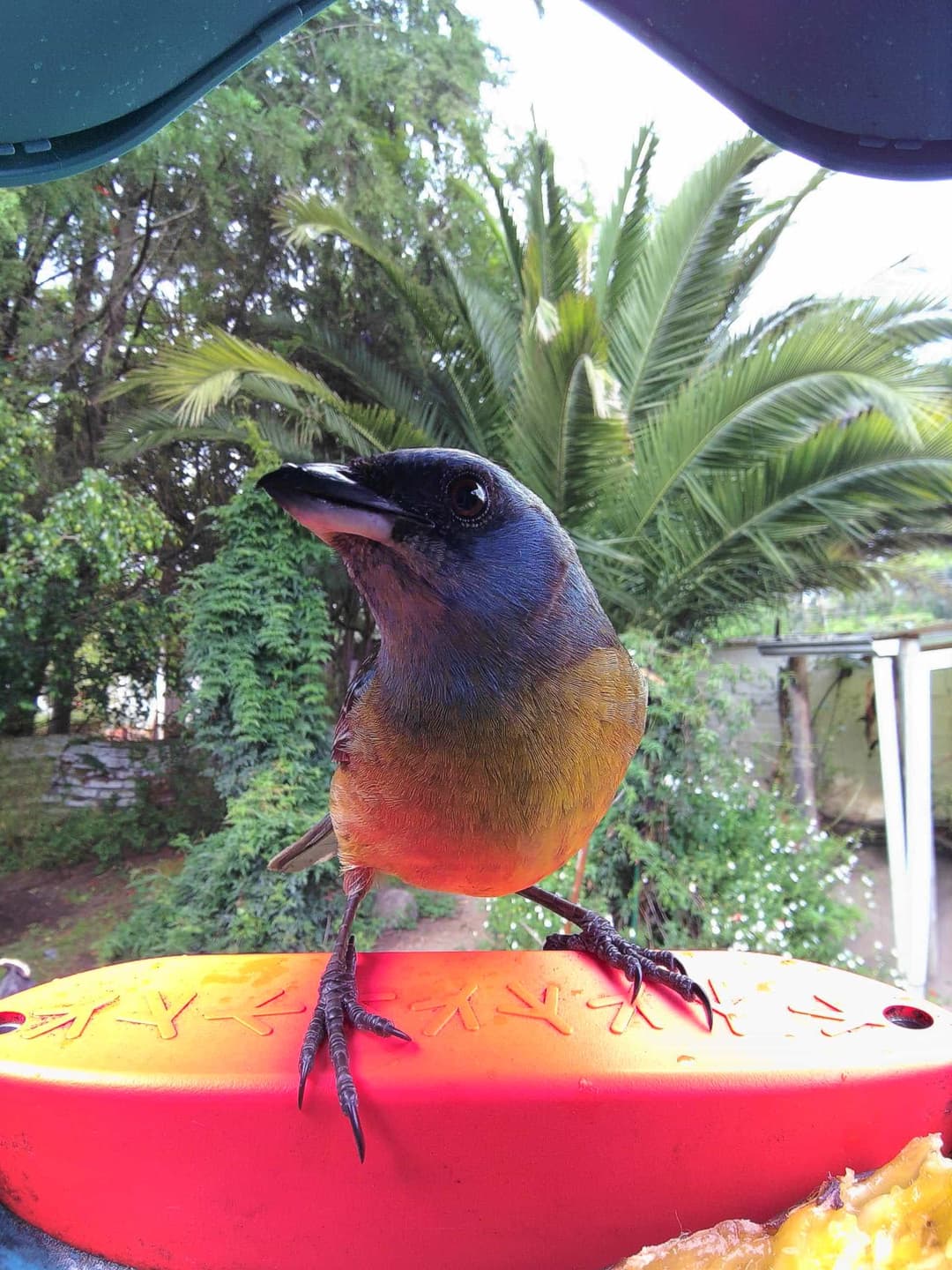
[Select a bird]
Pick a bird to compare