
Sayaca Tanager
Sayaca Tanager
Thraupis sayaca


Quick Identification guide
Quick Identification guide
- •
Exhibits a pale turquoise to bluish-gray plumage with a slight gradation into softer grays on the underparts
- •
Features a short, grayish beak that is slightly thicker and conical
- •
Displays a medium-sized, slender body with no distinctive crests or markings
What does a sayaca tanager sound like?
The sayaca tanager vocalizes with a sweet, musical call that primarily consists of "tsee-tsee-tsuwee" sounds. Its melodious songs, a common feature in their social interactions, contain strophe patterns, often repeated consecutively, showcasing decent note variety. The bird's vocal range is extensive, with sounds varying from whistles to buzzing. This tanager’s vocalization is particularly noticeable during the mating season, when males actively sing to attract females.


Description
Did you know sayaca tanagers are one of the most common urban birds in southeastern Brazil? They have a rich repertoire of complex and beautiful songs. They are monogamous, with both parents sharing feeding duties, and families don't break up as soon as chicks fledge, either, and kids stay with the family for a considerable time after that.
The sayaca tanager can weigh between 28to34grams and be from16to17centimeters tall.
The Sayaca Tanager typically lives up to 10 years, which is similar to the average lifespan of most tanagers. This species' lifespan is comparable to related species like the Palm Tanager, which also possesses a lifespan of 10 years. Nevertheless, certain factors like predation, disease, and availability of food can influence their longevity.
Did you know?
Most popular questions about sayaca tanager
How to recognise a sayaca tanager?
General appearance
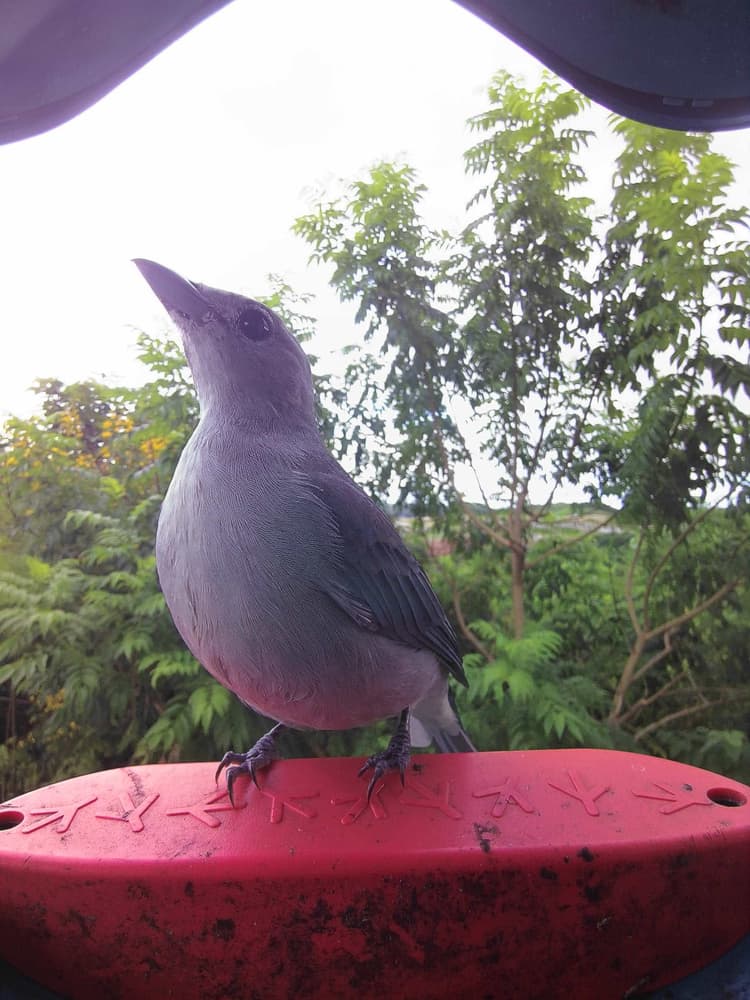
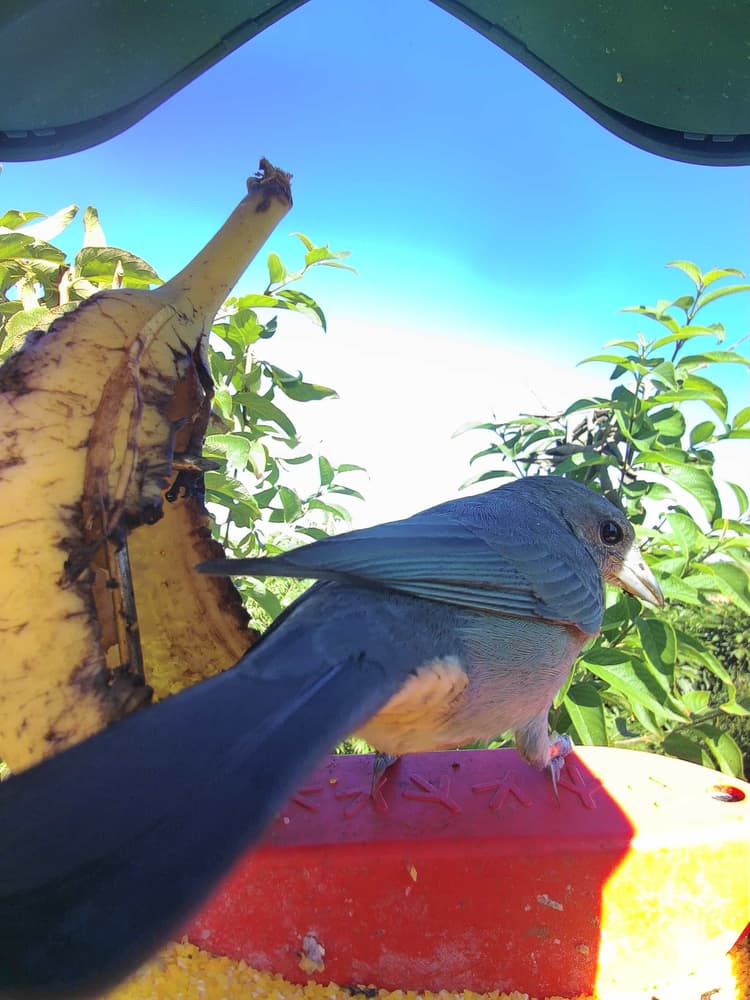
The Sayaca Tanager is a medium-sized bird, typically around 16-18 cm in length, with a predominantly gray body. Their plumage features a subtle greenish-blue sheen on the wings and tail. The beak is short and stout, adapted for their fruit-based diet, and their legs are a light gray color. Their eyes are dark, contrasting with their generally pale facial feathers. In the wild, the Sayaca Tanager is often spotted in groups, exhibiting a lively presence in treetops.
Male vs female
There is little sexual dimorphism in Sayaca Tanagers, making it challenging to differentiate between males and females based on appearance alone. Both sexes share the same gray and bluish-green coloration. However, males might occasionally exhibit a slightly brighter hue, particularly during the breeding season.
Juvenile
Juvenile Sayaca Tanagers are generally duller in color than adults. They tend to display a more muted gray and may lack the bluish-green sheen seen in mature birds. The juveniles' plumage gradually brightens as they reach maturity. As they age, the subtle differences in coloration between juveniles and adults become more apparent, aiding identification in the wild.
Often mistaken for
Scrub Tanager vs Sayaca Tanager
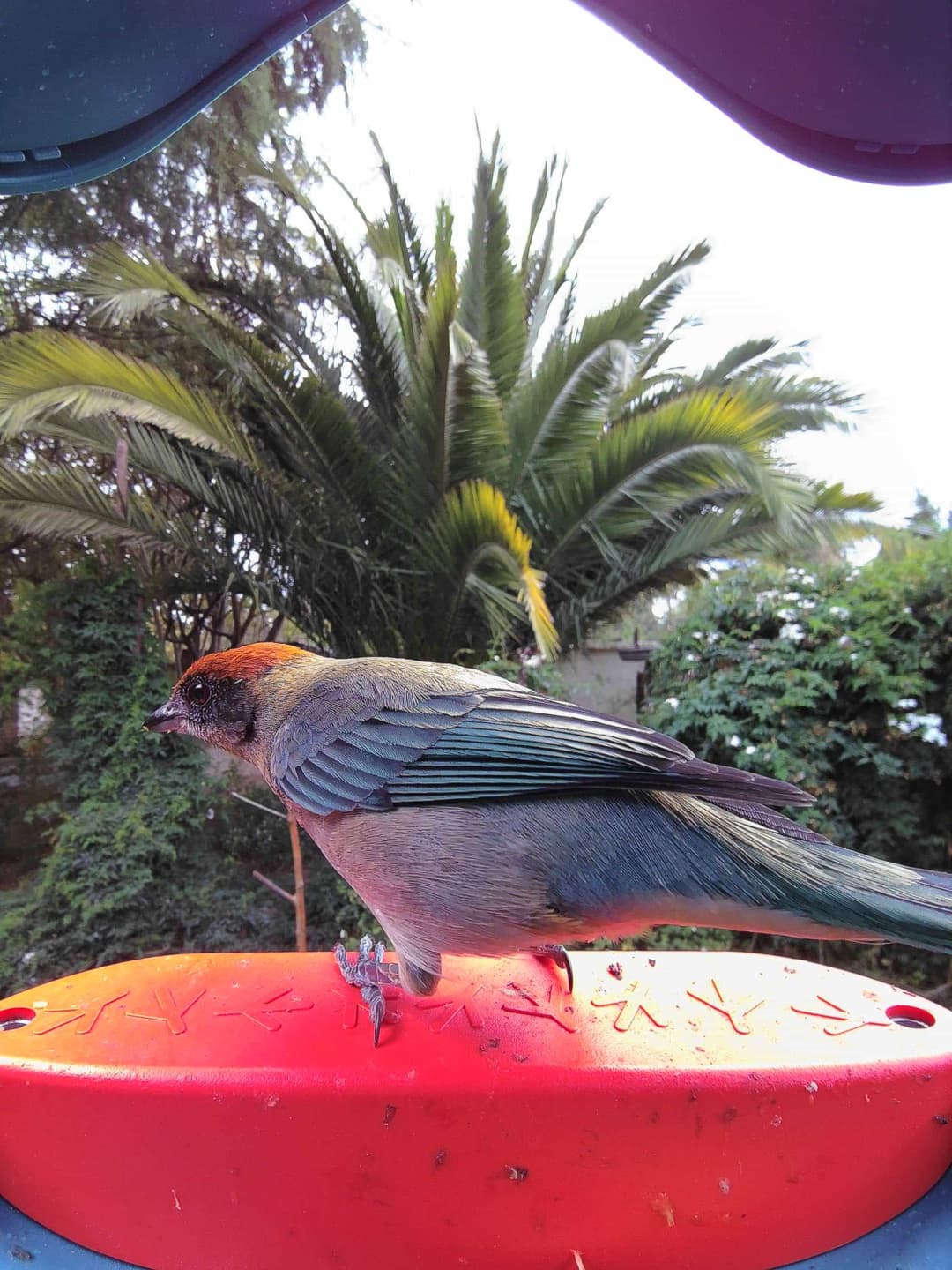
Scrub Tanagers are often confused with Sayaca Tanagers due to their similar coloration. However, Scrub Tanagers typically have a more pronounced greenish tint on their back and wings compared to the uniform bluish-gray of the Sayaca Tanager. Additionally, Sayaca Tanagers have a longer tail.
Blue-Gray Tanager vs Sayaca Tanager
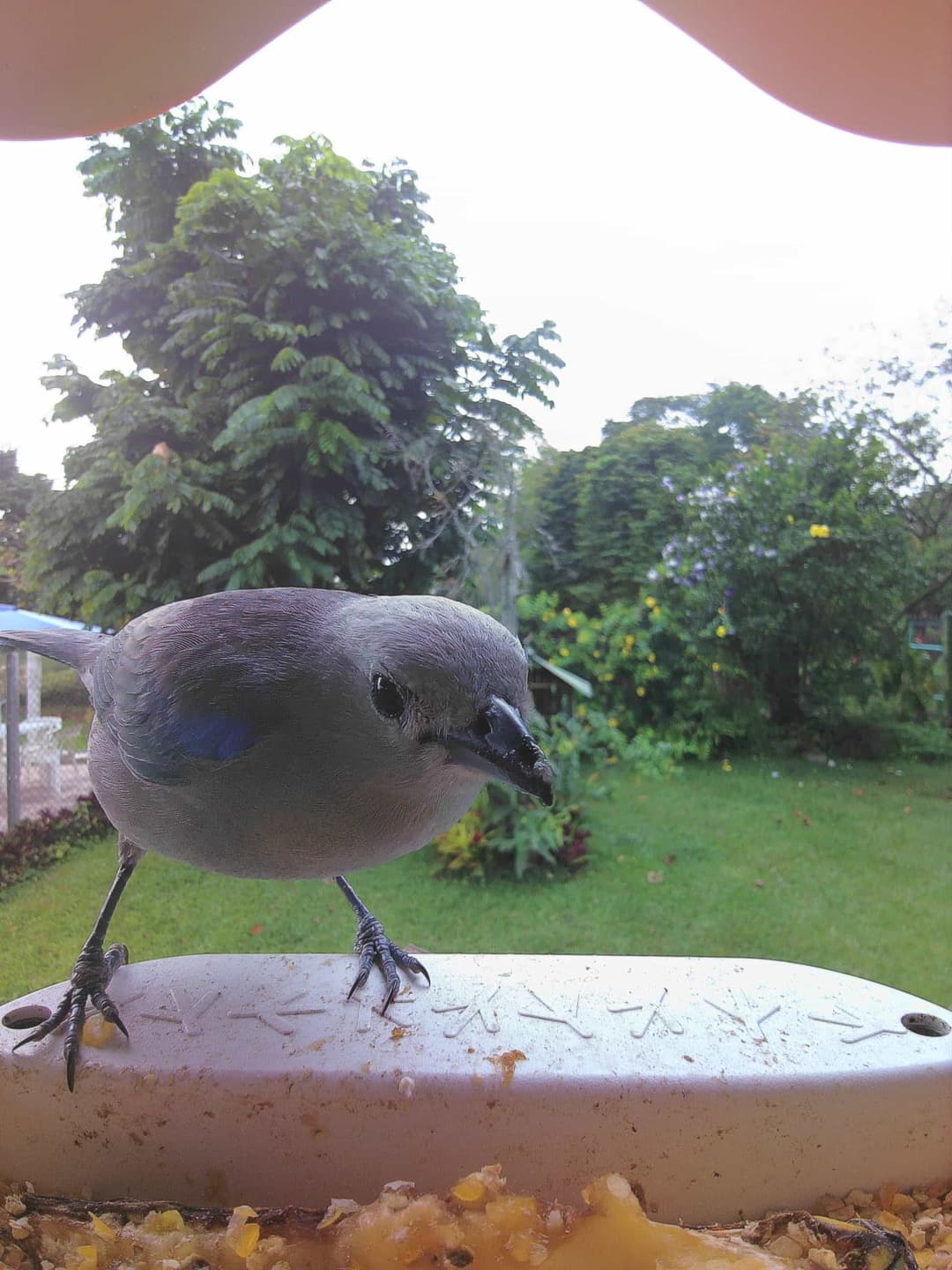
The Blue-Gray Tanager resembles the Sayaca Tanager but can be distinguished by its lighter plumage and the absence of the Sayaca's characteristic silvery-blue hue. Blue-Gray Tanagers also have a slightly smaller size and different vocalizations.
Breeding and nesting habits of the sayaca tanager
Mating behaviors
Sayaca tanagers engage in courtship displays involving song and aerial maneuvers. These displays help establish pair bonds, essential for successful breeding.
Nesting details
They build cup-shaped nests using twigs, grass, and feathers. Nests are often located in trees or shrubs, sometimes in gardens. To attract them, plant native shrubs and trees that offer cover and perch spots.
Eggs and chick-rearing
Females typically lay 2-3 eggs. Both parents may be involved in feeding and protecting chicks. Hatchlings require care and feeding for several weeks until they fledge.
What does a sayaca tanager like to eat?
Flowers
Fruits
Insects
Plants
Seeds
Natural diet
The sayaca tanager primarily consumes a variety of fruits and berries found in its natural habitat. Common fruits include those from palm trees, fig trees, and other native shrubs. It also feeds on small insects and arthropods, which it actively seeks in the foliage.
Bird feeders
At bird feeders, the sayaca tanager often partakes in offerings such as bananas, papayas, and melons. This bird species may also consume commercially available bird food like suet or fruit-based mixtures provided in backyard feeders.
Choose the right snacks
Sayaca Tanagers are partial to a variety of fruits, especially oranges, bananas, and apples. You can slice these fruits and hang them in your yard or place them on bird tables. We'd also recommend Bird Buddy seeds. Chosen by experts for the season, these seeds have consistently shown the best results in attracting Sayaca Tanagers.
Select appropriate feeders
When choosing a feeder, opt for one that is sturdy and easy to clean. Tray feeders work well as they allow these birds to eye their food before they eat. Hanging feeders, preferably with lots of perch space, are also a good option as Sayaca Tanagers enjoy feeding in elevation.
Treats and tricks
For a fun trick, try placing a small, clean mirror near your feeding area. Sayaca Tanagers are known to be curious birds and may be drawn in to check their reflection. Also, these birds love a clean water source. Installing a birdbath will not only attract them but can also encourage them to stay longer and maybe even burst into a melodious sing-along!
Where can you find sayaca tanagers?
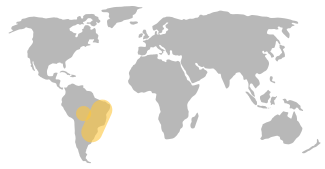
Primary habitat
The Sayaca Tanager primarily inhabits open woodlands, gardens, and urban areas across Brazil, Bolivia, Argentina, Paraguay, and Uruguay, preferring warm, tropical climates.
Additional range
Though mostly found in its typical range, it can also occupy unexpected environments like cultivated lands and semi-arid regions, showcasing its adaptability.
Do they migrate?
The Sayaca Tanager is a primarily non-migratory bird. It resides year-round in its native regions, which include a significant range across central and eastern South America. This includes countries like Brazil, Argentina, Paraguay, Uruguay, and Bolivia. While the Sayaca Tanager does not undertake long-distance migrations, it might exhibit some local movements, primarily in response to food availability and environmental conditions. These movements are generally not predictable and do not follow any specific migratory route or timetable typical of true migratory species. Habitats typically include open woodlands, gardens, and urban areas, suggesting that the bird has adapted well to human-altered environments. Its year-round presence contributes to its role in the local ecosystem, especially in seed dispersal and as part of the avian food web. In summary, the Sayaca Tanager does not migrate but may engage in short local movements influenced by changes in its environment.
What is the role of sayaca tanagers in nature and how to protect them?
Conservation status
The sayaca tanager is considered a species of least concern, meaning it is currently common and not threatened. It is widespread across much of South America, thriving in various habitats including urban areas. There are no significant threats impacting its population at present, and it benefits from its ability to adapt to human-altered environments. Conservation efforts are generally minimal given its stable status. Maintaining habitat diversity and preventing deforestation in its range would support continued stability for this species.
Ecological role of sayaca tanagers
Its role in the ecosystem
The Sayaca Tanager (Thraupis sayaca) plays an important role in its ecosystem. It is an omnivorous bird, consuming a wide variety of fruits and insects. Its diet of insects contributes to pest control, keeping insect populations in check and thereby helping to maintain a balance in the ecological community. Additionally, it serves as an agent of seed dispersal. When the Tanager consumes fruit, it later excretes the seeds in different locations, facilitating the spread of various plant species. These seeds often germinate and grow into new plants, thus enriching the plant diversity in the ecosystem. Consequently, the Sayaca Tanager aids in maintaining biodiversity, promoting overall ecosystem health and vitality.
How to help protect sayaca tanagers
Preservation tips
Habitat preservation for sayaca tanager
To conserve the Sayaca Tanager, habitat preservation is critical. Implement strategies such as protecting and restoring forested areas, especially in regions the bird frequents. Advocate for responsible land use policies at local and national levels to safeguard against deforestation.
Community science initiatives for sayaca tanager conservation
Involve community in conservation efforts by raising awareness about the Tanager and its ecological importance. Establish community science initiatives, encouraging local citizens to aid data gathering on the bird's population, behavior, and habitat utilization. Such data can guide more informed conservation actions.