
Blue-Necked Tanager
Blue-Necked Tanager
Stilpnia cyanicollis


Quick Identification guide
Quick Identification guide
- •
Features a striking blue neck and head, contrasting sharply with its mostly black body
- •
Exhibits a bright turquoise back and rump, adding vibrant color to its appearance
- •
Boasts a short, stout black beak, perfect for feeding on fruits and insects
What does a blue-necked tanager sound like?
The blue-necked tanager has a diverse repertoire of vocalizations. Its typical song is a rapid, high-pitched, melodic trill that lasts for 2-3 seconds, often compared to the sound of a sizzling pan. This tanager's common calls include short, sharp "tsip" or "seee" notes and quiet chirps. It also makes a distinct buzzy "tzeee" sound during flight. These vocalizations are often used for communication and during courtship rituals. Overall, the blue-necked tanager's voice is considered loud and lively.


Description
When it comes to raising kids, you sometimes need all the help you can get. That’s why blue-necked tanager couples not only share feeding duties, but also have a few helpful family members on hand to lend a feather! These gorgeous birds have a bit of a sweet tooth and don't mind wandering into the occasional garden, so, to attract them, a fruit feeder is the way to go!
The blue-necked tanager can weigh between 16to18grams and be from11to13centimeters tall.
The Blue-necked Tanager typically lives up to 11 years. Compared to related species such as the Green-headed Tanager and the Silver-beaked Tanager which have an average lifespan of 12 and 15 years respectively, the Blue-necked Tanager has a slightly shorter lifespan. These tangier species are all known for their relatively long lifespans compared to other birds of similar size.
Did you know?
Most popular questions about blue-necked tanager
How to recognise a blue-necked tanager?
General appearance
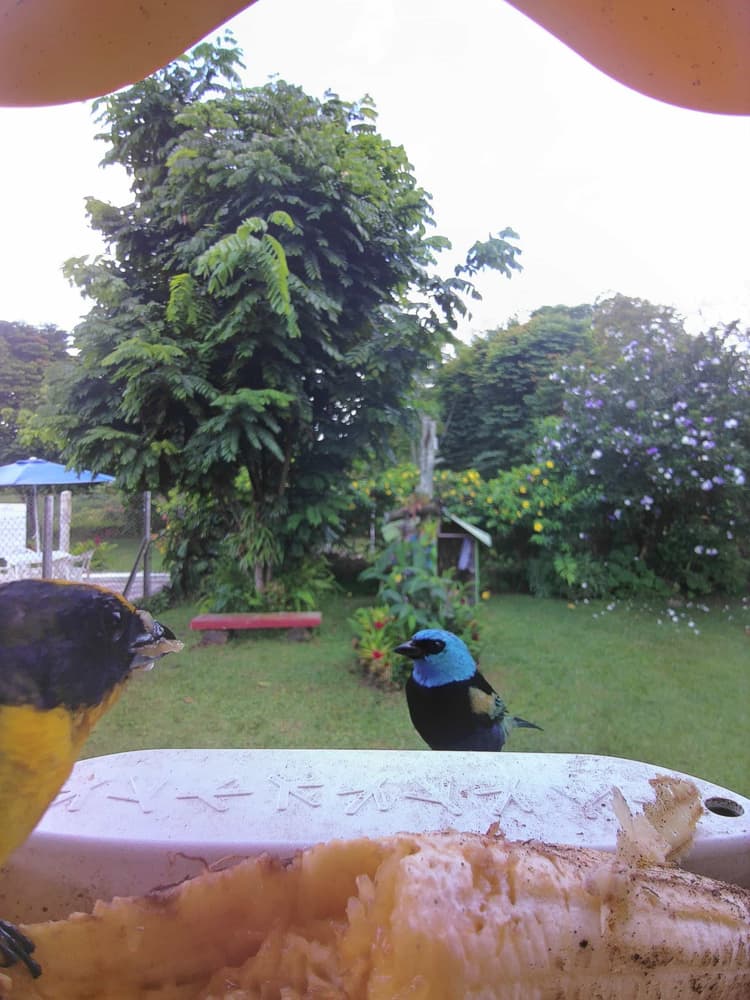
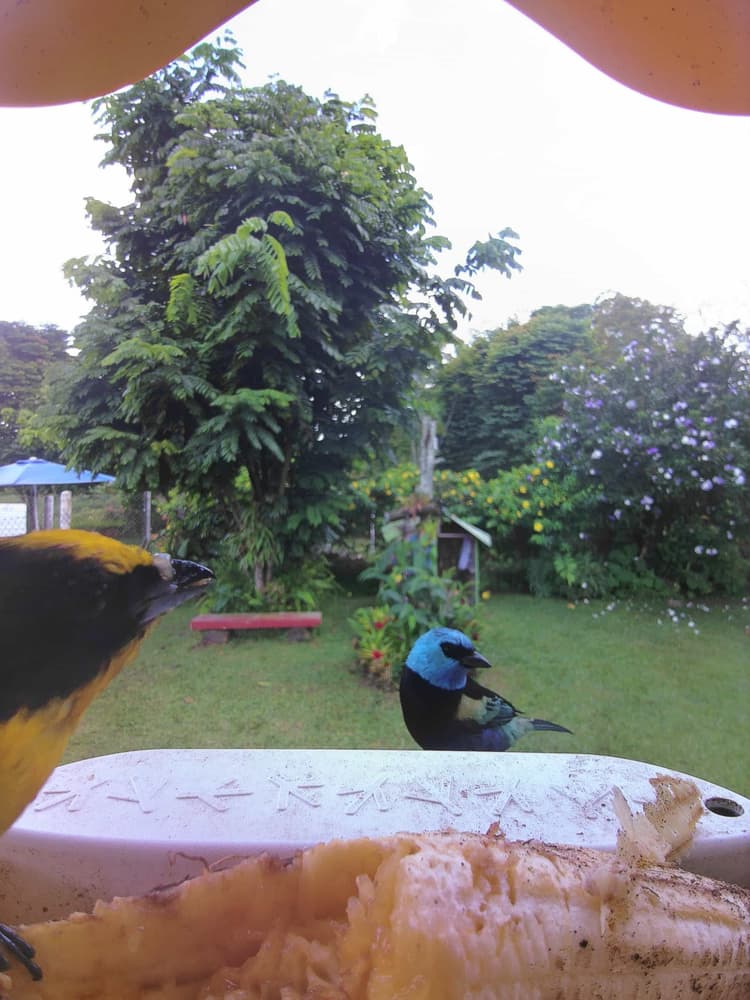
The blue-necked tanager is a medium-sized bird characterized by striking, vibrant colors. Its name derives from its royal blue throat and chest. The rest of the body is mainly turquoise and green with varying shades. Its beak is short and quite sharp.
Male vs female
In the case of the blue-necked tanager, both males and females share a similar appearance with no significant differences. Both sexes exhibit the same bright blue neck and chest, and multicolored body. There's little to no sexual dimorphism, making them difficult to differentiate in the wild.
Juvenile
Juvenile blue-necked tanagers have a duller coloration compared to adults, often appearing more green than blue. While they share the same basic color pattern, their feathers lack the vibrant shine and intense colors of the adults. As they mature, their plumage will gradually brighten to match that of the adult birds.
Often mistaken for
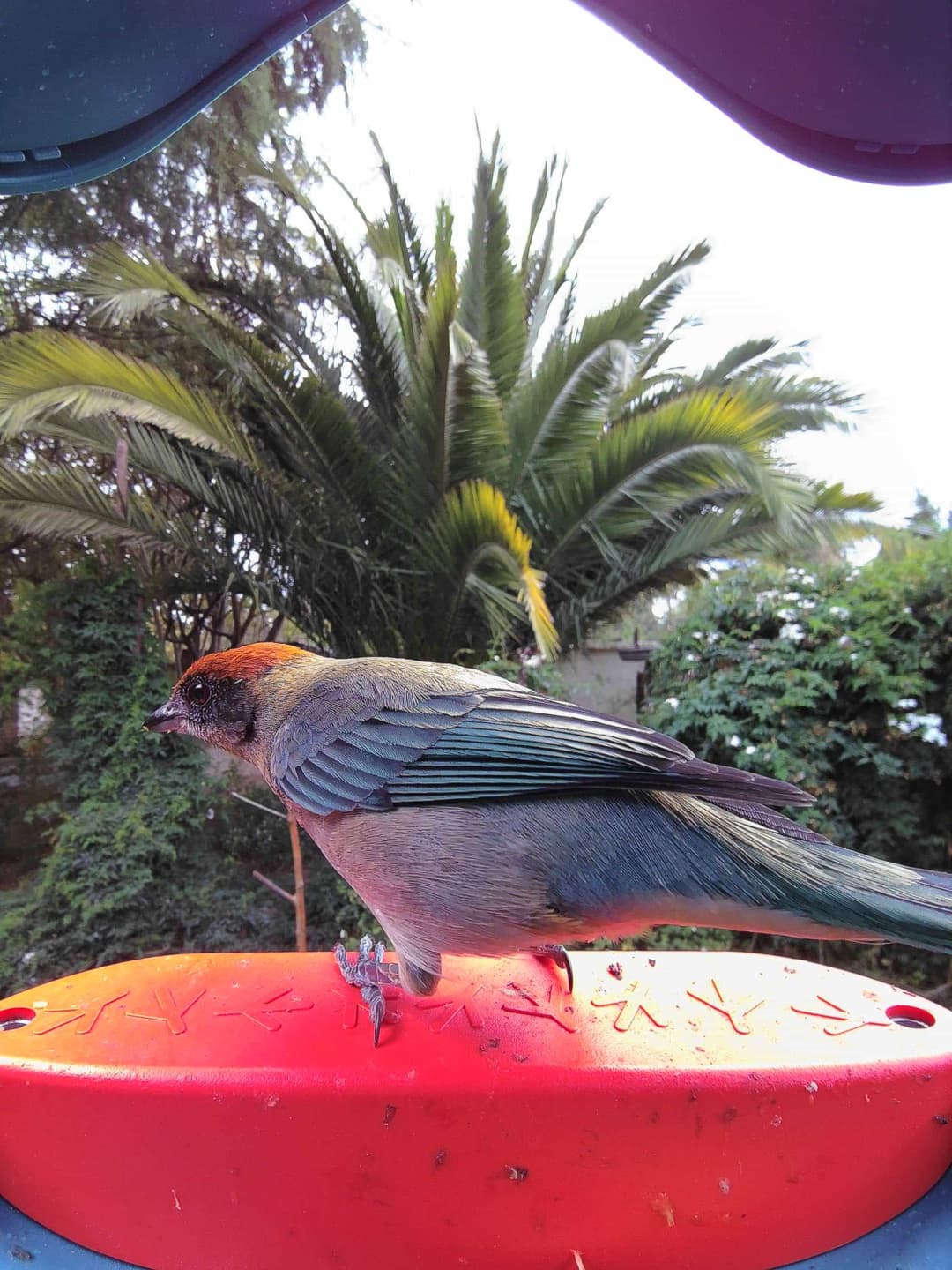
Scrub Tanager vs Blue-Necked Tanager
The Scrub Tanager has a more muted coloration compared to the Blue-Necked Tanager with less vibrant blue markings, primarily featuring more olive tones across its body.
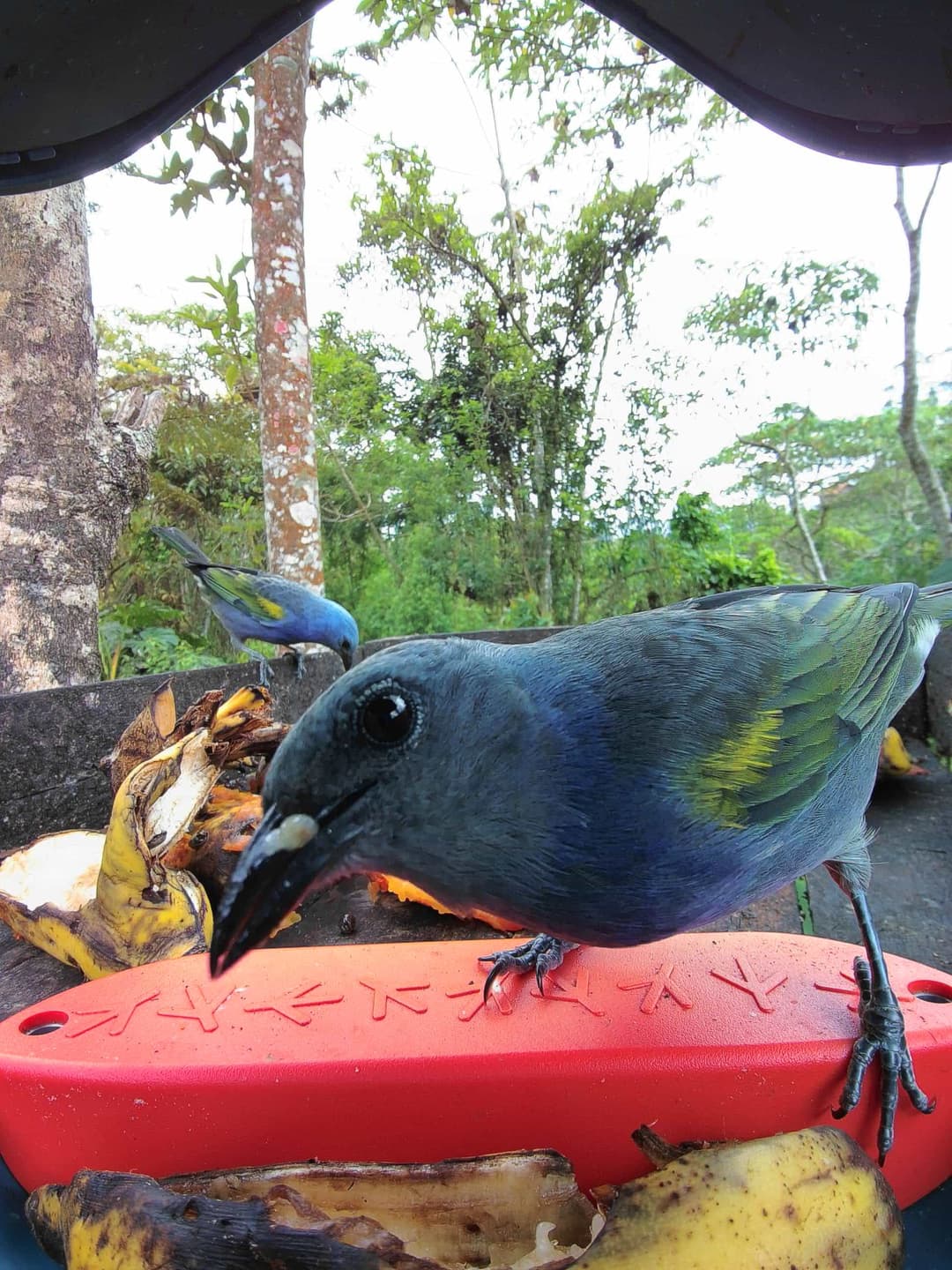
Golden-Chevroned Tanager vs Blue-Necked Tanager
While the Golden-Chevroned Tanager shares some blue coloration, it is identifiable by its distinctive golden patches on its shoulders and more subdued overall color palette.
Sayaca Tanager vs Blue-Necked Tanager
Differentiating the Sayaca Tanager from the Blue-Necked Tanager lies in its coloration; Sayaca Tanagers are mostly bluish-grey without the vibrant blue neck coloration.
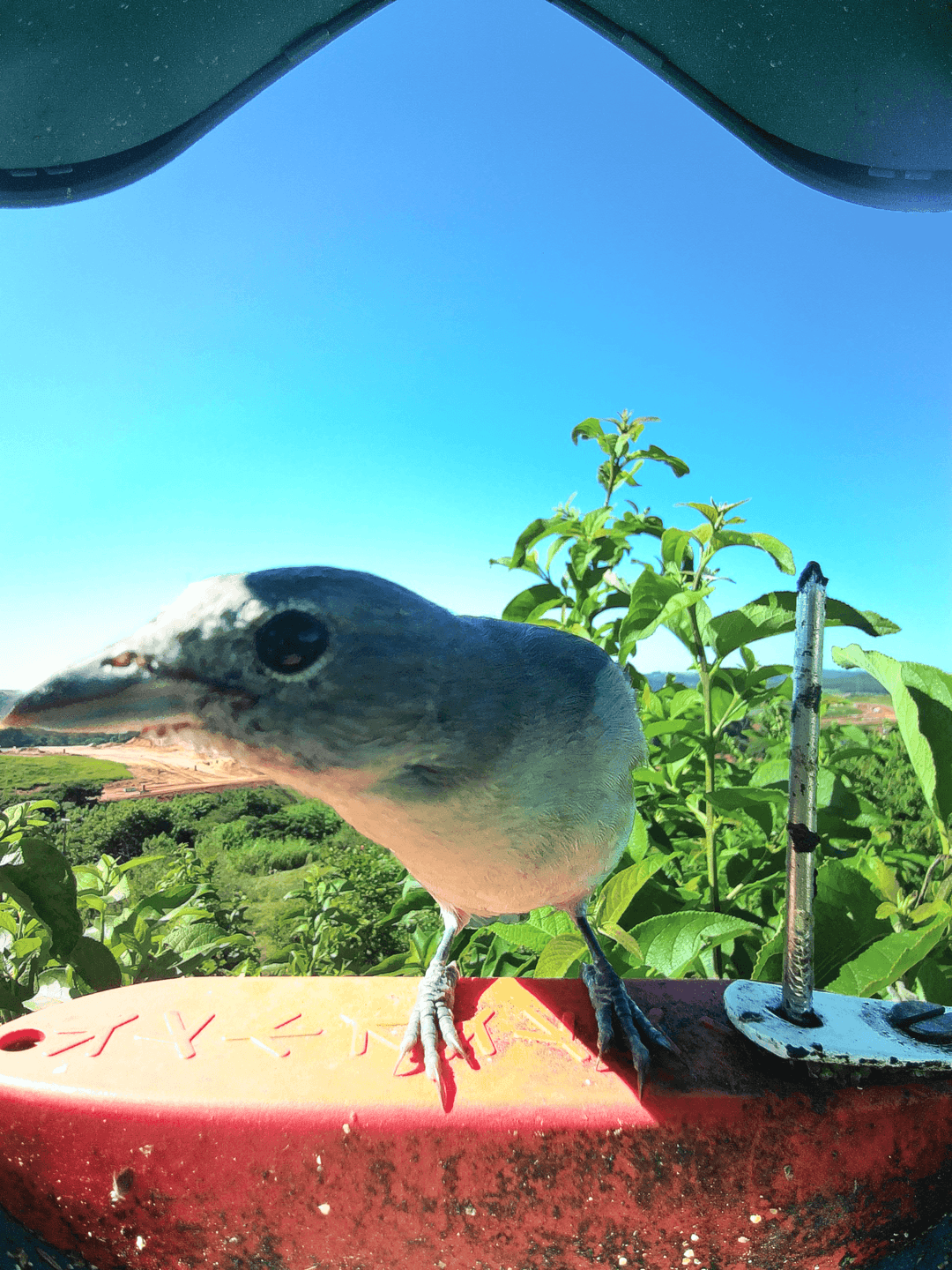
Blue-and-Yellow Tanager vs Blue-Necked Tanager
The Blue-and-Yellow Tanager features a mix of blue and yellow tones rather than the distinct bright blue neck and black body of the Blue-Necked Tanager.
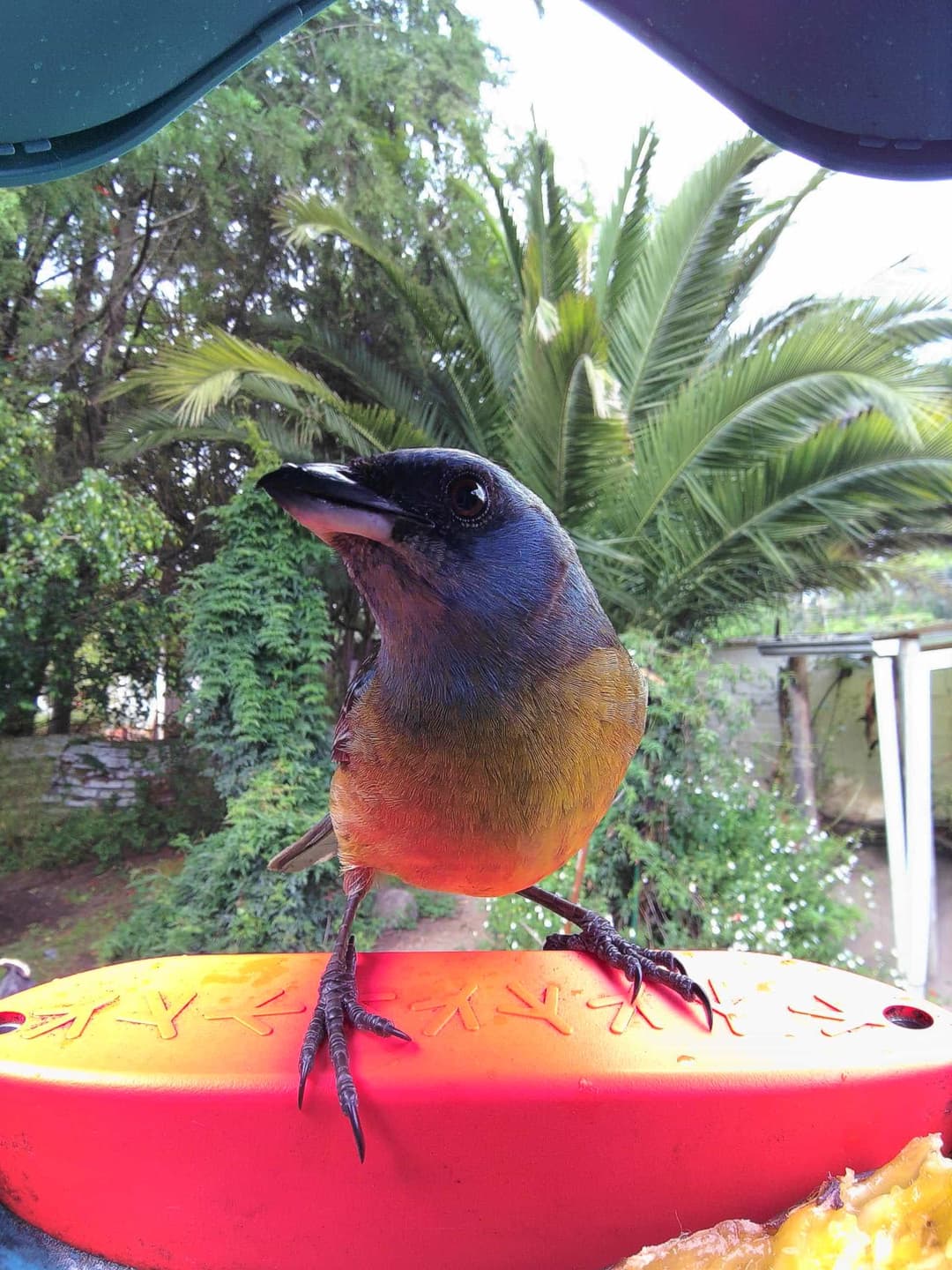
Breeding and nesting habits of the blue-necked tanager
Mating behaviors
The blue-necked tanager engages in vibrant courtship displays. Males often showcase vivid plumage and perform elaborate dances to attract females. Song exchanges between paired birds reinforce bonds.
Nesting details
The blue-necked tanager constructs cup-shaped nests. Preferred locations are in dense foliage or tree canopies. The nests are made from twigs, leaves, and moss. In gardens, planting native shrubs and trees can provide suitable nesting sites.
Eggs and chick-rearing
Females typically lay 2-3 eggs. Both parents participate in incubation and feeding. Chicks fledge about 14-17 days post-hatching. To support nesting in gardens, ensure a supply of fruits and insects, which serve as primary food sources.
What does a blue-necked tanager like to eat?
Flowers
Fruits
Insects
Plants
Natural diet
The blue-necked tanager primarily feeds on a variety of fruits, berries, and insects. It forages through trees and bushes, consuming ripe fruits such as berries, figs, and other small tropical fruits. Insects, including beetles and caterpillars, provide essential proteins, making up a significant part of its diet, especially during the breeding season.
Bird feeders
At bird feeders, the blue-necked tanager is attracted to offerings of fresh fruits and sugar water. It favors sliced bananas, papayas, and pieces of melon. Nectar feeders also attract these birds, mimicking the sweet nectar from flowers they naturally consume. Rarely, they may try seeds, though these are not a staple of their diet.
Favorite snacks for blue-necked tanagers
The Blue-Necked Tanager likes eating a mixture of fruits and insects. They particularly love berries, both wild and those that can be grown at home. You could also provide a mix of regular Bird Buddy seeds, which have shown great results as they are expertly selected according to the season.
Preferred feeder types for tanagers
To attract the Blue-Necked Tanager to your yard, consider using a hanging feeder. Tanagers prefer feeders that are higher up where they feel safer from predators. You may also wish to place the feeder close to a shrub or tree where the birds can quickly seek cover.
Fun tricks to tempt blue-necked tanagers
Given their love for fruit, an easy trick to encourage them to visit is on occasion to impale pieces of fresh, ripe fruits onto twigs or branches where they can easily see and reach them. Planting native flowering shrubs can also prove attractive to them as they search for nectar.
Ensuring tanagers stick around
Once you have attracted these beautiful birds to your yard, providing a consistent source of food, particularly Bird Buddy seeds, can encourage them to stay. Also, it might help to offer a birdbath or water feature, as they enjoy having access to water not only for drinking but also for bathing.
Where can you find blue-necked tanagers?

Primary habitat
The Blue-necked Tanager primarily inhabits tropical lowland forests, from sea level up to 2,500m. They are typically found in the canopy.
Additional range
Can also be found in gardens, plantations, and scrubland areas. Its range spreads throughout South America including Ecuador, Colombia, Venezuela, Peru, and Bolivia.
Do they migrate?
The blue-necked tanager is generally considered a non-migratory bird. It resides year-round in tropical regions of South America, primarily inhabiting the humid forests and edges from eastern Panama through Colombia, Venezuela, Ecuador, Peru, Bolivia, and Brazil. This species tends to stay within its established range throughout the year, relying on the abundant food resources available in these areas. Instead of migration, the blue-necked tanager may exhibit local movements in response to food availability and breeding conditions, commonly shifting elevations depending on the season. They are often found in lowland and foothill forests, typically up to 1,500 meters in elevation but occasionally higher. These movements are not migratory in the classic sense and are confined within their geographical range. Due to this relative sedentary nature, the blue-necked tanager does not have specific migration routes, timing, or key stopover locations that characterize migratory species. Instead, they adapt to local ecological conditions within their range, maintaining a consistent presence in their preferred habitat across seasons.
What is the role of blue-necked tanagers in nature and how to protect them?
Conservation status
The blue-necked tanager is classified as "Least Concern" by the IUCN, indicating it is relatively common and not currently at risk of extinction. The species is found across a wide range in South America, which helps maintain stable population levels. However, habitat destruction, especially deforestation, poses a potential threat to its environment. Key conservation efforts focus on preserving natural habitats and promoting sustainable land use. Maintaining forest reserves and curbing deforestation are essential to ensuring its long-term survival.
Ecological role of blue-necked tanagers
Its role in the ecosystem
The Blue-necked Tanager, scientifically known as Tangara cyanicollis, is a small bird species native to South and Central America. It is a crucial component of tropical and subtropical ecosystems due to its importance in pest control and seed dispersal. In terms of pest control, these birds are insectivores, and their diet mainly consists of various types of insects. They are natural predators of pest insects, helping to maintain a balanced ecosystem and mitigating damage to vegetation. Additionally, their role in seed dispersal is also significant. They eat a variety of fruits from different forest species, and through their movements across the forest, they excrete the seeds in various locations, effectively helping in the propagation and spreading of these fruit-bearing plants. This activity aids in forest regeneration, thereby enhancing floral diversity and maintaining a dynamic and healthy ecosystem. Furthermore, they play an indirect role in boosting local economies through bird-watching tourism.
How to help protect blue-necked tanagers
Preservation tips
Habitat preservation strategies
Blue-necked tanagers rely on tropical forest environments. Support conservation efforts dedicated to preserving and restoring these habitats. Avoid products contributing to deforestation and support those certified as sustainable. Local municipalities should establish and maintain protected natural areas conducive for tanager's habitat.
Community science initiatives
Encourage community science projects to study and monitor Blue-necked tanager populations and their habitats. Activities could include bird counting, habitat quality assessments, and documenting changes over time. This will increase knowledge about this specific tanager and raise awareness of its conservation needs. Community members can also get involved through local bird-watching groups or conservation organizations dedicated to protecting bird species.