Baudin’s Black Cockatoo or Glossy Black Cockatoo?
Here's how to tell the difference

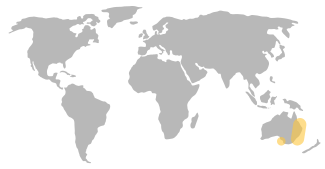

Baudin’s Black Cockatoo

Glossy Black Cockatoo
Baudin’s Black Cockatoo
Calyptorhynchus baudinii
Also known as: Baudin's Cockatoo, Long-Billed Black Cockatoo
General appearance
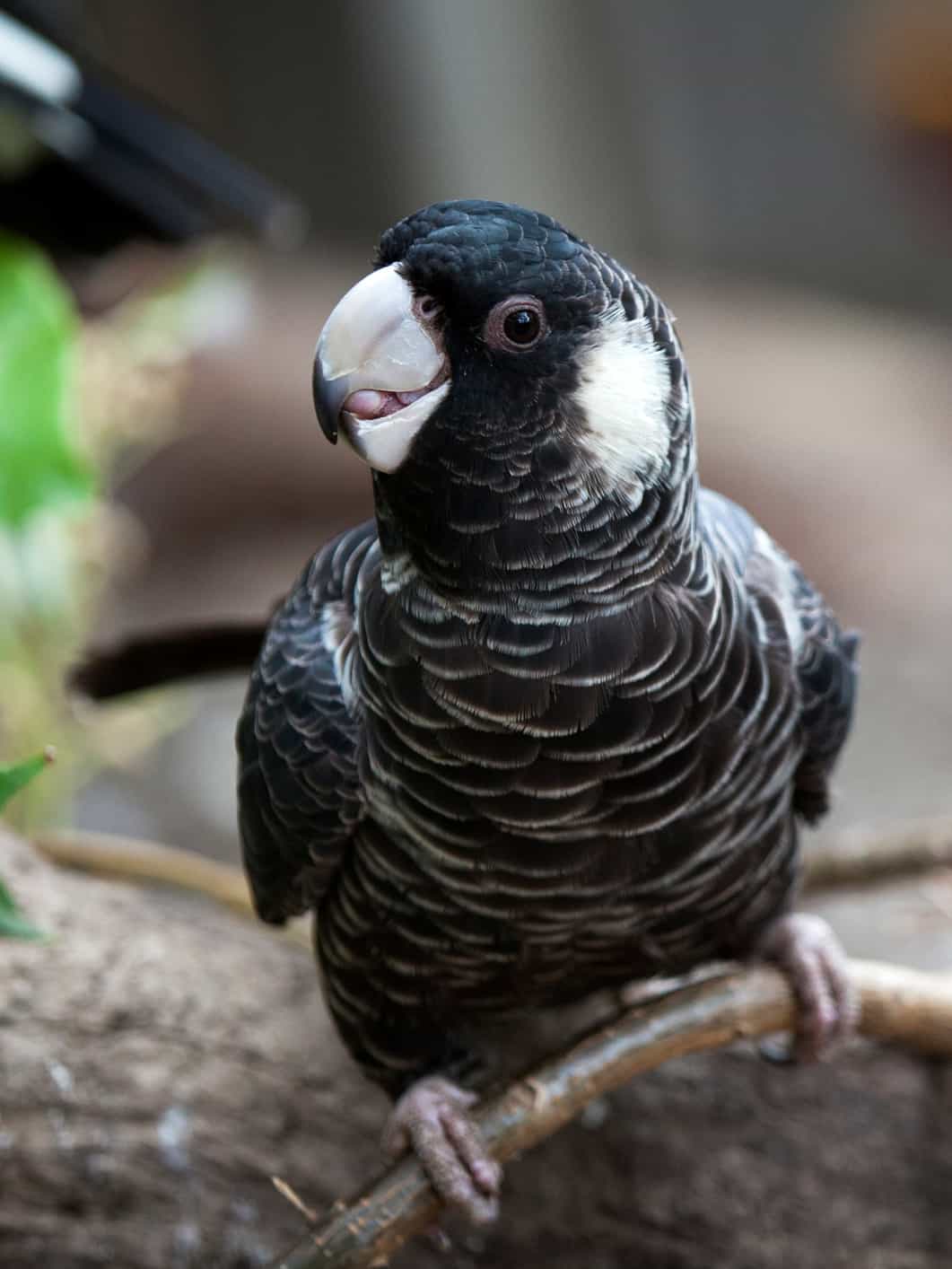
The Baudin's black cockatoo, a large and striking bird, has primarily blackish plumage highlighted with undertones of brown. It's impressive in size, with the upperparts of its body and wings featuring scattered white or light yellow specks. Its distinguishing characteristic is a broad tail with white panels on the side and a rounded tip.
Male vs female
Sexual dimorphism exists among these birds, allowing males and females to be distinguished. Male Baudin's cockatoos have a dark grey beak and pink eye-rings, whilst females have a lighter, horn-coloured beak and grey eye-rings. Additionally, females have more prominent and numerous specks on their head, neck, and underparts compared to males.
Juvenile
Juvenile Baudin's black cockatoos resemble adult females but have paler beaks, and a yellow tint on their lower parts which disappears as they mature. The barring and spotting are not as defined compared to adults. Their eye-rings begin as a soft pink and harden to grey as they mature.
Size
21.7 - 23.6 in/19.0 - 27.9 oz
There's more to learn about Baudin’s Black Cockatoo
View full detailsGlossy Black Cockatoo
Calyptorhynchus lathami
General appearance
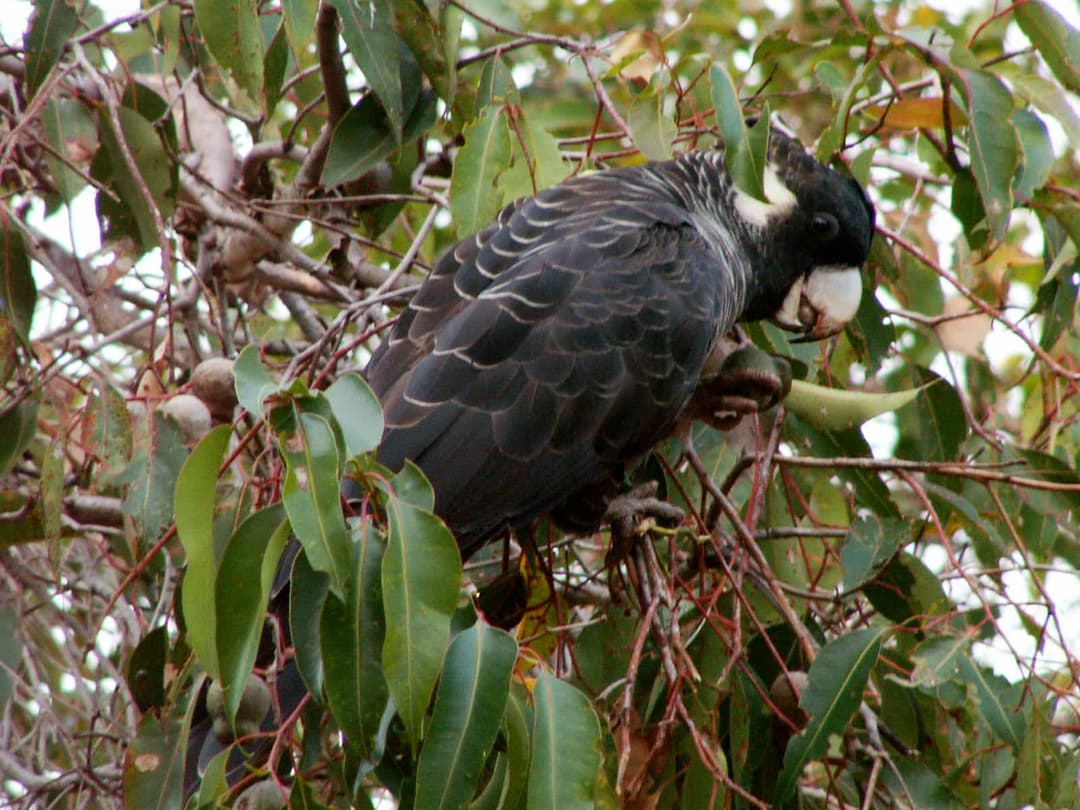
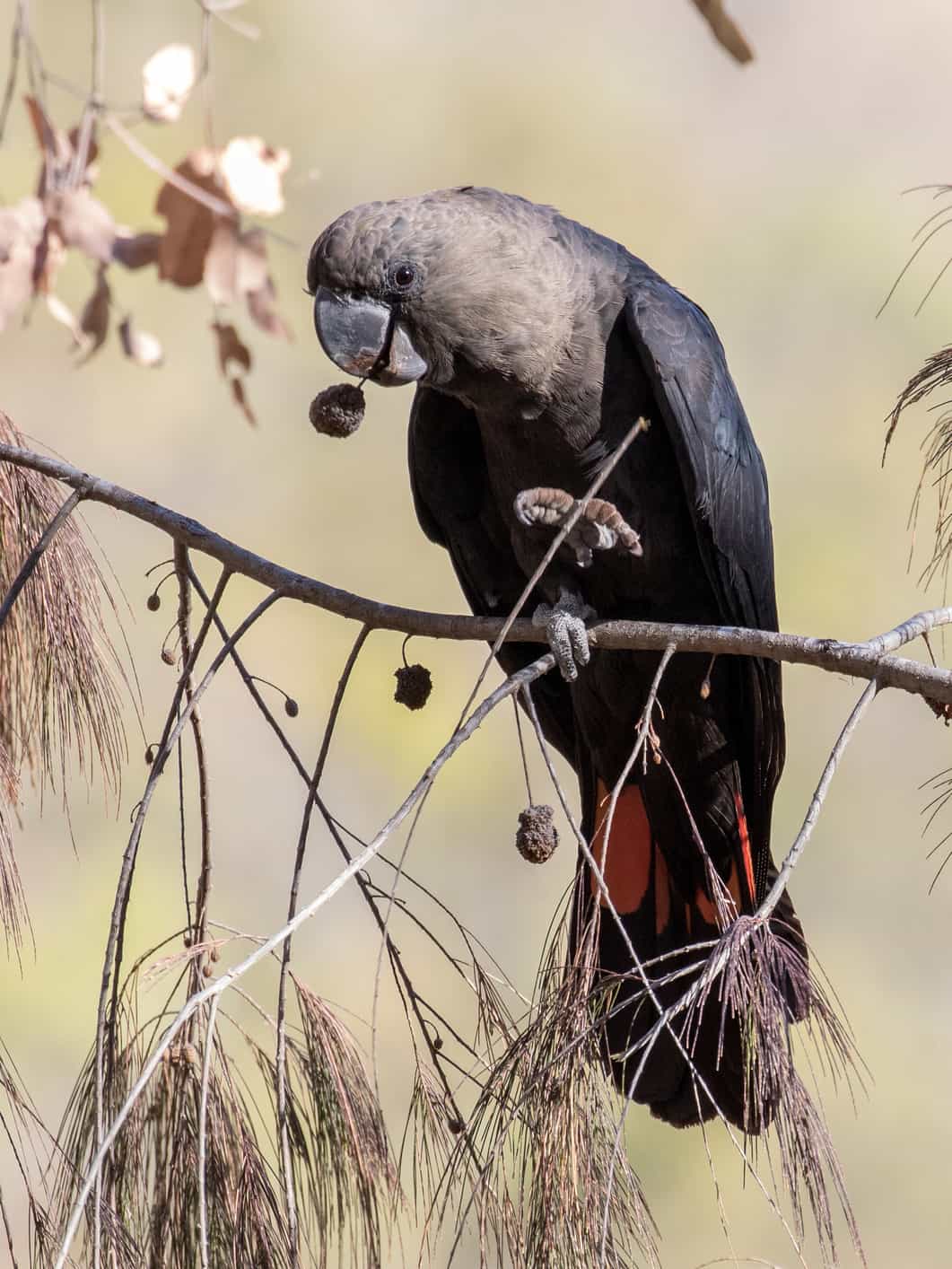
The glossy black cockatoo is relatively small for a cockatoo, and stands out due to its solid black or dark brown plumage with variable red or orange markings. The bird has a sturdy build and a strong curved beak. Its most noticeable feature includes an all-dark bill, contrary to other black cockatoos that exhibit bone-colored beaks.
Male vs female
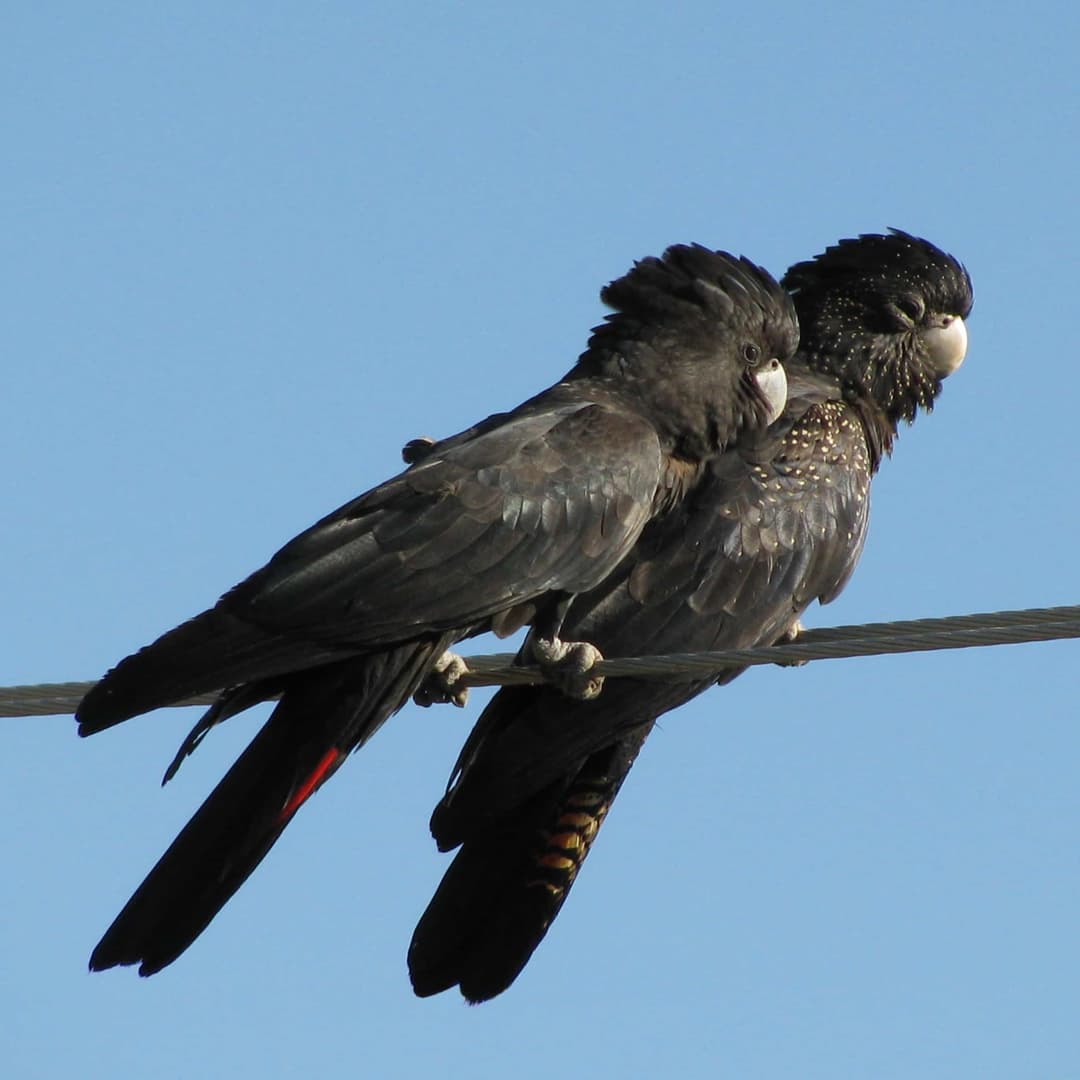
Sexual dimorphism exists in glossy black cockatoos. Males have a solid black plumage with a bright red patch on the tail, while females and young males display yellow speckles on the head and neck and possess varying red, black, and yellow elements within their tail feathers. Females may also have lighter bills than males.
Juvenile
Juveniles of this species resemble females but have less yellow spotting. Their tail bands are more orange and less clearly defined than in adults. The precise age at which males attain their adult coloring is not well documented, but it's thought to take several years.
Size
18.1 - 19.7 in/14.1 - 15.9 oz
There's more to learn about Glossy Black Cockatoo
View full detailsHow to tell the Baudin’s Black Cockatoo from the Glossy Black Cockatoo
Visual differences
Baudin's Black Cockatoo is larger (21.6-23.6 inches, 1.2-1.7 pounds) with primarily blackish-brown plumage and white/light yellow specks, featuring broad tails with white panels. Males have dark grey beaks and pink eye-rings, while females have lighter beaks. Glossy Black Cockatoo is smaller (18.1-19.7 inches, 0.88-0.99 pounds) with solid black/dark brown plumage and red/orange tail markings. Males have a bright red tail patch, and females/youth show yellow speckles and lighter bills. Glossies have all-dark bills, contrary to Baudin's variant beak colors.
Key differences and behavior
Baudin's Black Cockatoos and Glossy Black Cockatoos exhibit distinct behavioral traits that aid in field identification. Baudin's, found in southwestern Australia, thrive in eucalypt woodlands and employ courtship with vocal calls and preening. They are monogamous, nesting in tree hollows, and have a broader diet, including eucalyptus seeds and fruits. In contrast, the smaller Glossy Black Cockatoos of eastern Australia favor sheoak seeds, making them less likely to visit feeders. They prefer smaller groups, with males engaging in aerial acrobatics during courtship. Both species participate in chick-rearing, but Baudin's raise 1-2 chicks per nesting, while Glossy Black Cockatoos typically raise one. Notably, Baudin's have declined to endangered status with 10,000-15,000 individuals remaining, highlighting conservation urgency.
Still not sure? Here are more lookalikes!
Baudin’s Black Cockatoo vs Carnaby’s Black Cockatoo
Baudin’s Black Cockatoo vs Red-Tailed Black Cockatoo
Baudin’s Black Cockatoo vs Yellow-Tailed Black Cockatoo
Glossy Black Cockatoo vs Red-Tailed Black Cockatoo
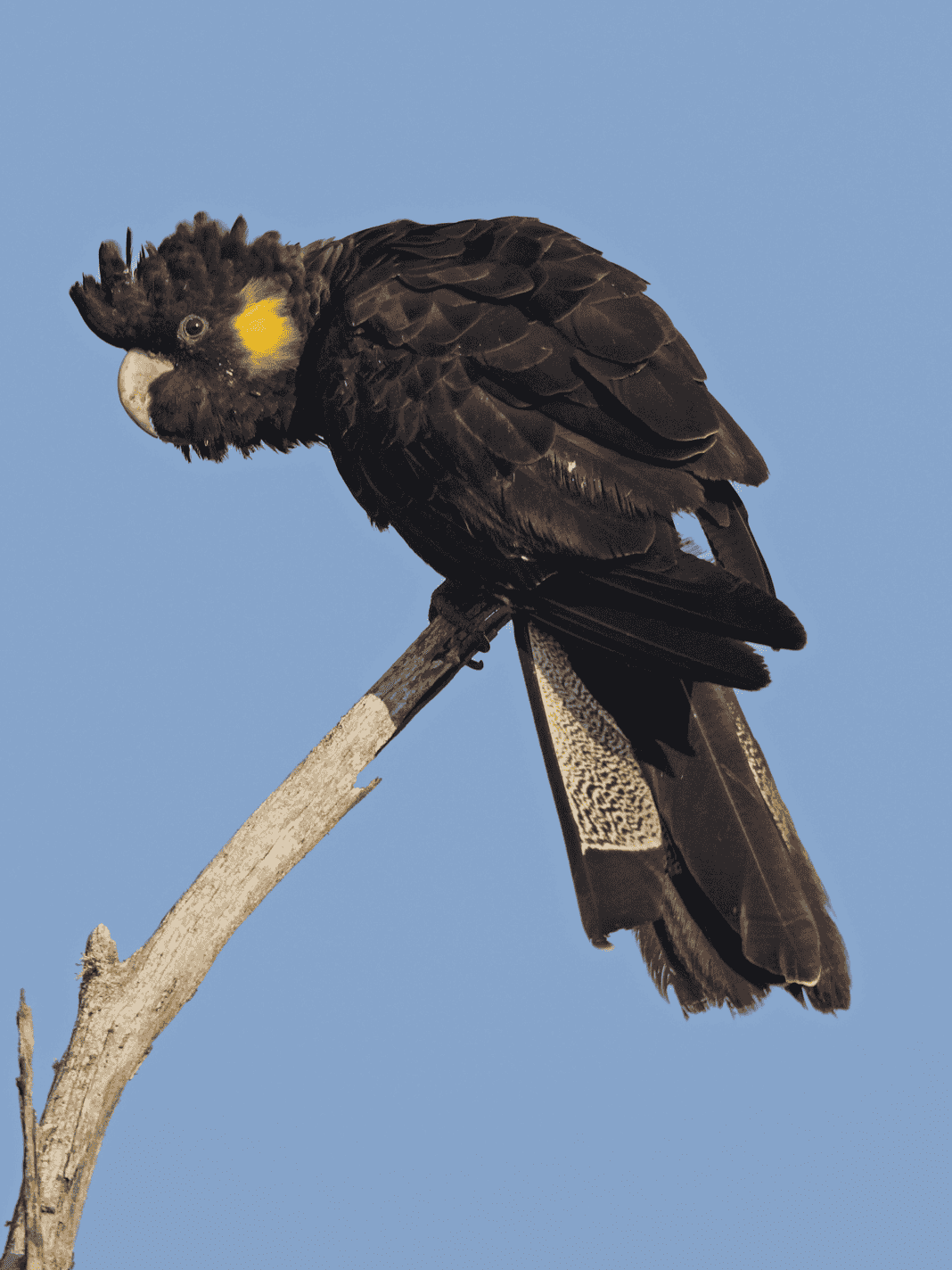
Glossy Black Cockatoo vs Yellow-Tailed Black Cockatoo
Baudin’s Black Cockatoo vs [Select a bird]

[Select a bird]
Pick a bird to compare
Glossy Black Cockatoo vs [Select a bird]
[Select a bird]
Pick a bird to compare