
Carnaby’s Black Cockatoo
Carnaby’s Black Cockatoo
Also known as: Short-Billed Black Cockatoo
Calyptorhynchus latirostris
Quick Identification guide
Quick Identification guide
- •
Features glossy black plumage with distinctive white cheek patches for a striking contrast
- •
The large, hooked beak is robust and powerful, designed for breaking tough seed casings
- •
Exhibits a broad tail with white bands visible in flight, adding to its unique appearance
What does a Carnaby's black-cockatoo sound like?
Carnaby's black cockatoo vocalizations are characterized by a distinctive, loud, high-pitched screech, often made while in flight. They also produce softer, social chattering sounds when in groups. Unlike many parrot species, they do not possess a wide variety of songs; instead, their main call, which is a distinctive short or long "wail," is commonly used for communication. Their contact call, a shorter and more staccato "wee-loo," is used for coordination within a flock.
Description
Carnaby's black cockatoos are vocal birds that are not afraid to tell you what they want. They have the means to do it, too: they have a wide variety of calls suitable for all sorts of occasions. They mate for life and like their privacy, positioning their nests some 517 feet apart from others'. Sadly, they are considered endangered.
The Carnaby's black-cockatoo can weigh between 580to770grams and be from55to60centimeters tall.
Carnaby's black cockatoo typically lives for about 40-60 years. This Australian species, similar to its close relative, Baudin's black cockatoo, has a long lifespan despite threats such as habitat loss. In comparison, other related species such as the red-tailed black cockatoo also live for around 50 years, making them one of the longest-living parrot species. However, domestic cockatoos can live even longer, up to 70 years or more under ideal conditions.
Did you know?
Most popular questions about Carnaby's black-cockatoo
How to recognise a Carnaby's black-cockatoo?
General appearance
The Carnaby’s black cockatoo is a large parrot with an overall sooty black coloration. They have a characteristic crest of feathers on their heads and beige patches on their cheeks. Their tail feathers are also adorned with beige panels. In flight, they display bright white markings on their wings.
Male vs female
Males and females have slightly different appearances. Males have dark grey beaks and pink eye-rings, while females have bone-colored beaks and grey eye-rings. Females also display barred feathering on their crests, while males have solid black crests.
Juvenile
Juvenile Carnaby’s black cockatoos resemble females with their bone-colored beaks, but they lack the female's barred crest feathering. Their eye-rings are duller in colour, often appearing brown. As they mature, males develop dark beaks and pink eye-rings, while females maintain their appearance.
Often mistaken for
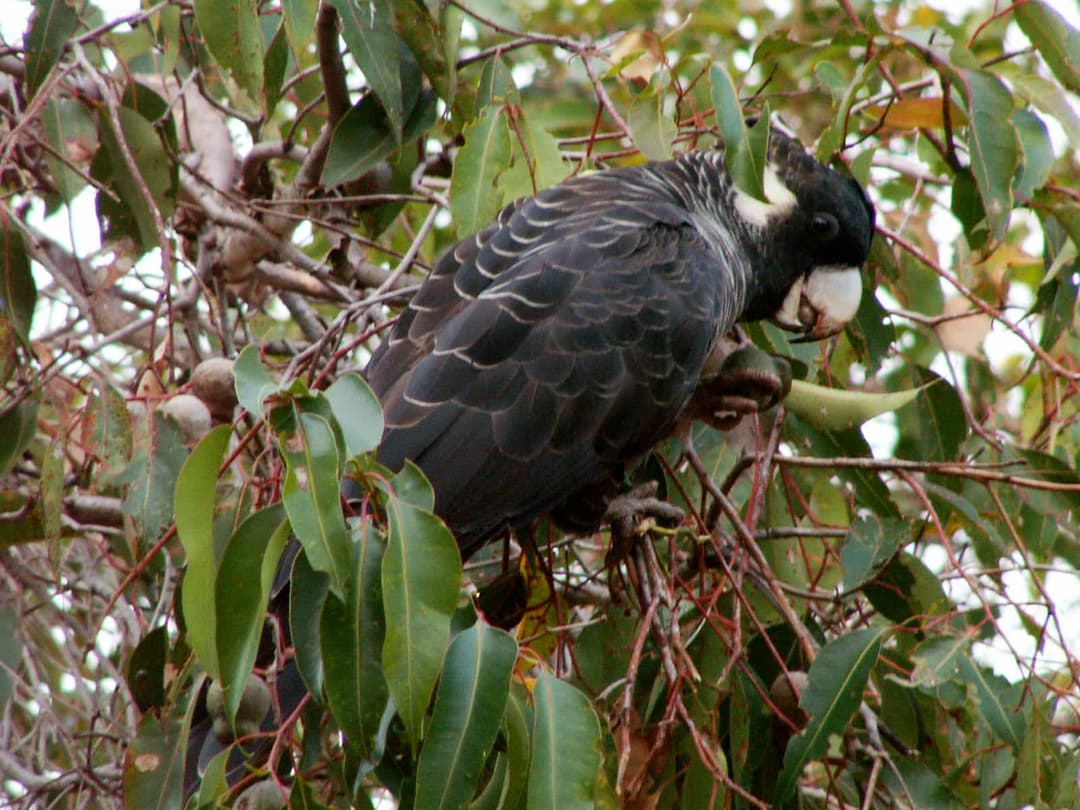
Baudin’s Black Cockatoo vs Carnaby’s Black Cockatoo
Similar in appearance with dark plumage and white cheek patches like Carnaby’s Black Cockatoo, but Baudin’s Black Cockatoo has a longer bill and more elegant call.
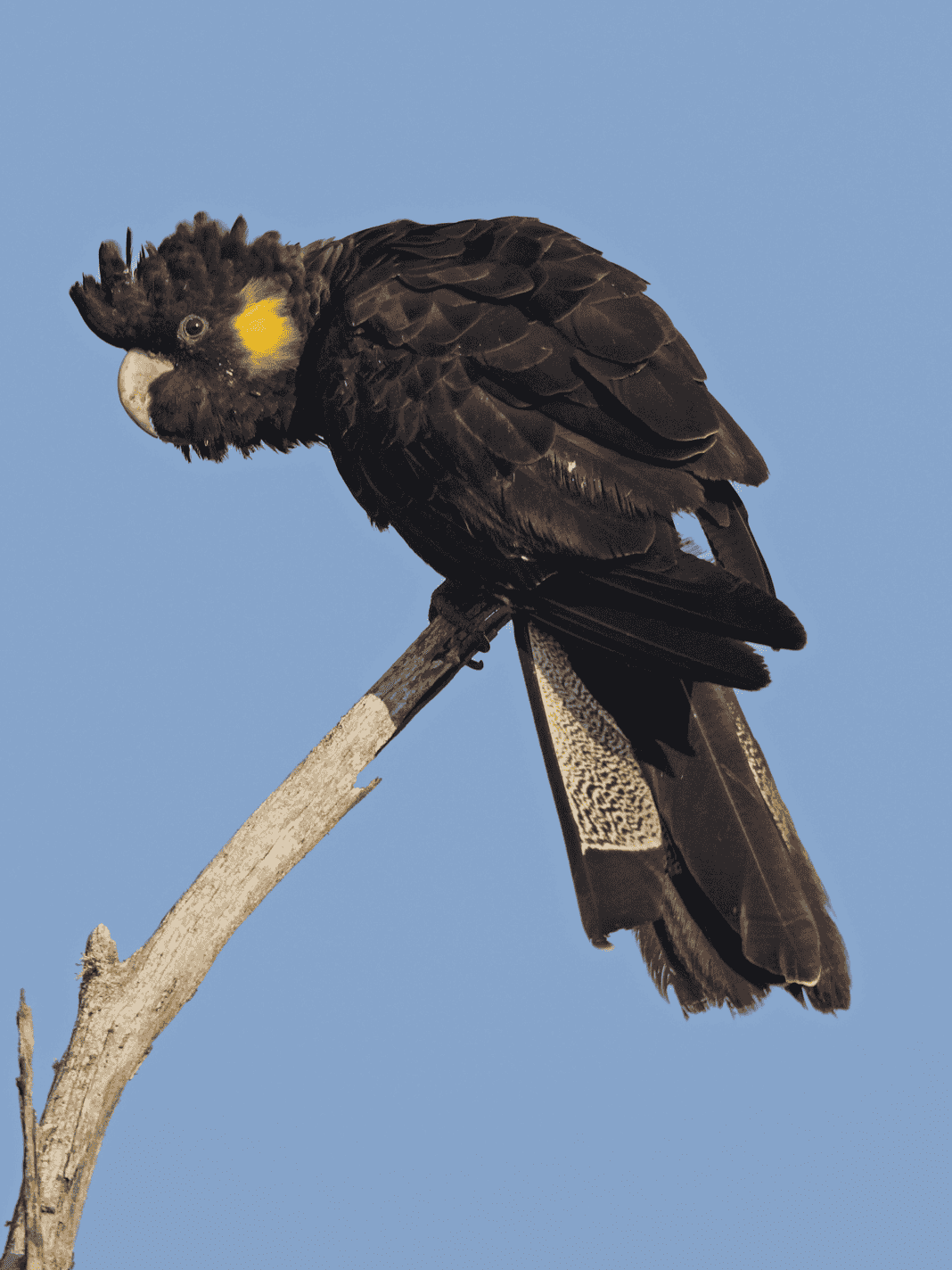
Yellow-Tailed Black Cockatoo vs Carnaby’s Black Cockatoo
Shares similarities such as size and black plumage but can be distinguished by the yellow panels on the tail and cheek patches.
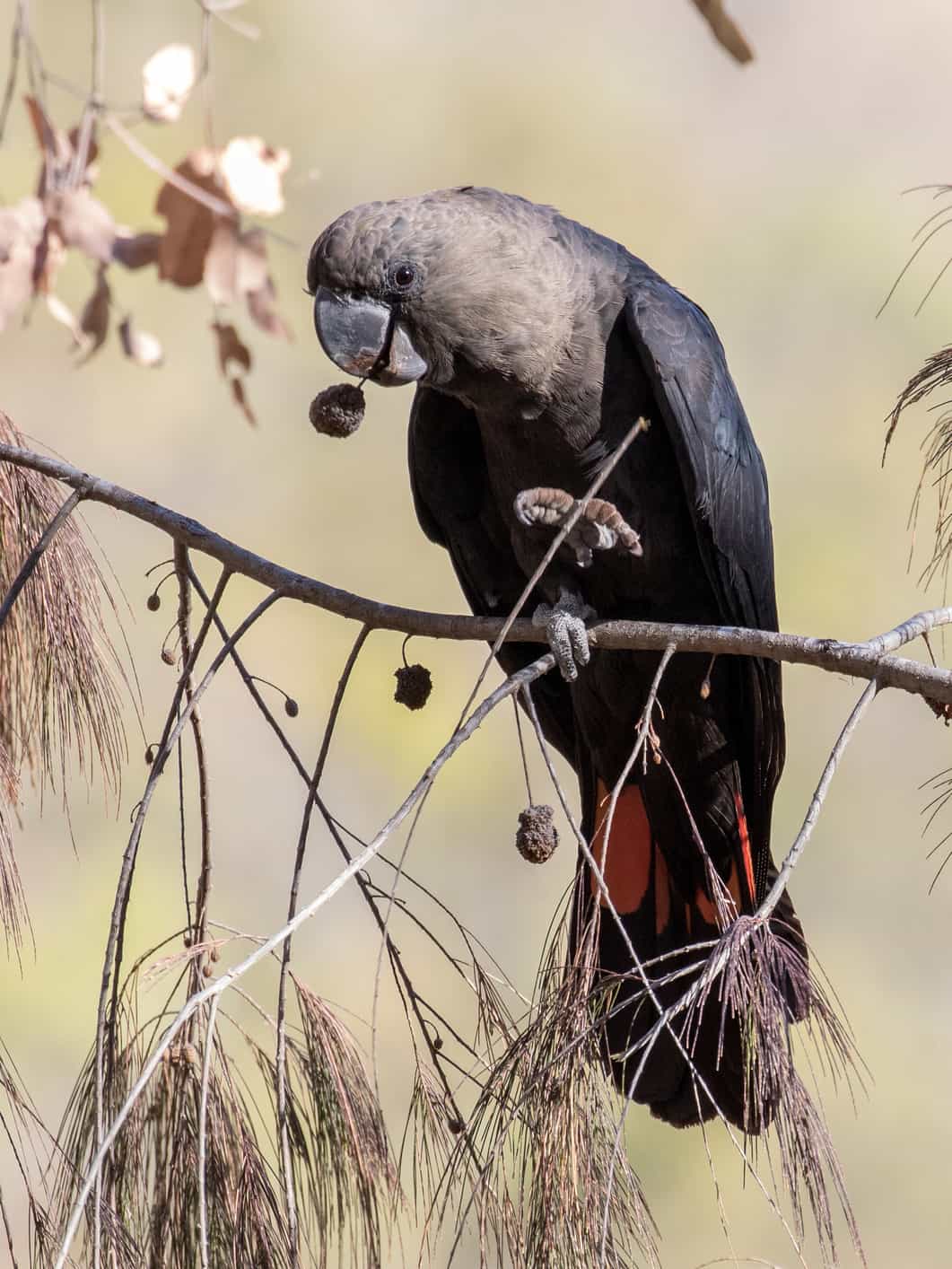
Glossy Black Cockatoo vs Carnaby’s Black Cockatoo
Similar black plumage and red tail bands can be mistaken, but the Glossy Black Cockatoo is smaller with no white cheek patches.
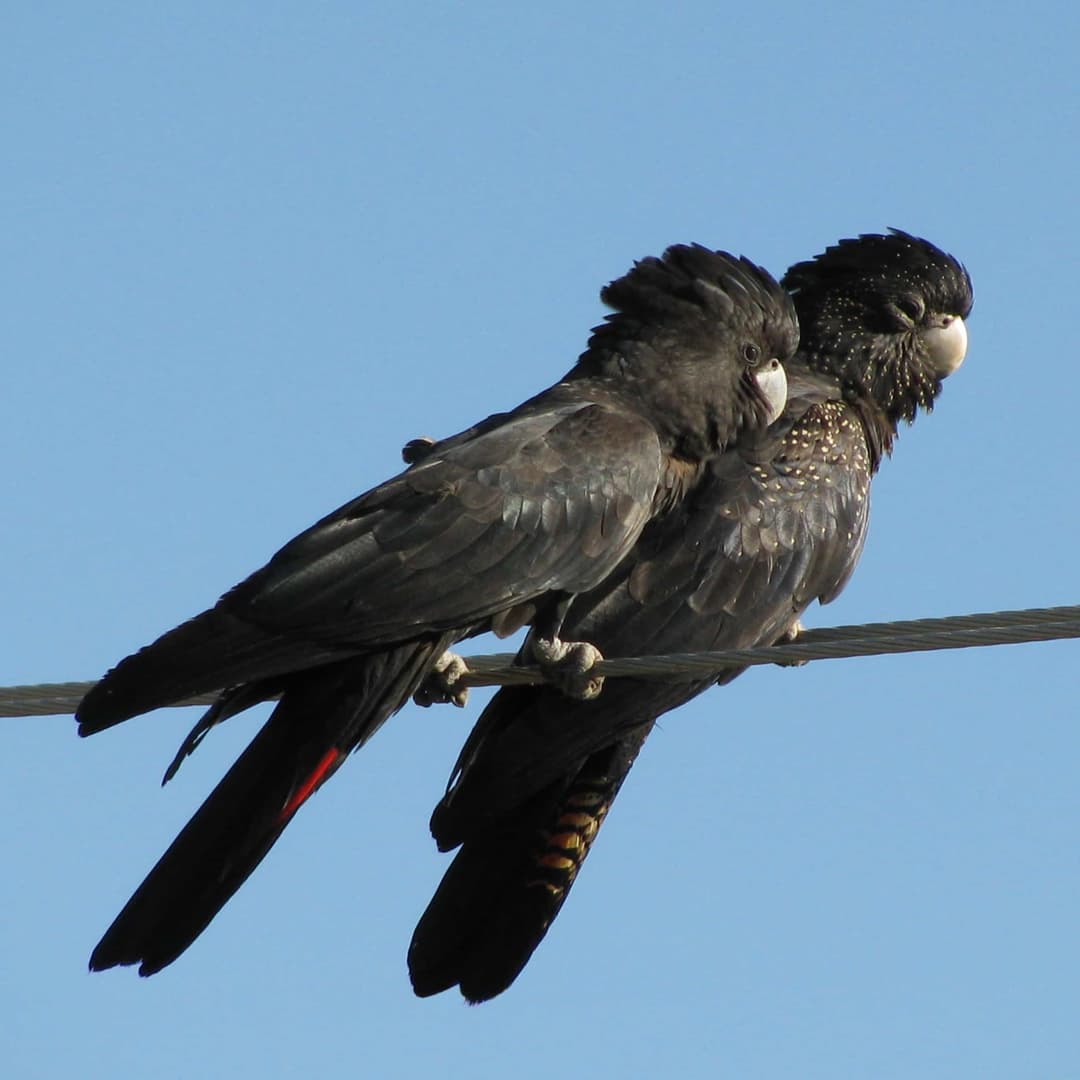
Red-Tailed Black Cockatoo vs Carnaby’s Black Cockatoo
Resembles in overall black plumage and red panels like Carnaby’s, but can be distinguished by the large size and distinct call.
Breeding and nesting habits of the Carnaby's black-cockatoo
Mating behaviors
Carnaby’s black cockatoos perform elaborate courtship displays, involving vocalizations and physical displays such as wing stretching and head bobbing to attract mates. Males may present food to females as part of the courtship ritual.
Nesting details
These cockatoos prefer nesting in large hollows of mature eucalypt trees, usually within woodland areas. They line their nests with wood chips and leaves. In urban areas, gardeners can help by planting native tree species that support large hollows and providing bird-friendly landscape features.
Eggs and chick-rearing
Typically, the female lays 1 to 2 eggs and incubates them for 29 to 31 days. After hatching, both parents participate in feeding the chicks, which fledge at about 10 to 12 weeks. Parents continue to care for the fledglings even after they leave the nest.
What does a Carnaby's black-cockatoo like to eat?
Flowers
Insects
Seeds
Natural diet
Carnaby’s black cockatoo primarily feeds on seeds and nuts from native trees and shrubs such as Banksia, Hakea, and Eucalyptus. This species also consumes a variety of insects and larvae, which supplement their diet, especially during breeding season.
Bird feeders
At bird feeders, Carnaby’s black cockatoo often consumes sunflower seeds and nuts. They might also be attracted to feeders offering a mix of grains and seeds intended for larger birds. Occasionally, they may try fruits like apples and pears if available.
Attracting the carnaby’s black cockatoo
To tempt a Carnaby’s black cockatoo into your yard, first set up a feeder where they will feel safe and comfortable. Choose a feeder that is sturdy and strong enough to support the weight of this large bird, and place it in a quiet, tree-covered area of your yard. Avoid placing the feeder near windows, busy roads, or other potential sources of stress for the birds.
Provide favorite snacks
Carnaby’s black cockatoos have a few favorite snacks that you can use to lure them to your feeder. This includes seeds, nuts, and fruit. Provide a variety of these in your feeder to attract this diverse eater.
Bird buddy seeds recommendation
We recommend using Bird Buddy seeds, as these have been expert-selected to appeal to Carnaby’s black cockatoos in every season. Bird Buddy seeds will supply the right nutrition for the cockatoos and ensure they keep coming back to your feeder.
Fun tricks to encourage visits
Carnaby’s black cockatoos are known for their intelligence and curiosity. You can use this to your advantage by incorporating some fun elements into your feeding station. For example, try hanging some toys near your feeder. The birds will be drawn in by the shiny objects and the opportunity for play. Once they spot your delicious Bird Buddy seeds, they’ll be tempted to stay and sing a song or two!
Where can you find Carnaby’s black cockatoos?

Primary habitat
Carnaby’s black cockatoo is native to southwestern Australia. It primarily dwells in eucalypt woodlands and heath.
Additional range
In addition to its primary habitats, this bird has adapted to urban areas and pine plantations. It prefers Mediterranean climate with wet winters and dry summers.
Do they migrate?
The Carnaby’s black cockatoo, native to southwestern Australia, is partially migratory. During the breeding season, from July to December, they inhabit inland eucalypt woodlands, primarily in regions such as the Wheatbelt. Nesting typically occurs in tree hollows in areas with abundant food sources like native shrubs and trees. After breeding, the cockatoos migrate toward coastal and peri-coastal areas from December to July. This post-breeding dispersal leads them to regions including Perth, the Swan Coastal Plain, and other coastal lands. They are often seen in banksia woodlands, pine plantations, and urban areas, where they feed on seeds and a variety of plant materials. Key locations during the coastal migration include Yanchep National Park and the Gnangara Pine Plantation. This seasonal movement between inland breeding areas and coastal feeding sites is largely driven by food availability and habitat conditions, ensuring they have access to sufficient resources throughout the year. The migration covers relatively short distances compared to many other migratory bird species, but this seasonal movement is crucial for their survival and reproduction.
What is the role of Carnaby’s black cockatoos in nature and how to protect them?
Conservation status
Carnaby’s black cockatoo is classified as endangered. Major threats include habitat loss due to land clearing for agriculture and urban development, which affects their breeding and feeding areas. Additionally, competition for nesting sites and food shortages further threaten their survival. Key conservation efforts focus on habitat preservation and restoration, creating artificial nesting sites, and legal protection of the species under various conservation laws. Community and governmental initiatives aim to boost public awareness and involvement in conservation activities. Conservation strategies also target the control of invasive species that compete with or prey upon these cockatoos.
Ecological role of Carnaby’s black cockatoos
Its role in the ecosystem
Carnaby's black cockatoo holds significant ecological value in Australian ecosystems, their native environment. Firstly, their diet consists primarily of weed seeds which helps in pest control, by limiting the number of invasive plants that may otherwise overrun the native Australian flora. Secondly, their natural behaviour of dropping or storing seeds during feeding aids in seed dispersal, which contributes to the propagation of various plant species and enhances vegetation growth. This indirectly supports the ecosystem by helping to maintain and increase biodiversity. Furthermore, their nesting habits in tree hollows also create habitats for different fauna species. Unfortunately, this unique bird species is now under the threat of extinction due to habitat loss and degradation. Thus, protecting the Carnaby's black cockatoo not only ensures the survival of a singular species but also preserves the overall balance of the ecosystem they inhabit.
How to help protect Carnaby’s black cockatoos
Preservation tips
Habitat preservation strategies
Protect existing Carnaby’s black cockatoo nesting and feeding habitats by discouraging deforestation. Support reforestation projects in areas where their natural habitats have been destroyed. Local governments should implement land use policies favouring preservation and restoration of natural forests. Avoid disturbing areas within 100 meters of nest sites during their breeding season, always between January and July.
Community science initiatives
Get involved in citizen science projects monitoring the populations and habitats of the Carnaby’s black cockatoo. ‘The Great Cocky Count’ is a yearly survey organised by BirdLife Australia, which helps to track the species’ population trends. Always report sightings to BirdLife Australia, providing necessary data for conservation planning. Encourage local schools to raise awareness about the cockatoo, its habitats, and threats it faces, fostering a sense of stewardship in young generations. Lastly, support wildlife rescue centres that rehabilitate injured and orphaned cockatoos.