Glossy Black Cockatoo or Yellow-Tailed Black Cockatoo?
Here's how to tell the difference
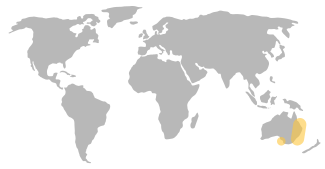

Glossy Black Cockatoo

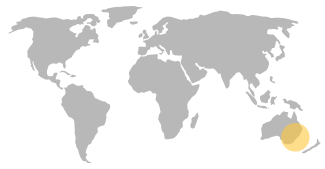
Yellow-Tailed Black Cockatoo
Glossy Black Cockatoo
Calyptorhynchus lathami
General appearance
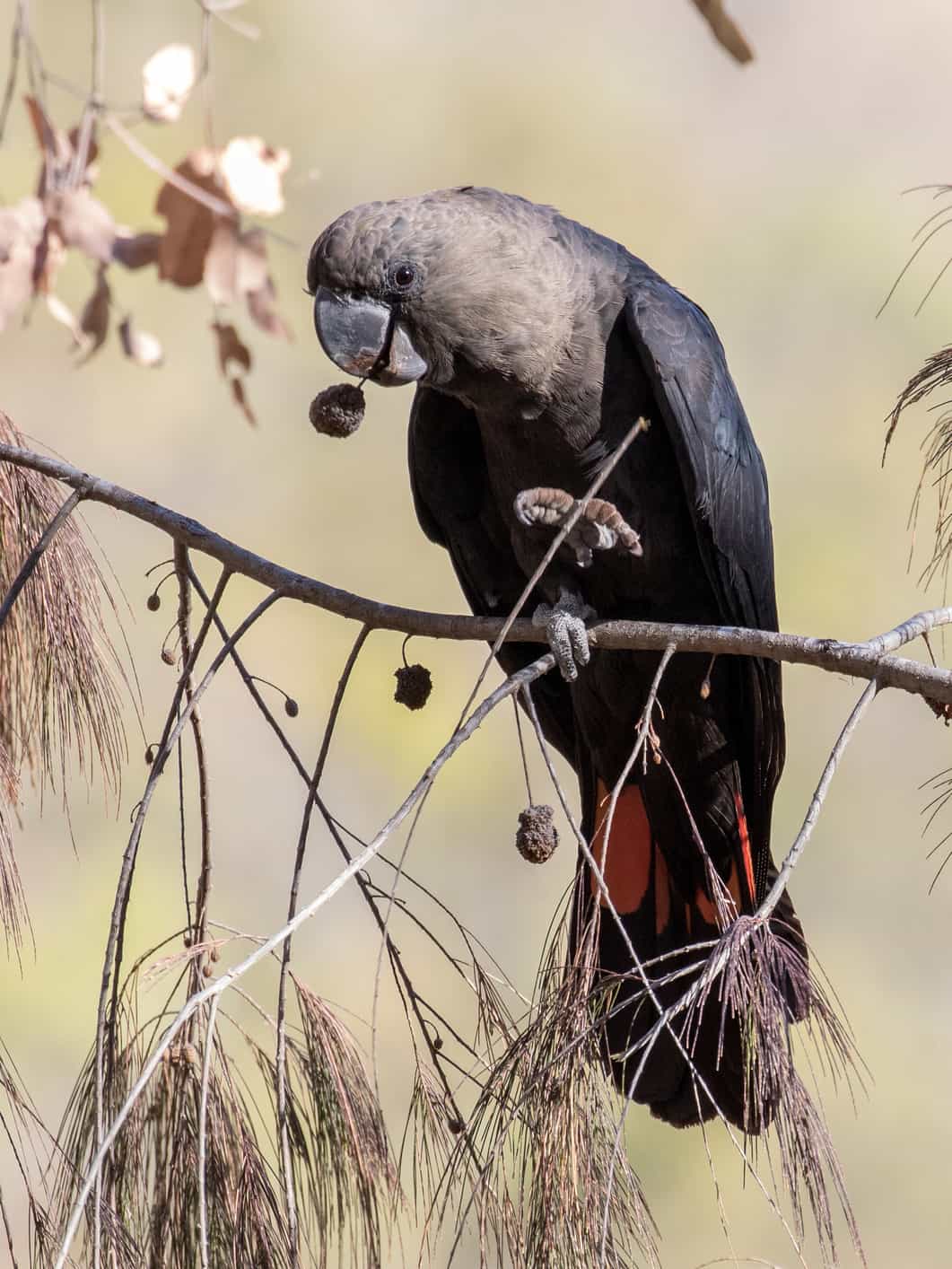
The glossy black cockatoo is relatively small for a cockatoo, and stands out due to its solid black or dark brown plumage with variable red or orange markings. The bird has a sturdy build and a strong curved beak. Its most noticeable feature includes an all-dark bill, contrary to other black cockatoos that exhibit bone-colored beaks.
Male vs female
Sexual dimorphism exists in glossy black cockatoos. Males have a solid black plumage with a bright red patch on the tail, while females and young males display yellow speckles on the head and neck and possess varying red, black, and yellow elements within their tail feathers. Females may also have lighter bills than males.
Juvenile
Juveniles of this species resemble females but have less yellow spotting. Their tail bands are more orange and less clearly defined than in adults. The precise age at which males attain their adult coloring is not well documented, but it's thought to take several years.
Size
18.1 - 19.7 in/14.1 - 15.9 oz
There's more to learn about Glossy Black Cockatoo
View full detailsYellow-Tailed Black Cockatoo
Zanda funerea
General appearance
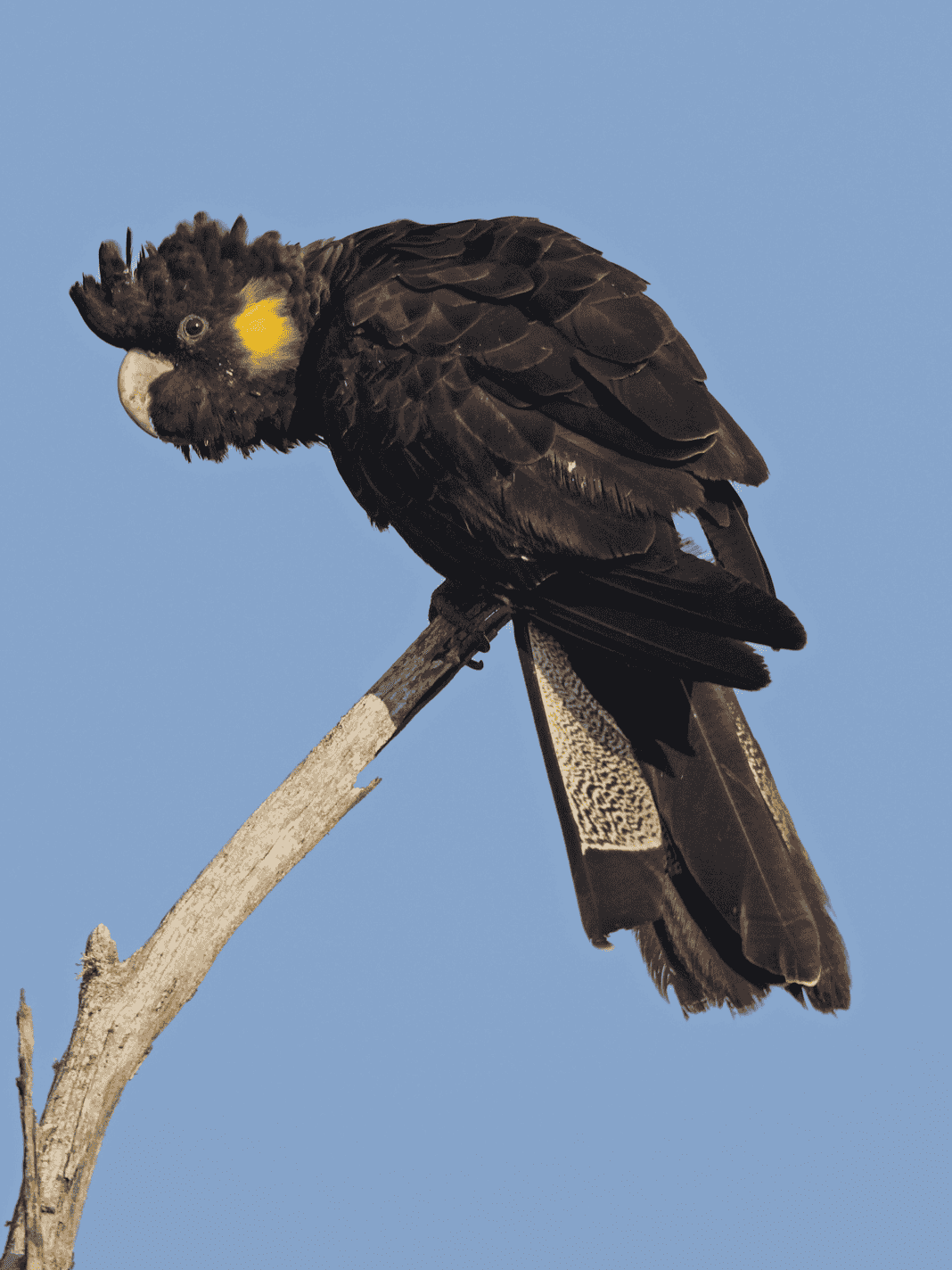
Yellow-tailed black cockatoos are large birds, measuring up to 65 cm in length, with overall black coloration. They possess a prominent crest of black feathers on their head and yellow patches on their cheeks. The main distinctive feature is a yellow band on their tail feathers, granting the species its name.
Male vs female
Males have a dark grey beak color and pinkish eye-rings, while females have a bone-colored beak and grey eye-rings. Another notable characteristic in females is broader and brighter yellow tail bands.
Juvenile
Juvenile yellow-tailed black cockatoos resemble the adult females, though their coloring is slightly duller. They also possess a shorter crest compared to adults. Juvenile males will start to develop darker beaks with age, allowing for differentiation from females.
Size
21.7 - 23.6 in/21.5 - 31.7 oz
There's more to learn about Yellow-Tailed Black Cockatoo
View full detailsHow to tell the Glossy Black Cockatoo from the Yellow-Tailed Black Cockatoo
Visual differences
The Glossy Black Cockatoo is smaller (18-20 inches) with solid dark plumage and an all-dark bill. Males have bright red tail patches, while females show yellow speckles. The Yellow-Tailed Black Cockatoo is larger (22-24 inches), predominantly black with a prominent crest, yellow cheek patches, and distinct yellow tail bands. Males have darker beaks and pinkish eye-rings; females have bone-colored beaks and broader yellow tail bands. Glossy Black Cockatoos have a robust build with curved beaks, contrasting with the more slender build of the Yellow-Tailed variety.
Key differences and behavior
Glossy Black Cockatoos (18-20 inches long, 0.9-1 lbs) usually form small, quiet, non-migratory groups, preferring the forests of Eastern Australia with casuarina trees. They have a specialized diet mainly consisting of casuarina seeds and are seldom seen at bird feeders. Their elaborate mating behavior involves aerial displays and food offerings, with nesting predominantly in eucalyptus hollows. In contrast, Yellow-Tailed Black Cockatoos (21.7-23.6 inches long, 1.3-2 lbs) form larger groups, occupying diverse habitats in Southeastern Australia, including sub-alpine and coastal areas. They forage on seeds, fruits, nuts, and wood-boring larvae, sometimes visiting bird feeders. These cockatoos choose old tree hollows over 200 years for nesting and can lay more than one egg. Both species perform aerial acrobatics for courtship, but Yellow-Tails also rely on a broader range of food sources and habitats.
Still not sure? Here are more lookalikes!
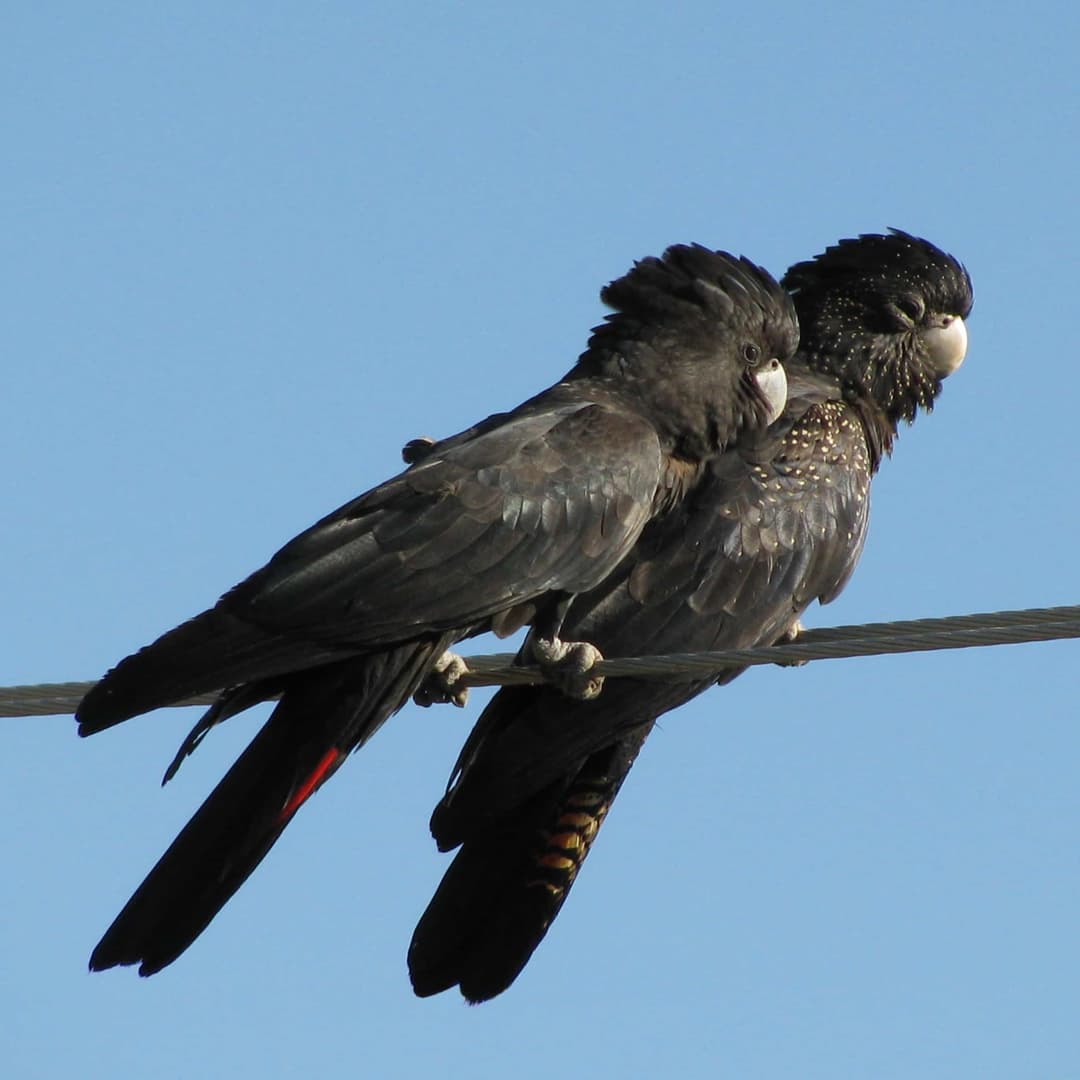
Glossy Black Cockatoo vs Red-Tailed Black Cockatoo
Glossy Black Cockatoo vs [Select a bird]

[Select a bird]
Pick a bird to compare
Yellow-Tailed Black Cockatoo vs [Select a bird]
[Select a bird]
Pick a bird to compare