
Glossy Black Cockatoo
Glossy Black Cockatoo
Calyptorhynchus lathami
Quick Identification guide
Quick Identification guide
- •
Exhibits a sleek black plumage with a distinct deep red tail patch visible during flight
- •
Features a strong, curved beak that is adapted for feeding on native seeds
- •
Lacks a prominent crest, giving it a more smooth, rounded head appearance
What does a glossy black-cockatoo sound like?
The glossy black cockatoo is known for its raucous, screeching calls and piercing whistles, often heard during its evening flights. These calls often vary between sexes; males usually make a repetitive 'kreel-kreel' noise while the females and young emit high-pitched, shrieking notes. This cockatoo, however, is relatively quieter compared to other cockatoo species. It does not really have a defined song or specific melody, but rather depends on a series of calls and sounds for communication.
Description
Glossy black cockatoos are not only the smallest Australian cockatoos but they are also the smallest black cockatoos! Small bird, small group; these guys like to hang around in small groups and roost together in groups of up to 40 birds. They are non-migratory and not particularly vocal.
The glossy black-cockatoo can weigh between 400to450grams and be from46to50centimeters tall.
The glossy black cockatoo typically lives for up to 40 years. Such lifespan is relatively long compared to other cockatoo species like the Major Mitchell's cockatoo, which lives for around 30 years. However, it's relatively shorter compared to the Sulphur-crested cockatoo which can live up to 70 years. The glossy black cockatoo's lifespan depends on factors like diet, environment, and access to veterinary care.
Did you know?
Most popular questions about glossy black-cockatoo
How to recognise a glossy black-cockatoo?
General appearance
The glossy black cockatoo is relatively small for a cockatoo, and stands out due to its solid black or dark brown plumage with variable red or orange markings. The bird has a sturdy build and a strong curved beak. Its most noticeable feature includes an all-dark bill, contrary to other black cockatoos that exhibit bone-colored beaks.
Male vs female
Sexual dimorphism exists in glossy black cockatoos. Males have a solid black plumage with a bright red patch on the tail, while females and young males display yellow speckles on the head and neck and possess varying red, black, and yellow elements within their tail feathers. Females may also have lighter bills than males.
Juvenile
Juveniles of this species resemble females but have less yellow spotting. Their tail bands are more orange and less clearly defined than in adults. The precise age at which males attain their adult coloring is not well documented, but it's thought to take several years.
Often mistaken for
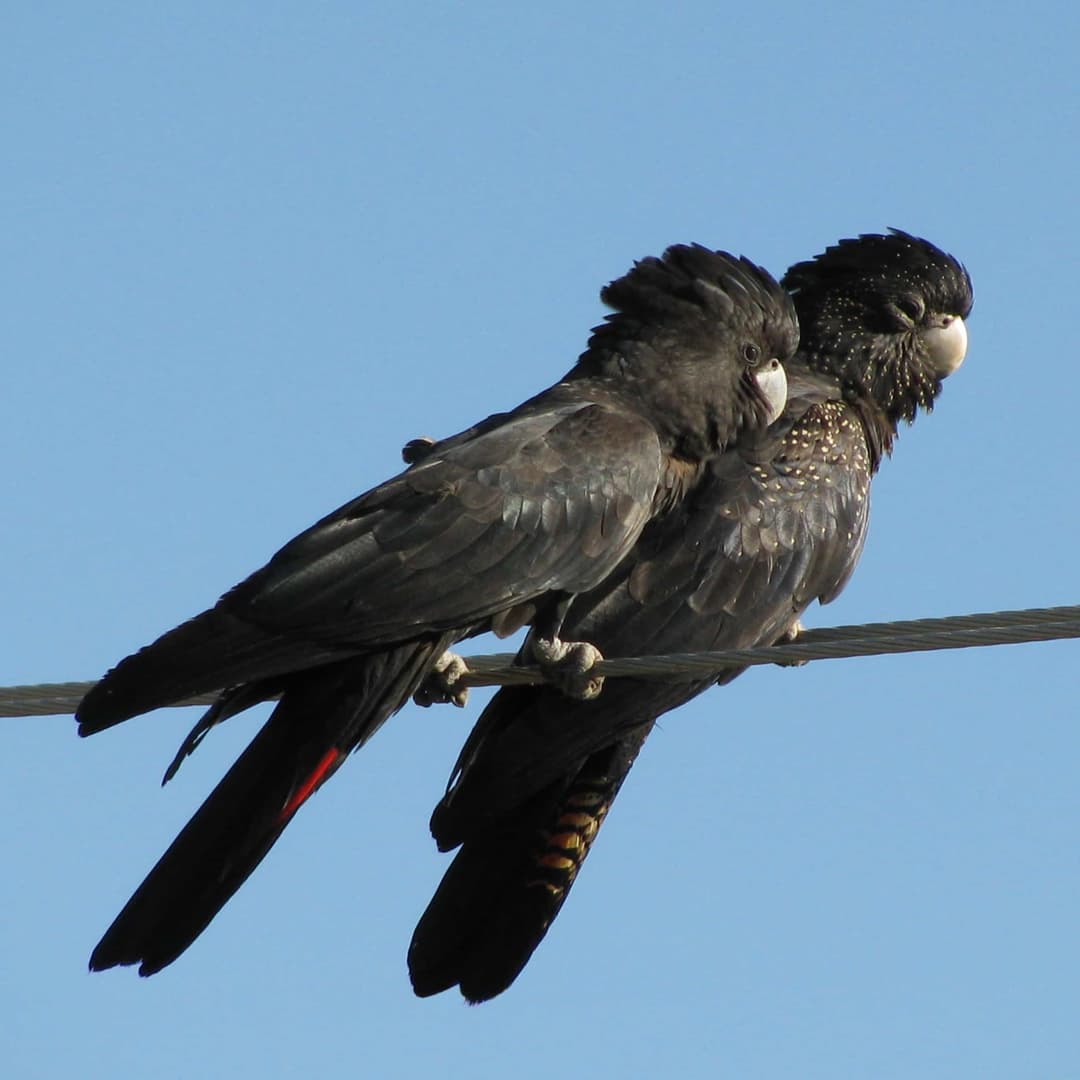
Red-Tailed Black Cockatoo vs Glossy Black Cockatoo
Red-Tailed Black Cockatoos are slightly larger and display distinctive red patches on the tails, which are absent in Glossy Black Cockatoos.
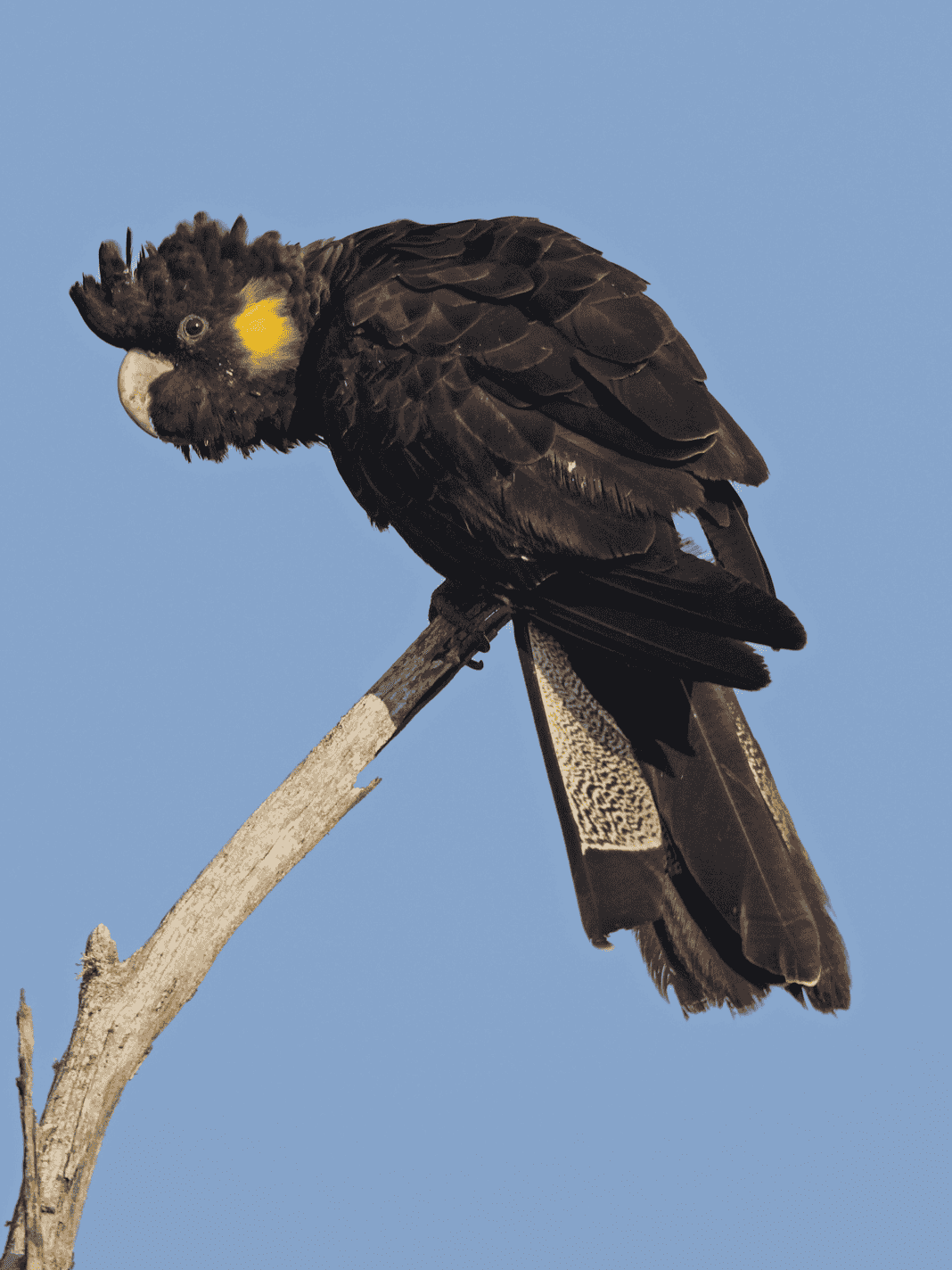
Yellow-Tailed Black Cockatoo vs Glossy Black Cockatoo
Yellow-Tailed Black Cockatoos have bright yellow panels on their tails and a yellow cheek patch, contrasting with the dusky appearance of the Glossy Black Cockatoo.
Breeding and nesting habits of the glossy black-cockatoo
Mating behaviors
Glossy black cockatoos engage in elaborate courtship displays. Males perform aerial acrobatics and vocalizations to attract females, often presenting food as a gift. Bonded pairs may preen each other as part of pair bonding.
Nesting details
These cockatoos prefer nesting in hollows of mature eucalyptus trees. Nests are lined with wood chips or leaves for comfort. They may also use nest boxes in gardens that mimic natural hollows, positioned high and away from disturbances.
Eggs and chick-rearing
The female typically lays one egg, incubating it for about 30 days. Both parents feed the chick with regurgitated food. Chick rearing lasts up to six months, during which the parents fiercely protect the nest.
What does a glossy black-cockatoo like to eat?
Insects
Seeds
Natural diet
The glossy black cockatoo primarily feeds on the seeds of casuarina and allocasuarina trees. They have a specialized diet, relying heavily on these seed sources, particularly from species like the drooping she-oak (Allocasuarina verticillata). They may also consume seeds from other native trees and sometimes supplement their diet with insect larvae found under the bark.
Bird feeders
It is uncommon for glossy black cockatoos to visit bird feeders, as they prefer their natural diet of casuarina seeds. However, they may occasionally consume seeds from bird feeders that offer a variety of nuts and seeds similar to their natural sources, though this is rare and not a significant part of their diet.
Attract glossy black cockatoos with their favorite snacks
Glossy Black Cockatoos have a particular fondness for the seeds of casuarina trees, or sheoaks. However, a great alternative is using Bird Buddy seeds. Expertly chosen for the season, these seeds are often favored by these beautiful birds. In addition to seeds, you can also tempt them with fresh fruits and nuts. Remember not to overfeed though, as they're known to be picky eaters.
Choosing the right feeder for glossy black cockatoos
When it comes to feeders, these birds prefer platforms or large hanging feeders, which are capable of supporting their size and weight. Ensure the feeder is robust, and heavy-duty as cockatoos can be quite destructive. Location is key; place the feeder at a height and in a quiet place. Also, keep the feeding site clean, as a dirty site could discourage them from visiting.
Fun tricks to get them to stay
Creating a bird-friendly environment can convince Glossy Black Cockatoos to stay longer. Besides providing food, it helps to have a water source for drinking and bathing. Birds are also attracted to places that feel safe from predators. Thus, having dense foliage or trees for shelter will help. For a fun trick, try playing bird sounds. Although it's not proven to always work, sometimes a 'sing-along' can tempt a curious bird to pay a visit.
Best seed choice - bird buddy seeds
Bird Buddy seeds come highly recommended for attracting Glossy Black Cockatoos. These seeds are selected by experts for each season, ensuring their relevance to the birds' dietary needs throughout the year. Their quality and mix have been proven to have the best results in attracting these magnificent cockatoos.
Where can you find glossy black cockatoos?

Primary habitat
The glossy black cockatoo’s primary habitat consists of woodland and forest regions, preferably with a good supply of sheoak trees, in Eastern Australia.
Additional range
They may also occupy rainforest edges, farmland, urban parks, and gardens. Their climate preference is generally mild to warm, often in coastal areas.
Do they migrate?
The glossy black cockatoo is known for being a sedentary species, meaning it does not migrate. Instead, these birds generally stay within their established home ranges throughout the year. They are found primarily in eastern and southeastern Australia, including parts of Queensland, New South Wales, and Victoria, as well as Kangaroo Island in South Australia. Their habitat preferences include woodlands with an abundance of their primary food source, the seeds of the she-oak. While they do not migrate, glossy black cockatoos may exhibit local movements in search of food and suitable breeding sites, particularly during periods of scarcity. These movements are usually short-range and within their home territories. Thus, there are no specific migratory routes, timings, or notable stopover locations associated with the species. Conservation efforts focus on protecting their habitat and food sources to support their stationary lifestyle.
What is the role of glossy black cockatoos in nature and how to protect them?
Conservation status
The glossy black cockatoo is classified as vulnerable, with its population declining due to habitat loss, primarily from land clearing and bushfires. This bird relies heavily on casuarina trees for food, which are being lost to development and climate change. Key conservation efforts include habitat restoration, planting casuarina trees, and monitoring populations. Efforts are particularly strong on Kangaroo Island, where conservationists focus on recovery post-bushfires. Predation by invasive species, such as rats and cats, also threatens their nesting success, necessitating further protective measures.
Ecological role of glossy black cockatoos
Its role in the ecosystem
The Glossy Black Cockatoo serves a vital role in maintaining ecological balance in its habitat. Its diet primarily consists of the seeds of the Allocasuarina tree, making it a key seed disperser. This not only aids in new tree growth but also helps to regenerate landscapes, particularly after bushfires. This bird also contributes to pest control by consuming insect larvae that may otherwise damage trees. Its nesting habits, which often involve hollowing out tree trunks, provide homes for various other species, contributing to biodiversity. However, the Glossy Black Cockatoo is listed as an endangered species, and its decline may disrupt these ecological functions, impacting overall ecosystem health.
How to help protect glossy black cockatoos
Preservation tips
Habitat preservation strategies
Retain old-growth and large hollow-bearing trees which serve as nesting sites. Rehabilitate degraded habitats by planting native plant species, particularly Allocasuarina trees which constitute their primary food source. Limit land clearing activities in and around habitats. Include setback distances from nesting trees in development planning to minimize disturbance.
Community science initiatives
Participate in bird counting exercises and report sightings to regional conservancy databases. Volunteer for tree planting initiatives promoting Allocasuarina growth. Educate community about importance of conservation through awareness programs, school instruction or use of social media. Advocate for legislation to protect remaining habitats and prevent deforestation.