
Baudin’s Black Cockatoo
Baudin’s Black Cockatoo
Also known as: Baudin's Cockatoo, Long-Billed Black Cockatoo
Calyptorhynchus baudinii
Quick Identification guide
Quick Identification guide
- •
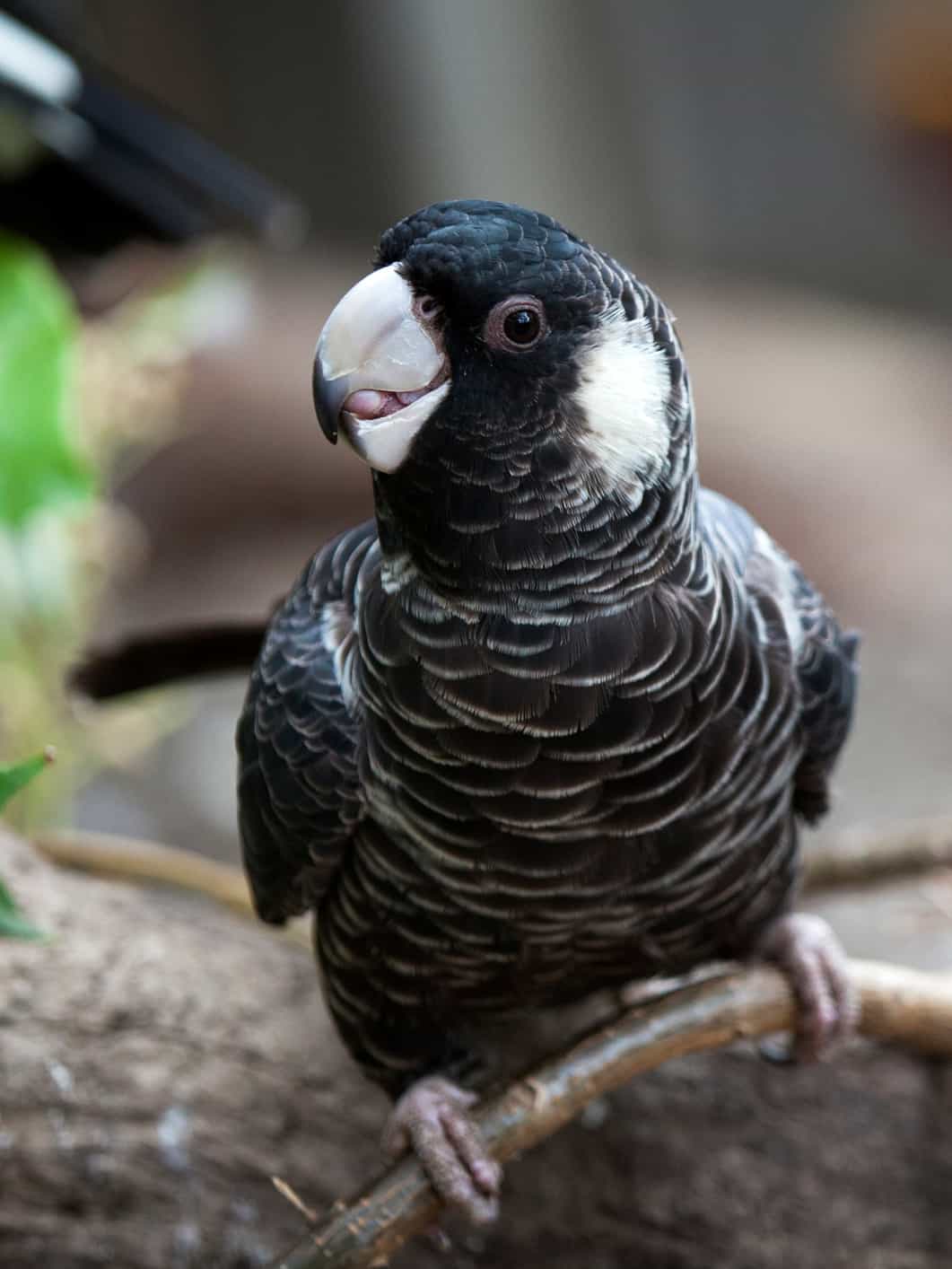
Identified by its large, curved black beak and striking black plumage with greyish scalloping
- •
Features distinctive white cheek patches and subtle pale yellow panels on the tail visible in flight
- •
Exhibits a narrow crest, often relaxed, creating a sleek head profile
What does a Baudin's black-cockatoo sound like?
Baudin’s black cockatoo has distinct vocalizations, generally composed of harsh, raspy, and loud calls. They mainly produce a repetitive “kree-kree-kree” sound, which varies in pitch and duration depending on their movement or activities. Additionally, when alarmed or frightened, their call turns into a sharp, high-pitched shriek. This species is not typically known for their melodious songs, as their primarily noisy and screeching calls serve as means of communication.
Description
Baudin's black cockatoos are here for a long time and a good time! The oldest recorded member of the species reached the ripe age of 47 years! These beauties are monogamous and mate for life; life partners choose a nest hollow together and females are in charge of preparing it and doing all the interior decorating. Sadly, they are endangered and only between 10,000 and 15,000 individuals remain.
The Baudin's black-cockatoo can weigh between 540to790grams and be from55to60centimeters tall.
The Baudin’s black cockatoo typically lives for up to 50 years in the wild. This lifespan is comparable to related species such as the Carnaby's black cockatoo with a lifespan of around 40-50 years and the red-tailed black cockatoo living for up to 25 years. Longevity is influenced by factors such as diet, habitat, and threat levels.
Did you know?
Most popular questions about Baudin's black-cockatoo
How to recognise a Baudin's black-cockatoo?
General appearance
The Baudin's black cockatoo, a large and striking bird, has primarily blackish plumage highlighted with undertones of brown. It's impressive in size, with the upperparts of its body and wings featuring scattered white or light yellow specks. Its distinguishing characteristic is a broad tail with white panels on the side and a rounded tip.
Male vs female
Sexual dimorphism exists among these birds, allowing males and females to be distinguished. Male Baudin's cockatoos have a dark grey beak and pink eye-rings, whilst females have a lighter, horn-coloured beak and grey eye-rings. Additionally, females have more prominent and numerous specks on their head, neck, and underparts compared to males.
Juvenile
Juvenile Baudin's black cockatoos resemble adult females but have paler beaks, and a yellow tint on their lower parts which disappears as they mature. The barring and spotting are not as defined compared to adults. Their eye-rings begin as a soft pink and harden to grey as they mature.
Often mistaken for
Carnaby’s Black Cockatoo vs Baudin’s Black Cockatoo
Carnaby’s Black Cockatoo looks similar to Baudin’s Black Cockatoo, but it has a shorter bill. The bill size is one of the key features used to distinguish between the two species.
Red-Tailed Black Cockatoo vs Baudin’s Black Cockatoo
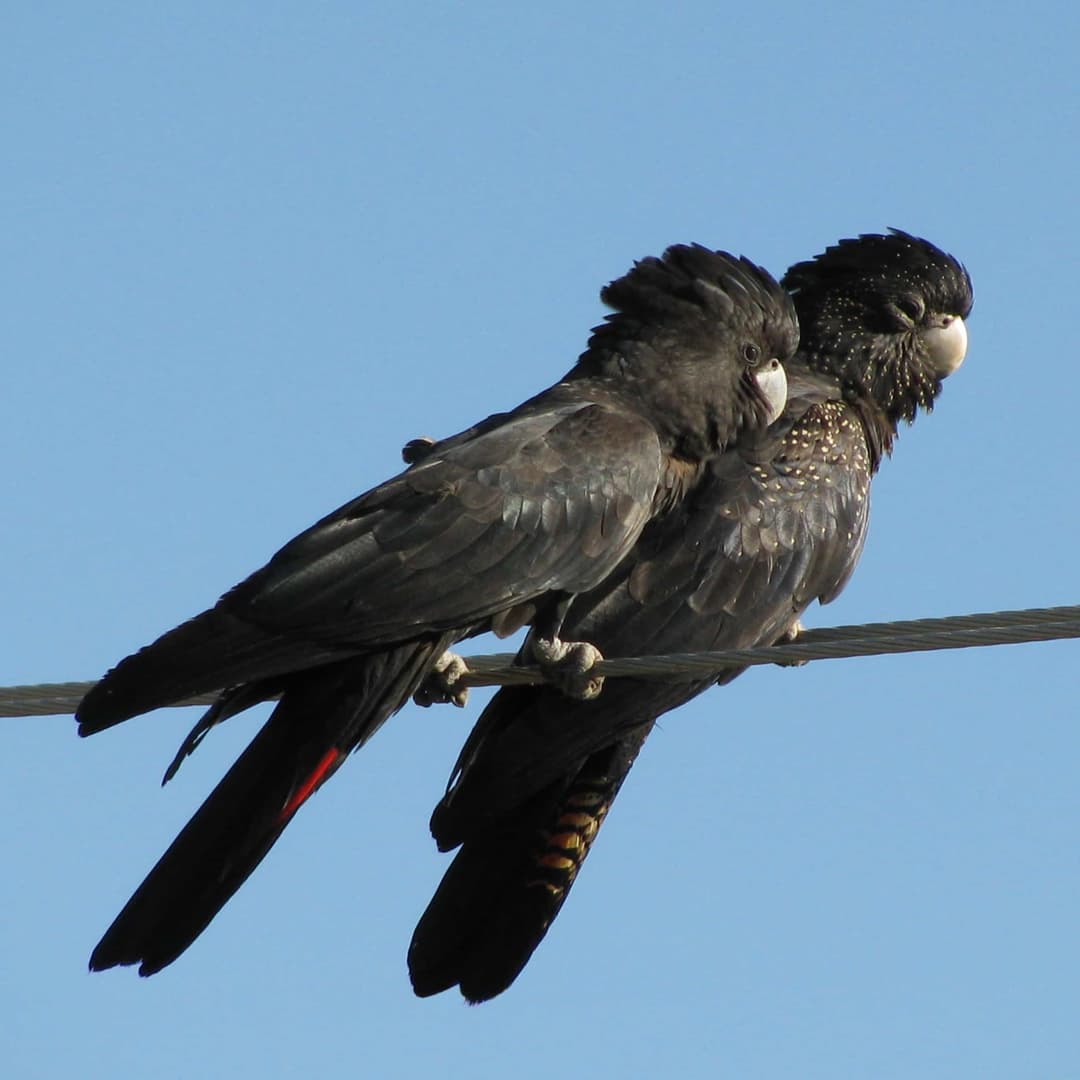
Red-Tailed Black Cockatoo resembles Baudin’s Black Cockatoo in some aspects, but it features a distinctive red or orange tail, setting it apart from Baudin’s.
Yellow-Tailed Black Cockatoo vs Baudin’s Black Cockatoo
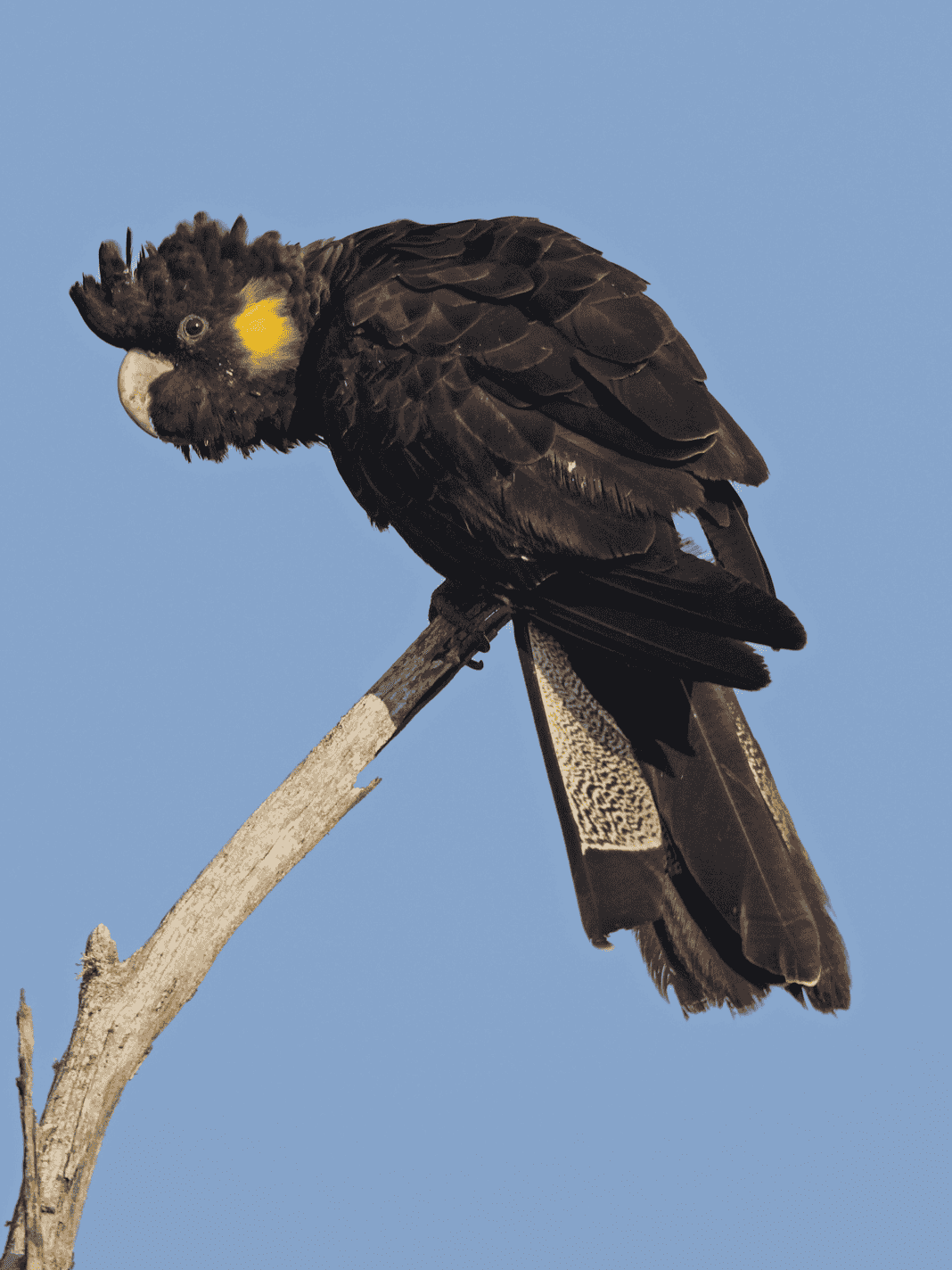
Yellow-Tailed Black Cockatoo can be confused with Baudin’s Black Cockatoo but can be identified by its yellow tail and cheek patches.
Glossy Black Cockatoo vs Baudin’s Black Cockatoo
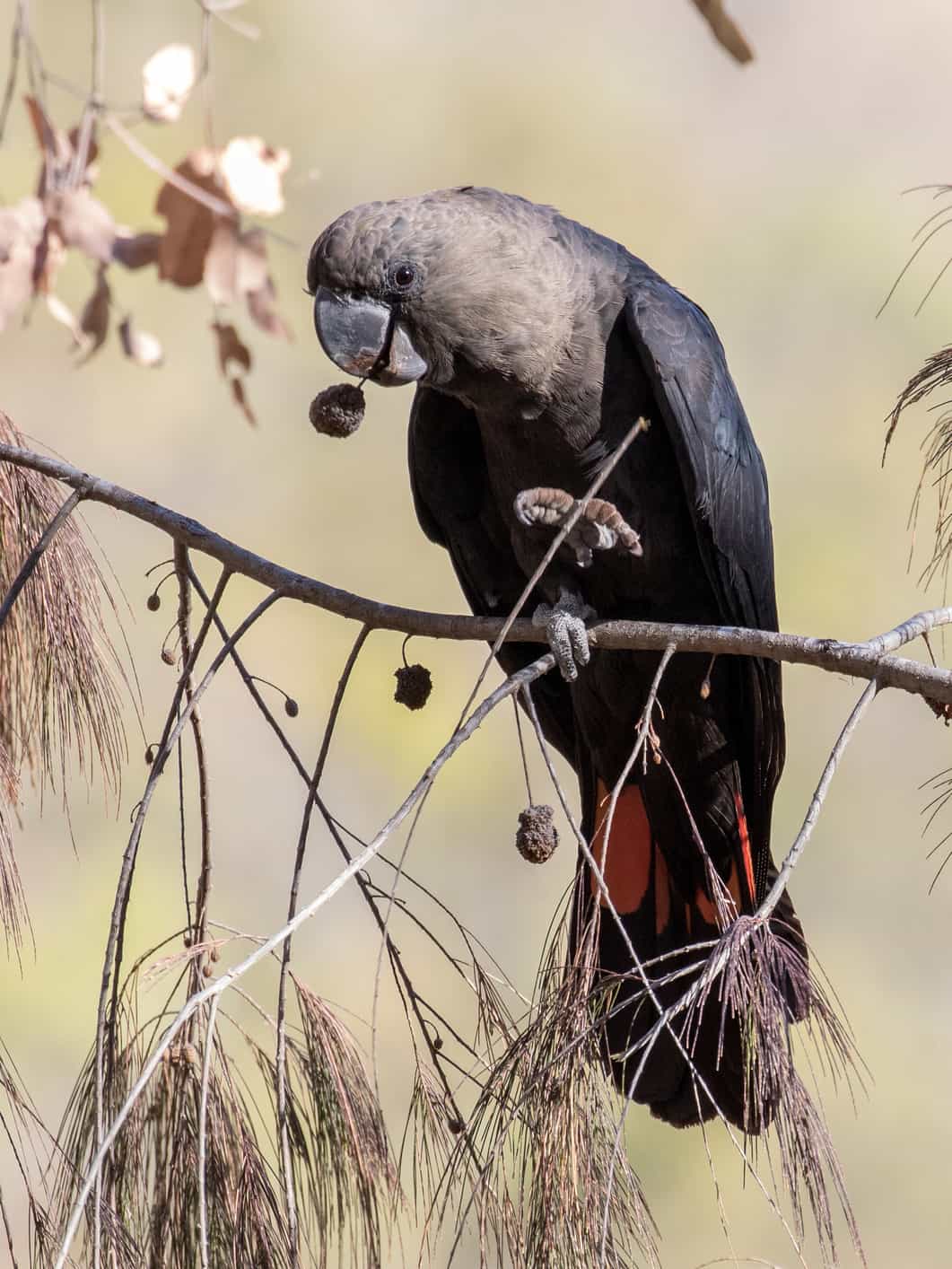
Glossy Black Cockatoo might look similar to Baudin’s due to its predominantly dark appearance, but it has a smaller bill and distinct parrot-like calls.
Breeding and nesting habits of the Baudin's black-cockatoo
Mating behaviors
Baudin's black cockatoos engage in courtship displays that include vocal calls and mutual preening. Males often present food to females as a part of courtship rituals.
Nesting details
These cockatoos prefer nesting in large tree hollows found in eucalyptus woodlands. Nests are lined with wood chips and bark, which the birds chew into fine materials.
Eggs and chick-rearing
Typically, 1 to 2 eggs are laid, and the female incubates them for about 28 days. After hatching, both parents participate in feeding the chicks, which fledge approximately 3 months later.
What does a Baudin's black-cockatoo like to eat?
Insects
Nuts
Seeds
Natural diet
Baudin’s black cockatoo primarily feeds on a variety of seeds, nuts, and fruits. They are known to consume the seeds of eucalyptus, banksia, and hakea species. Additionally, they eat native and introduced fruits like marri, almonds, and pine seeds. Foraging in tall trees, their diet is adapted to seasonal availability, including flowers and insect larvae occasionally.
Bird feeders
At bird feeders, Baudin’s black cockatoo might adapt to consume sunflower seeds, nuts, and other seed mixes commonly provided to attract parrots and cockatoos. Larger bird feeders capable of holding sturdy nuts can also attract these cockatoos, especially in areas where their natural food sources are scarce.
Attracting baudin’s black cockatoos with feeders
Start by installing a bird feeder in your yard. A tray-style feeder is preferable because Baudin's black cockatoos are large birds in need of a sturdy platform. Place the feeder in a calm and quiet area, preferably near trees for their comfort.
The perfect snacks for baudin’s black cockatoos
Baudin's black cockatoos are particularly fond of seeds, nuts, and fruit. Fill your feeder with Bird Buddy seeds. These seasonal selections have been chosen by experts, ensuring an enticing and nutritious feed for the cockatoos.
Creating a welcoming environment
Plant native Australian trees and shrubs that provide additional food sources and roosting spots to make your yard even more inviting. Remember, the more natural the setting, the more likely the cockatoos feel at home.
Making it a fun experience
These birds are known to be quite playful. Add variety in your feeder selection, changing its contents occasionally. This not only keeps the cockatoos interested, but it may encourage them to linger, providing opportunities for observation and interaction.
Where can you find Baudin’s black cockatoos?

Primary habitat
Baudin's black cockatoo primarily inhabits the forests of southwestern Australia, preferring eucalypt woodlands and mixed species forests.
Additional range
They may also occupy agricultural areas and orchards, where they feed on various fruits and seeds, adapting to changes in land use.
Do they migrate?
Baudin's black cockatoo, also known as the long-billed black cockatoo, is a species native to the southwestern regions of Western Australia. Unlike some bird species that undertake long-distance migrations, Baudin’s black cockatoo does not migrate in the traditional sense. Instead, these birds exhibit a pattern of local movements largely influenced by the availability of food and seasonal changes. Throughout the year, they travel between eucalypt forests and various agricultural lands in search of food. During the breeding season, which spans from August to January, they are generally found in mature eucalypt forests where they nest. After the breeding season, these cockatoos may move to surrounding areas, including orchards and plantations, to feed on seeds, fruits, and nuts. While not migratory, their movements are largely determined by environmental factors such as food abundance and habitat conditions, with birds often covering relatively short distances to exploit available resources. Therefore, in terms of their distribution and movement, Baudin’s black cockatoos remain relatively localized within the southwest corner of Western Australia.
What is the role of Baudin’s black cockatoos in nature and how to protect them?
Conservation status
Baudin’s black cockatoo is classified as endangered. The species faces significant threats from habitat loss due to logging and land clearing, as well as competition for nesting sites with other species. Illegal poaching for the pet trade further exacerbates their decline. Key conservation efforts include habitat protection and restoration, installation of artificial nest boxes, and legal protection from poaching. Community engagement and monitoring programs are also critical in efforts to stabilize and recover their population. Effective conservation relies on addressing these threats and ensuring long-term habitat preservation.
Ecological role of Baudin’s black cockatoos
Its role in the ecosystem
Baudin's black cockatoo, an endemic species to southwest Australia, is an integral part of the ecosystem. It plays a significant role in pest control by consuming insect larvae and adults that can cause harm to various plants and trees. Besides, its habit of feeding on fruits, seeds and flowers leads to seed dispersal, thus contributing to plant biodiversity and regeneration. These cockatoos also aid in the process of pollination, ensuring the survival of flowering plant species in their habitat. Additionally, their nesting habits create hollows in trees, facilitating habitats for various fauna. However, the Baudin's black cockatoo is currently facing major threats due to loss of feeding and breeding habitats, making it a vulnerable species. Conservation of this species is therefore crucial, not just for maintaining biodiversity, but also for the sustenance of the ecological processes they facilitate.
How to help protect Baudin’s black cockatoos
Preservation tips
Habitat preservation strategies for baudin’s black cockatoo
Start with land management practices. Restrict logging in their natural habitat and implement controlled burning to reduce wildfires. Plant native vegetation conducive to the survival of the species. Encourage collaboration with local farmers to diversify crops in a manner that supports the food supply of the Cockatoos. Collaborative habitat restoration can be beneficial.
Community science initiatives
Promote community-based monitoring programs that help track the population and health of Baudin's Black Cockatoo. Encourage involvement through citizen science tools where people can report sightings, nest locations or potential threats. This can provide a rich dataset for scientists to understand behaviors and threats. Host educational workshops at schools and community centers to raise awareness about conservation.