
White-Throated Sparrow
White-Throated Sparrow
Zonotrichia albicollis


Quick Identification guide
Quick Identification guide
- •
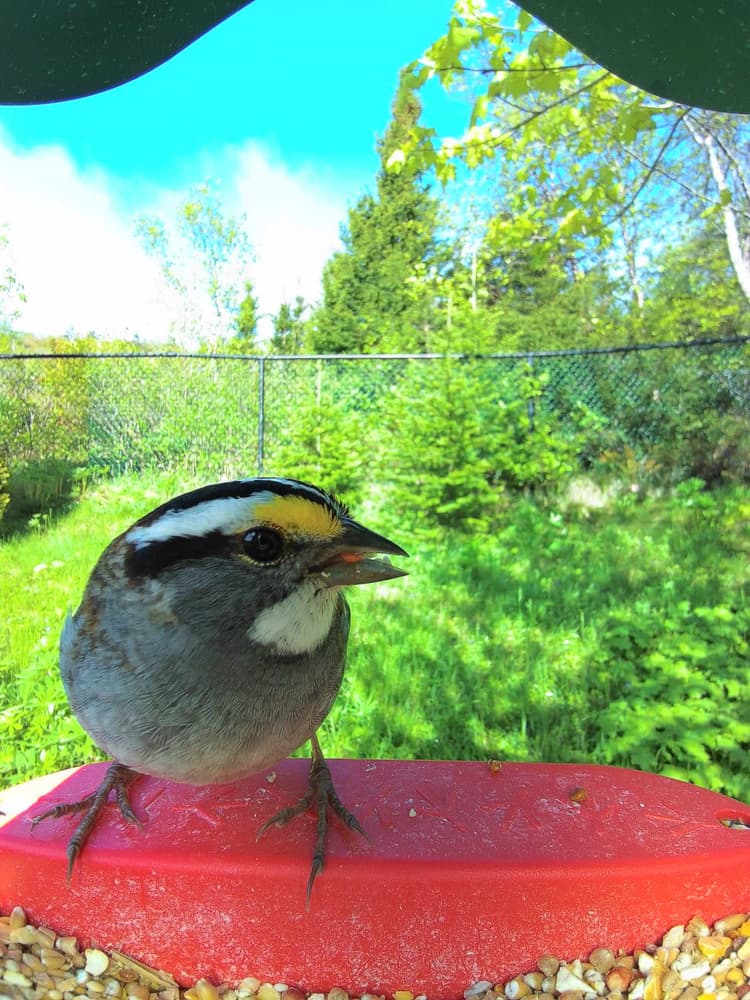
Distinguished by a white throat patch with contrasting black and white striped head
- •
Features a plump body and bi-colored bill, dark on top and yellow below
- •
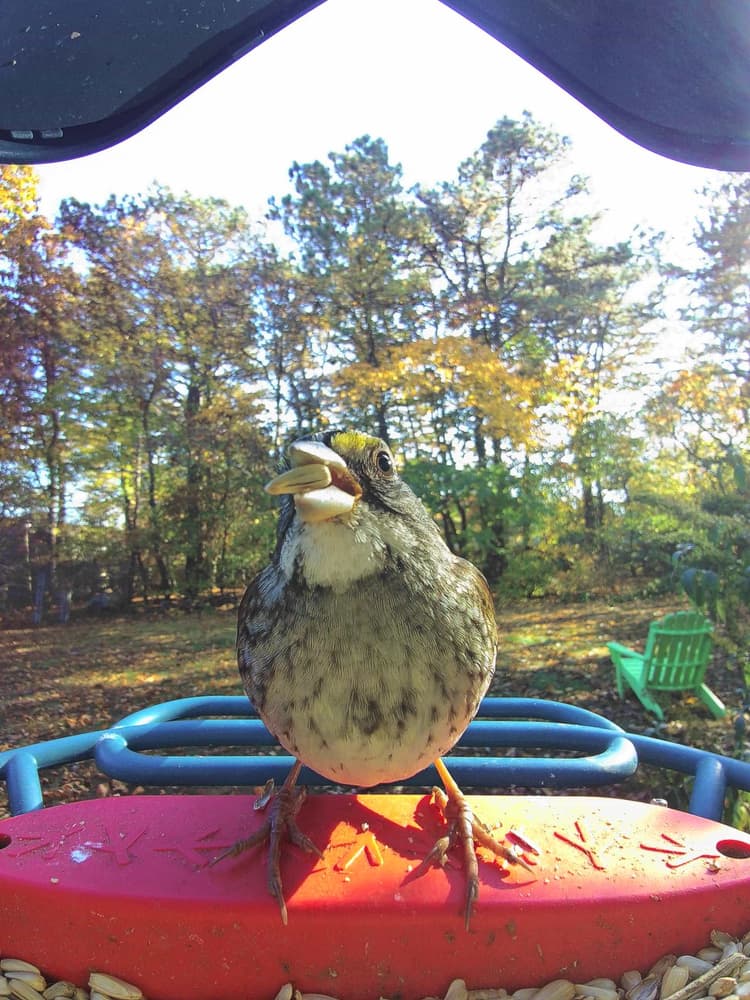
Exhibits brown streaked upper parts and grayish underparts, with two distinctive wing bars
What does a white-throated sparrow sound like?
The white-throated sparrow's song is a clear, whistle consisting of "Poor Sam Peabody, Peabody, Peabody," or "Sweet Sweet Canada, Canada, Canada," likely due to their breeding predominance in Canada. Its call pattern experiences a fall and rise, and its call types range from chirps or chips to whistles.


Description
These birds come in two genetically determined colour variations: white-crowned and tan-crowned. The colours aren't just for show. They determine character, with white-striped birds being more aggressive. Opposites do indeed attract as they tend to mate with birds of the opposite colour but males of both colours prefer females with white stripes and both kinds of females prefer tan-striped males. Occasionally, they'll mate with dark-eyed juncos!
The white-throated sparrow can weigh between 19to35grams and be from15to17centimeters tall.
The white-throated sparrow typically lives for 9.6 years. This is older compared to related species like the song sparrow that has an average lifespan of 11.3 years. However, such longevity is not widespread and depends largely on the survivability of these birds during their first year, which is usually fraught with high mortality.
Did you know?
Most popular questions about white-throated sparrow
How to recognise a white-throated sparrow?
General appearance
The white-throated sparrow is about the size of a Robin or Sparrow, measuring 6-7 inches or 15-18 cm in length. The bird sports a distinctive white throat which contrasts against a dark bill. This sparrow has a variety of colors in its plumage; black, brown, gray, white, and yellow. A yellow spot in front of the bird's eye marks a unique physical trait. The bird's wings are broad and its tail shape varies from notched, rounded to square-tipped.
Male vs female
Both male and female white-throated sparrows exhibit two color morphs, namely white-striped and tan-striped. However, white-striped birds tend to pair off with tan-striped birds, suggesting some visual differences between the sexes which may not be readily discernible to the human eye.
Juvenile
Juvenile white-throated sparrows or 'first-winter' birds may not be as visually vibrant as their adult counterparts. They display a duller color palette with blurry streaks that appear below their bodies. As they age, they will develop the clear, contrasting color patterns distinctive of this species.
Often mistaken for
White-Crowned Sparrow vs White-Throated Sparrow
The White-Throated Sparrow has a distinctive white throat patch, whereas the White-Crowned Sparrow lacks this feature and has bold black and white stripes on its head. The White-Crowned Sparrow tends to have a more uniformly gray chest, whereas the White-Throated has a streaked brown back and contrasting yellow lores between the eye and beak.

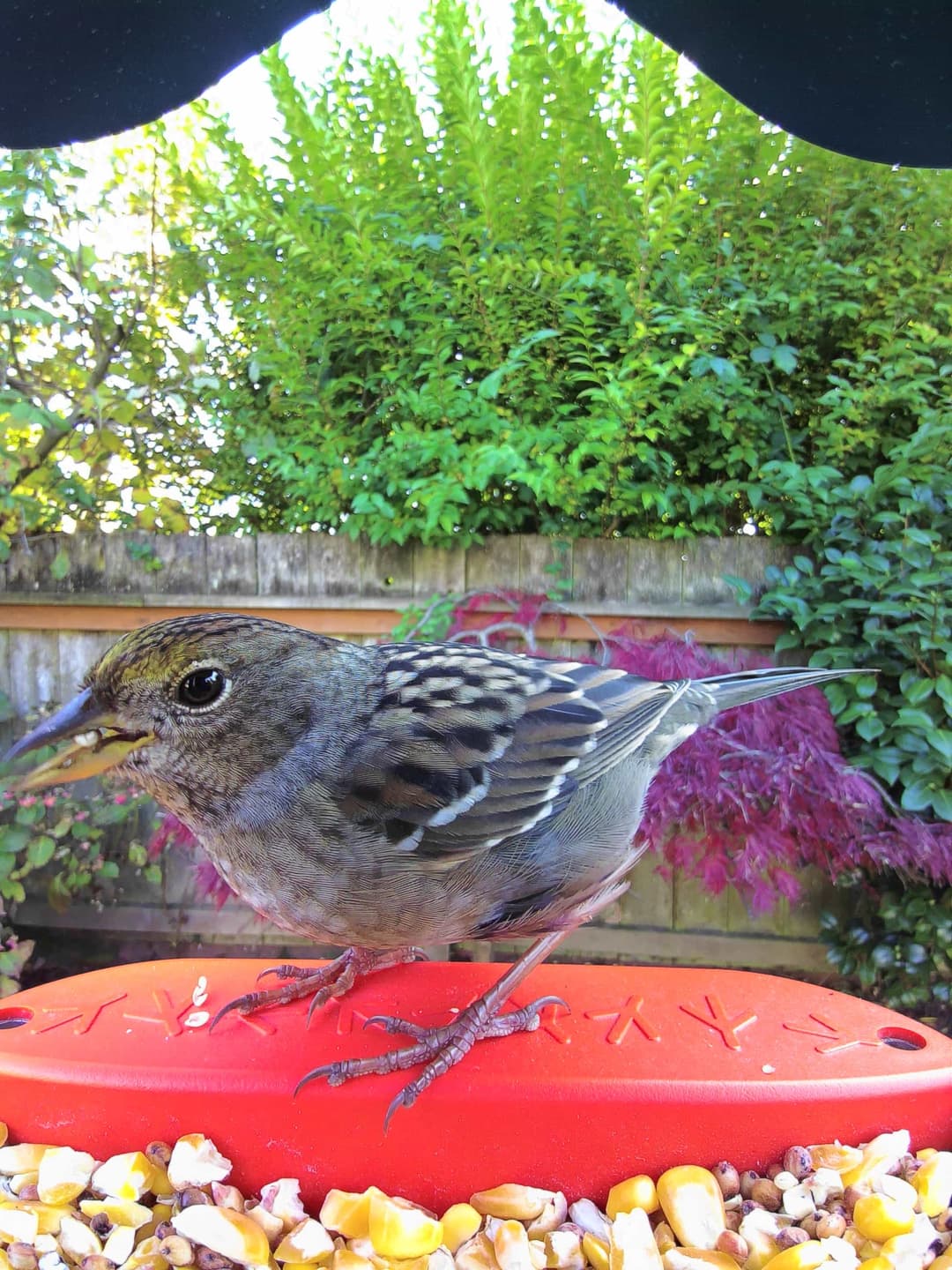
Golden-Crowned Sparrow vs White-Throated Sparrow
The White-Throated Sparrow's white throat and yellow lores set it apart from the Golden-Crowned Sparrow, which features a golden crown bordered by black. The White-Throated has a brown, streaked back and distinct white head stripes, contrasting with the Golden-Crowned's more drab, uniform appearance.
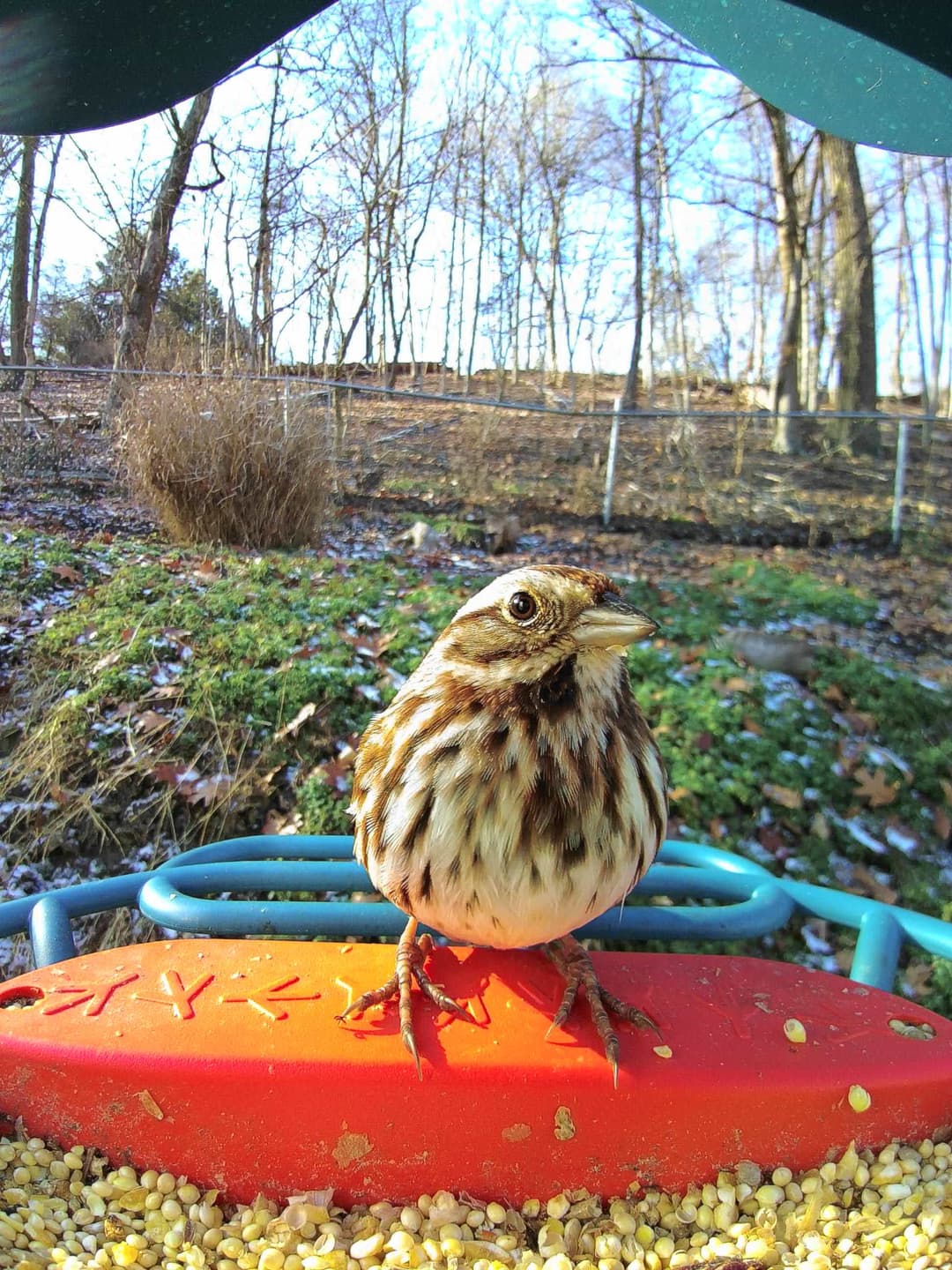
Song Sparrow vs White-Throated Sparrow
Unlike the Song Sparrow, the White-Throated Sparrow is known for its white throat patch and prominent yellow lores. The Song Sparrow has thick streaks on the chest converging into a central spot, while the White-Throated's chest is more clean and less streaked. Their songs also differ significantly in pattern.
Breeding and nesting habits of the white-throated sparrow
Mating behaviors
White-throated sparrows exhibit two color morphs: tan-striped and white-striped. These morphs, which can be either male or female, typically mate with the opposite color morph. Males sing to establish and defend their nesting territory.
Nesting details
Nests are usually located on the ground, concealed by low vegetation like shrubs, grass, or ferns. Occasionally, nests are built above ground in shrubs, brushpiles, or trees, rarely exceeding 10 feet in height. The female constructs an open cup-shaped nest using materials such as grass, twigs, weeds, and pine needles, lined with finer materials like grass, rootlets, or animal hair.
Eggs and chick-rearing
The female is responsible for incubating the eggs and, along with the male, caring for the hatchlings. Sparrows may benefit from garden habitats featuring low shrubs and grasses, offering concealment for ground nests and potential insects for feeding the chicks.
What does a white-throated sparrow like to eat?
Berries
Flowers
Fruits
Insects
Plants
Seeds
Natural diet
The white-throated sparrow primarily consumes seeds and insects. During its breeding season, the bird's diet consists largely of insects such as damselflies, ants, wasps, true bugs, beetles, flies, caterpillars, spiders, millipedes, and snails. In winter, its diet shifts to focus on seeds, especially from weeds and grasses. It also consumes various berries, predominantly in the fall. Young birds are mostly fed insects to support their growth.
Bird feeders
The white-throated sparrow is known to visit bird feeders where it typically consumes seeds such as millet, cracked corn, and sunflower seeds. These foods mimic its natural winter diet and are appealing during times when insects are less available.
Set up a backyard buffet
White-throated sparrows love seeds and berries. One of the best ways to attract them to your yard is by setting up a bird feeder filled with their favorite snacks. Black oil sunflower seeds, millet, and corn are all great choices. We highly recommend 'Bird Buddy' seeds, a blend specially chosen by experts for the season to attract a variety of birds.
Choose the right feeder
Tube feeders with large perches and tray or hopper feeders are excellent choices for white-throated sparrows. They can land on the feeder comfortably and nibble at their favorite seeds. Make sure your feeder is easily visible, about five feet off the ground and near a bush or tree for quick cover if a predator is nearby.
Sing a song
Sounds can also attract white-throated sparrows. You can use bird call recordings to pique their curiosity and encourage them to visit. Just make sure it's not too loud to avoid disturbing them. Who knows, you might even inspire a little sing-along in the yard!
Provide shelter
Birds like to feel safe when they're feeding. Providing shrubs or small trees for cover will make your yard more attractive to white-throated sparrows. They might even consider it as a perfect spot to build a nest!
Where can you find white-throated sparrows?

Primary habitat
The white-throated sparrow's preferred habitat is the undergrowth of conifer and mixed woodlands, mainly in openings with dense deciduous shrubs. This bird species breeds in zones of coniferous and mixed forest.
Additional range
In the winter, these sparrows can be found in areas with dense, low cover including forest undergrowth, edges, well-vegetated suburbs, parks, and even roadsides. They also inhabit areas around ponds and clearings.
Do they migrate?
The white-throated sparrow is a migratory bird that primarily travels during the night. Its migration is characterized by a relatively late departure in the fall, as it moves gradually southward towards its wintering grounds. During the fall migration, white-throated sparrows typically begin their journey from their breeding areas located in the boreal forests of Canada and the northeastern United States. As they migrate, these sparrows follow a path that generally moves southeast. They traverse through the eastern and central regions of the United States, often using diverse habitats such as woodlands, brushy areas, and even suburban gardens to rest and forage for food. Key stopover locations along their migration route often include areas with dense vegetation for cover and abundant food resources like seeds and insects. The final wintering destinations for the white-throated sparrow are primarily in the southeastern United States and extend as far as central Texas, though some individuals may reach northern Mexico. The timing of their migration, along with their tendency to migrate at night, aids in minimizing predation and allows them to take advantage of favorable winds and cooler temperatures for energy conservation.
What is the role of white-throated sparrows in nature and how to protect them?
Conservation status
The white-throated sparrow is widespread and common, though surveys indicate slight population declines in recent decades. It is not currently classified as vulnerable or endangered. Key conservation efforts focus on monitoring population trends and preserving habitats, particularly in breeding and migratory areas. Significant threats include habitat loss due to deforestation and urban development, as well as potential impacts from climate change. Continued observation and adaptive conservation strategies are essential to ensure the species remains stable.
Ecological role of white-throated sparrows
Its role in the ecosystem
The white-throated sparrow plays a vital role within its ecosystem by controlling pest populations and contributing to seed dispersion. During breeding season, their diet includes various insects such as damselflies, ants, wasps, beetles, and caterpillars, thus reducing the numbers of these potential pests and contributing to the maintenance of a balanced ecosystem. Additionally, in winter their diet shifts to seeds of weeds and grasses, which aids in seed dispersal when the birds move across territories, promoting plant biodiversity. Moreover, their distinctive behavior, with different feeding styles between tan-striped and white-striped morphs, possibly leads to diverse interactions with the environment. This bird's dual diet, feeding both on insects and seeds, is ecologically significant as it can potentially interact with a higher number of species within its ecosystem compared to species with a more specialized diet.
How to help protect white-throated sparrows
Preservation tips
Habitat preservation for the white-throated sparrow
Support the preservation of boreal forests which serve as the natural habitat for the white-throated sparrow. This can be achieved by advocating for sustainable forestry practices to prevent habitat destruction. Promote their preservation by organizing afforestation initiatives and educating the public about the importance of these habitats.
Community science initiatives for conserving the white-throated sparrow
Launch citizen science initiatives to monitor sparrow populations and their breeding patterns. This data can be invaluable in researching these birds and for informing conservation strategies. Encourage community members to create bird-friendly spaces in their yards and local parks where these sparrows can feed and rest during migration.