
Golden-Crowned Sparrow
Golden-Crowned Sparrow
Zonotrichia atricapilla


Quick Identification guide
Quick Identification guide
- •
Features a distinctive golden crown on its head, flanked by black stripes
- •
Exhibits brownish-gray body plumage with a streaked back and wings
- •
Possesses a conical, pale beak suited for seed consumption
What does a golden-crowned sparrow sound like?
The Golden-crowned Sparrow's vocalizations are characterized by a song comprised of three descending, plaintive notes reminiscent of the phrase "oh, dear me." The bird also uses two types of calls, a 'tseet' and a 'chink'. The call pattern is undulating, varying between short chirps or chips and longer, whistle-like sounds.


Description
Golden-crowned sparrows are one of the least-known North American songbirds! Nowadays, at least. Miners in the Yukon used to be well-acquainted with them and called them 'I'm so tired' and 'No gold here' because that's just what their songs sounded like! Sadly, the latter is probably not something the gold miners wanted to hear. These guys are creatures of habit, so if you see one always eating at the same spot at your feeder, it's likely the same bird!
The golden-crowned sparrow can weigh between 24to39grams and be from15to18centimeters tall.
The golden-crowned sparrow typically has a lifespan of around 11 years in the wild. This is considerably longer than its relatives, such as the white-crowned sparrow and the white-throated sparrow, which live for around 9 years and 10 years respectively. This species’ longer life may be attributed to various evolutionary and environmental factors.
Did you know?
Most popular questions about golden-crowned sparrow
How to recognise a golden-crowned sparrow?
General appearance
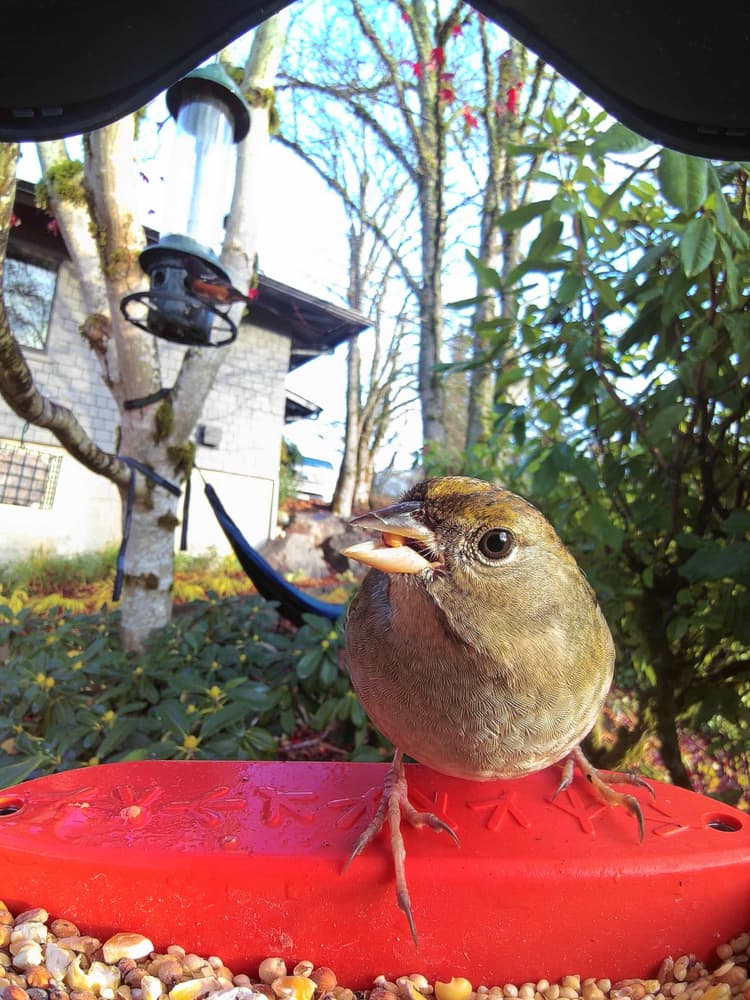
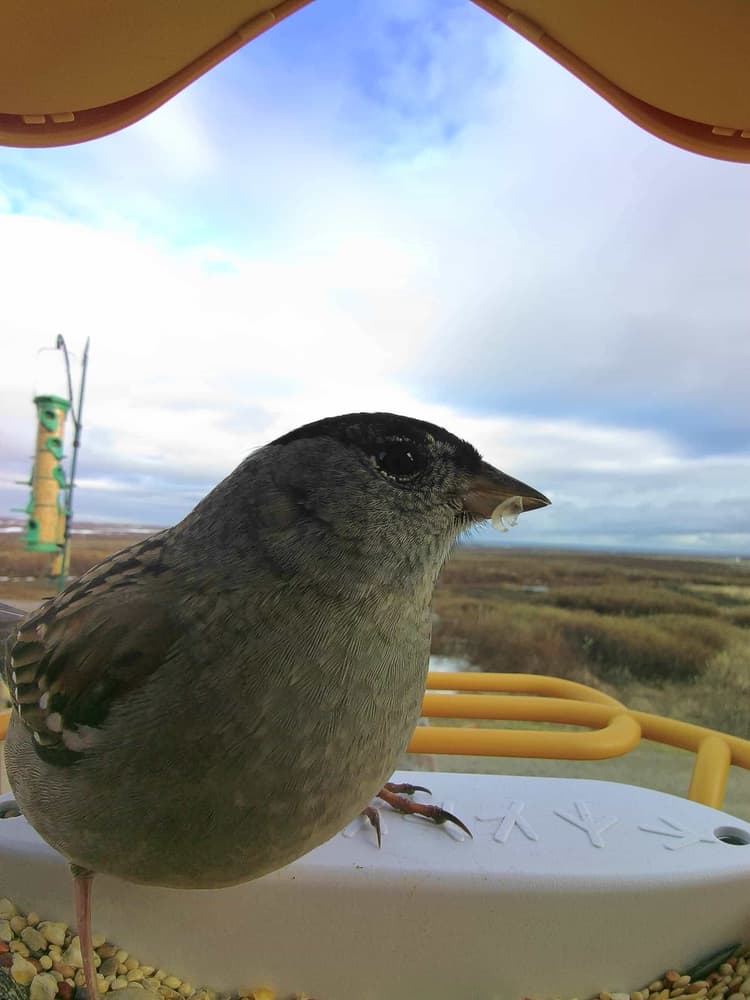
The golden-crowned sparrow is a medium-sized bird with a distinctive yellow patch on its crown bordered by black stripes. Its plumage is primarily brown with streaks of gray and white, providing excellent camouflage in its natural habitat. During the breeding season, the yellow crown becomes more vibrant.
Male vs female
Males and females have similar plumage, making it difficult to distinguish them in the field. Both sexes share the characteristic golden crown, but males may display slightly more vivid coloration during the breeding season.
Juvenile
Juvenile golden-crowned sparrows lack the distinctive yellow crown of adults, having more muted brown and gray plumage. As they mature, the yellow and black patterns on their crown begin to develop, reaching full vibrancy in adulthood.
Often mistaken for
White-Crowned Sparrow vs Golden-Crowned Sparrow
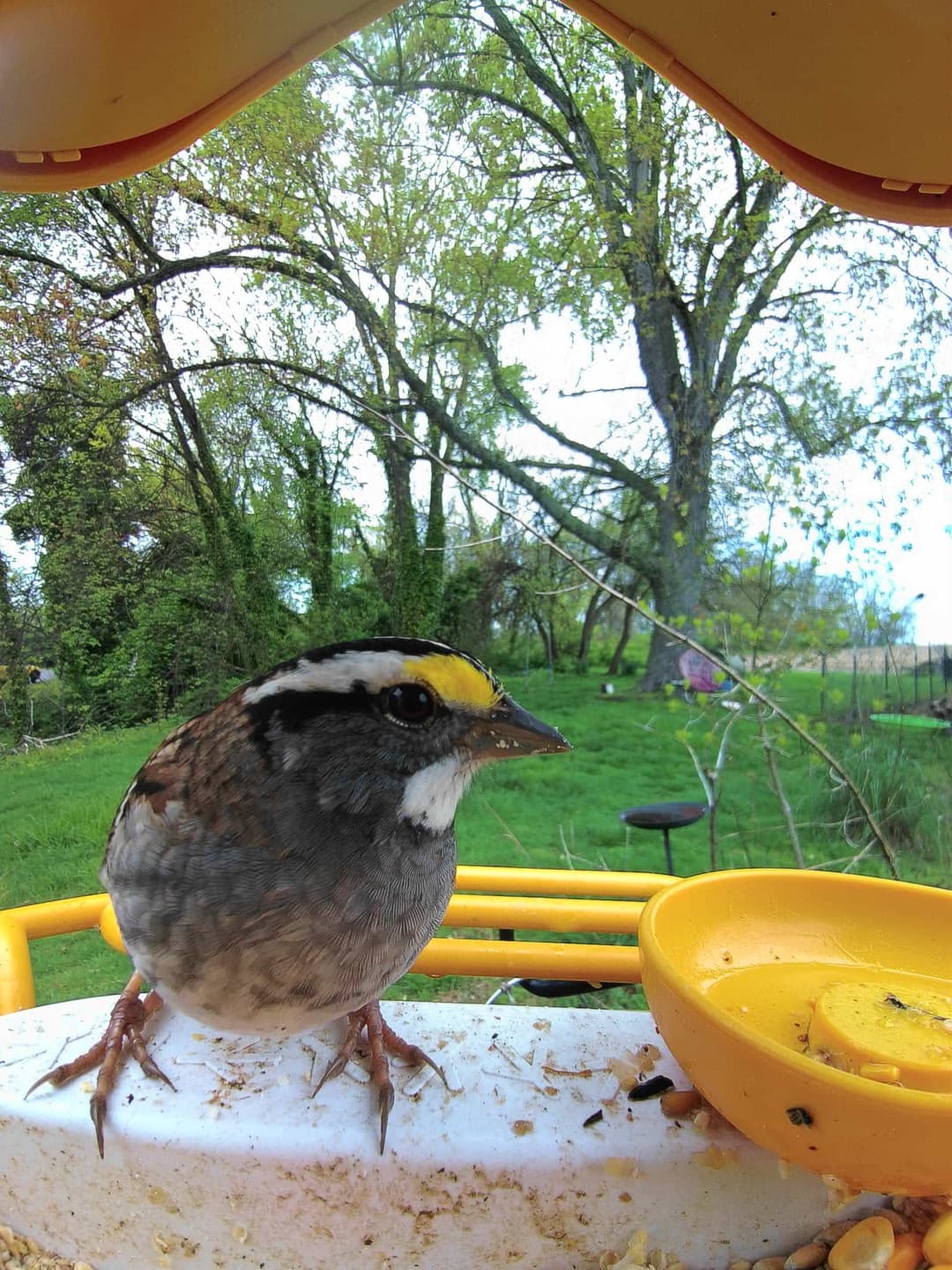
Golden-Crowned Sparrow features a distinct golden crown in adults, while White-Crowned Sparrows display bold black and white stripes on their head. The Golden-Crowned also tends to have a plainer gray-brown body compared to the more contrasting gray and brown of the White-Crowned. Seasonally, look for the Golden-Crowned’s crown to be more muted outside of breeding season.

White-Throated Sparrow vs Golden-Crowned Sparrow
White-Throated Sparrow has a bright white throat patch and striking yellow lores, which the Golden-Crowned lacks. The crown of the Golden-Crowned is, as the name suggests, a golden hue, whereas the White-Throated has a black and white striping pattern. The Golden-Crowned’s song is also a distinct three-note whistle, differing from the varied, clear whistles of the White-Throated Sparrow.
Breeding and nesting habits of the golden-crowned sparrow
Mating behaviors
The golden-crowned sparrow's mating behaviors include the male singing from a prominent perch during the summer. This vocal display is primarily used to defend their nesting territory from rivals and to attract potential mates.
Nesting details
The nesting site for the golden-crowned sparrow is usually on the ground, well hidden under thickets of dwarf willow or other shrubs. The nest is typically placed in a slight depression, with its rim nearly level with the ground. Rare instances may find the nest a couple of feet up in a dense shrub. The nest itself is a bulky cup constructed from grass, weeds, ferns, leaves, and is lined with fine grass and occasionally animal hair.
Eggs and chick-rearing
Details on the eggs and chick-rearing practices of the golden-crowned sparrow are scarce. However, the hidden nature of their nests suggests a strong emphasis on protecting the eggs and chicks from predators.
What does a golden-crowned sparrow like to eat?
Flowers
Fruits
Insects
Plants
Seeds
Natural diet
The golden-crowned sparrow's diet primarily consists of seeds and insects. In winter, it mostly feeds on seeds from weeds and grasses, as well as other plant materials like buds, flowers, newly sprouted shoots, and berries. During summer, it likely consumes more insects and spiders. The young are probably fed mostly insects to support their growth.
Bird feeders
Common foods eaten by the golden-crowned sparrow at bird feeders include seeds, especially those similar to its natural preference such as sunflower seeds and millet. It may also consume commercially available seed mixes designed for sparrows and similar small birds.
Feeding the golden-crowned sparrow
Golden-Crowned Sparrows are particularly fond of seeds. Offering a variety of seeds, especially Bird Buddy seeds, can help tempt these sparrows into your yard or feeder. These seeds are chosen by experts for the season to provide optimal nutrition and attraction for the birds.
Choosing the right feeder
The type of feeder you use can also play a significant role. Golden-Crowned Sparrows are ground feeders by nature, so a low hanging or platform feeder filled with Bird Buddy seeds may entice these beautiful birds to your yard.
Creating a bird-friendly environment
In addition to the right type of food and feeder, providing a bird-friendly environment can also attract Golden-Crowned Sparrows. Shrubs, trees, or brush piles offer plenty of cover and make these sparrows feel secure.
Engaging the golden-crowned sparrow
For a bit of fun, try playing the Golden-Crowned Sparrow's song from a bird app on your phone. They may respond in kind and give you a delightful sing-along!
Where can you find golden-crowned sparrows?

Primary habitat
The Golden-crowned Sparrow typically occupies boreal scrub and spruce habitats. It breeds in the shrubby environments of Northern regions and high mountains, often near the edge of dry tundra or stunted spruce near the treeline.
Additional range
In winter, this bird ranges from forest edges and thickets to chaparral, gardens, and parks. It shares a similar winter habitat with the White-crowned Sparrow but prefers denser brush.
Do they migrate?
The golden-crowned sparrow is a migratory bird species known for its nocturnal migration behaviors. It typically migrates late in the fall and early in the spring. The most substantial presence of golden-crowned sparrows on their wintering grounds occurs from late October to early April. In terms of migration routes, the golden-crowned sparrow breeds in the Pacific coastal regions of North America, primarily from central Alaska through British Columbia. As cooler temperatures signal the onset of fall, they begin their southward migration, heading towards their wintering habitats that stretch from southern coastal regions of British Columbia, through Washington, Oregon, and California, reaching as far south as northern Baja California. During the spring migration, they reverse this route, traveling back north to their breeding grounds. While specific stopover spots along the route can vary, these birds are often found in dense brushy areas and wooded habitats that provide ample cover and foraging opportunities. By targeting these coastal regions, the golden-crowned sparrow ensures access to milder weather and abundant food sources throughout the winter months.
What is the role of golden-crowned sparrows in nature and how to protect them?
Conservation status
The golden-crowned sparrow is currently considered common and widespread, indicating it is not vulnerable or endangered. The species maintains a stable population, benefiting from diverse habitats across its range. Key conservation efforts focus on habitat preservation and monitoring population trends. Significant threats to the golden-crowned sparrow include habitat loss due to urbanization and climate change. By safeguarding critical breeding and wintering areas, conservationists aim to ensure the continued stability of the sparrow’s populations. Overall, the species does not face immediate risk but requires continued conservation attention.
Ecological role of golden-crowned sparrows
Its role in the ecosystem
The Golden-crowned Sparrow plays a significant role in the ecosystem where it resides. Its foraging behavior, which largely occurs on the ground in or near dense thickets, aids in the control of insect populations which can be detrimental to certain plant life. Eating insects as part of their diet, especially in summer, reduces their potential overpopulation, thus contributing to the pest control aspect of the environment. In winter, these sparrows shift their diet to feed mainly on seeds from weeds, grasses, and other plants. This behavior promotes seed dispersal, allowing for the growth and propagation of various plant species. Furthermore, their consumption of buds, flowers, newly sprouted shoots, and berries may also contribute to the pollination of certain plant species. Their nesting behavior, mostly on the ground under dwarf willow or shrubs, may also contribute to soil aeration and the dispersal of some ground plants.
How to help protect golden-crowned sparrows
Preservation tips
Habitat preservation for the golden-crowned sparrow
To preserve the habitat of the golden-crowned sparrow, limit human encroachment in their nesting areas. Implement responsible land-use policies that restrict alteration of natural landscapes and preserve wild spaces. Launch reforestation projects where necessary and plant native shrubs and trees which provide food and shelter for these birds.
Community science initiatives for bird conservation
Community science initiatives greatly contribute to the conservation of species like the golden-crowned sparrow. Encourage local communities to participate in birdwatching and reporting. Such activities increase awareness about the sparrow species and aids in tracking their population trends and migration patterns. Community groups can also help in habitat restoration efforts and educational outreach programs.