
Syrian Woodpecker
Syrian Woodpecker
Dendrocopos syriacus


Quick Identification guide
Quick Identification guide
- •
The black crown and nape contrast with the white face, creating a distinctive head pattern
- •
Features a white underbody with black horizontal bars across the wings and back
- •
A red vent and strong, straight beak make it instantly recognizable among woodpeckers
What does a Syrian woodpecker sound like?
The Syrian Woodpecker's vocalizations are usually resonating and consist of clear, ringing notes. It often produces a sharp "kik" or "kik-kik" sound as an alarm call or during interactions with other birds. The drumming sound, created by the bird's beak against tree trunks, is characteristic of the woodpecker family. The Syrian Woodpecker doesn't have a 'song' in the typical sense, but it does make a distinct series of 10-14 quick, loud taps when marking territory or attracting mates.


Description
Syrian woodpeckers are a common sight throughout their range. Pairs do everything together: from excavating the nest hole and incubating the eggs, to keeping their home nice and tidy and feeding the young'uns. They are perfectly content with each other's company and do most things either alone or in a pair.
The Syrian woodpecker can weigh between 55to82grams and be from22to23centimeters tall.
The typical lifespan of a Syrian woodpecker is about 11 years. Compared to other related species, this is slightly above average. For instance, the Downy Woodpecker and the Great Spotted Woodpecker typically live for about 10 and 9 years respectively, while the Longer Lived Black Woodpecker can reach up to 11-12 years.
Did you know?
Most popular questions about Syrian woodpecker
How to recognise a Syrian woodpecker?
General appearance
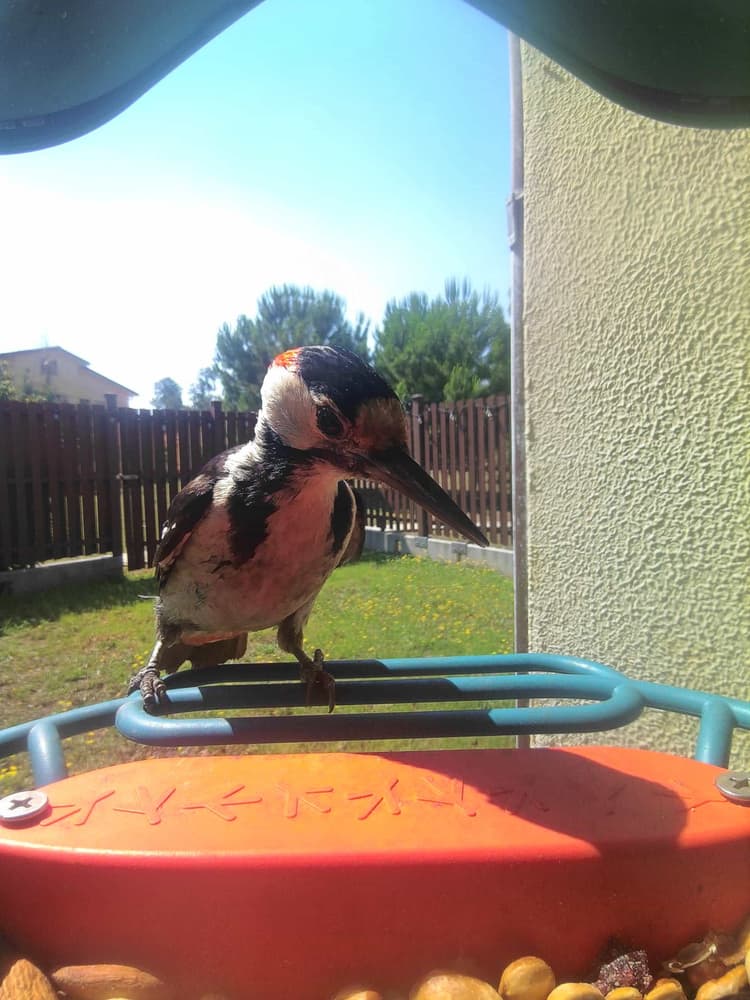
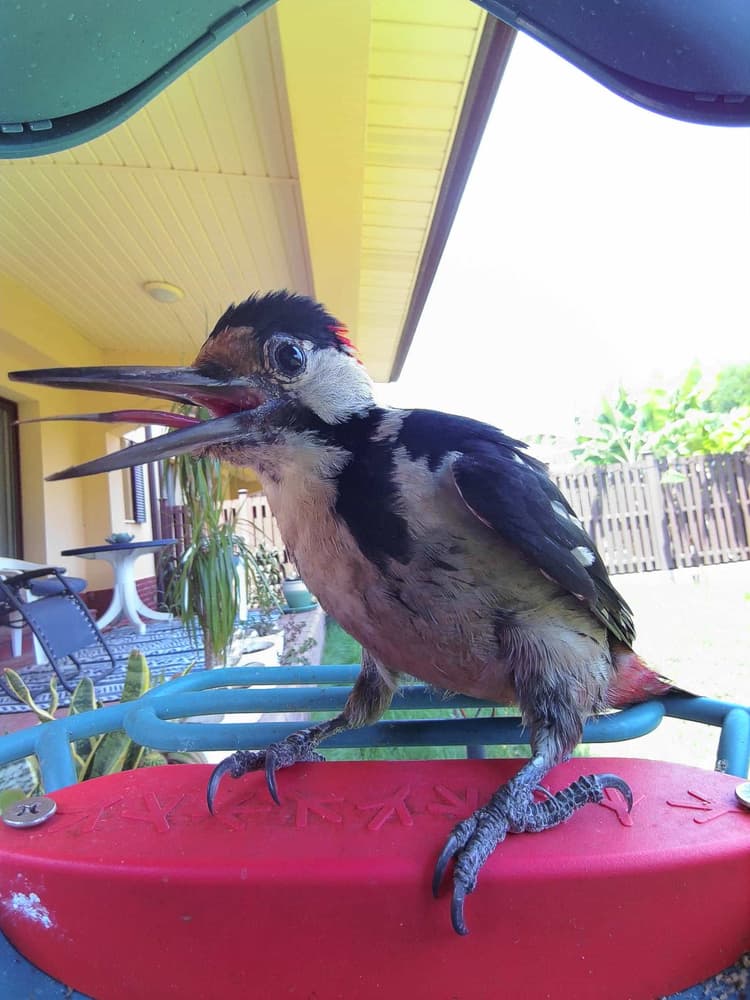
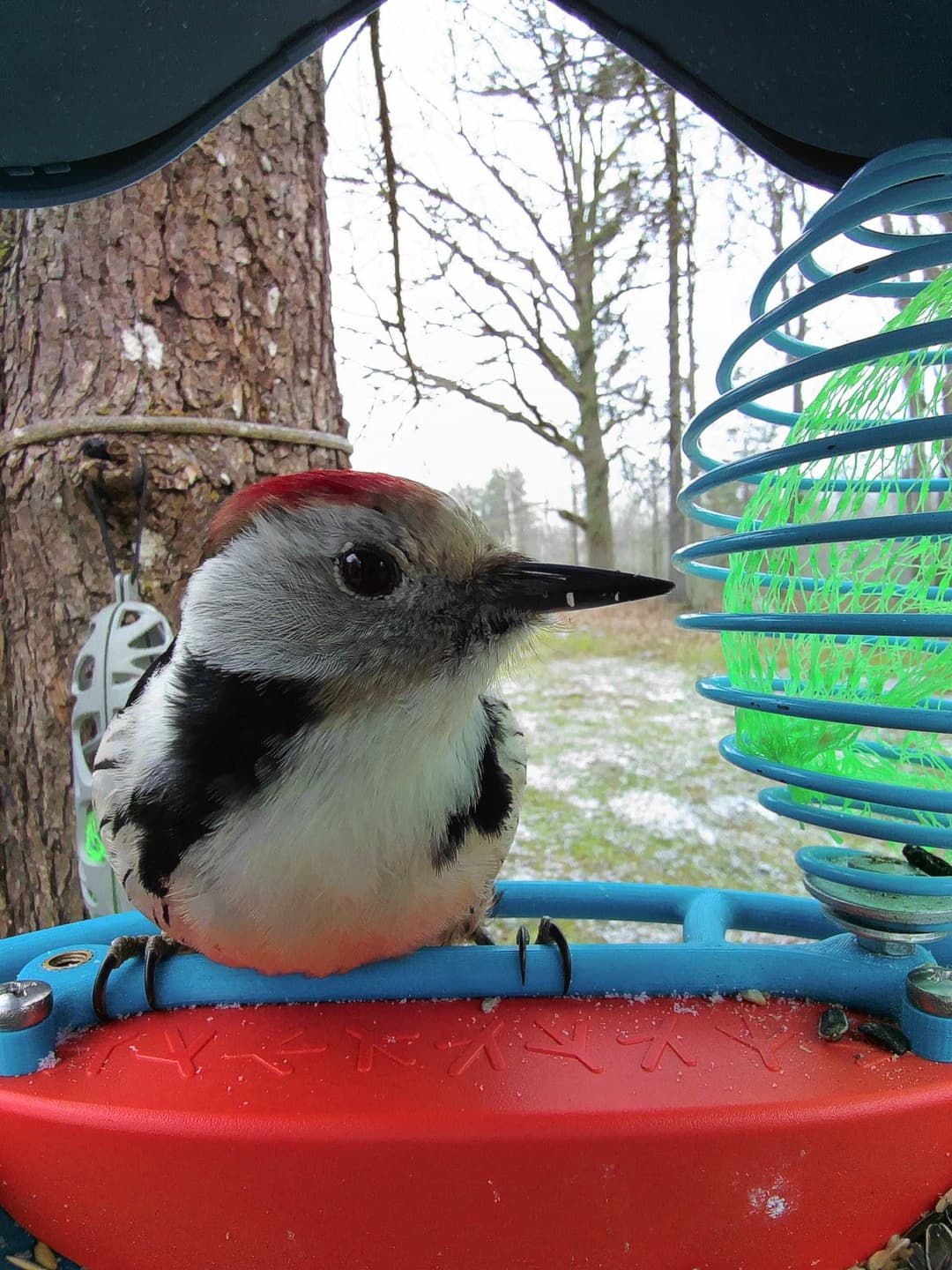
Syrian woodpeckers have domed heads, strong bills, and sturdy bodies, typically with white undersides and black upper-parts. They have characteristic woodpecker 'moustaches' and white cheek patches. Their distinctive wing pattern features large white patches, visible during flight. Seasonal variations in appearance are insignificant.
Male vs female
Male Syrian woodpeckers stand out with their red crown and nape that females lack. However, both sexes share the white forehead and large black eyepatch extended towards the nape, creating a hooded appearance.
Juvenile
Juveniles share the general color pattern of adults but they have duller plumage. Juvenile males can be spotted by a faint red patch on the crown which becomes brighter as they mature.
Often mistaken for
Great Spotted Woodpecker vs Syrian Woodpecker
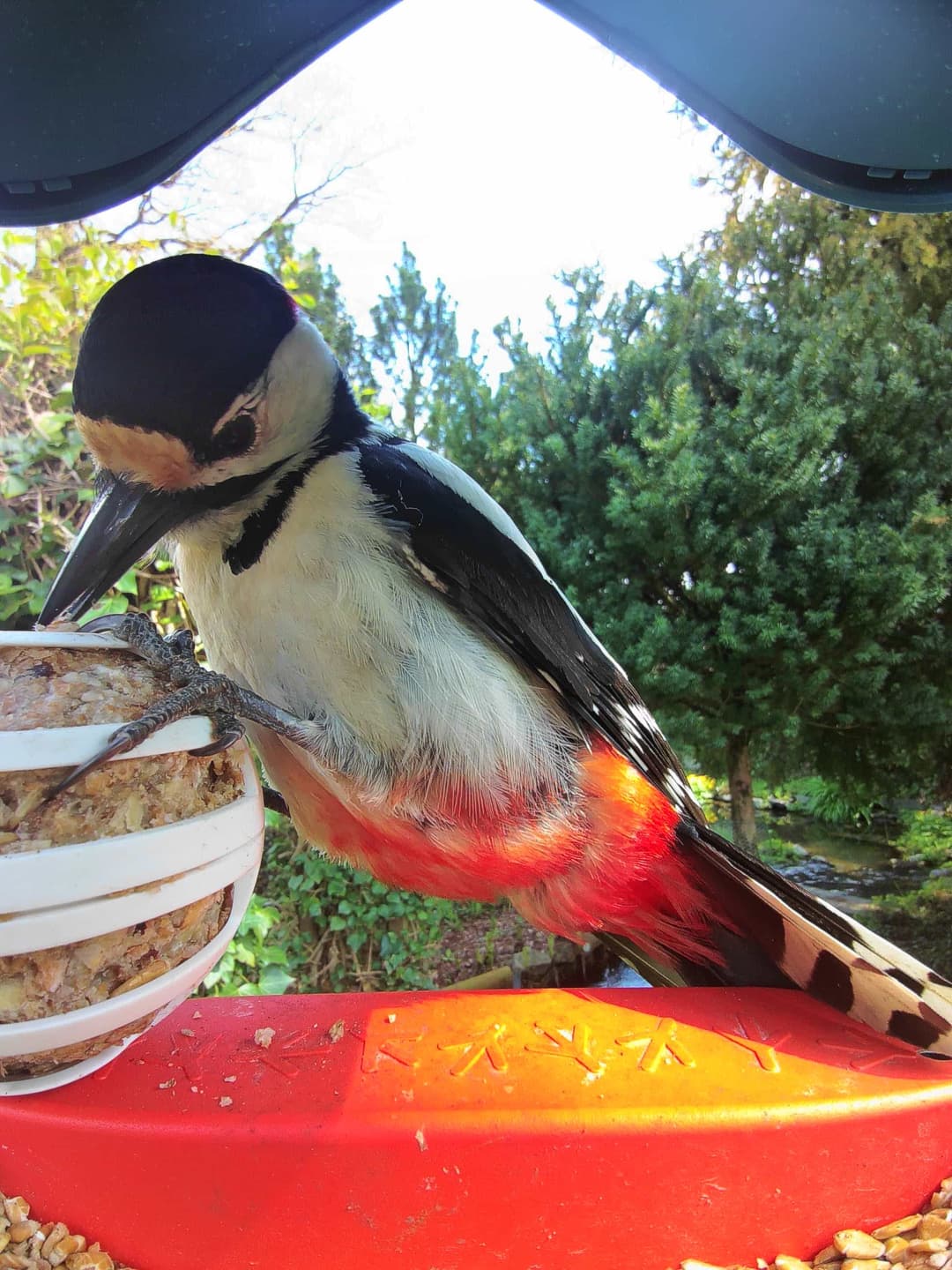
The Great Spotted Woodpecker is similar to the Syrian Woodpecker in size and overall plumage, but they can be distinguished by the Great Spotted Woodpecker’s more extensive white shoulder patches and the presence of a white bar across its wings.
Lesser Spotted Woodpecker vs Syrian Woodpecker
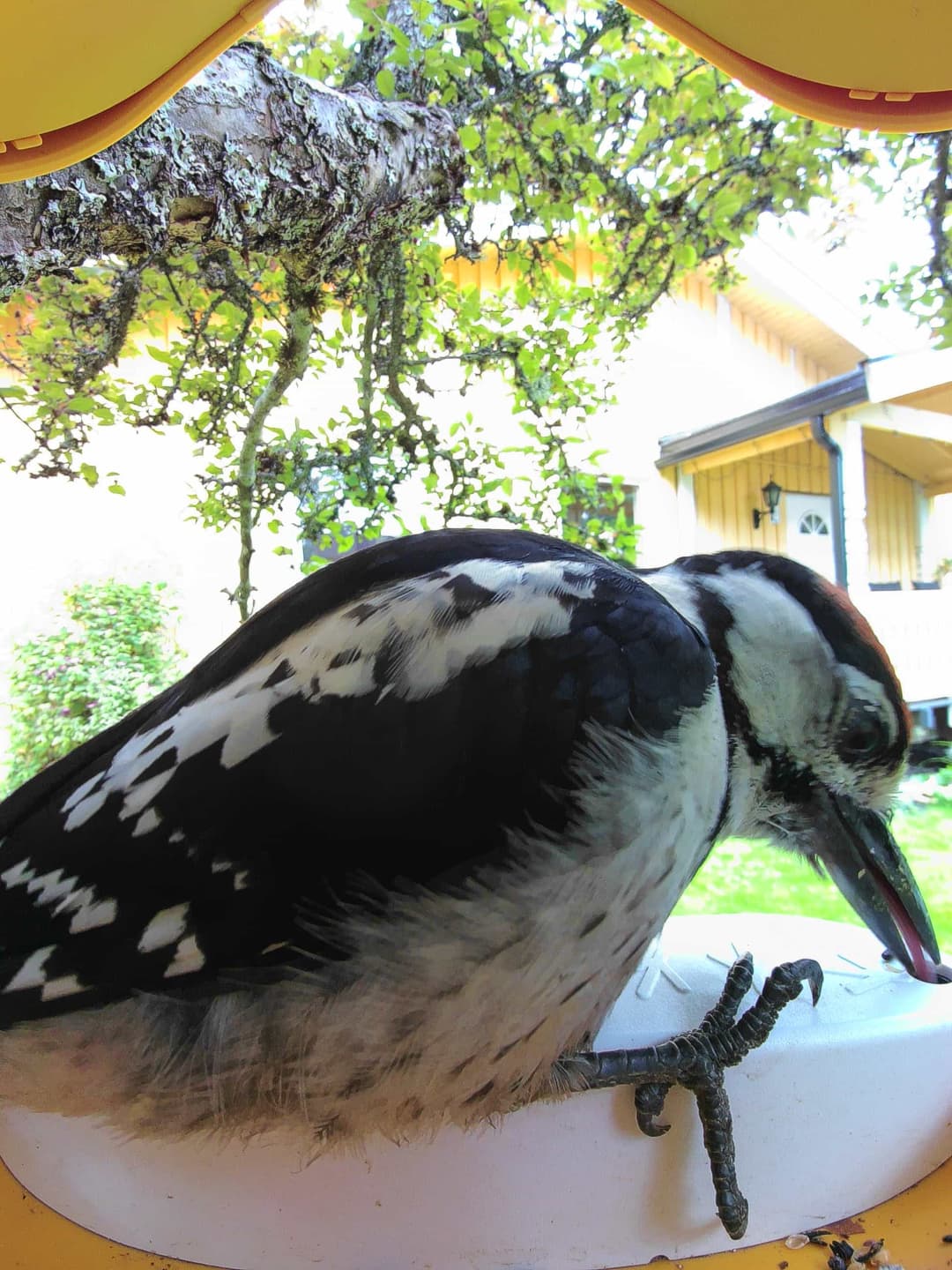
The Lesser Spotted Woodpecker is similar in appearance to the Syrian Woodpecker but is smaller in size and features a distinct lack of the red cap on the adult male’s head.
Middle Spotted Woodpecker vs Syrian Woodpecker
The Middle Spotted Woodpecker shares the Syrian Woodpecker's general coloration but has a distinct red crown and lacks the large white cheek patch found on the Syrian Woodpecker.
Breeding and nesting habits of the Syrian woodpecker
Mating behaviors
The Syrian woodpecker engages in courtship through vocal calls and drumming to establish territory and attract mates. Males often display by fluttering their wings and showcasing their plumage to entice females.
Nesting details
Nests are typically excavated in dead or decaying wood, often in deciduous trees like poplars. The cavity is lined sparsely using wood chips for comfort. In gardens, provide mature trees or nesting boxes with a 5 cm entrance hole to attract them.
Eggs and chick-rearing
The female lays 4-7 white eggs, incubated primarily by her over two weeks. Both parents participate in feeding, regurgitating insects for the hatchlings. Fledging occurs about 20-24 days after hatching, as juveniles grow rapidly during this period.
What does a Syrian woodpecker like to eat?
Berries
Fruits
Insects
Nuts
Plants
Spiders
Natural diet
The Syrian woodpecker primarily feeds on insects such as beetles, ants, and larvae. It uses its strong beak to drill into tree bark and wood to extract these prey. Additionally, it consumes various fruits and berries, such as cherries, apples, and elderberries, and may occasionally eat seeds and nuts.
Bird feeders
At bird feeders, the Syrian woodpecker is known to eat peanuts and sunflower seeds. It may also be drawn to suet blocks, especially those containing insect or berry mixtures. These foods complement its natural diet by providing essential fats and proteins, particularly during colder months when natural food sources are scarcer.
Syrian woodpecker's preferred foods
To attract Syrian Woodpeckers, fill your bird feeders with their favorite snacks, which typically include beetles, caterpillars, or spiders. They are also fond of fruits, berries, and sunflower seeds. For best results, try Bird Buddy seeds, generally liked by Syrian Woodpeckers and chosen by experts according to the season.
Feeders and environment for a syrian woodpecker
A platform feeder or larger tube feeder would be apt to attract these birds. Syrian Woodpeckers prefer bird houses with a hole diameter of about 2.5 inches. Place the feeder or the house in a quiet, predator-free zone with plenty of trees or shrub cover to mimic their natural habitat.
Fun tricks to lure a syrian woodpecker
Something interesting about Syrian Woodpeckers, they are attracted to sounds. Tapping on the feeder or birdhouse lightly can mimic their drumming and might draw them in for a closer look – and maybe a sing-along! Also, these birds need water, so having a bird bath or water feature could also be a big draw.
Where can you find Syrian woodpeckers?
Primary habitat
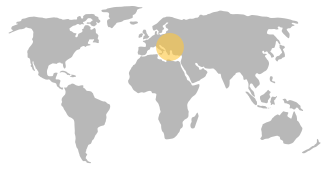
The Syrian Woodpecker prefers deciduous forests, orchards and parks in temperate regions. It is commonly found from southeastern Europe to Iran.
Additional range
Surprisingly, it can also be found in urban areas, adapting to environments with trees, like city parks, gardens and avenues.
Do they migrate?
The Syrian woodpecker (Dendrocopos syriacus) is generally considered a non-migratory, resident species. It primarily resides in southeastern Europe and parts of the Middle East and does not undertake significant migratory journeys like some other bird species. Instead, the Syrian woodpecker tends to remain within its range throughout the year, maintaining territories as long as there is a suitable habitat. This bird can be found in a variety of environments, such as woodlands, orchards, parks, and gardens, where it has access to its arboreal habitat and adequate food resources like insects and other invertebrates, fruits, and seeds. Its range covers countries including parts of Turkey, Greece, Bulgaria, and others in the Balkan region, extending into the Middle East in Syria, Israel, and Iran. While Syrian woodpeckers generally do not migrate, some seasonal altitudinal movements may occur in response to environmental conditions, such as food availability or temperature changes, but these do not constitute long-distance migration. Overall, their adaptability to various landscapes aids in their year-round residency within their established geographic range.
What is the role of Syrian woodpeckers in nature and how to protect them?
Conservation status
The Syrian woodpecker is currently classified as "Least Concern" by the IUCN, indicating it is relatively common. Found primarily in Southeast Europe and the Middle East, its population is considered stable, but it faces some regional threats, including habitat loss due to deforestation and agricultural expansion. Conservation efforts focus on preserving woodland habitats and implementing sustainable forestry practices. Although not endangered, continued monitoring is essential to ensure its long-term viability, given changing environmental conditions and land-use practices.
Ecological role of Syrian woodpeckers
Its role in the ecosystem
The Syrian Woodpecker, also known as Dendrocopos syriacus, is a valuable part of the ecosystem in which it resides. Its primary ecological contribution lies in pest control; it feeds on insects found in wood and bark, aiding in keeping certain pest populations under control. This action by the Syrian Woodpecker also indirectly leads to the health maintenance of trees and enhancement of forest habitats. Additionally, like other woodpeckers, it excavates holes in trees for nesting, which later provide homes for other species, hence contributing to biodiversity. Despite not being a primary seed disperser, the Syrian Woodpecker does inadvertently assist in seed dispersal as seeds stick to its body and are later dropped at other locations. All these behaviors underscore the ecological significance of the Syrian Woodpecker, highlighting how its survival influences broader forest and avian ecosystems.
How to help protect Syrian woodpeckers
Preservation tips
Habitat preservation strategies
Protect the Syrian woodpecker's natural habitat, primarily fruit orchards, aged forests, parklands and river valleys from logging, pollution, and human encroachment. Implement strict regulations against the use of pesticides that diminish insect populations the species depends on for food. Promote eco-conscious agricultural practices that support biodiversity.
Community science initiatives
Raise awareness about the significance of the Syrian woodpecker within local communities and schools. Involve locals in tree-planting initiatives to recover its lost habitats. Establish monitoring programs to track the species population and document changes. Encourage citizen reporting of sightings to provide data on the woodpecker's distribution. Collaborate with scientific institutions to aid in conservation research efforts.