
Middle Spotted Woodpecker
Middle Spotted Woodpecker
Leiopicus medius


Quick Identification guide
Quick Identification guide
- •
Features a bright red crown patch on its head, distinct without extending to the nape or neck
- •
Displays black-and-white striped wings and back, typical of woodpecker patterning
- •
Possesses a medium-sized body with a subtle pinkish hue on the undertail coverts
What does a middle spotted woodpecker sound like?
The Middle Spotted Woodpecker produces a variety of calls including a sharp "kik" or "pik" sound, as well as a "krr" sound that is lower in pitch. Their song, emitted primarily during their mating period, comprises of a fast, repetitive "giggling" or "chuckling" sound, similar to a horse's gallop. Its drumming sound, used for communication and territorial announcements, is relatively slow-paced and irregular when compared to other woodpecker species.


Description
Most of the time, middle spotted woodpeckers don't rely on drumming to assert their territory. Their voice will do just fine! These vocal and active birds are pretty tough to spot, not least because they just can't stay still and need to be on the move almost constantly. Bet we all know someone like that, right?
The middle spotted woodpecker can weigh between 60to80grams and be from20to22centimeters tall.
The middle spotted woodpecker typically lives up to 5-6 years. In comparison, the greater spotted woodpecker can live up to 11 years. The longevity of this species, like others in its family, depends on factors like predation, disease, and habitat conservation.
Did you know?
Most popular questions about middle spotted woodpecker
How to recognise a middle spotted woodpecker?
General appearance
The Middle Spotted Woodpecker is distinguishable primarily by its abundant streaks of white and brown on its chest and belly. Its upper parts are mostly brownish-green and it has a prominent crest of red feathers on the top of its head. The bird measures about 20-22cm in length, with a wingspan of 34–39 cm and a sleek body structure, boasting protruding feathers which provide excellent camouflage within the foliage of trees.


Male vs female
In the Middle Spotted Woodpecker, sexual dimorphism is not prominent. Both sexes share a similar size and coloration, making it difficult to identify the gender based solely on visual observation. The red cap that serves as the defining characteristic of the species is present in both males and females.
Juvenile
The juvenile Middle Spotted Woodpecker is similar to adults, but with slightly duller plumage. They possess less red on the crown, and their underparts are streaked to a greater extent. Their features become more distinct and resemble those of adults as they reach maturity.
Often mistaken for
Great Spotted Woodpecker vs Middle Spotted Woodpecker
The Great Spotted Woodpecker is larger compared to the Middle Spotted Woodpecker. It has a more prominent red undertail and lacks the red crown patch on the head. The Middle Spotted Woodpecker has a smaller size and a distinctive red crown on its head.
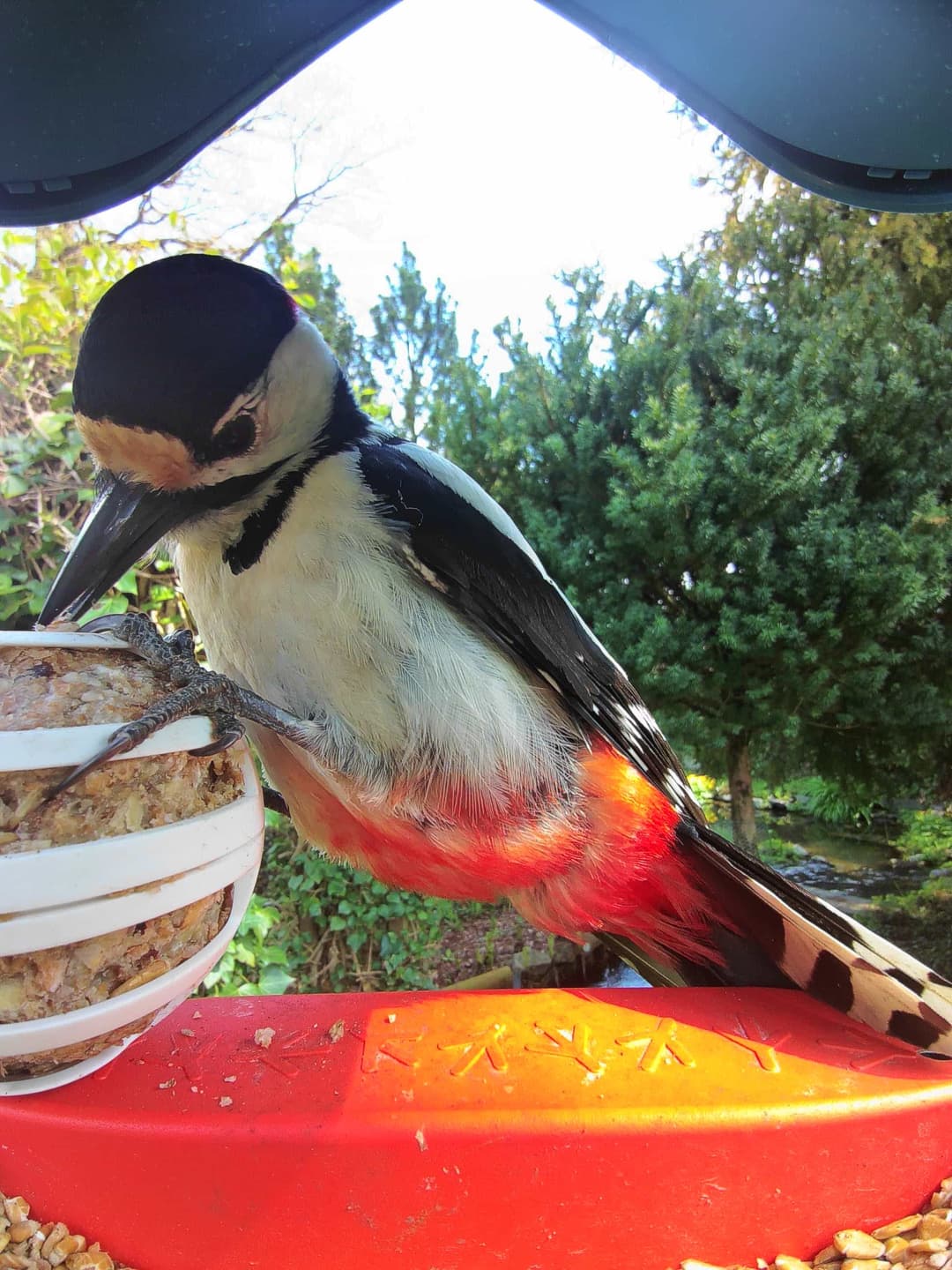
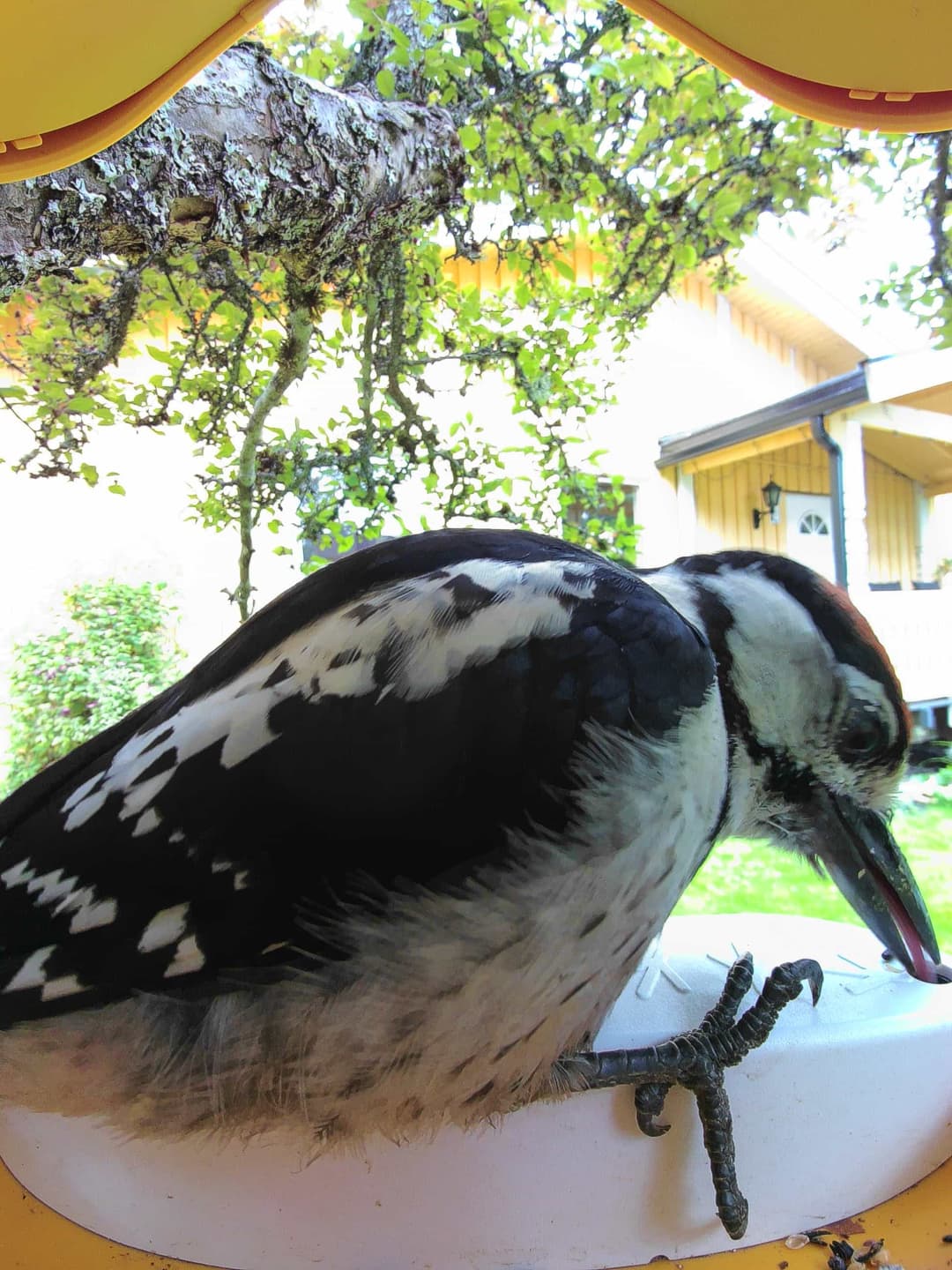
Lesser Spotted Woodpecker vs Middle Spotted Woodpecker
The Lesser Spotted Woodpecker is smaller than the Middle Spotted Woodpecker and has a conspicuous black-and-white barring on its back. Unlike the Middle Spotted Woodpecker, the Lesser Spotted Woodpecker lacks the red crown and has a more subdued plumage.
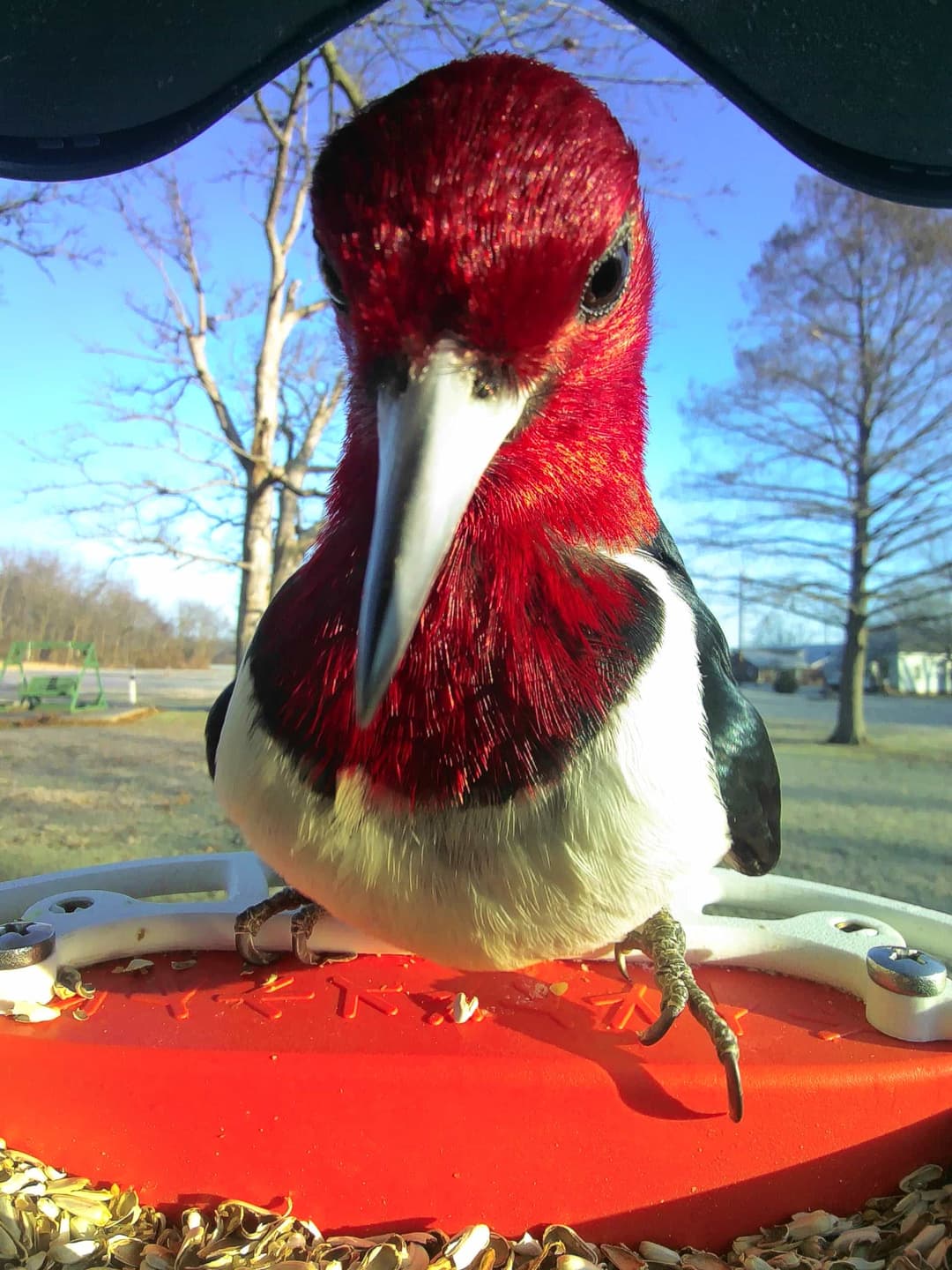
Red-Headed Woodpecker vs Middle Spotted Woodpecker
The Red-Headed Woodpecker is markedly different with its entirely red head, white body, and black wings. The Middle Spotted Woodpecker, in contrast, has a red crown, black and white barred back, and no solid white or black wing coloring.
Breeding and nesting habits of the middle spotted woodpecker
Mating behaviors
Middle spotted woodpeckers engage in courtship displays involving drumming and calls. Males perform aerial displays and offer food to attract females.
Nesting details
Nests are typically built in dead wood or decaying trees. They prefer open deciduous or mixed forests. Nests are excavated with materials primarily being wood chips.
Eggs and chick-rearing
Females lay 4-7 eggs. Both parents incubate the eggs for about 10-12 days. Chicks are reared by both parents, fed with insects and larvae, and fledge approximately 20-24 days post-hatching.
What does a middle spotted woodpecker like to eat?
Fruits
Insects
Sap
Seeds
Natural diet
The middle spotted woodpecker primarily feeds on insects and their larvae, found by pecking and probing the bark of trees. It relies heavily on beetles, ants, and caterpillars as its main sources of nutrition. In addition, it consumes spiders and occasionally small vertebrates like lizards. During autumn and winter, when insects are less abundant, the woodpecker adds a variety of seeds and berries to its diet, including those from beech, hornbeam, and oak trees.
Bird feeders
While the middle spotted woodpecker is not as common at bird feeders as other species, it may occasionally visit feeders in gardens or parks, particularly in areas where natural food sources are scarce. At feeders, it is likely to consume suet, peanuts, and sunflower seeds. Offering these food items, along with placing the feeder near large trees, increases the chances of attracting this woodpecker.
Feed them their favorite snacks
Middle spotted woodpeckers are fond of insects, berries, and nuts. These sustain them, giving them the energy they need for their activities. Bird Buddy seeds are, however, their absolute favorite. These seeds are seasonally selected by experts and have been shown to produce the best results. They have the necessary nutrients and appeal to the taste palette of the woodpecker.
Provide the right type of feeder
Woodpeckers need sturdy feeders, preferably made of metal or heavy-duty plastic. They prefer feeders with a perch that allows them to comfortably peck at the food. The feeder should also be hangable on tree trunks or branches since woodpeckers are tree-dwelling creatures.
Install a pleasant sounding bird song player
Woodpeckers are known to be attracted by sounds, particularly those that resemble bird songs or calls. Consider installing a bird song player in your yard to attract them, and you might just get yourself a 'woodpecker sing-along sessions'. Make sure you choose songs of species that don't scare away woodpeckers.
Maintain a woodpecker-friendly environment
Woodpeckers love trees, so try to have at least a few around your yard. They provide everything a woodpecker needs – food, shelter, and a place to nest. Moreover, make sure your yard is quiet and peaceful, as loud noises may scare them away.
Where can you find middle spotted woodpeckers?

Primary habitat
The middle spotted woodpecker typically lives in deciduous forests, especially old oak woods, in Central and Southern Europe.
Additional range
It unexpectedly thrives in climates from the temperate to mediterranean zones, ranging to the Middle East, and as far east as Korea.
Do they migrate?
The middle spotted woodpecker is predominantly a resident species rather than a migratory one. It mainly inhabits deciduous and mixed forests in Europe, particularly favoring oak-rich environments. These woodpeckers typically remain within their established territories throughout the year, adapting to seasonal changes rather than migrating over long distances. In situations where their food sources become scarce, such as during harsh winters, some local and minor movements may occur, but these are not truly migratory behaviors. Instead, they may shift slightly to nearby areas in search of food, particularly following mast events where the availability of acorns and other nuts are reduced. Because they do not undertake regular migration, specific migratory routes, timing, or key stopover locations do not apply to the middle spotted woodpecker. Their strong territorial nature and reliance on particular forest habitats imply that they are best adapted to a sedentary lifestyle, remaining within their home ranges year-round.
What is the role of middle spotted woodpeckers in nature and how to protect them?
Conservation status
The middle spotted woodpecker is generally considered to be of "Least Concern" according to the IUCN Red List, indicating it is relatively common. The species inhabits deciduous forests across Europe and parts of the Middle East. Key threats include habitat loss due to deforestation and changes in land use, which can reduce suitable nesting areas. Conservation efforts focus on preserving mature hardwood forest habitats and managing woodlands to support biodiversity. Increased awareness and targeted conservation measures in various countries help stabilize the population, ensuring these birds continue to thrive in their natural environment.
Ecological role of middle spotted woodpeckers
Its role in the ecosystem
The Middle Spotted Woodpecker plays a crucial ecological role in its habitat. One of its major contributions is pest control. The bird feeds primarily on insects on tree trunks and branches, thus helping to manage pest populations and maintain a balanced ecosystem. By hunting wood-boring beetles and other insect pests, it protects healthy trees and prevents further outbreaks. Additionally, the woodpecker excavates holes in tree trunks for nesting. These cavities can then become homes for other species, contributing to biodiversity. This bird species can also assist in seed dispersal. Some diet studies show it to occasionally eat fruits and nuts, potentially spreading these seeds in their droppings. Furthermore, by their pecking behavior on tree trunks, they indirectly contribute to the decomposition process and recycling of nutrients in the ecosystem. Overall, the Middle Spotted Woodpecker provides valuable ecological services.
How to help protect middle spotted woodpeckers
Preservation tips
Habitat preservation
Preservation of the middle spotted woodpecker's natural habitat, which includes large and mature forests with an abundance of dead or decaying trees, is critical. Encourage local and national forest management to retain such areas, rather than clearing them for other uses. Also, promote the growth of native berries and fruits, an important part of their diet.
Community science initiatives
Consider citizen science initiatives to observe and monitor middle spotted woodpecker populations. Training local communities to recognize these birds and report sightings can provide valuable data for conservation efforts. Encourage citizens to get involved in nest monitoring, tracking seasonal changes, and participating in dedicated birdwatching events to raise awareness of the species' plight.