
Peaceful Dove
Peaceful Dove
Geopelia placida


Quick Identification guide
Quick Identification guide
- •
Features a pale grayish-brown body with distinctly fine black-and-white barring on the neck and chest
- •
Shows off a long, slender tail that is edged with white and dark tips
- •
Displays a small, slender beak and dark blue eye rings which stand out against the light face
What does a peaceful dove sound like?
The peaceful dove, known for its gentle cooing, typically employs a soft, plaintive 'coo-ru-cuk' sound repeated many times. Its song is a rhythmic, mournful "coooo, coo-coo-coo," often repeated for long periods, usually from an elevated perch, and is most active at dawn and dusk. The cooing sequences help in marking territory and enticing mates. Other vocalizations include soft chuckling sounds and whistling notes during flight.


Description
During breeding season, better steer clear of peaceful doves because there is absolutely nothing peaceful about them! However, when they are not being protective of their progeny, you can catch these small birds roaming the streets or even your own garden in pairs or flocks.
The peaceful dove can weigh between 41to66grams and be from20to24centimeters tall.
The typical lifespan of the peaceful dove, a species native to Australia and New Guinea, is approximately 10-15 years. This is relatively shorter compared to larger dove species such as the mourning dove, which can live up to 20 years in the wild. Other related small dove species like the diamond dove also have similar lifespans, typically around 15 years.
Did you know?
Most popular questions about peaceful dove
How to recognise a peaceful dove?
General appearance
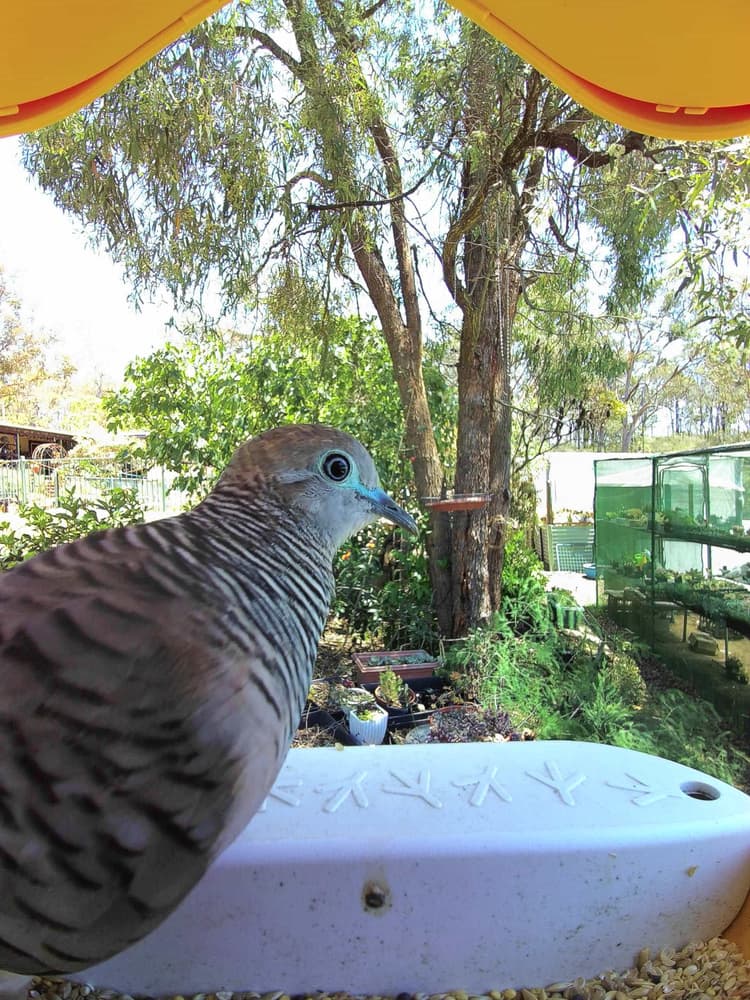
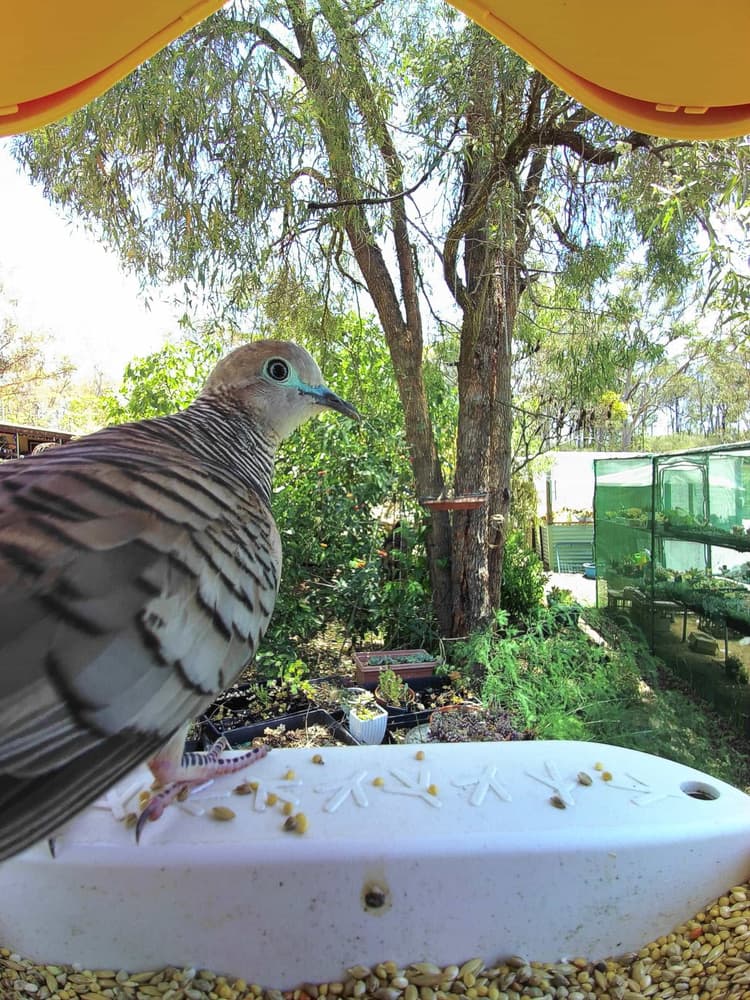
The Peaceful Dove is a small grey-white bird with a blue-grey hued chest, a long and slender bill, and characteristic spotted black and white wings. Measuring around 20-24 cm in length, it showcases pink legs, a buff white belly and a distinctive two-part cooing sound that separates it from other dove species.
Male vs female
There is little sexual dimorphism in the Peaceful Dove; males and females share similar physical characteristics. Both sexes have a striking black line with white borders around their neck. However, during courtship, the male flaunts abnormal upright display, with the neck stretched height, revealing its expanded glossy chest.
Juvenile
Juveniles are nearly identical to adult Peaceful Doves but are a duller version of the adults. The characteristic spots on their wings are also less defined compared to the adults. Over time, they develop adult-like appearance as their plumage matures.
Often mistaken for
Mourning Dove vs Peaceful Dove
The Mourning Dove is larger than the Peaceful Dove and lacks the characteristic scale-like pattern on its neck and breast. Its tail is pointed with white edges, unlike the Peaceful Dove's square tail with black and white barring.

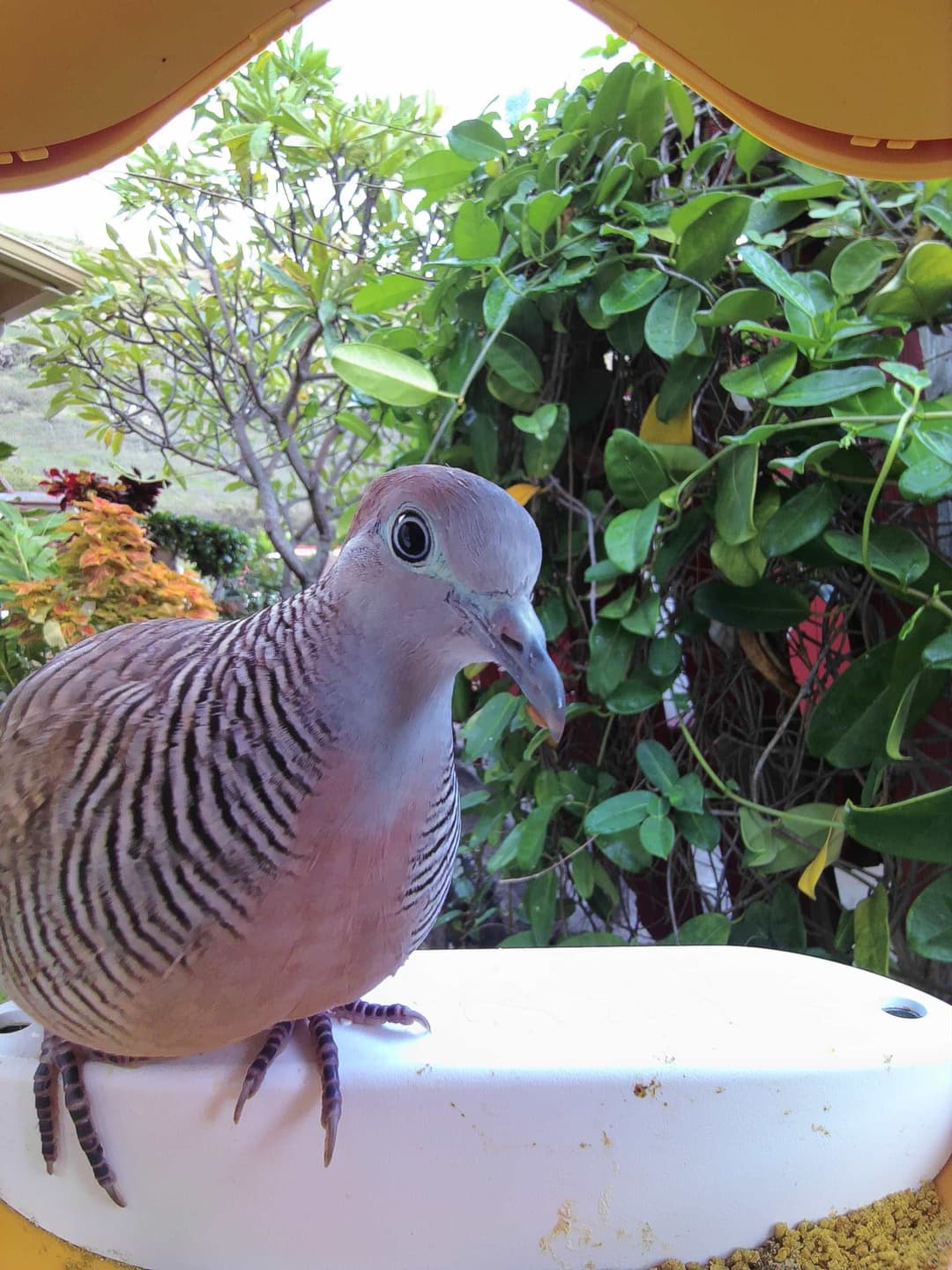
Zebra Dove vs Peaceful Dove
The Zebra Dove is similar in size to the Peaceful Dove but has a more pronounced zebra-like pattern on its neck and chest, whereas the Peaceful Dove's pattern is more scaled and subtle.
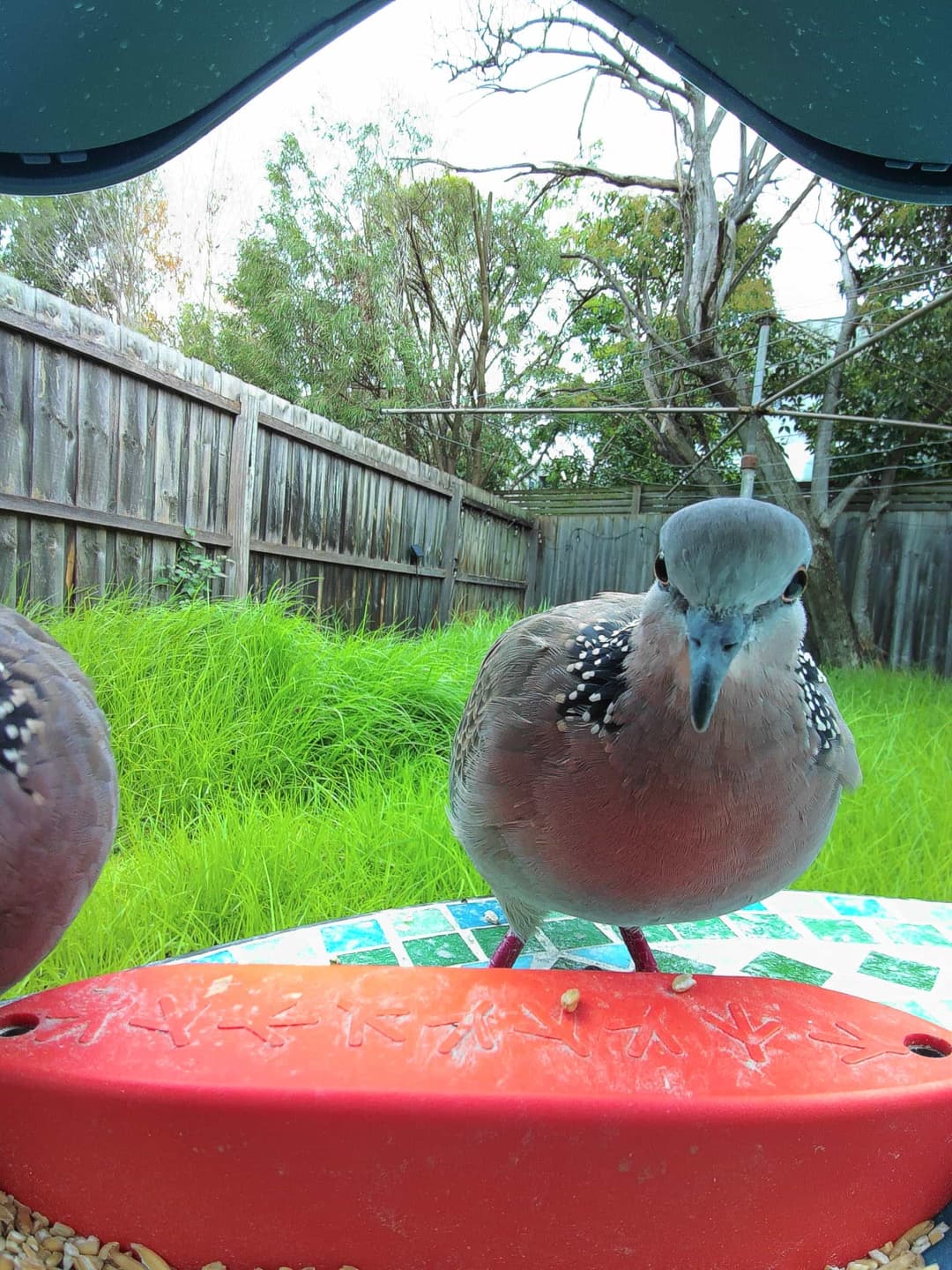
Spotted Dove vs Peaceful Dove
The Spotted Dove is larger than the Peaceful Dove and has a distinctive black half-collar with white spots on the back of its neck, which the Peaceful Dove lacks.
Breeding and nesting habits of the peaceful dove
Mating behaviors
Peaceful doves engage in courtship displays that include bowing, cooing, and tail-fanning to attract mates. The male often fluffs its feathers and produces a series of soft coos to signal readiness for mating.
Nesting details
These doves prefer building nests in trees, shrubs, or even gardens. Nests are constructed using twigs, grasses, and roots, forming a simple platform. They often choose locations with ample cover to provide protection from predators.
Eggs and chick-rearing
The female typically lays two white eggs. Both parents share incubation duties lasting about 13–15 days. Once hatched, the chicks are cared for by both parents. They feed the young a nutrient-rich substance known as 'pigeon milk' and chicks fledge in approximately two weeks.
What does a peaceful dove like to eat?
Insects
Seeds
Natural diet
The peaceful dove primarily feeds on seeds and grains found on the ground. Its diet includes seeds from grasses, weeds, and sedges, along with small invertebrates such as insects and worms. It forages in open areas and prefers locations with sparse vegetation which makes food more accessible.
Bird feeders
At bird feeders, the peaceful dove often consumes grains and seeds like millet and cracked corn. It may also eat commercial birdseed mixes and occasionally forages for small insects if available. The dove is attracted to ground-feeding trays where seeds are easily accessible.
Attract the tranquil doves to your yard
The peaceful dove can be a welcome addition to any yard. To attract these charming birds, ensure your backyard provides what they love most: food, water, and a safe place to nest. They have a particular fondness for sunflower seeds and millets. Setting up a bird feeder filled with their favorites can help draw them in. An easily accessible source of clean, fresh water for drinking and bathing can also be a major draw.
Choosing the right feeder and fun tricks to keep them coming
A platform or tray feeder is ideal for doves as it allows easy access to the seeds and accommodates their feeding style. Placing the feeder in a quiet, safe location away from predators will make them feel secure and encourage repeat visits. Doves also love bathing, so a bird bath can be great for attracting them. For some fun, try playing gentle bird songs from a speaker; the doves might just indulge you in a sing-along!
Bird buddy seeds for best results
Bird Buddy seeds come highly recommended for attracting doves to your yard. Expertly chosen for the season, these seeds will provide the exact nutrition doves need. High in quality, Bird Buddy seeds ensure the doves get a delicious and nutritious meal, tempting them to become regular visitors in your yard.
Where can you find peaceful doves?

Primary habitat
The peaceful dove predominately inhabits dry, open woodland areas and grasslands.
Additional range
Its range extends from northern and eastern Australia, through Papua New Guinea to the Solomon Islands. It can also be found in unexpected urban environments.
Do they migrate?
The peaceful dove is primarily a resident bird, meaning it does not engage in long-distance migration. These birds are typically found in their habitats throughout the year, displaying some local movement as opposed to extensive migratory patterns. Peaceful doves are native to Australia and can also be seen in parts of Indonesia and Papua New Guinea. Within these regions, they inhabit open forests, woodlands, grasslands, and urban areas. While they do not migrate seasonally, some local movements might occur due to ecological factors such as availability of food and water, or breeding requirements. In Australia, peaceful doves may move short distances when conditions such as drought make food resources scarce, but such movements are usually within the same general geographic region. Hence, there are no specific migratory routes or key locations associated with the peaceful dove, as their movements tend to be limited and opportunistic rather than seasonal migrations. They continue to be a familiar sight across their range, adapting their habits to local conditions rather than migrating over long distances.
What is the role of peaceful doves in nature and how to protect them?
Conservation status
The peaceful dove is classified as a species of least concern, indicating it is common and not currently at risk of becoming endangered. It has a stable population across its native range in Australia and nearby regions. Key conservation efforts are minimal due to its abundance, but maintaining natural habitats is essential for its continued stability. Potential threats include habitat destruction and competition with invasive species. However, these have not significantly impacted its population. Conservationists encourage habitat preservation to ensure the species remains unaffected by future environmental changes.
Ecological role of peaceful doves
Its role in the ecosystem
The Peaceful Dove, native to Australia and New Guinea, plays a significant role in its ecosystem. As a granivorous bird, it consumes a variety of seeds which aids in the process of seed dispersal. This contributes to the geographic spread and germination of plants, maintaining plant diversity and the health of the terrain. In terms of pest control, the Peaceful Dove can help control insect population as insects form part of their diet. Furthermore, the dove acts as a prey for larger predators, thus contributing to the natural food chain and maintaining ecological balance. Their nests, often created in trees or shrubs, provide spaces for different types of wildlife and boost local biodiversity. Therefore, the ecological significance of Peaceful Dove is multifaceted, ranging from promoting vegetation spread, controlling pests, to supporting broader biodiversity in their habitats.
How to help protect peaceful doves
Preservation tips
Habitat preservation for peaceful dove
To preserve the habitat of the peaceful dove, support the prevention of deforestation and land conversion. Encourage sustainable practices in agriculture and logging. Promote reforestation programs that include the dove's preferred trees and shrubs. Lobby for legislation to protect critical dove habitats from urban sprawl.
Community science initiatives
Get involved in community science initiatives like bird counts and habitat assessments. Participate in training sessions on identifying and recording the peaceful dove and their habitats. Use smartphone apps to log sightings and share data with scientists. Educate the community about the importance of the dove to the local ecosystem and how they can help conserve by minimizing pesticide use and keeping outdoor cats indoors.