
Costa’s Hummingbird
Costa’s Hummingbird
Calypte costae


Quick Identification guide
Quick Identification guide
- •
Exhibits brilliant iridescent purple cap and throat, males glow in certain lights
- •
Possesses a short, straight bill, perfectly adapted for nectar feeding
- •
The small, compact body and greenish back contrast with its dazzling throat


Description
Costa's hummingbirds need a lot of nectar to keep their energy up. How much? Well, they can visit up to 2,000 flowers in a single day! They are always on the go: males are especially feisty when it comes to their favourite perches or flowering plants during breeding season, and perform a looping and diving display that can last anywhere between 5 seconds to four minutes!
The Costa's hummingbird can weigh between 2.9to3.4grams and be from8.5to9.5centimeters tall.
The Costa's hummingbird typically lives for up to 9 years, which is significantly longer than its relative, the Ruby-throated hummingbird, that only lives for up to 5 years. However, it has a shorter lifespan compared to the Black-chinned hummingbird, which can live up to 11 years. Factors affecting lifespan include predation, disease, and availability of food.
Where can you find Costa’s hummingbirds?
Based on Birdbuddy sighting data. Bubbles represent reported bird sightings over the past years.
Embed this mapPrimary habitat
The Costa’s hummingbird prefers dry and open habitats with a variety of plant life such as deserts, washes, sage scrub and especially those in the Sonoran desert. It favors lower regions of dry canyons and coastal sage scrub areas.
Additional range
Unexpectedly, after the breeding season, this bird may occasionally venture into mountain meadows.
Do they migrate?
The Costa's hummingbird exhibits varying migratory behaviors depending on the availability of year-round resources. Traditionally, these hummingbirds nest in the desert southwest of the United States during spring. When suitable food is not available during other seasons, they typically migrate westward to coastal areas. This seasonal movement allows them to exploit the rich floral resources found along the coast, which are crucial for their survival outside the breeding season. However, in regions where flowers and feeders are available year-round, such as in many suburban gardens, a growing number of Costa's hummingbirds have become sedentary, choosing to remain in one place throughout the entire year. This shift in behavior suggests an adaptation to the consistent food supply provided by human environments. In summary, while the Costa’s hummingbird is traditionally migratory—moving from the desert to coastal areas outside the breeding season—some populations have adjusted to remain resident where continuous food resources are available, showcasing their flexibility in response to environmental changes.
Did you know?
Most popular questions about Costa's hummingbird
How to recognise a Costa's hummingbird?
General appearance
Costa’s hummingbird is a small bird recognized for its iridescent plumage and rapid wingbeats. It boasts a compact body, long bill, and dazzling throat patch known as a gorget. Its short tail and speedy flight make it a distinctive sight in its native habitats.
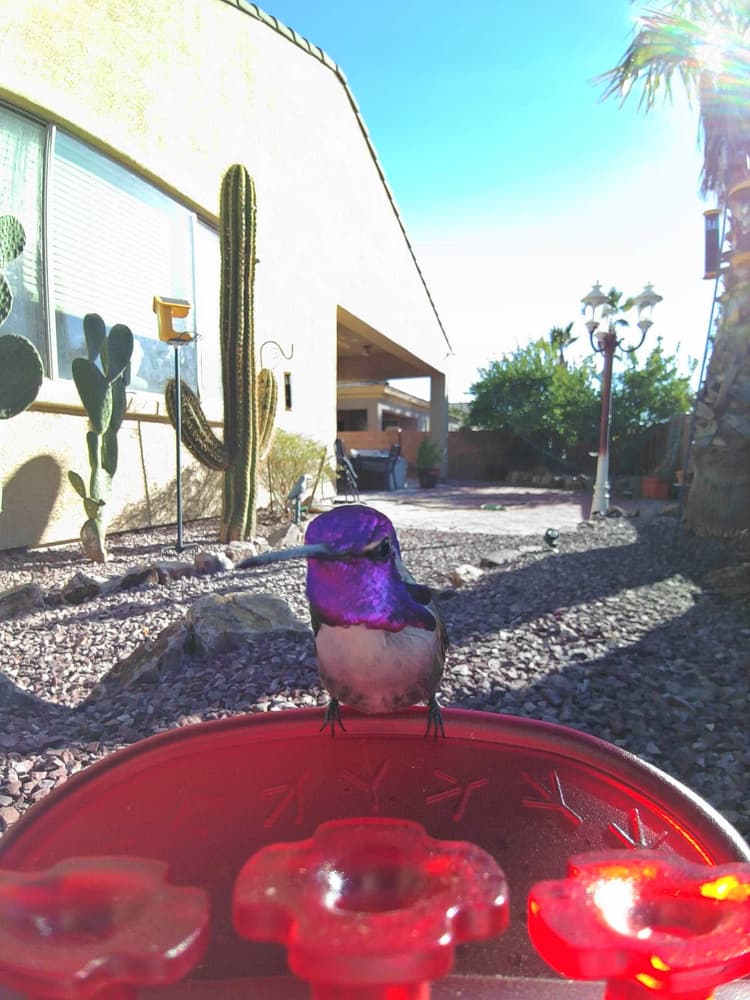
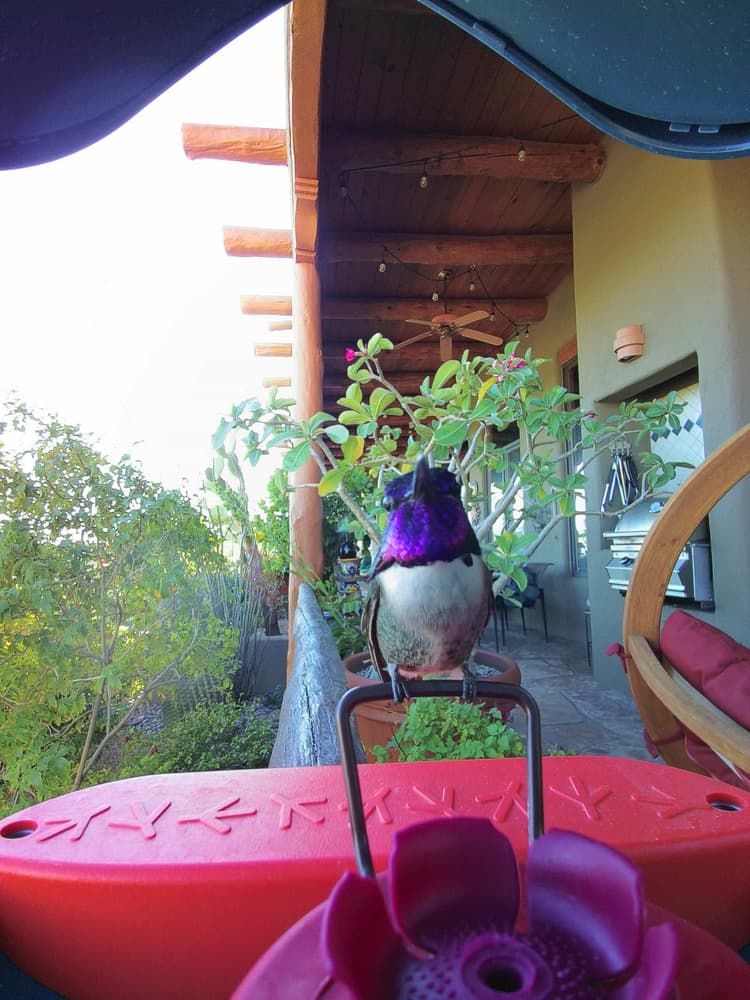
Male vs female
Male Costa’s hummingbirds are notable for their vibrant violet crown and gorget that extends down the sides of the neck, creating a striking appearance. Females, by contrast, are more subdued with a greenish back and a white underbelly, lacking the male’s vivid throat coloring.
Juvenile
Juvenile Costa’s hummingbirds resemble adult females, exhibiting similar greenish plumage but with a more muted appearance. They lack the pronounced coloration seen in mature males, gradually developing distinctive traits as they mature.
Often mistaken for
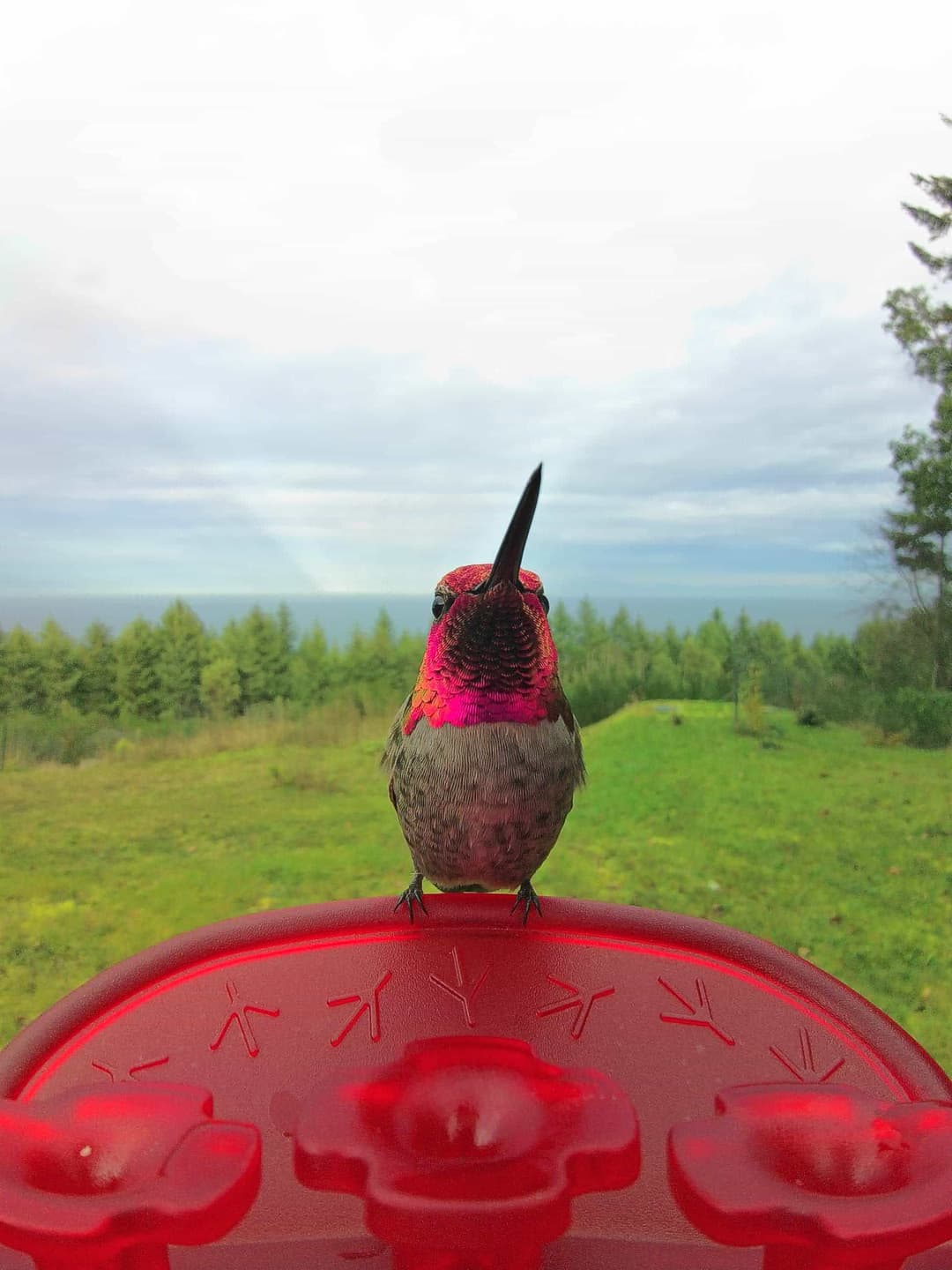
Anna's Hummingbird vs Costa’s Hummingbird
Costa’s Hummingbird males have a deeper purple throat that flares out, while Anna’s have a rose-pink gorget. Female Costa’s are also smaller with slightly downcurved bills.
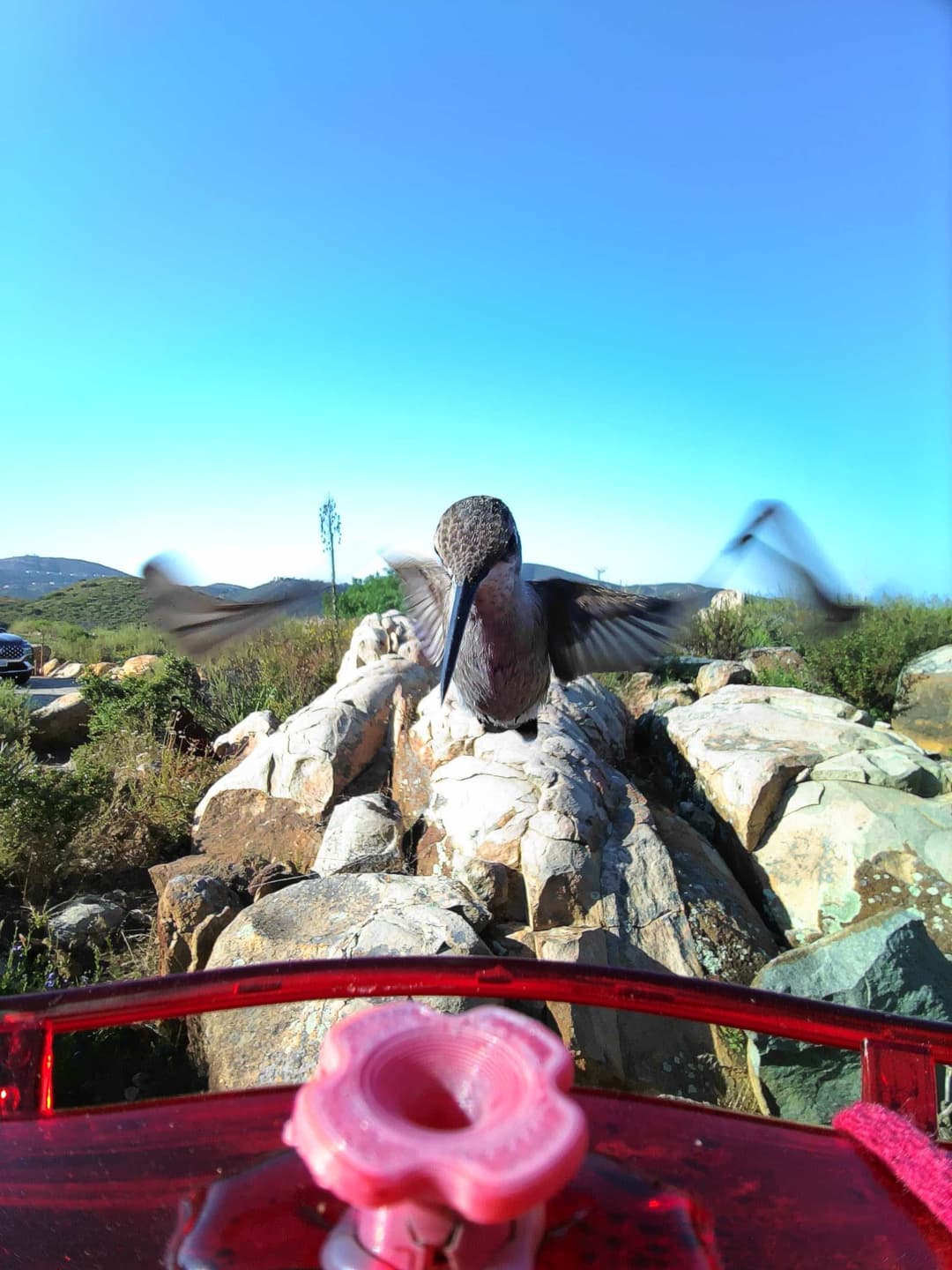
Black-Chinned Hummingbird vs Costa’s Hummingbird
Costa’s Hummingbird has more vibrant purple on the throat, extending behind the eyes, while Black-Chinned Hummingbirds have a black chin and a violet band.
Calliope Hummingbird vs Costa’s Hummingbird
Calliope Hummingbirds are smaller with magenta streaks on their throats, whereas Costa’s have a more uniform purple gorget and broader tail feathers.
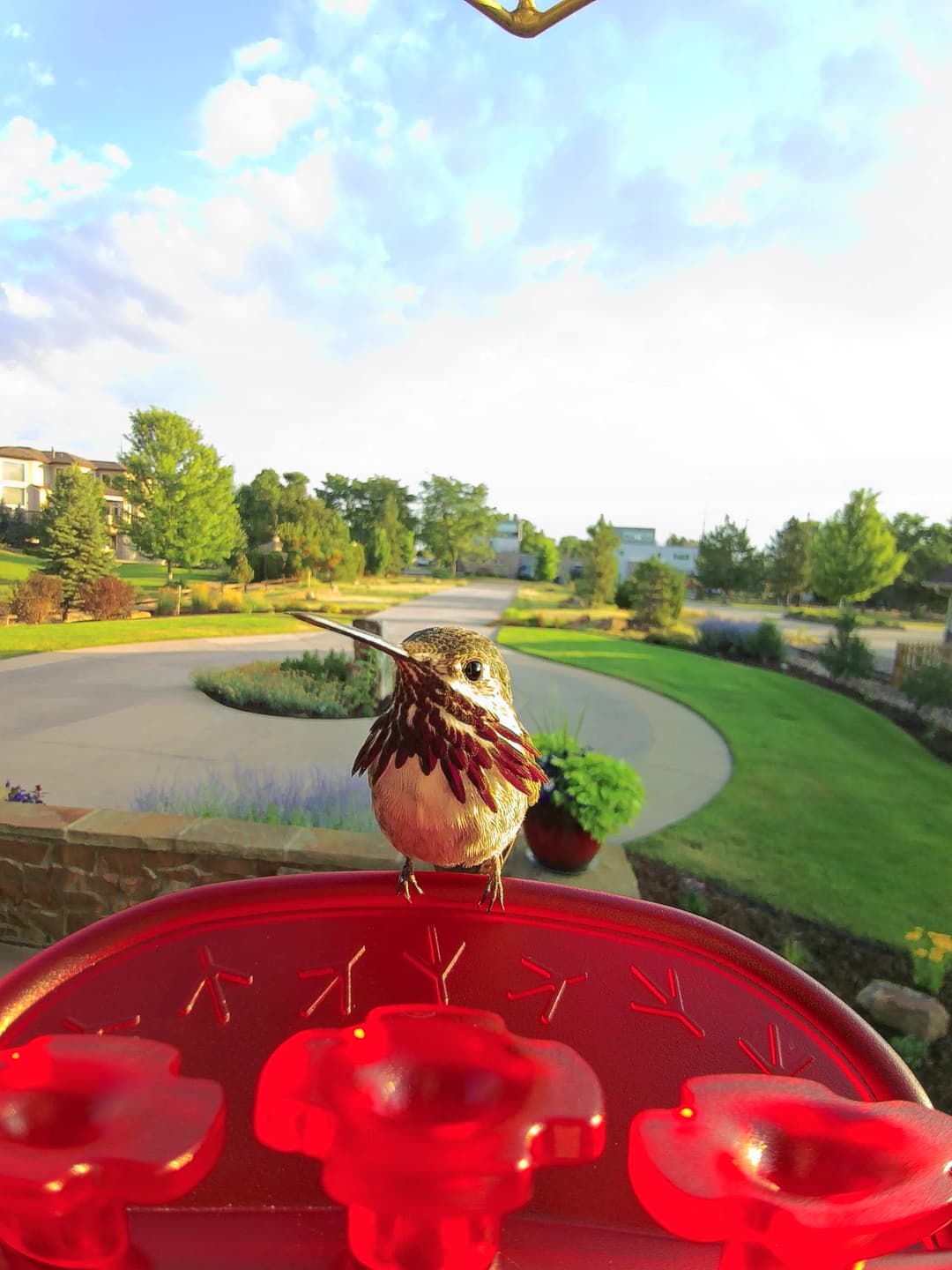
Broad-Tailed Hummingbird vs Costa’s Hummingbird
Costa’s have a distinctive purple gorget, while Broad-Tailed males show a rose throat and tend to be larger with a coppery sheen on their backs.
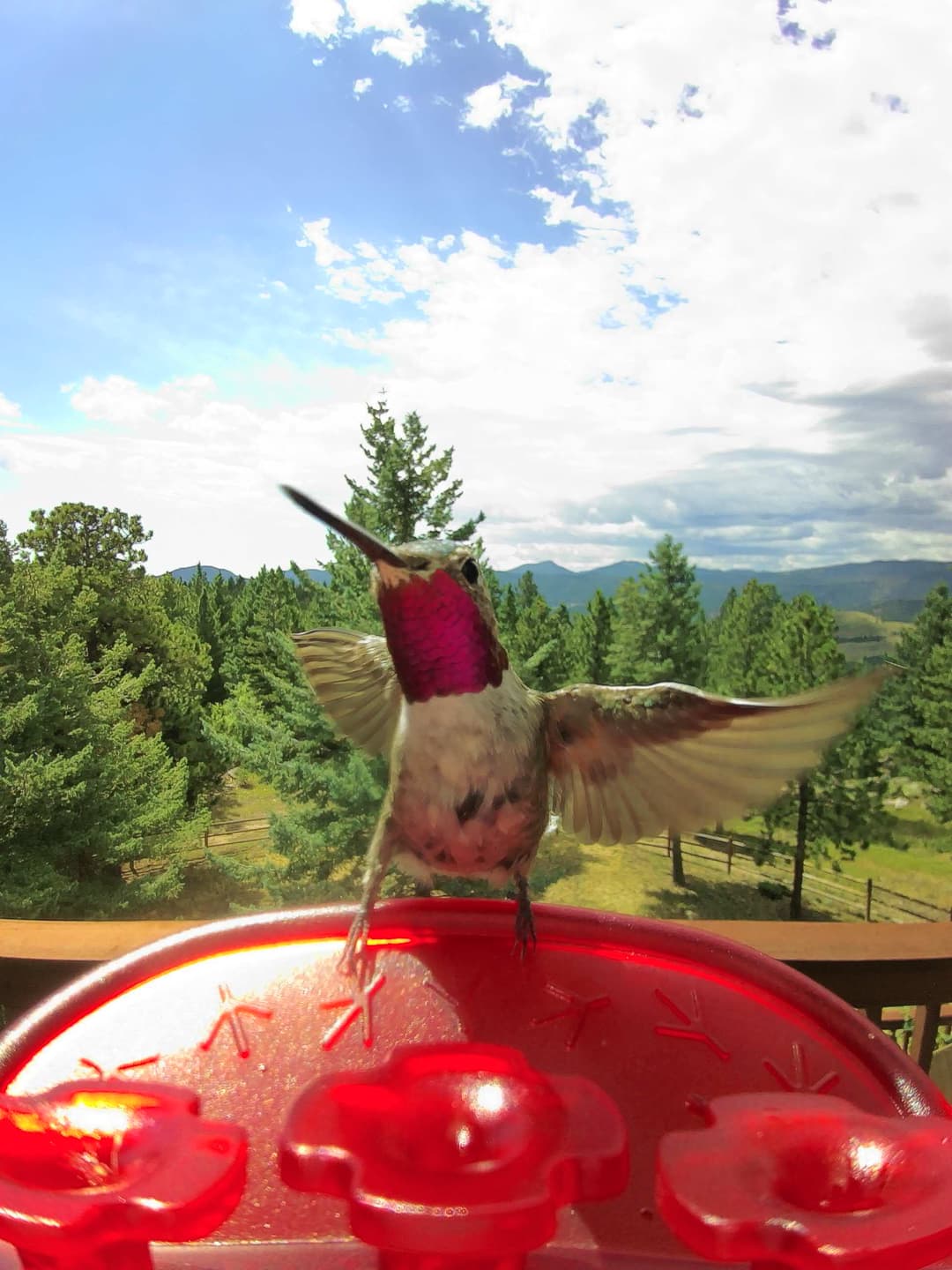
Breeding and nesting habits of the Costa's hummingbird
Mating behaviors
Male Costa's hummingbirds engage in courtship displays by flying high and zooming down past perched females. During the dive, they produce a shrill high-pitched whistle and repeat this whistled song while perched. A male may mate with several females.
Nesting details
Nesting occurs in open or sparsely leaved shrubs or small trees, sometimes in yucca or cactus, 2-8 feet above ground. Nests are placed on horizontal or diagonal branches. Females build compact cups using plant fibers, bits of leaves or flowers, and spider webs, giving the nest a grayish look.
Eggs and chick-rearing
After constructing the nest, the female Costa's hummingbird lays eggs and continues to add to the nest during the incubation period. The female is solely responsible for incubating the eggs and rearing the chicks after they hatch.
What does a Costa's hummingbird like to eat?
Insects
Nectar
Natural diet
The Costa's hummingbird primarily relies on nectar and insects for sustenance. It extracts nectar from a variety of desert-native flowers, including agave, chuparosa, desert honeysuckle, and fairy-duster. In addition to nectar, the Costa's hummingbird supplements its diet with tiny insects, which provide essential proteins and nutrients.
Bird feeders
At bird feeders, the Costa's hummingbird often feeds on sugar-water mixtures. These feeders are commonly used to mimic nectar and attract hummingbirds by providing an accessible source of energy.
Attract costa’s hummingbird with food
One of the best ways to attract Costa's hummingbirds to your yard or feeder is to provide them with a steady supply of their favourite food. These tiny birds consume half their body weight in bugs and nectar each day, so offering plentiful sweet snacks–like the thoroughly researched, season-specific Bird Buddy seeds–will help bring them to your yard. Additionally, hummingbirds are attracted to bright colors, so consider adding red or orange flowers to your garden or around your feeder to draw them in.
Choose the right feeder and spot
Costa's hummingbirds love tube feeders filled with nectar, which imitate the flowers they feed from in the wild. Position your feeder in a quiet spot near your house, preferably with some cover (like trees or shrubs) nearby so they feel safe while feeding. Sun exposure is vital because hummingbirds are attracted to the sparkling sugar water when the sun hits the feeder. If possible, place it where you can see it from a window, so you can enjoy the show!
Make your yard a costa’s hummingbird haven
Besides food, provide multiple perching spots where these birds can rest and sing. Install a birdbath with shallow water, or a mister that they can fly through to bathe. It might take some time to see the hummingbirds regularly, but with patience, you'll find your garden becoming a favorite spot for these beautiful, tiny creatures.
What is the role of Costa’s hummingbirds in nature and how to protect them?
Conservation status
The Costa’s hummingbird is common within its range but has experienced declines in areas where the desert has been cleared for development. Despite these challenges, the species has shown adaptability by nesting in suburban areas. It is not currently classified as vulnerable or endangered. Key threats include habitat loss due to urban expansion. Conservation efforts should focus on protecting natural habitats and promoting urban planning that considers wildlife. Creating green spaces and preserving desert landscapes can help ensure the continued survival of this hummingbird in both natural and modified environments.
Ecological role of Costa’s hummingbirds
Its role in the ecosystem
The Costa's Hummingbird plays a significant role in their ecosystem. Primarily, this bird contributes to the pollination process. Its specialized feeding behavior, where it extends its bill into flowers to feed on nectar, results in the bird unknowingly transferring pollen from one flower to another, assisting in plant reproduction. Without this hummingbird, certain plant species might struggle to reproduce efficiently, potentially leading to a decline in biodiversity. Additionally, the Costa's Hummingbird feeds on tiny insects, thereby acting as a form of natural pest control. This is ecologically beneficial as it can help to maintain a balance in the insect population, potentially reducing harm to plant life. Furthermore, by constructing their nests, these hummingbirds also indirectly assist in seed dispersal as they carry plant fibers and bits of leaves or flowers, enabling the spread of plant species across their habitat. Overall, Costa's Hummingbird contributes to pollination, pest control, and seed dispersal, thus maintaining the ecological balance in their ecosystem.
How to help protect Costa’s hummingbirds
Preservation tips
Habitat preservation strategies for costa’s hummingbird
Preserve and restore habitats, especially those with Tubular flowers for nectaring and shrubs for nesting. Limit the use of pesticides in your garden as they harm the hummingbird's insect prey. Plant native flowers to provide natural sources of nectar. Install hummingbird feeders and fill them with sugar solution as additional food sources.
Community science initiatives for costa’s hummingbird conservation
Participate in initiatives like 'citizen science' programs to monitor hummingbird populations. Use smartphone apps like eBird to report your sightings. Join and support conservation organizations such as Audubon Society and BirdLife International. Educate your community about the value and needs of Costa’s Hummingbirds through local schools, community centers, and birding clubs.