
Brewer’s Blackbird
Brewer’s Blackbird
Euphagus cyanocephalus


Quick Identification guide
Quick Identification guide
- •
Males feature a striking glossy black plumage with an iridescent bluish-purple sheen on the head
- •
Females exhibit sooty brown feathers throughout with a slightly lighter throat
- •
Both sexes have bright yellow eyes and a straight, slender black beak
What does a Brewer's blackbird sound like?
The Brewer's blackbird produces an array of vocalizations including gurgles, squawks, and whistles. Its call patterns can be described as either falling or rising. The call types vary considerably from a buzzing sound to chatter, chirp or chip, and whistle. These sounds give a glimpse into the bird's complex communication system.


Description
Brewer's blackbirds are very social birds and like to nest in colonies of up to 100 individuals. Sadly, they are misunderstood! They are considered pests by farmers and quite often shot, although they are far from a nuisance. They're actually wonderful, winged pest-control agents! They eat all kinds of insects and are great for controlling outbreaks of new agricultural pests.
The Brewer's blackbird can weigh between 58to67grams and be from20to25centimeters tall.
The Brewer's blackbird typically has a lifespan of up to 10 years. This is comparable to related species like the common grackle and brown-headed cowbird, which live for about 11-13 years and 8 years respectively. However, it's significantly shorter than other relatives, for instance, the American crow, which can live up to 20 years.
Did you know?
Most popular questions about Brewer's blackbird
How to recognise a Brewer's blackbird?
General appearance
The Brewer’s blackbird is a medium-sized songbird with a slender body and a rounded head. It has a pointed bill and relatively long legs. The overall plumage is glossy with an iridescent sheen under certain lighting conditions, predominantly appearing black from a distance.
Male vs female
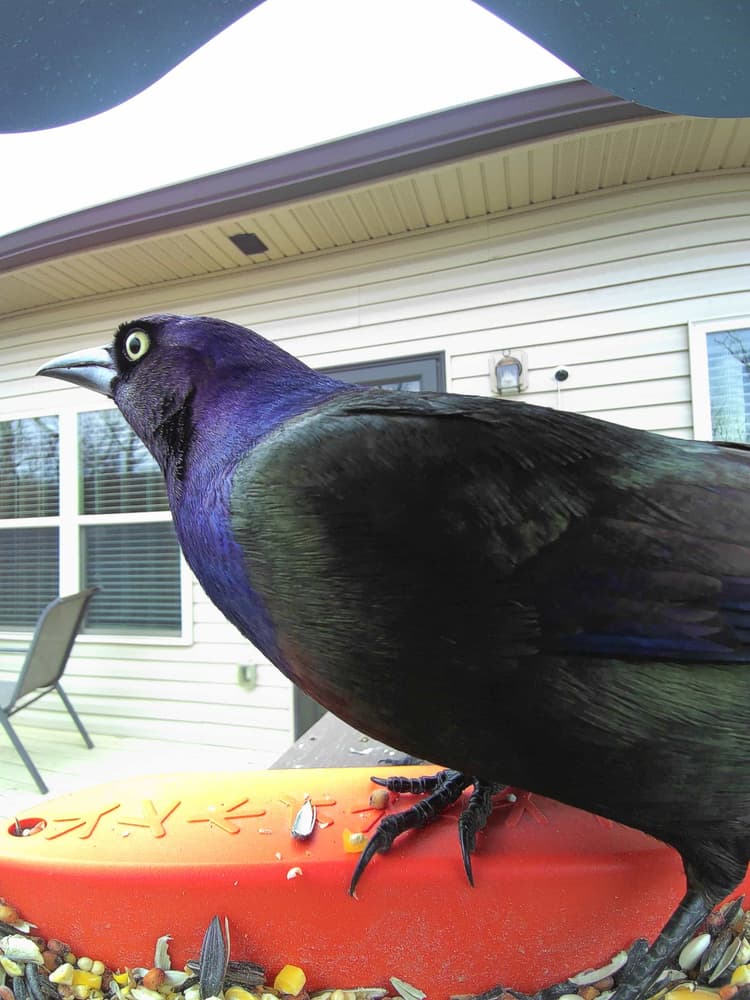
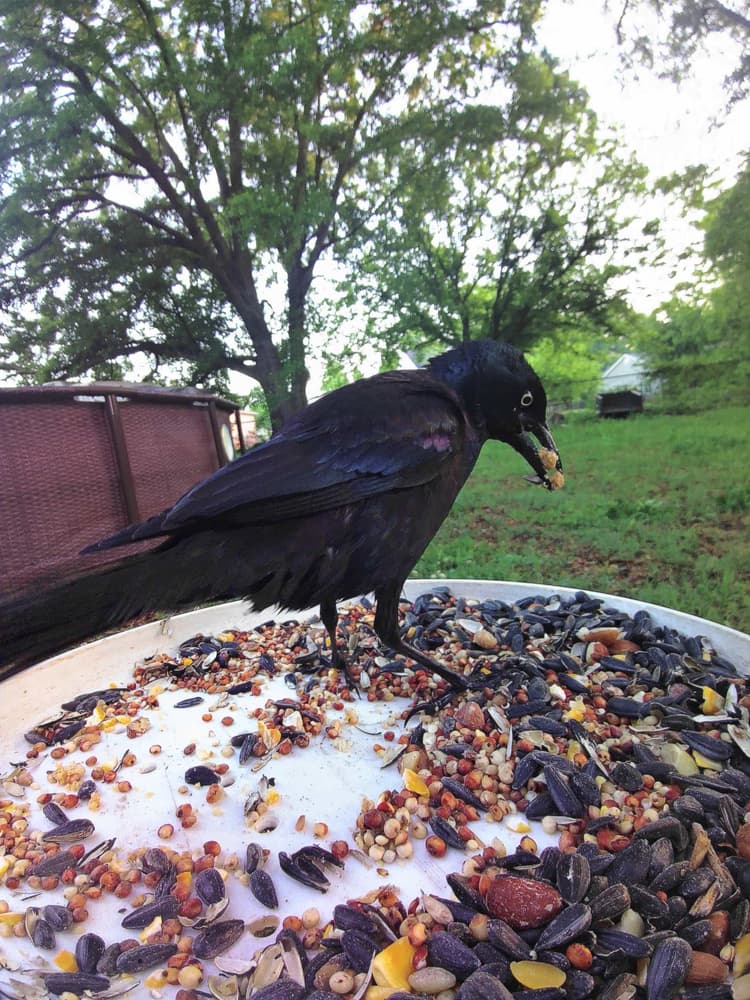
Male Brewer’s blackbirds are characterized by their glossy black overall color, with a purplish sheen on the head and greenish gloss on the body and wings. Females, however, display a more subdued appearance, with brownish-gray plumage, pale throat, and lack the iridescence that males exhibit. Their eyes are darker than those of males.
Juvenile
Juvenile Brewer’s blackbirds resemble females but are generally duller in tone. They have brownish feathers with a streaky appearance and lack the iridescence seen in adults. Unlike adults, their eyes are typically dark brown rather than the yellow seen in mature males.
Often mistaken for
Common Grackle vs Brewer’s Blackbird
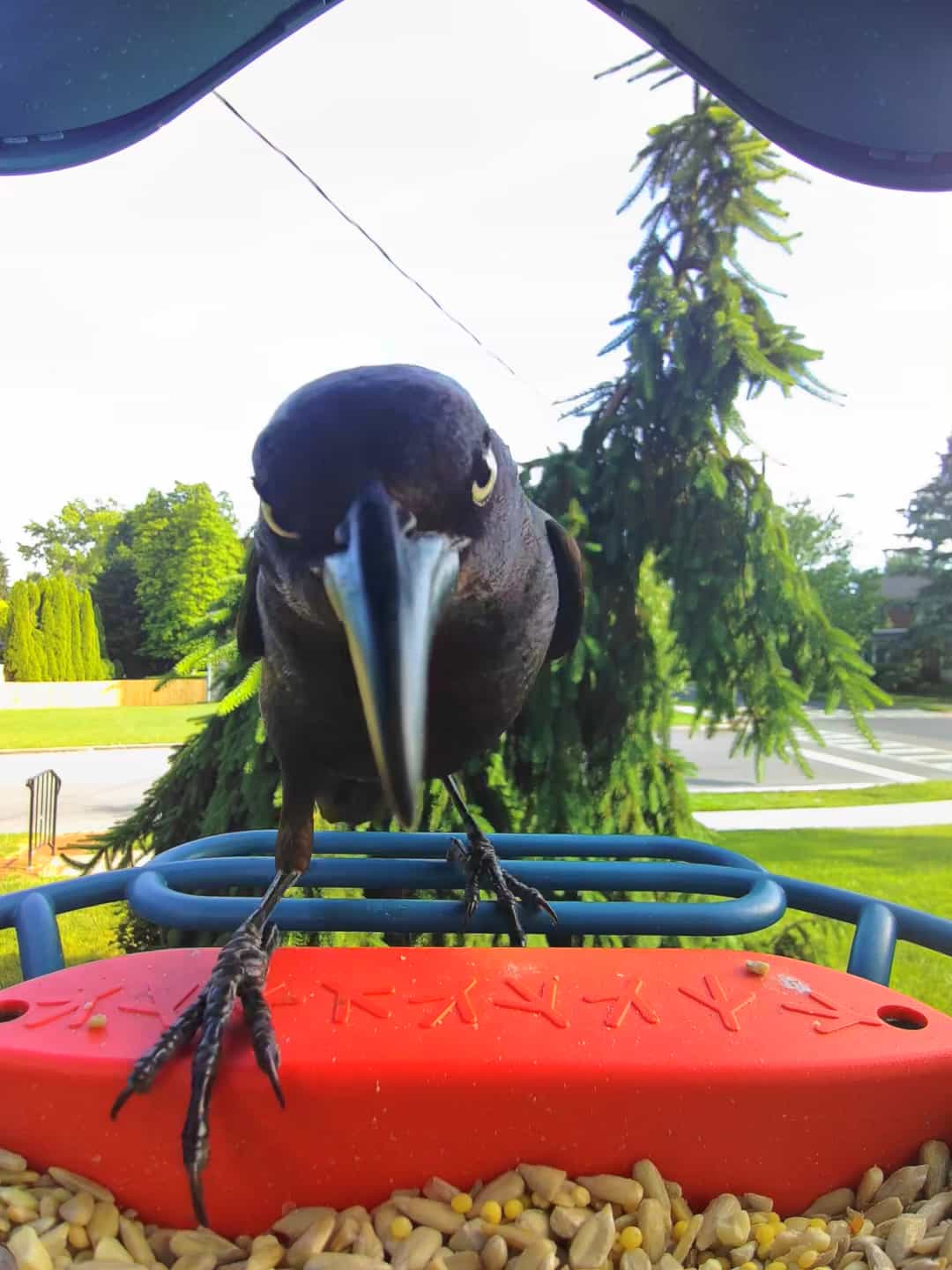
Brewer’s Blackbird is smaller with a shorter tail and lacks the iridescent body of the Common Grackle. Grackles have longer bills and yellow eyes; Brewer’s show a solid black body with a more uniform gloss.
Rusty Blackbird vs Brewer’s Blackbird
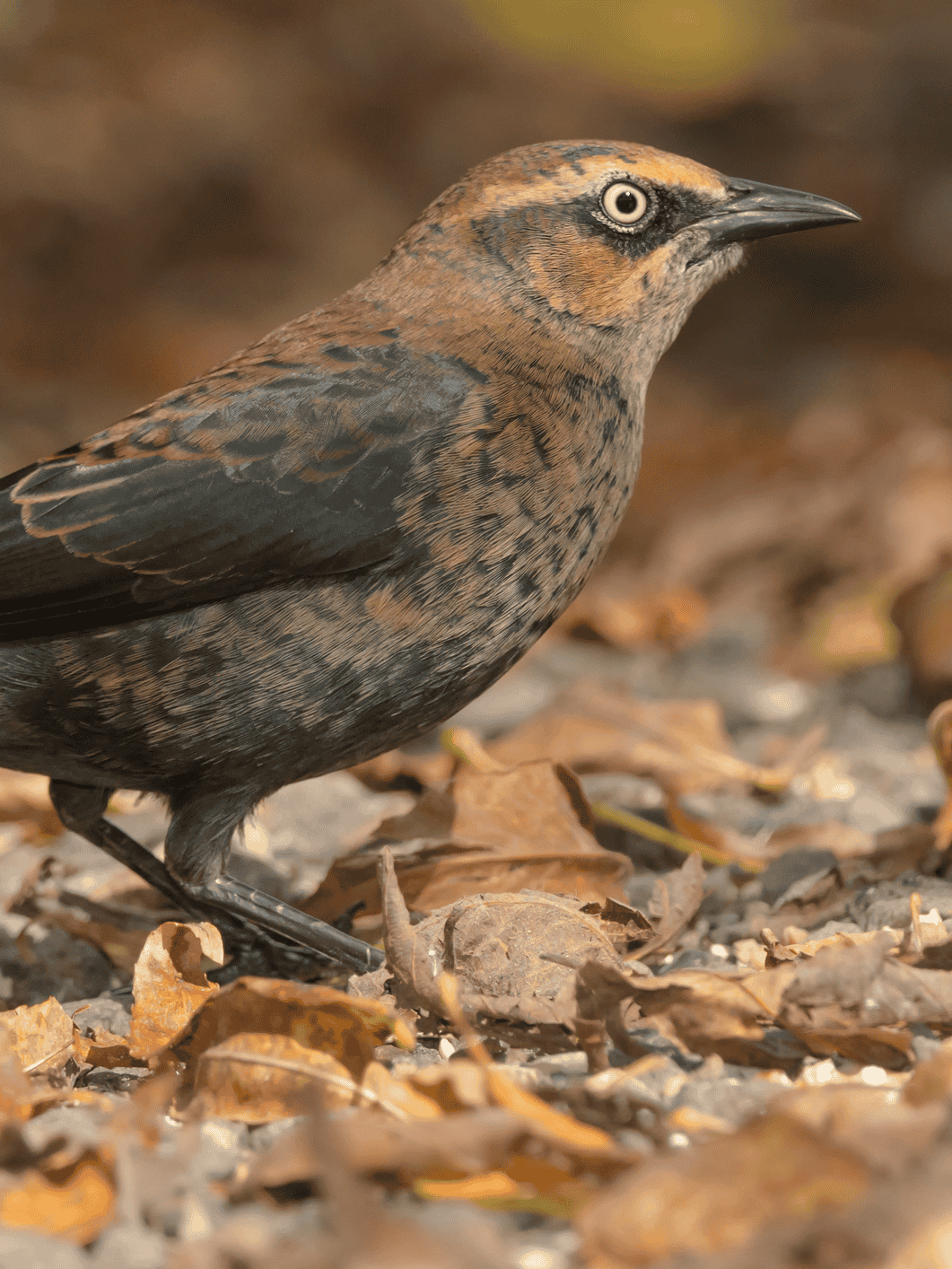
Brewer’s Blackbird males are more uniformly black compared to the Rusty Blackbird's mottled appearance in non-breeding season. Females of Brewer’s have duller brown tones and lack the Rusty’s rusty edges in fall/winter.
Red-Winged Blackbird vs Brewer’s Blackbird
Males are notably different, as the Brewer’s lack the distinct red and yellow shoulder patches. Females may be confused; however, Red-Winged females are streaked heavily, unlike the more even brown of the Brewer’s females.
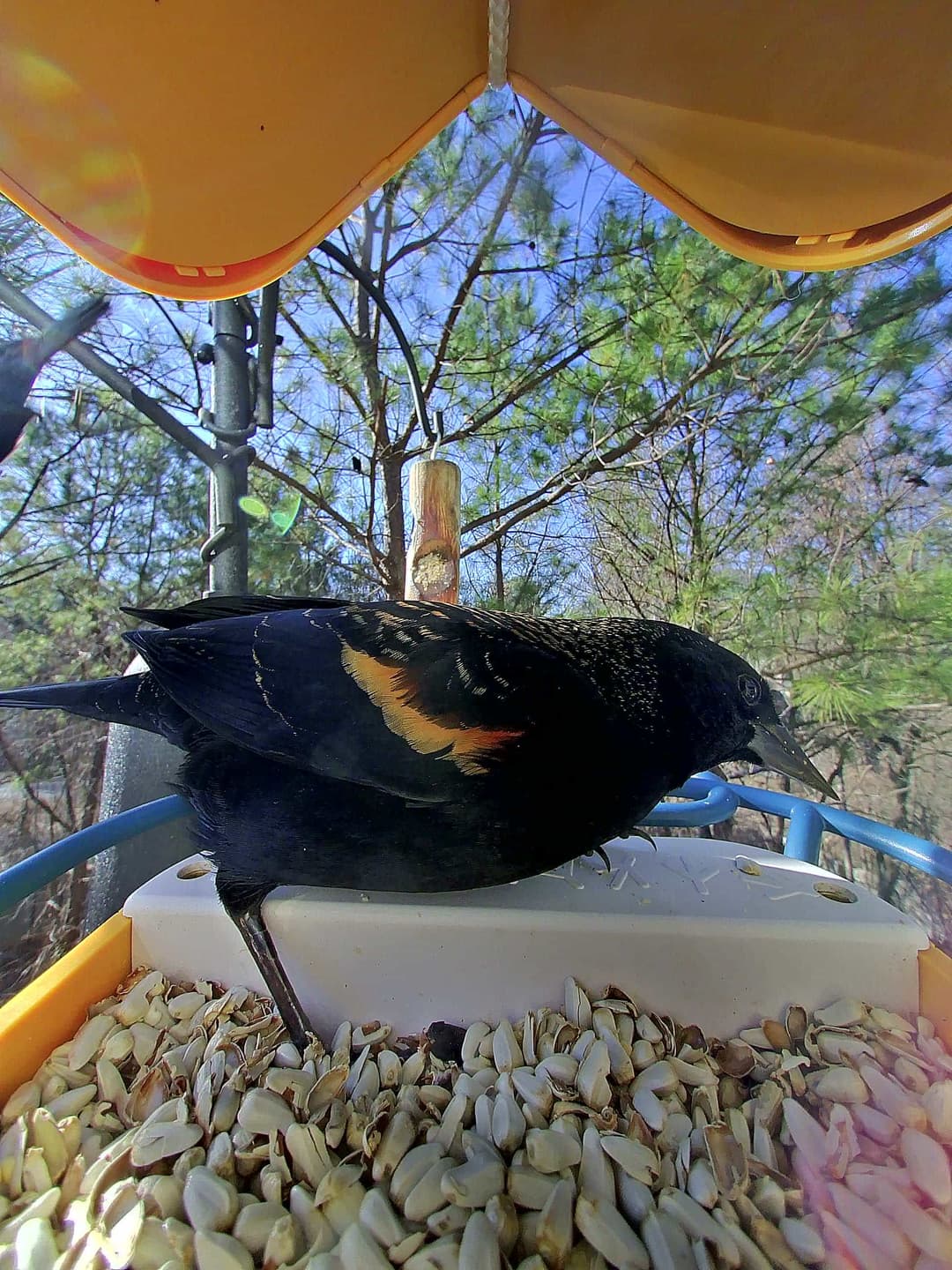
Brown-Headed Cowbird vs Brewer’s Blackbird
Male Brewer’s Blackbird is deep black while the male Brown-Headed Cowbird has a distinctive brown head. Brewer’s have longer tails and a more slender, direct appearance than the compact Cowbird.
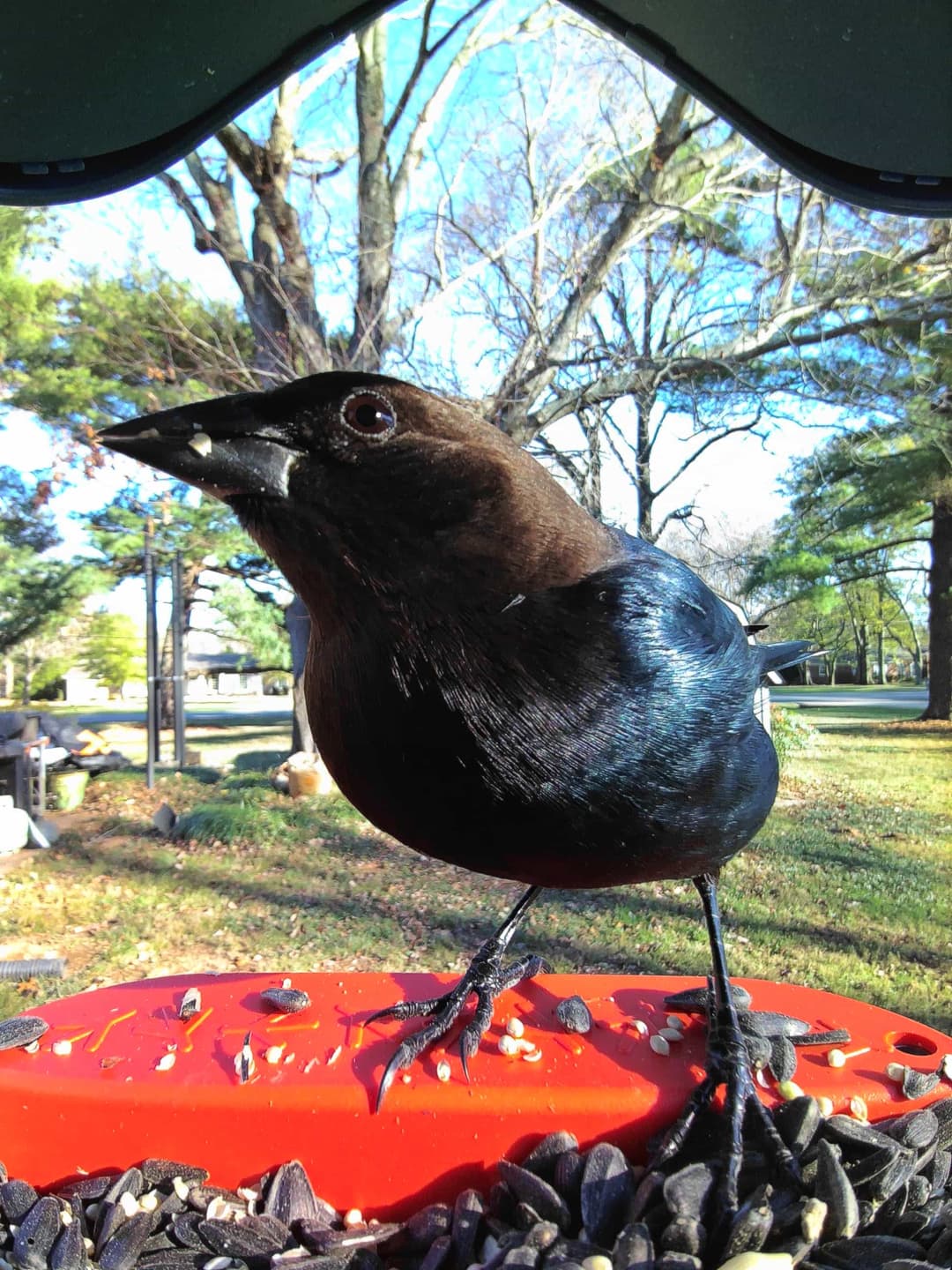
Breeding and nesting habits of the Brewer's blackbird
Mating behaviors
Brewer’s blackbirds display courtship behaviors including singing and performing flight displays. Males showcase their plumage to attract females and may also feed prospective mates as part of their courtship ritual.
Nesting details
These birds often nest in colonies. Nests are typically placed in trees, shrubs, or artificial structures. They use grass, twigs, and mud to construct cup-shaped nests lined with finer materials. Brewer's blackbirds can adapt to human environments and may nest in gardens when suitable structures are available.
Eggs and chick-rearing
A typical clutch contains 3-7 eggs, incubated for about 12-14 days. Both parents partake in feeding the chicks, which fledge roughly 13-14 days after hatching. In garden environments, providing dense shrubs or trees can encourage nesting and offer protection against predators.
What does a Brewer's blackbird like to eat?
Fruits
Insects
Seeds
Natural diet
The Brewer's blackbird primarily feeds on a diverse array of insects and seeds. Its insect diet includes grasshoppers, crickets, beetles, aphids, caterpillars, and termites, as well as some spiders, snails, and tiny crustaceans. Additionally, it consumes many seeds from grasses and weeds and also indulges in waste grain. During the summer months, its diet is complemented by berries.
Bird feeders
Brewer's blackbirds are known to visit bird feeders, where they commonly eat grains and seeds. They often consume cracked corn, millet, and sunflower seeds. While they prefer natural foraging, feeders provide an additional food source, especially in urban and suburban areas.
Offer tasty treats
Brewer’s blackbirds are fans of seeds and insects. You can set out a variety of seeds, but Bird Buddy seeds are highly recommended. These seeds are seasonally selected by experts and have reported great results in attracting Brewer's blackbirds.
Choose the right feeder
Brewer's blackbirds prefer platform feeders or ground feeding. These types of feeders give these birds a better view of the area, which is something they prefer, being naturally careful creatures. Also, make sure to clean your feeder regularly to prevent the spread of diseases.
Maintain a safe environment
Create a safe, open space around the feeder so the birds feel secure while feeding. Brewer’s blackbirds prefer to keep an eye out for predators, so placing the feeder in an open space with a few shrubs or low trees nearby for escape routes is ideal.
Incorporate water sources
Installing a birdbath or a water fountain can help attract Brewer’s blackbirds. They love splashing and bathing, and having a consistent water source can make your feeding spot more desirable.
Sing a tune or play bird calls
Playing bird calls or bird song can also attract Brewer’s blackbirds. This can be a fun trick to attract these social birds and maybe even spark a little sing-along!
Where can you find Brewer’s blackbirds?

Primary habitat
The Brewer's blackbird prefers open and semi-open landscapes ranging from fields, prairies, farms to parks. It's often seen in shrubby areas near water, aspen groves in mountain meadows, and shores.
Additional range
Moreover, this bird adapts well to human-altered environments; farmland, irrigated or plowed fields, suburban lawns, and city parking lots are common places to find it.
Do they migrate?
The Brewer’s blackbird displays a migratory pattern, although it remains present all year in certain parts of the western United States. During the fall, these birds gradually move eastward, expanding their range into various regions. By winter, the Brewer’s blackbird's range includes much of the Southeastern United States. This migration suggests adaptability to seasonal changes and the bird’s need for optimal feeding and breeding conditions. In spring, the Brewer’s blackbird starts its northward migration relatively early. This early movement is likely timed to align with the availability of resources in breeding areas, as well as favorable weather conditions. The northward migration leads them back to their breeding grounds, which are generally located in the northern United States and parts of southern Canada. Throughout these migrations, the Brewer’s blackbird uses different habitats, such as open fields, farmland, and urban areas, demonstrating its adaptability across environments. The southeastern and central United States serve as important wintering grounds, while the western and northern areas are vital during the breeding season. This migratory behavior allows the Brewer’s blackbird to exploit various ecosystems and maintain its population across a varied geographic range.
What is the role of Brewer’s blackbirds in nature and how to protect them?
Conservation status
The Brewer’s blackbird is widespread and abundant, indicating a status of common rather than vulnerable or endangered. It expanded its range eastward in the Great Lakes region during the 20th century. However, in some areas, the species may face competition from the increasing Common Grackle in the west, which could pose a threat. While there are no specific conservation efforts noted, monitoring this competition and habitat changes is essential to ensure the species remains common and not at risk.
Ecological role of Brewer’s blackbirds
Its role in the ecosystem
The Brewer's Blackbird, an insectivorous species, plays a notable role in the ecosystem by controlling pests. It feeds on a wide range of insects like grasshoppers, crickets, beetles, aphids, caterpillars, termites, spiders, snails, and tiny crustaceans. By consuming large quantities of these creatures, the bird helps keep their populations in check, limiting the damage they can inflict on plants. Additionally, this bird contributes to seed dispersal; it consumes many seeds of grasses, weeds, and waste grain, passing them in their droppings, which increases plant diversity and helps with regeneration. Moreover, it may follow farm machinery in fields to feed on insects turned up by the plow, providing an unseen helping hand to farmers. By feeding on the ground and catching insects in flight, these birds also offer an element of spectacle for birdwatchers.
How to help protect Brewer’s blackbirds
Preservation tips
Habitat preservation strategies
Preserve habitat containing suitable nesting trees and ensure food availability. Limit pesticide usage affecting food supply. Protect breeding colonies during nesting seasons. Consider protecting non-traditional habitats, like urban areas where the Brewer’s blackbird also nests.
Community science initiatives
Engage in bird watching groups and report sightings in citizen science platforms. Participate in Christmas Bird Counts and breeding bird surveys to monitor population trends. Raise awareness in local communities about the importance of conserving birds and their habitats. Promote educational initiatives about the Brewer’s blackbird's ecological role.