Whitehead or White-Headed Woodpecker?
Here's how to tell the difference

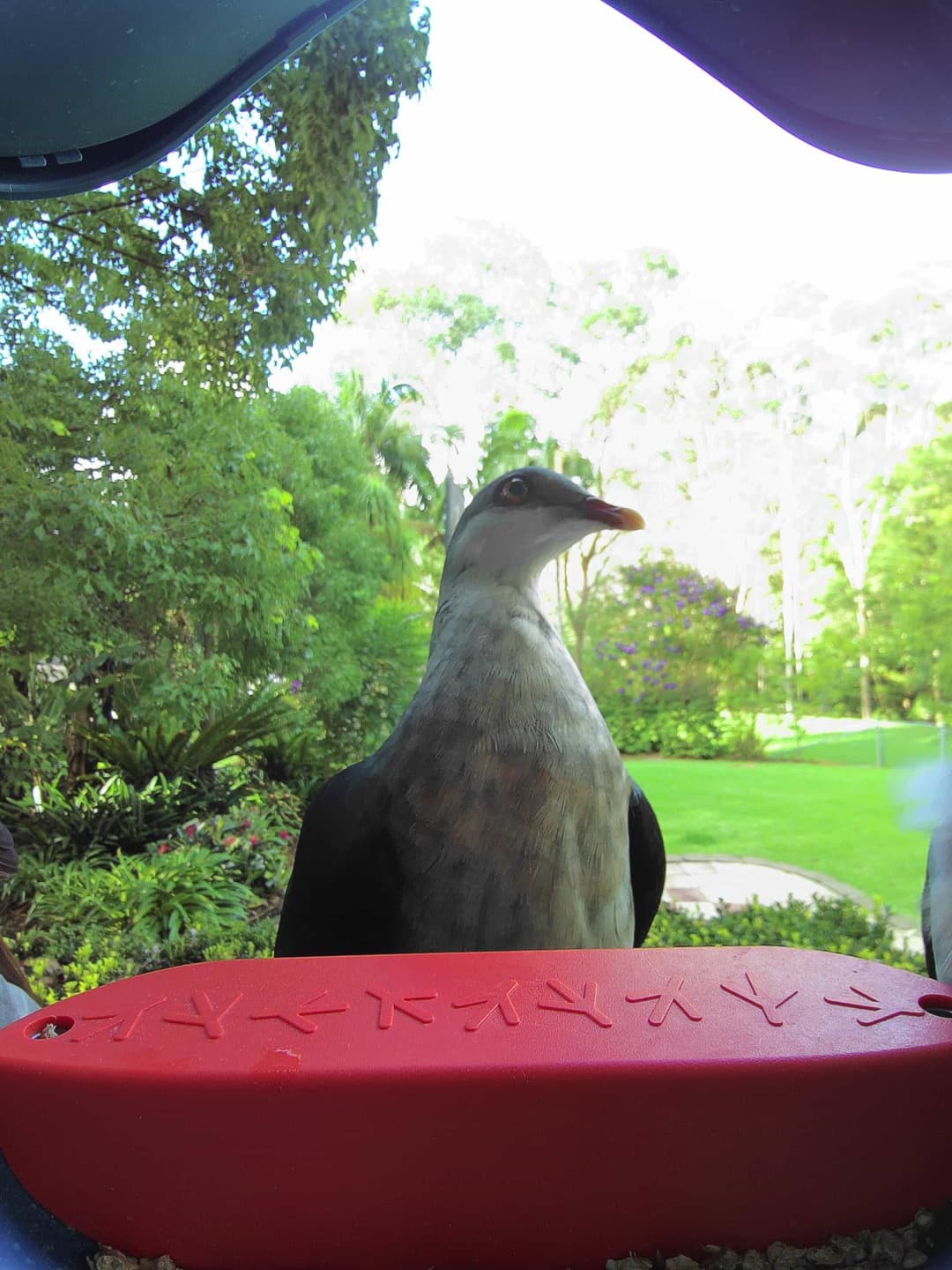
Whitehead


White-Headed Woodpecker
Whitehead
Mohoua albicilla
Also known as: Popokotea
General appearance
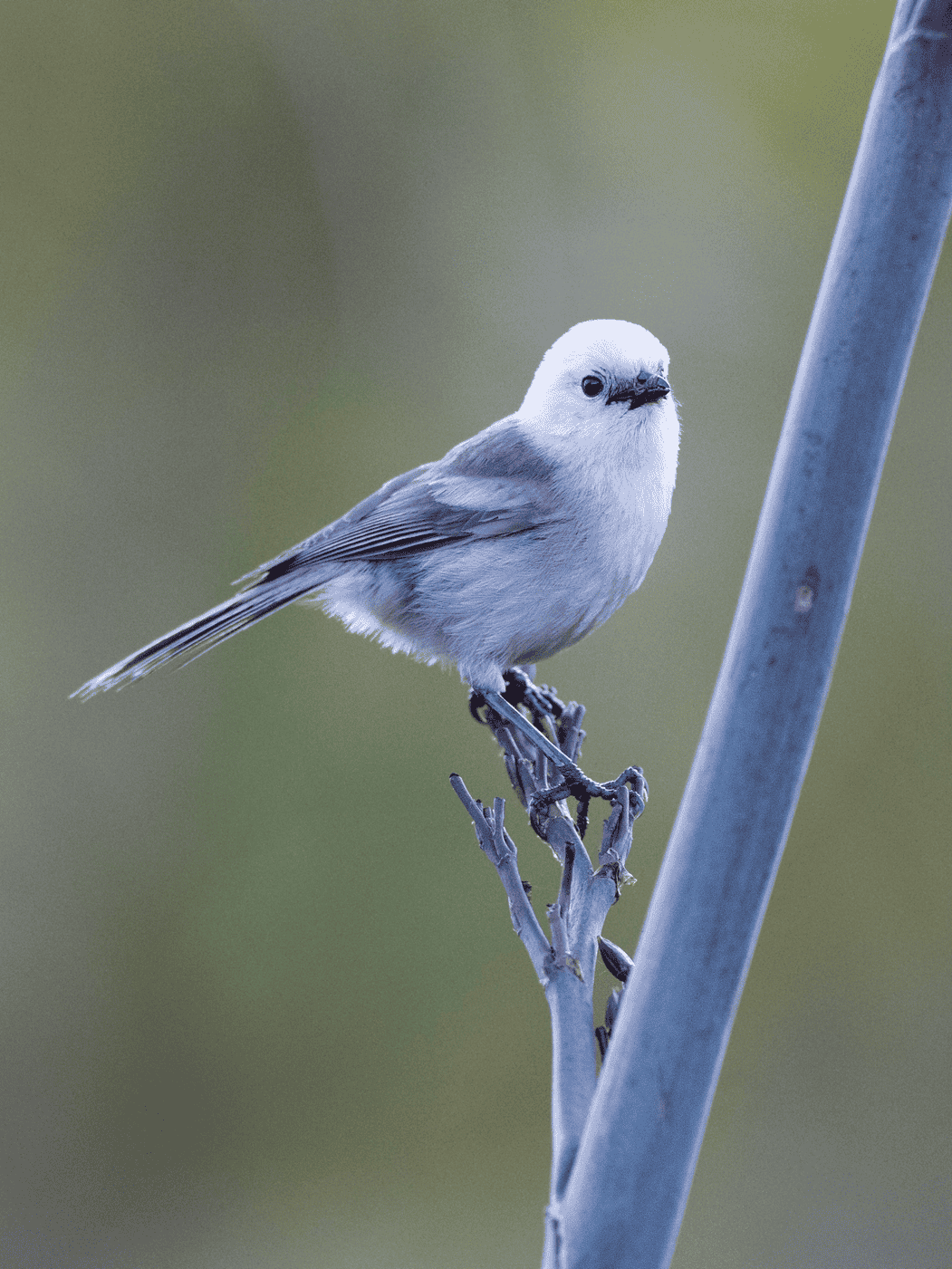
The Whitehead, also known as Mohoua albicilla, is a small songbird remarkably known for its distinct all-over snowy white plumage. Its body length is about between 5.9-6.3 inches and typically has wings that are edged in black. The bird has dark eyes and legs, with a slim, pointed dark-colored beak used for extracting insects from bark and foliage.
Male vs female
Males and females look similar with white plumage across their bodies, but males often have a brighter, more pure white coloration while females may have a slightly more off-white or creamy hue. Males also tend to slightly larger in size compared to females. Both sexes maintain their color year-round, with no significant seasonal variation.
Juvenile
Juvenile Whiteheads also show the characteristic white plumage, but this may be mottled with gray or buff, turning to complete white as they reach adulthood. Their beaks and the skin around their eyes could manifest slight shades of pink, which darken as the bird matures.
Size
5.5 - 6.3 in/0.5 - 0.6 oz
There's more to learn about Whitehead
View full detailsWhite-Headed Woodpecker
Leuconotopicus albolarvatus
General appearance
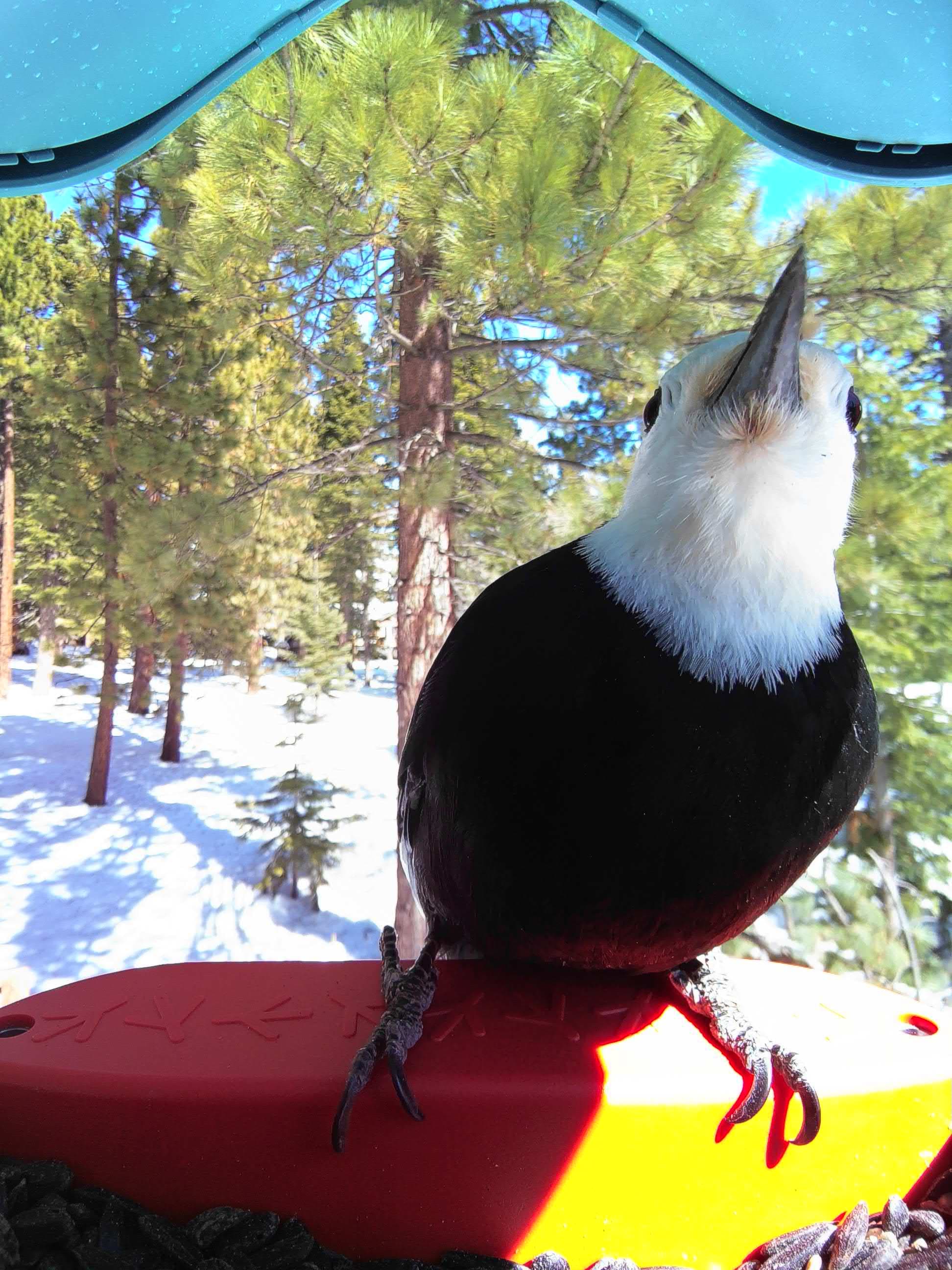
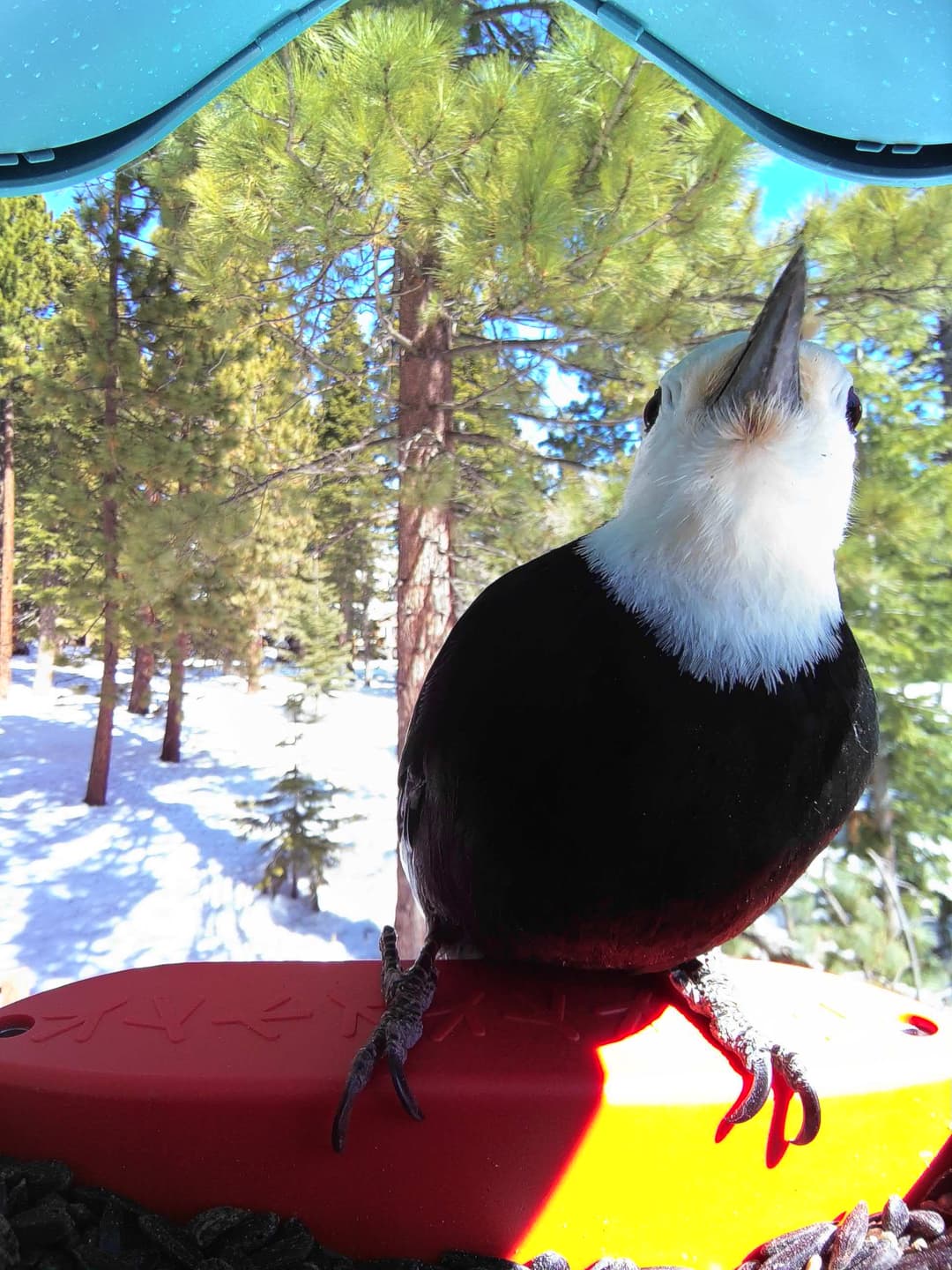
The white-headed woodpecker is a distinctive bird species known for its mostly black body and stark white head. Measuring approximately 8-9 inches long, they also feature bright white wing patches, and a sturdy, chisel-like bill perfect for drilling into wood. Overall, it's their contrasting monochromatic color profile that makes them easily identifiable.
Male vs female
Males and females of this species are generally similar in appearance. However, a key difference is that males feature a small, red patch or 'cap' on the back of their head. This is absent in females, making them a little less striking but equally as fascinating.
Juvenile
Juvenile white-headed woodpeckers do not greatly differ from adults in terms of their coloration. Both adolescents and adults have the same black and white coloration. However, their plumage is somewhat duller and lacks the sheen seen in mature birds. Interestingly, juvenile males already possess the red cap of the adults.
Size
8.3 - 9.1 in/1.9 - 2.4 oz
There's more to learn about White-Headed Woodpecker
View full detailsHow to tell the Whitehead from the White-Headed Woodpecker
Visual differences
The Whitehead (Mohoua albicilla) is a small songbird with all-white plumage, a slender beak, and measures about 5.9-6.3 inches long. In contrast, the White-Headed Woodpecker (Leuconotopicus albolarvatus) is larger, measuring 8-9 inches, with a stark white head, mostly black body, bright white wing patches, and a chisel-like beak. Males of the woodpecker species have a distinctive red cap, absent in females. Juvenile woodpeckers resemble adults but have duller feathers, while juvenile Whiteheads transition from mottled gray to white plumage.
Key differences and behavior
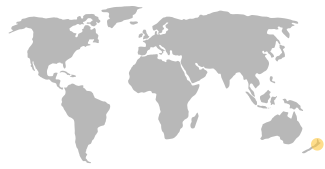
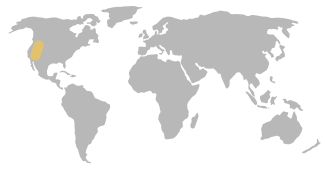
The whitehead and the white-headed woodpecker differ notably in behavior, habitat, and diet. Whiteheads are small songbirds native to New Zealand, foraging for insects in temperate forests and occasionally visiting bird feeders for suet and seeds. They engage in elaborate courtship displays and construct cup-shaped nests. In contrast, white-headed woodpeckers, found in North American pine forests, exhibit lifelong pair bonds reinforced through drumming and mutual preening. They predominantly feed on insects and pine seeds, using their chisel-like bills to access food. While whiteheads are impacted by cuckoo parasitism, woodpeckers excavate nest cavities in dead or decaying trees, jointly incubating their eggs. Both species share duties in chick feeding but differ significantly in habitat and dietary adaptations.
Still not sure? Here are more lookalikes!
Whitehead vs [Select a bird]

[Select a bird]
Pick a bird to compare
White-Headed Woodpecker vs [Select a bird]
[Select a bird]
Pick a bird to compare