Whitehead or White-Headed Pigeon?
Here's how to tell the difference

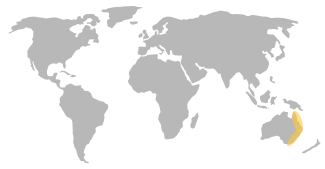

Whitehead


White-Headed Pigeon
Whitehead
Mohoua albicilla
Also known as: Popokotea
General appearance
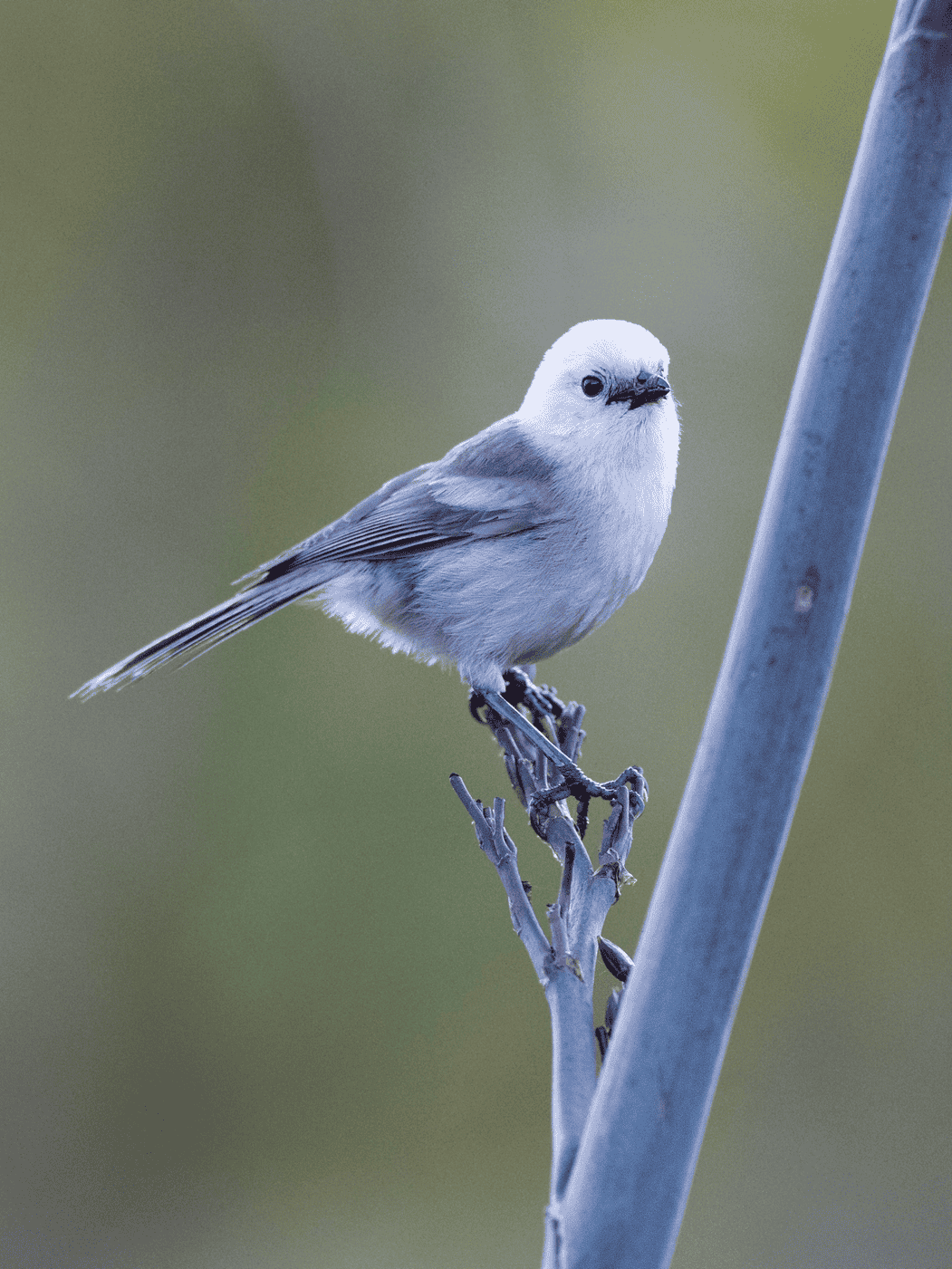
The Whitehead, also known as Mohoua albicilla, is a small songbird remarkably known for its distinct all-over snowy white plumage. Its body length is about between 5.9-6.3 inches and typically has wings that are edged in black. The bird has dark eyes and legs, with a slim, pointed dark-colored beak used for extracting insects from bark and foliage.
Male vs female
Males and females look similar with white plumage across their bodies, but males often have a brighter, more pure white coloration while females may have a slightly more off-white or creamy hue. Males also tend to slightly larger in size compared to females. Both sexes maintain their color year-round, with no significant seasonal variation.
Juvenile
Juvenile Whiteheads also show the characteristic white plumage, but this may be mottled with gray or buff, turning to complete white as they reach adulthood. Their beaks and the skin around their eyes could manifest slight shades of pink, which darken as the bird matures.
Size
5.5 - 6.3 in/0.5 - 0.6 oz
There's more to learn about Whitehead
View full detailsWhite-Headed Pigeon
Columba leucomela
General appearance
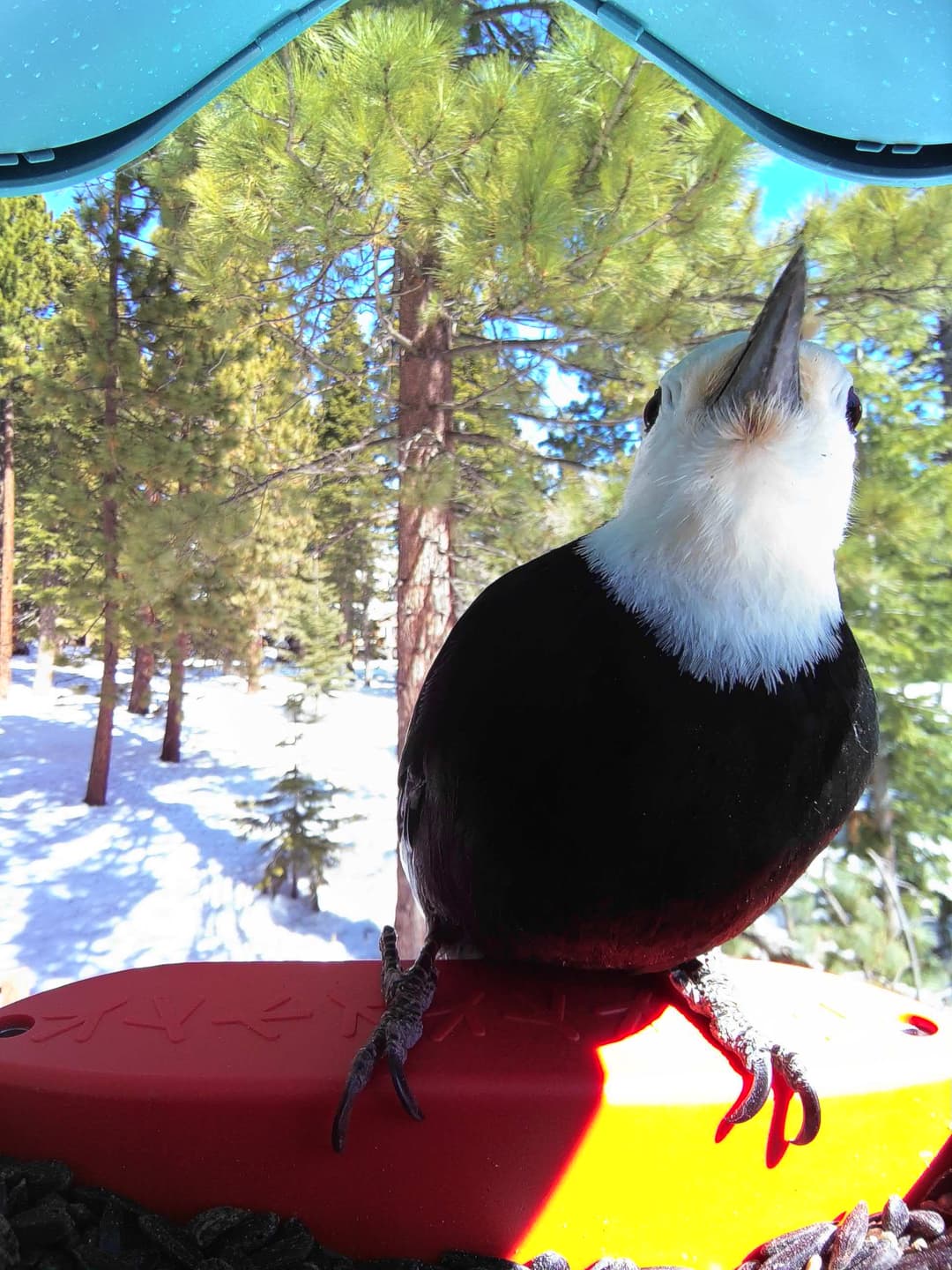
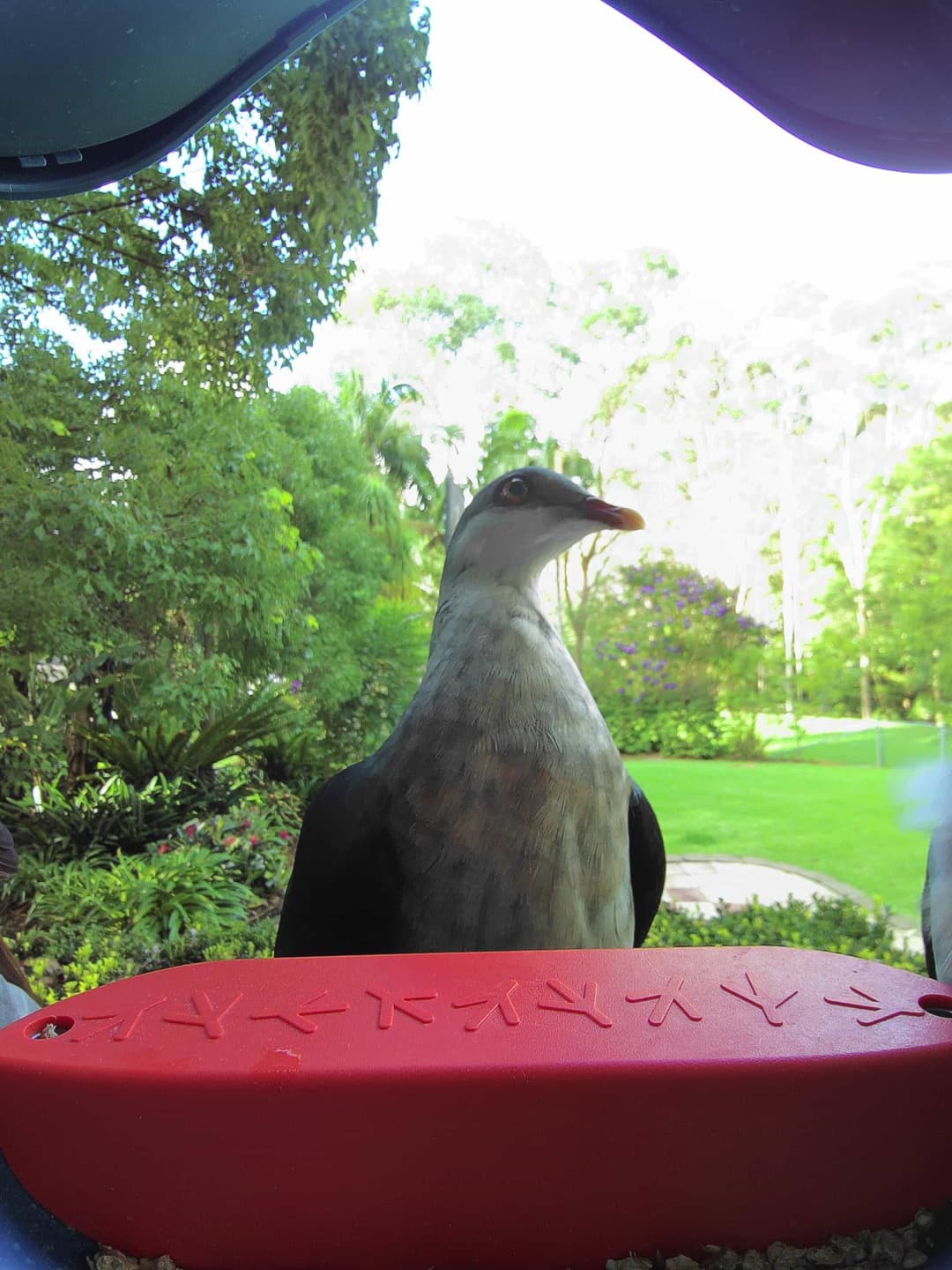
The White-Headed Pigeon is large, predominantly black, and named for its strikingly white head and breast. They usually measure between 38-41cm. A white line above the eye serves to heighten the contrast, while pale yellow feet and a dark gray beak provide additional distinctive touches. They are not known to have significant seasonal variations in appearance.
Male vs female
There are no significant differences between males and females in terms of size or coloration. Both sexes demonstrate the same striking contrast between the white head and breast and the black wing, tail, and belly feathers. This consistent look makes sexing based on physical characteristics difficult.
Juvenile
Juvenile White-Headed Pigeons differ from adults primarily in coloration. They are a dull gray-brown rather than black, with paler heads and breasts. Over time, this youthful coloration will darken and the head and breast will brighten to the distinctive white, signaling the transition to adulthood.
Size
15.0 - 16.1 in/13.1 - 17.6 oz
There's more to learn about White-Headed Pigeon
View full detailsHow to tell the Whitehead from the White-Headed Pigeon
Visual differences
The Whitehead is a small songbird, measuring 5.9-6.3 inches, with all-over snowy white plumage edged in black and a slim, dark beak. In contrast, the White-Headed Pigeon is significantly larger, at 15-16 inches, and features a predominantly black body with a strikingly white head and breast, a white line above the eye, pale yellow feet, and a dark gray beak. Juvenile White-Headed Pigeons display a dull gray-brown coloration, unlike the initially mottled juvenile Whiteheads.
Key differences and behavior
The Whitehead (5.5-6.3 inches, 0.5-0.6 ounces) and the White-Headed Pigeon (15-16 inches, 13-18 ounces) differ significantly in behavior and ecology. Whiteheads, endemic to New Zealand's temperate forests, primarily consume insects, supplementing with fruits and seeds. They display elaborate courtship behavior and both sexes participate in nesting and feeding. On the contrary, White-Headed Pigeons, native to Australia, prefer feeding on fruits and seeds of rainforests and can adapt to suburban areas. Their courtship includes cooing and head-bobbing, and they share incubation duties. Whiteheads are agile foragers within foliage, while White-Headed Pigeons forage in canopy and occasionally ground. Whiteheads utilize dense foliage for nest placement, while White-Headed Pigeons nest high in trees. Despite both being adept flyers, White-Headed Pigeons are more elusive and quiet than the social Whitehead.
Still not sure? Here are more lookalikes!
Whitehead vs [Select a bird]

[Select a bird]
Pick a bird to compare
White-Headed Pigeon vs [Select a bird]
[Select a bird]
Pick a bird to compare