
White-Headed Pigeon
White-Headed Pigeon
Columba leucomela


Quick Identification guide
Quick Identification guide
- •
Features a distinct white head contrasting sharply with its dark, slate grey body
- •
Displays a robust, streamlined build with a long tail that tapers to a point
- •
Possesses a short, dark bill that is slightly arched, complementing its sleek appearance
What does a white-headed pigeon sound like?
The white-headed pigeon is known for its distinct set of vocalizations, which mainly consist of cooing sounds similar to other pigeon species. It often produces a soft, repetitive "coo-coo" or "wooo-wooo" sound. Its song is a low, mournful "coooo-ooo," usually repeated several times in a sequence. This sound is accompanied by a resonating echo. Occasionally, it can make sharp alarm calls when feeling threatened or disturbed. Its call is frequently used to communicate with potential mates and signal its presence to rivals.


Description
White-headed pigeons build their nests high, high up in the canopy, sometimes as high as 60 feet! That's pretty brave, considering their nest is rather scanty, but they seem to do just fine. These beautiful birds are otherwise pretty quiet and elusive.
The white-headed pigeon can weigh between 370to500grams and be from38to41centimeters tall.
The white-headed pigeon typically lives to around 15 years. This is similar to the lifespan of many other pigeon species, such as the rock pigeon and the mourning dove, which have average lifespans of about 6-15 years. Unlike members of the parrot family, which can live to over 80 years, pigeons generally have more modest lifespans.
Did you know?
Most popular questions about white-headed pigeon
How to recognise a white-headed pigeon?
General appearance
The White-Headed Pigeon is large, predominantly black, and named for its strikingly white head and breast. They usually measure between 38-41cm. A white line above the eye serves to heighten the contrast, while pale yellow feet and a dark gray beak provide additional distinctive touches. They are not known to have significant seasonal variations in appearance.
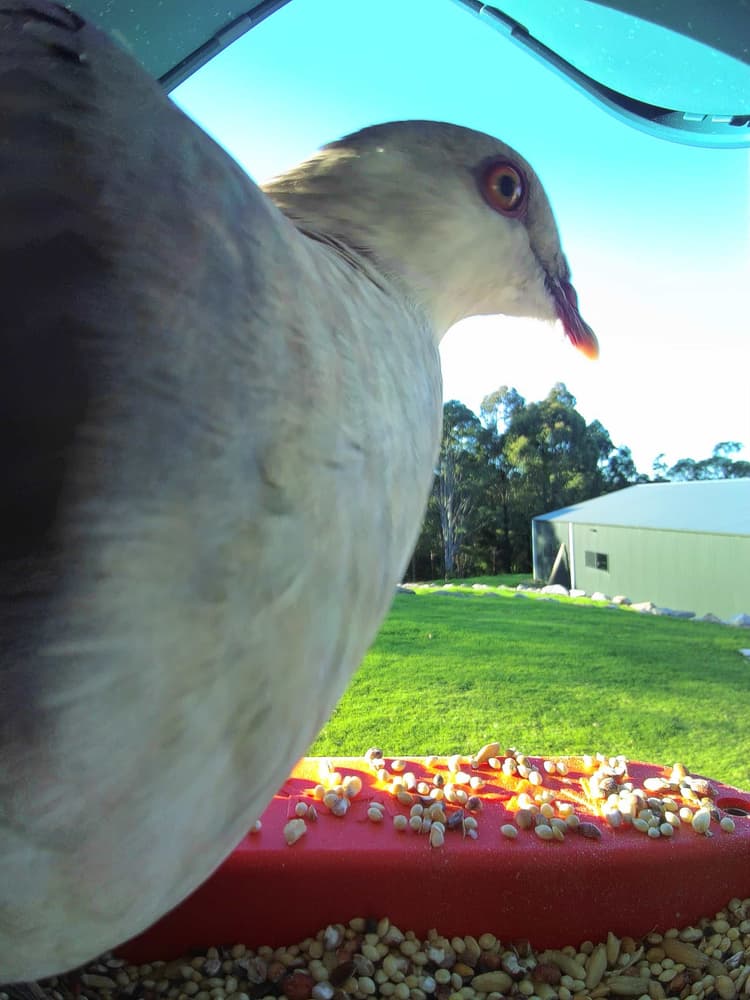
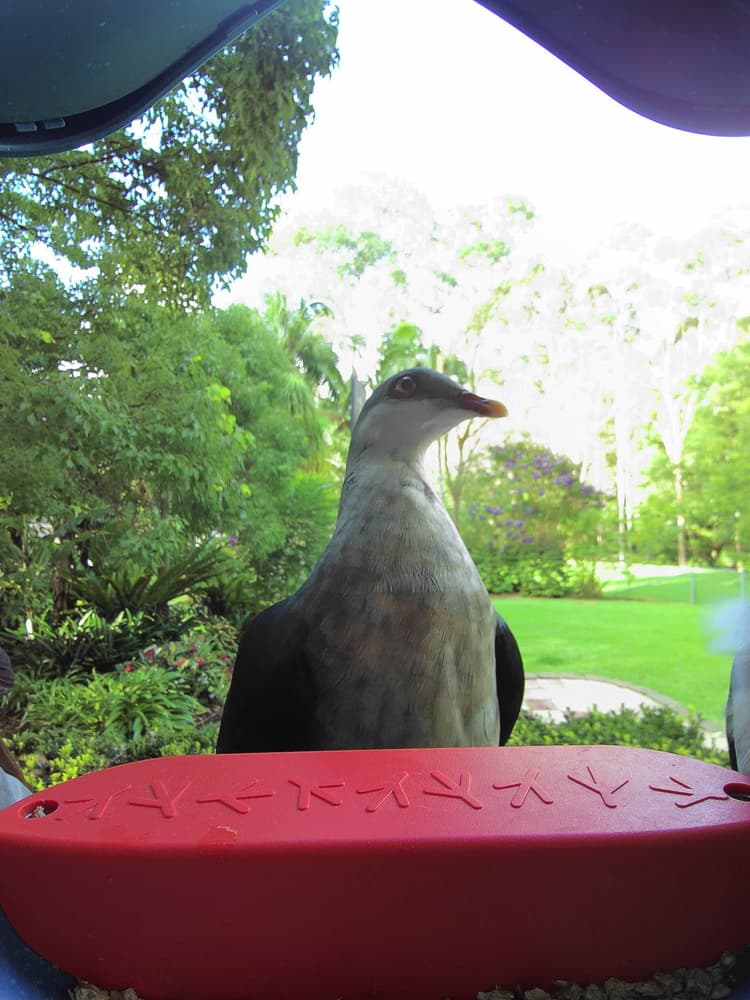
Male vs female
There are no significant differences between males and females in terms of size or coloration. Both sexes demonstrate the same striking contrast between the white head and breast and the black wing, tail, and belly feathers. This consistent look makes sexing based on physical characteristics difficult.
Juvenile
Juvenile White-Headed Pigeons differ from adults primarily in coloration. They are a dull gray-brown rather than black, with paler heads and breasts. Over time, this youthful coloration will darken and the head and breast will brighten to the distinctive white, signaling the transition to adulthood.
Breeding and nesting habits of the white-headed pigeon
Mating behaviors
White-headed pigeons exhibit courtship behaviors that include cooing and mutual preening. The male performs a series of head-bobbing displays to attract a mate, and pairs tend to form monogamous bonds.
Nesting details
These pigeons typically construct nests in tall trees using twigs and leaves. They prefer nesting platforms in dense foliage, often near water sources. In gardens, providing dense shrubbery and native trees can encourage nesting.
Eggs and chick-rearing
The species generally lays one to two eggs per clutch. Both parents share incubation duties over a period of about 18 days. After hatching, chicks are fed 'pigeon milk', a nutrient-rich secretion, and fledge within 3 to 4 weeks.
What does a white-headed pigeon like to eat?
Fruits
Seeds
Natural diet
The white-headed pigeon primarily feeds on a variety of fruits and seeds found in its natural habitat. These include native rainforest fruits, berries, figs, and palm fruits. It occasionally consumes insects and grubs, supplementing its diet with these protein sources. The pigeon forages in the tree canopy and sometimes on the ground for fallen fruits.
Bird feeders
While the white-headed pigeon primarily prefers its natural food sources, it can sometimes be attracted to bird feeders offering a mix of fruits, such as chopped apples, pears, and berries. It may also consume seeds like sunflower seeds and cracked corn if available, though these are not staple foods in its natural diet.
Attracting the white-headed pigeon
Attracting the white-headed pigeon to your yard or feeder can be a delightful experience. Make sure your feeder is in a quiet location, preferably with tree cover. As for snacks, these birds absolutely love fruits and seeds.
Best feed for white-headed pigeons
We recommend Bird Buddy seeds since they are handpicked by experts for the season. These seeds provide the right nutrition that caters to the needs of the white-headed pigeons, enticing them to visit more often.
Tricks to encourage visits
To make your yard more appealing, consider adding bird baths and nesting boxes. If you want to create a pigeon-approved concert, consider placing wind chimes or installing a gentle waterfall. The soothing sounds will draw them in, maybe even for a sing-along.
Where can you find white-headed pigeons?

Primary habitat
The white-headed pigeon is primarily found in Australia's eastern coast, preferring rainforests, eucalyptus woodlands, and coastal scrubs.
Additional range
This species can adapt to suburban environments where native food plants are available, and is seen in parts of New South Wales and Queensland.
Do they migrate?
The white-headed pigeon (Columba leucomela) is primarily a sedentary bird, meaning it tends to stay in one place year-round rather than migrate. These pigeons are native to the eastern regions of Australia, and their range extends from the northern parts of Queensland down to southern New South Wales. They are commonly found in rainforests, eucalypt woodlands, and areas with dense vegetation, where they breed and forage. Although generally not migratory, white-headed pigeons might engage in local movements in response to food availability, particularly when fruit is scarce. They primarily feed on fruits from both native and introduced plant species, which influences their movement patterns to some extent. These movements are more of dispersion for food rather than traditional migration. In summary, while the white-headed pigeon does not undertake large-scale migrations, it may exhibit local dispersal depending on environmental conditions and food resources. Such movements are typically confined within their established range in eastern Australia.
What is the role of white-headed pigeons in nature and how to protect them?
Conservation status
The white-headed pigeon is classified as "Least Concern" by the IUCN, indicating it is relatively common and not currently at significant risk of extinction. It is found primarily in eastern Australia, where it inhabits rainforests and dense woodlands. Key conservation efforts include preserving its natural habitat and controlling invasive species that threaten its environment. Major threats to the white-headed pigeon include habitat loss due to land clearing for agriculture and urban development. Conservation measures focus on maintaining healthy forest ecosystems to support its population.
Ecological role of white-headed pigeons
Its role in the ecosystem
The white-headed pigeon plays a significant ecological role in seed dispersal. It feeds on a variety of fruits from both native and introduced tree species. When the pigeon travels, it excretes the seeds in different locations, helping to spread these diverse plant species across its habitat, which facilitates in the growth of lush vegetation. This contributes to the diversity and health of the ecosystem by creating the conditions necessary for various animal species to live and thrive. The pigeon also plays a modest but important role in the control of certain pests, such as insects and worms that it eats as part of its diet. By limiting the number of these pests, it reduces their potential to damage local plants and vegetation. Overall, the white-headed pigeon has a positive impact on its ecosystem.
How to help protect white-headed pigeons
Preservation tips
Habitat preservation strategies
To support the conservation of the white-headed pigeon, protect and restore their native habitats. These pigeons inhabit rainforests and wet sclerophyll forests. Avoid deforestation and land clearing in these areas, and implement reforestation initiatives with native flora. Maintain a strict 'no hunting' policy in these regions to ensure the safety of these birds.
Community science initiatives
Engagement in community science projects can also aid in the conservation of the white-headed pigeon. Involve local communities and schools in bird monitoring initiatives. Educate the public about the importance of these species, their habitats, and threats they face. Report sightings to local wildlife agencies or upload them in citizen science platforms, which can help scientists track pigeon populations and plan conservation strategies.