Satin Bowerbird or Western Bowerbird?
Here's how to tell the difference
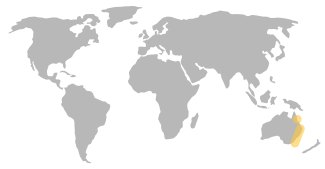



Satin Bowerbird

Western Bowerbird
Satin Bowerbird
Ptilonorhynchus violaceus
General appearance
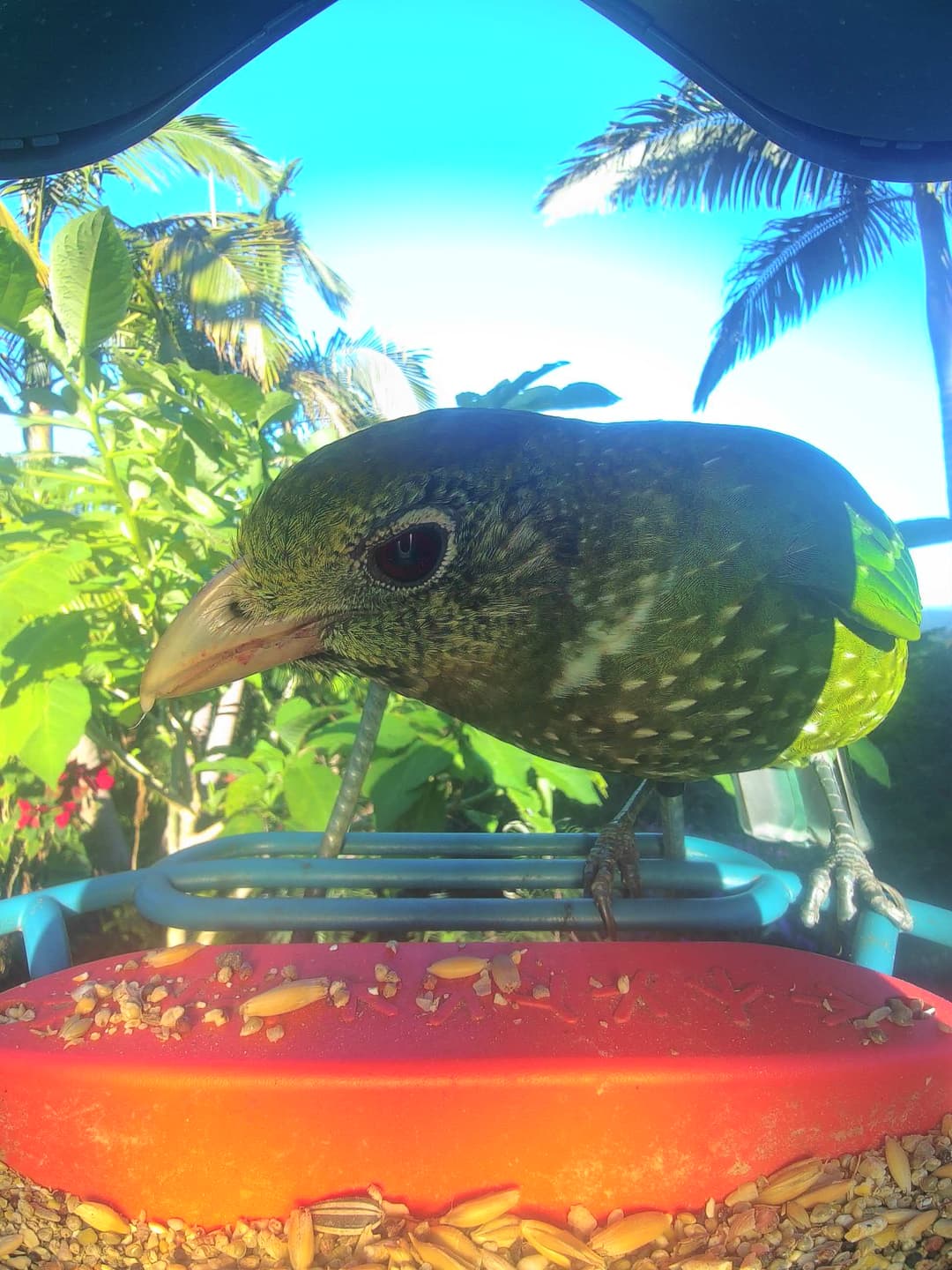
The satin bowerbird, scientifically named Ptilonorhynchus violaceus, exhibits sexual dimorphism, which means males and females look different. This medium-sized bird has a length of 25-35cm, typically having striking violet-blue eyes and thin pinkish bills.
Male vs female
Males are touted for their stunning uniform deep satin blue-black coloration, while females and juveniles are more camouflaged with an olive-green color, spotted and streaked with buff or whitish color. Females have brown or green eyes instead of the characteristic blue of the males. In the breeding season, males build intricate and peculiar 'bowers' decorated with shiny treasures, primarily blue in color, to entice females.
Juvenile
Juvenile satin bowerbirds bear a resemblance to adult females, maintaining an olive-green plumage which gradually darkens as they mature over several years. Young males will only gain their iridescent adult male plumage at around seven years of age, before which they may be mistaken for a female.
Size
12.6 - 13.0 in/6.0 - 10.2 oz
There's more to learn about Satin Bowerbird
View full detailsWestern Bowerbird
Chlamydera guttata
General appearance
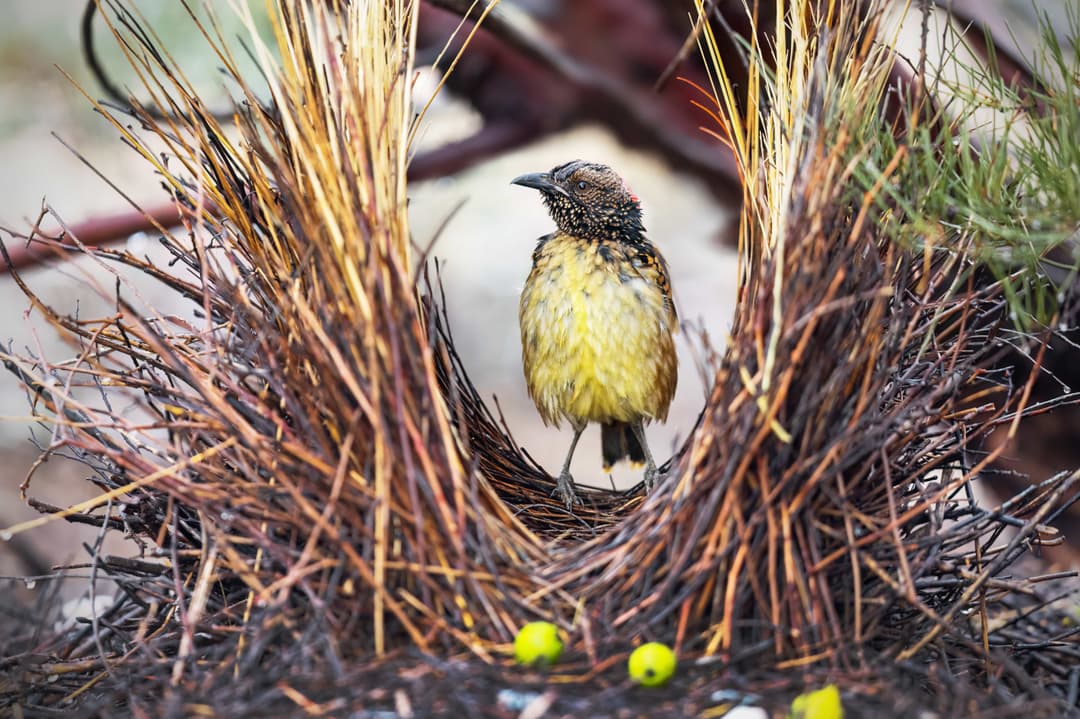
The western bowerbird is roughly 35 centimeters long and is primarily brownish-grey in color. Its most distinguishing feature is unquestionably its vibrant pink crest which it can raise at will. Other notable features include greenish-yellow bill and legs, and dark brown wings and tail.
Male vs female
Males and females of the species are generally similar, but males are larger in size. Males also have a violet-blue patch on the back of their neck, which is not seen in females. Additionally, males boast a vivid pink crest, used in mating displays, which females lack. Males’ overall coloration may also appear more vibrant.
Juvenile
Juvenile western bowerbirds have duller coloration than adults, with more brown and less pink on their crests. They also lack the violet-blue patch seen in mature males, making them appear more similar to females until they reach maturity. Juveniles grow adult-like plumage after their first year.
Size
9.4 - 11.0 in/4.3 - 5.2 oz
There's more to learn about Western Bowerbird
View full detailsHow to tell the Satin Bowerbird from the Western Bowerbird
Visual differences
The Satin Bowerbird (Ptilonorhynchus violaceus) and Western Bowerbird (Chlamydera guttata) can be distinguished visually as follows: Satin males exhibit a striking satin blue-black plumage with violet-blue eyes and a thin pinkish bill, whereas Western males have a brown-grey body with a vibrant pink crest, a violet-blue neck patch, and greenish-yellow bill. Females and juveniles of both species are more camouflaged, but Western Bowerbirds lack the distinct blue coloration. Satin males measure approximately 12.6-13 inches, slightly larger than Western males at 9.4-11 inches.
Key differences and behavior
Satin Bowerbirds (Ptilonorhynchus violaceus) and Western Bowerbirds (Chlamydera guttata) both engage in elaborate courtship with distinct environmental preferences. Satin Bowerbirds, native to the rainforests of eastern Australia, often inhabit urban parks as well. They build intricate bowers using blue objects and rely largely on fruits, complemented by insects and seeds. Western Bowerbirds, however, prefer the arid bushlands of Western Australia, constructing bowers decorated with diverse objects, including man-made items. Diet-wise, both species are fruit-centric, yet Western Bowerbirds adapt to seeds and suet when necessary. In mating, both species see males constructing bowers and performing displays, though Satin Bowerbirds prioritize blue objects, while Western Bowerbirds embrace creativity with available materials. In child-rearing, females in both species solely incubate and feed the chicks until fledging.
Still not sure? Here are more lookalikes!
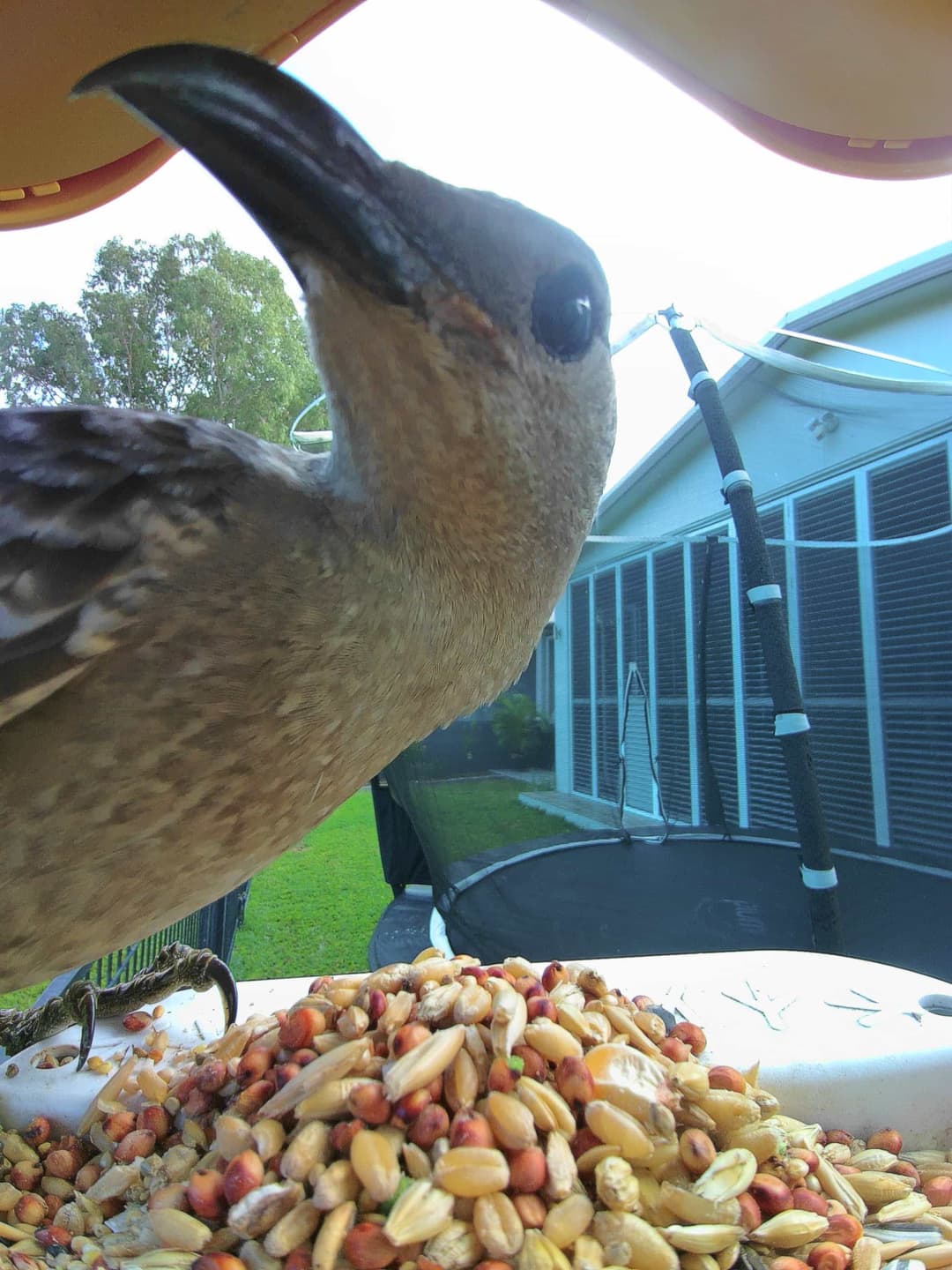
Satin Bowerbird vs [Select a bird]

[Select a bird]
Pick a bird to compare
Western Bowerbird vs [Select a bird]
[Select a bird]
Pick a bird to compare