Satin Bowerbird or Great Bowerbird?
Here's how to tell the difference
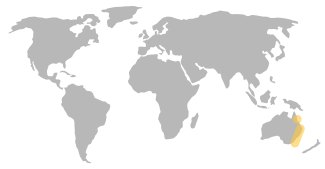


Satin Bowerbird


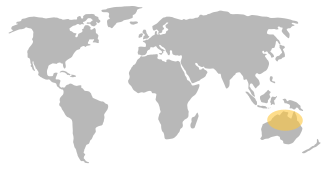
Great Bowerbird
Satin Bowerbird
Ptilonorhynchus violaceus
General appearance
The satin bowerbird, scientifically named Ptilonorhynchus violaceus, exhibits sexual dimorphism, which means males and females look different. This medium-sized bird has a length of 25-35cm, typically having striking violet-blue eyes and thin pinkish bills.
Male vs female
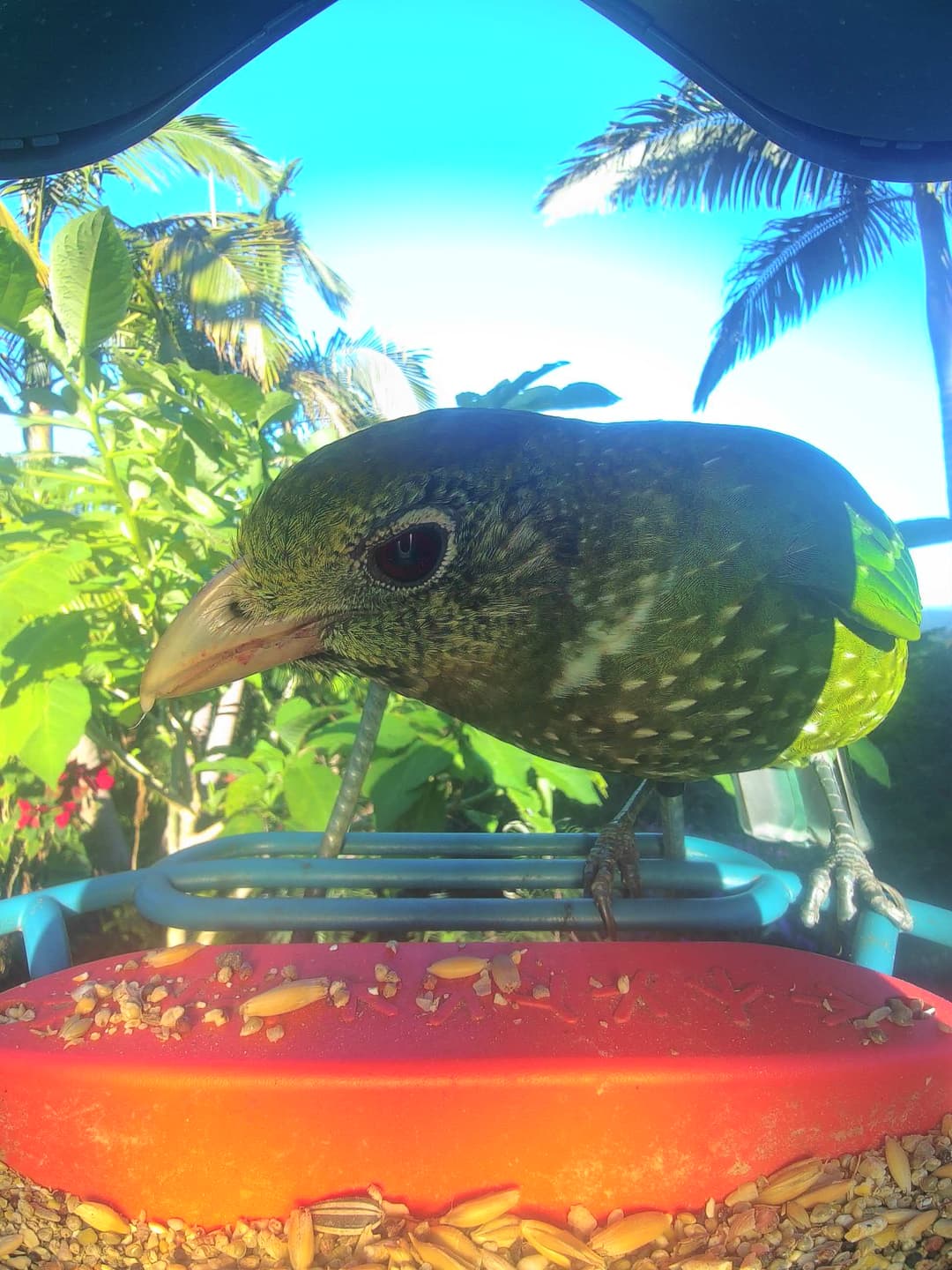
Males are touted for their stunning uniform deep satin blue-black coloration, while females and juveniles are more camouflaged with an olive-green color, spotted and streaked with buff or whitish color. Females have brown or green eyes instead of the characteristic blue of the males. In the breeding season, males build intricate and peculiar 'bowers' decorated with shiny treasures, primarily blue in color, to entice females.
Juvenile
Juvenile satin bowerbirds bear a resemblance to adult females, maintaining an olive-green plumage which gradually darkens as they mature over several years. Young males will only gain their iridescent adult male plumage at around seven years of age, before which they may be mistaken for a female.
Size
12.6 - 13.0 in/6.0 - 10.2 oz
There's more to learn about Satin Bowerbird
View full detailsGreat Bowerbird
Chlamydera nuchalis
General appearance
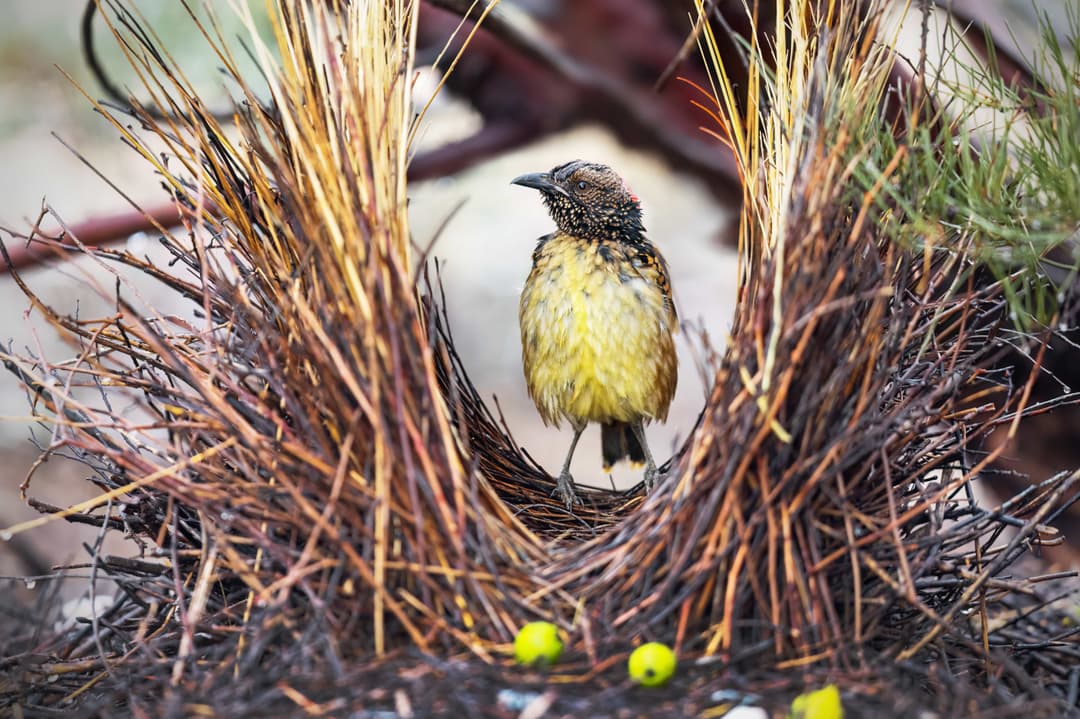
The Great Bowerbird is a large bowerbird characterized by its pale grey body and brown wings, with a wingspan of about 58-66 cm. Its most distinct feature is its pinkish-purple crest visible only when it's excited or distressed. It has striking bright pinkish-purple eyes. They are known for their architectural prowess, creating elaborate structures or 'bowers' using twigs, leaves, and stones to attract potential mates.
Male vs female
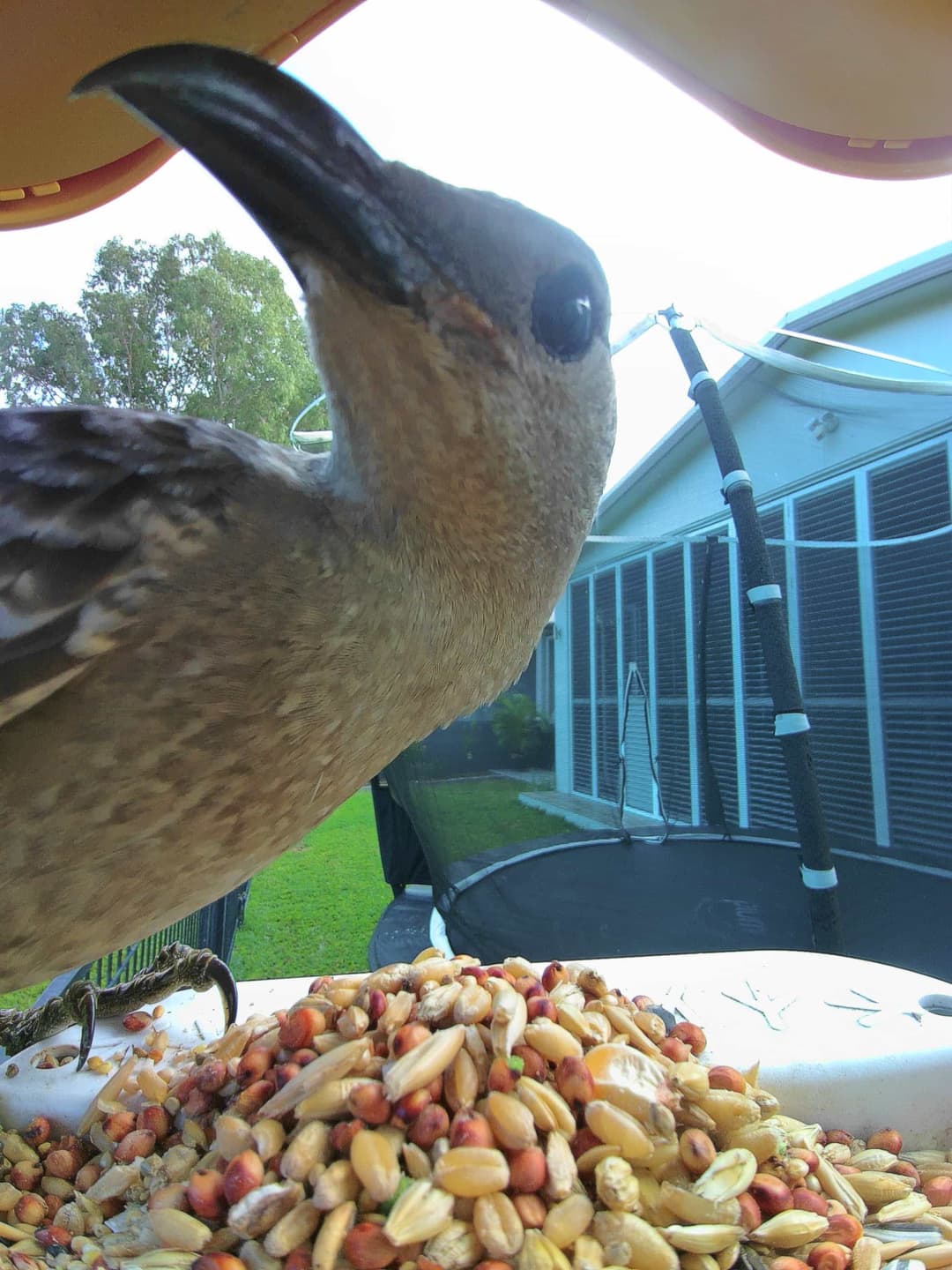
Males and females have a similar physical appearance, making it challenging to distinguish between the two based on plumage alone. However, males are generally larger and have a broader, thicker beak than females. What sets them apart is their behaviour; males are renowned for their elaborate bowers decorated with colourful objects to attract females.
Juvenile
Juvenile Great Bowerbirds resemble the adults, but their plumage is duller. Unlike adults, they lack the distinctive pinkish-purple eyes, instead having brown ones. They also lack the pinkish-purple crest and their beak is paler. As they mature, their plumage brightens, the eyes change colour, and they develop the adult's distinct crest.
Size
13.4 - 14.2 in/5.4 - 9.3 oz
There's more to learn about Great Bowerbird
View full detailsHow to tell the Satin Bowerbird from the Great Bowerbird
Visual differences
The Satin Bowerbird (10-13 inches) displays striking sexual dimorphism: males have deep satin blue-black plumage with violet-blue eyes and thin pinkish bills, while females and juveniles are olive-green with brown or green eyes. The Great Bowerbird, slightly larger at 13-14 inches, is pale gray with brown wings and a distinct pinkish-purple crest visible when excited. It features a thicker beak and pinkish-purple eyes for adults. While both build elaborate bowers, the Great Bowerbird resembles its female counterpart more closely, with duller juvenile plumage and paler beak.
Key differences and behavior
The Satin Bowerbird and Great Bowerbird exhibit distinct behaviors and habitats. Satin Bowerbirds, native to Australian rainforests, create complex bowers decorated mainly in blue to attract females, while Great Bowerbirds, found in northern Australian woodlands and urban areas, use a wider array of colors in their bowers. Courtship for both involves intricate dances at these structures, but Satin Bowerbirds focus on blue objects, reflecting their own plumage. In diet, both consume fruits and insects, but Great Bowerbirds include seeds more frequently, adapting well to urban feeders. Females of both species raise chicks alone; Satin females nest high in trees, contrasting with the Great's simpler ground nests in forks. This nesting preference aligns with habitat adaptation, enhancing their urban integration.
Still not sure? Here are more lookalikes!
Satin Bowerbird vs [Select a bird]

[Select a bird]
Pick a bird to compare
Great Bowerbird vs [Select a bird]
[Select a bird]
Pick a bird to compare