
Great Bowerbird
Great Bowerbird
Chlamydera nuchalis

Quick Identification guide
Quick Identification guide
- •
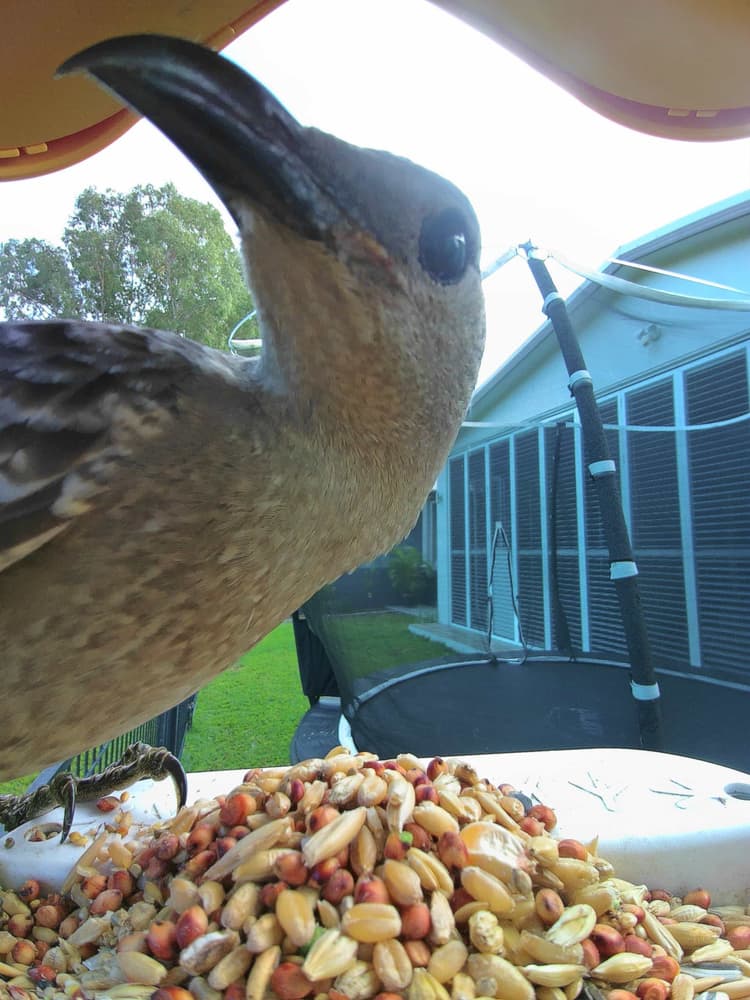
The Great Bowerbird is primarily grey-brown with a subtle pinkish tone on its nape, visible in good light
- •
It features a long, straight, slightly chunky beak, ideal for holding objects and building
- •
Notice its slender body with a relatively long tail, making it appear elongated compared to other bowerbirds
What does a great bowerbird sound like?
The great bowerbird is renowned for its complex and diverse vocal repertoire. Their communication calls are unusually harsh and grating, featuring sharp churrs and hisses. They display acoustic complexity and varied tones in their singing, involving mimicked sounds of other birds, humans, and even inanimate objects. Additionally, they also perform clicking sounds during mating rituals. Altogether, these vocalizations form a crucial part of their extensive courtship displays and establishment of territories.

Description
Did you know the majority of male great bowerbirds' time is spent tending to their bower? They are incredibly impressive, both in their build and in the creativity of decorative items! They are the largest of the bowerbirds, and maintain their bowers year after year. When they no longer can, they pass it on to another male: the oldest bower on record had been in existence for 70 years!
The great bowerbird can weigh between 153to265grams and be from34to36centimeters tall.
The Great Bowerbird typically lives up to 5 to 7 years in the wild, though in protected or captive settings, this can increase to 15-20 years. In comparison, other bowerbird species like the Satin Bowerbird have similar lifespans. These birds, native to Australia, have shorter lifespans in the wild due to factors such as predation and harsh environmental conditions.
Did you know?
Most popular questions about great bowerbird
How to recognise a great bowerbird?
General appearance
The Great Bowerbird is a large bowerbird characterized by its pale grey body and brown wings, with a wingspan of about 58-66 cm. Its most distinct feature is its pinkish-purple crest visible only when it's excited or distressed. It has striking bright pinkish-purple eyes. They are known for their architectural prowess, creating elaborate structures or 'bowers' using twigs, leaves, and stones to attract potential mates.
Male vs female
Males and females have a similar physical appearance, making it challenging to distinguish between the two based on plumage alone. However, males are generally larger and have a broader, thicker beak than females. What sets them apart is their behaviour; males are renowned for their elaborate bowers decorated with colourful objects to attract females.
Juvenile
Juvenile Great Bowerbirds resemble the adults, but their plumage is duller. Unlike adults, they lack the distinctive pinkish-purple eyes, instead having brown ones. They also lack the pinkish-purple crest and their beak is paler. As they mature, their plumage brightens, the eyes change colour, and they develop the adult's distinct crest.
Breeding and nesting habits of the great bowerbird
Mating behaviors
Great bowerbirds engage in elaborate courtship displays, where males build structures called bowers adorned with shells, stones, and other objects to attract females. Males perform intricate dances in and around these bowers to entice potential mates.
Nesting details
Unlike the bower, the actual nest is a simple, shallow dish of twigs and leaves, often found in a tree fork. Materials such as grass, leaves, and small twigs are commonly used. Great bowerbirds may nest in various locations, including rural gardens if suitable trees are available.
Eggs and chick-rearing
Females lay 1-2 eggs, incubating them alone. Once hatched, the chicks are tended solely by the female, who feeds them insects and fruits. To encourage nesting in gardens, plant native trees and shrubs to provide cover and food sources for the birds.
What does a great bowerbird like to eat?
Flowers
Fruits
Insects
Nectar
Plants
Scraps
Seeds
Natural diet
The great bowerbird primarily feeds on a variety of fruits, seeds, and small insects. It is known to consume berries and fruits from various native plants, such as figs and native cherry. Insects, particularly beetles and caterpillars, form an important part of its diet, providing essential protein.
Bird feeders
At bird feeders, the great bowerbird is often attracted to offerings of seeds, including sunflower seeds and cracked corn. They may also consume suet and other high-energy foods found in backyard feeders. Their adaptability allows them to take advantage of various artificial food sources provided by humans.
Feeder types and setup
To attract the great bowerbird, consider setting up open-platform feeders close to clumps of trees or shrubs. They also favor quite low feeders, about a meter off the ground, in well-lit locations. A birdbath or other water source nearby can also be a great attractant.
Preferred bowerbird snacks
Fill your feeders with Bird Buddy seeds - these are chosen by experts for the season and are known to be highly desirable to great bowerbirds. These birds also enjoy a variety of fruits, especially figs and berries. Providing a selection will increase your chances of a visit.
Tricks to encourage visits
Positioning shiny or brightly colored objects near your feeders could attract these curious birds since they love to collect such items for their bowers. Gentle background music might also draw them in for a sing-along, especially if the sounds resemble their complex calls and songs.
Creating a bowerbird-friendly environment
Ensure your yard is inviting and safe for the great bowerbird. Maintain a pesticide-free environment, offer ample shelter with native plants, and keep pets indoors or monitored to prevent them from harassing or harming the birds.
Where can you find great bowerbirds?

Primary habitat
The great bowerbird predominantly occupies northern Australia, thriving in different environments including woodlands, forests, mangroves, and gardens.
Additional range
Though mainly found in warm climates, the great bowerbird notably adapts to human-made environments like city parks and gardens.
Do they migrate?
The great bowerbird is a non-migratory bird, meaning it typically stays in one place throughout the year. It is native to northern Australia, where it inhabits a wide range of environments, such as savannas, open woodlands, and forest edges. These birds are known for their sedentary behavior, maintaining a certain territory year-round, especially males that stay near their bowers during the breeding season to attract mates. Great bowerbirds are known for their elaborate courtship displays, where males construct intricate structures called bowers, which are decorated with various objects like stones, shells, and man-made items. This territorial behavior further supports their non-migratory status, as males invest significant effort in maintaining and defending their bowers. Overall, the great bowerbird does not engage in seasonal migration, remaining in its established habitat throughout the year. This behavior ensures a stable environment for the bowerbirds to carry out their unique breeding rituals and maintain their social structures.
What is the role of great bowerbirds in nature and how to protect them?
Conservation status
The great bowerbird is currently listed as "Least Concern" on the IUCN Red List, indicating it is relatively common and not at immediate risk of extinction. The species inhabits northern Australia and is not facing significant threats that could lead to a rapid decline. Key habitats are relatively stable, and there are no major conservation actions targeting this bird specifically. However, habitat loss due to land development and climate change could potentially impact populations in the future. Nonetheless, its adaptability to altered environments currently supports its status as a species of least concern.
Ecological role of great bowerbirds
Its role in the ecosystem
The Great Bowerbird (Chlamydera nuchalis) contributes significantly to its ecosystem through various means. As omnivores, they play a vital role in controlling pests. They feed on a variety of insects, which helps to naturally minimize the population of these pests. Additionally, they also consume fruits and disperse the seeds in their droppings, helping to spread plant species they feed on. This contributes to plant propagation, promoting biodiversity in the region. Furthermore, the elaborate bowers, or nests, they build not only serve for courtship rituals but also provide shelter for other animals, enhancing the ecosystem's overall richness. Therefore, the great bowerbird is a critical participant in maintaining ecological balance in its habitat.
How to help protect great bowerbirds
Preservation tips
Habitat preservation strategies
Ensure great bowerbirds' habitats are protected from destruction by promoting legislation against deforestation and land degradation. Support sustainable practices that minimize impacts on their habitats, such as controlled logging and responsible farming. Encourage the establishment of protected areas and nature reserves where these birds can thrive without interference. Preserve native fruiting trees, flowering plants, and insect populations as they serve as main food sources for the bowerbirds.
Community science initiatives
Develop community science initiatives such as biodiversity surveys or citizen science programs to track the populations of great bowerbirds. Educate the community on the importance of bowerbirds in the ecosystem to cultivate support and involvement. Implement community-based conservation initiatives where locals actively take part in protecting these birds. This can include habitat cleaning, tree planting, and lobbying for policies favoring conservation. Community awareness and involvement are key to sustainable conservation efforts.