
Satin Bowerbird
Satin Bowerbird
Ptilonorhynchus violaceus


Quick Identification guide
Quick Identification guide
- •
Males display an iridescent dark blue plumage that can appear black in certain lights, while females and juveniles boast a dappled green-brown coloration
- •
Both genders have a strong, conical beak that is pale in color, ideal for handling various food items
- •
Males may present with a distinctive bright violet eye, contrasting sharply with their darker feathers
What does a satin bowerbird sound like?
Satin Bowerbirds have a complex array of vocalizations, including a distinct shrill whistle, a loud, high-pitched 'weeoo', and softer chattering. During courtship, males use mimicry, combining traditional Bowerbird calls with imitations of other bird species, even human-made noises. Their singing is mostly simple notes, repeated in varying patterns. Each male develops a unique song that they can adjust depending on the audience, ranging from melancholic tone to aggressive chatter.


Description
Satin bowerbirds' colour is blue. It is the colour males use to decorate their bowers and, in truth, it does accentuate their plumage wonderfully! Known for their very complex courtship behaviour, these guys build a bower that can be comprised of over 2,000 sticks. And get this: the same bower site can be in use for up to 30 years!
The satin bowerbird can weigh between 170to290grams and be from32to33centimeters tall.
The satin bowerbird typically lives for up to 25-30 years. This is a significant lifespan compared to other close relatives; the Australian magpie lives up to 25 years, whereas the white-winged chough tends to live up to 20 years. This longevity in satin bowerbirds could be attributed to their diet and native habitat conditions.
Did you know?
Most popular questions about satin bowerbird
How to recognise a satin bowerbird?
General appearance
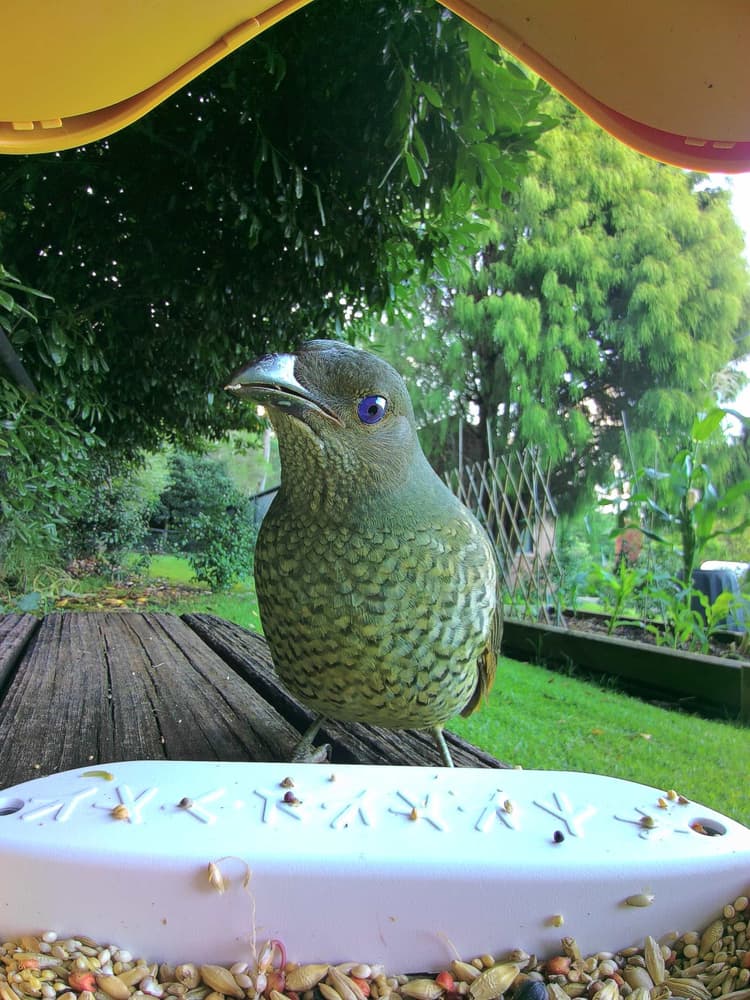
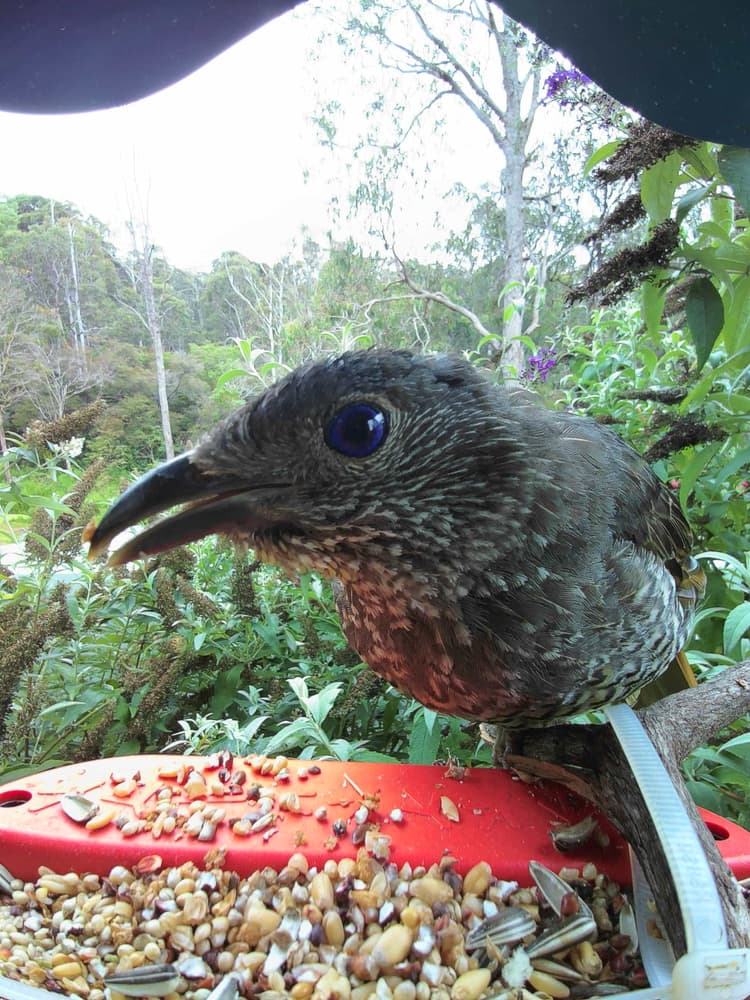
The satin bowerbird, scientifically named Ptilonorhynchus violaceus, exhibits sexual dimorphism, which means males and females look different. This medium-sized bird has a length of 25-35cm, typically having striking violet-blue eyes and thin pinkish bills.
Male vs female
Males are touted for their stunning uniform deep satin blue-black coloration, while females and juveniles are more camouflaged with an olive-green color, spotted and streaked with buff or whitish color. Females have brown or green eyes instead of the characteristic blue of the males. In the breeding season, males build intricate and peculiar 'bowers' decorated with shiny treasures, primarily blue in color, to entice females.
Juvenile
Juvenile satin bowerbirds bear a resemblance to adult females, maintaining an olive-green plumage which gradually darkens as they mature over several years. Young males will only gain their iridescent adult male plumage at around seven years of age, before which they may be mistaken for a female.
Often mistaken for
Great Bowerbird vs Satin Bowerbird
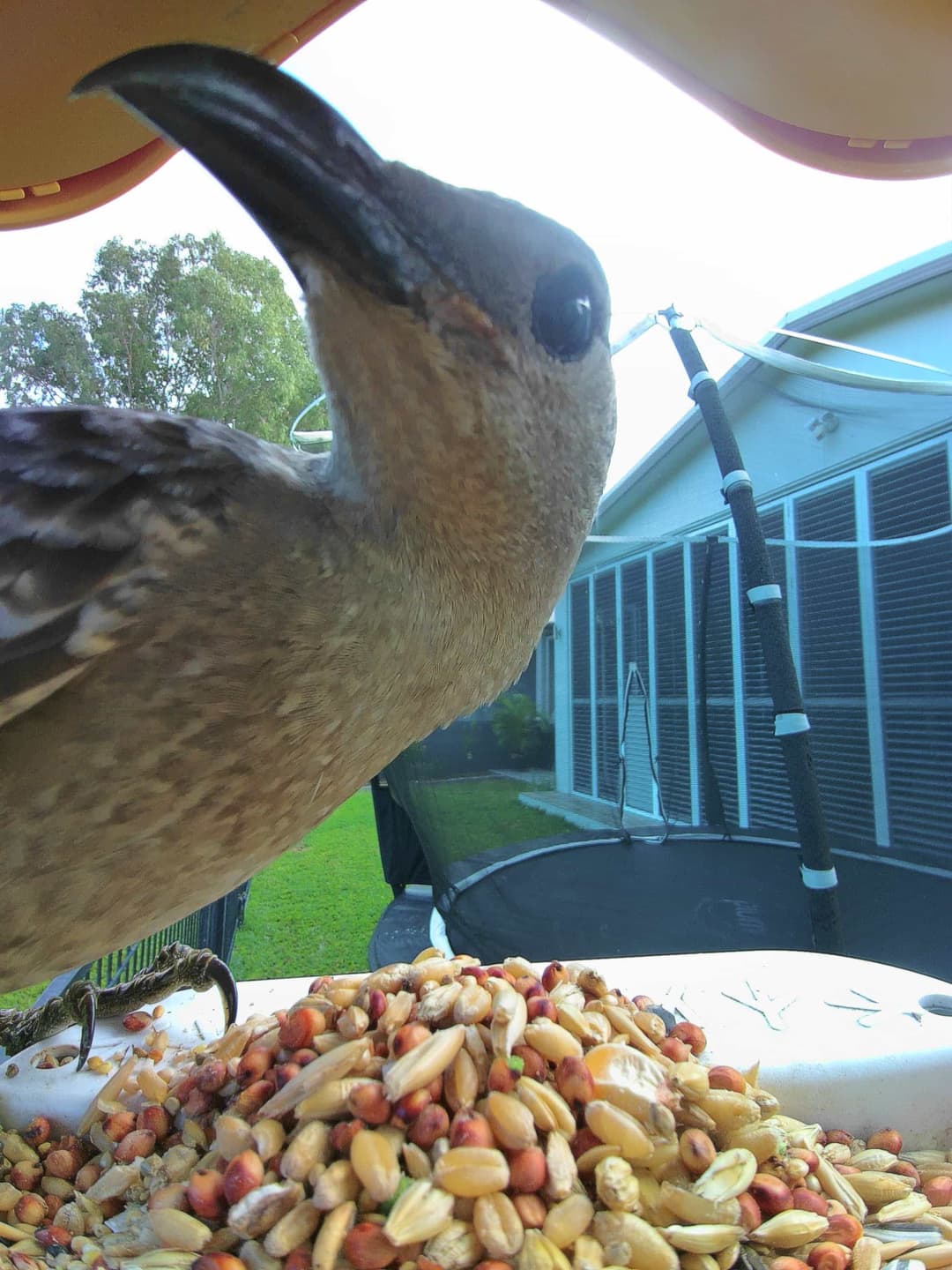
The Great Bowerbird and Satin Bowerbird are both bowerbirds and share some similarities in behavior, such as building intricate bowers to attract mates. However, the Great Bowerbird is generally larger and plainer in appearance, with greyish-brown plumage, whereas the male Satin Bowerbird is known for its striking glossy blue-black feathers.
Western Bowerbird vs Satin Bowerbird
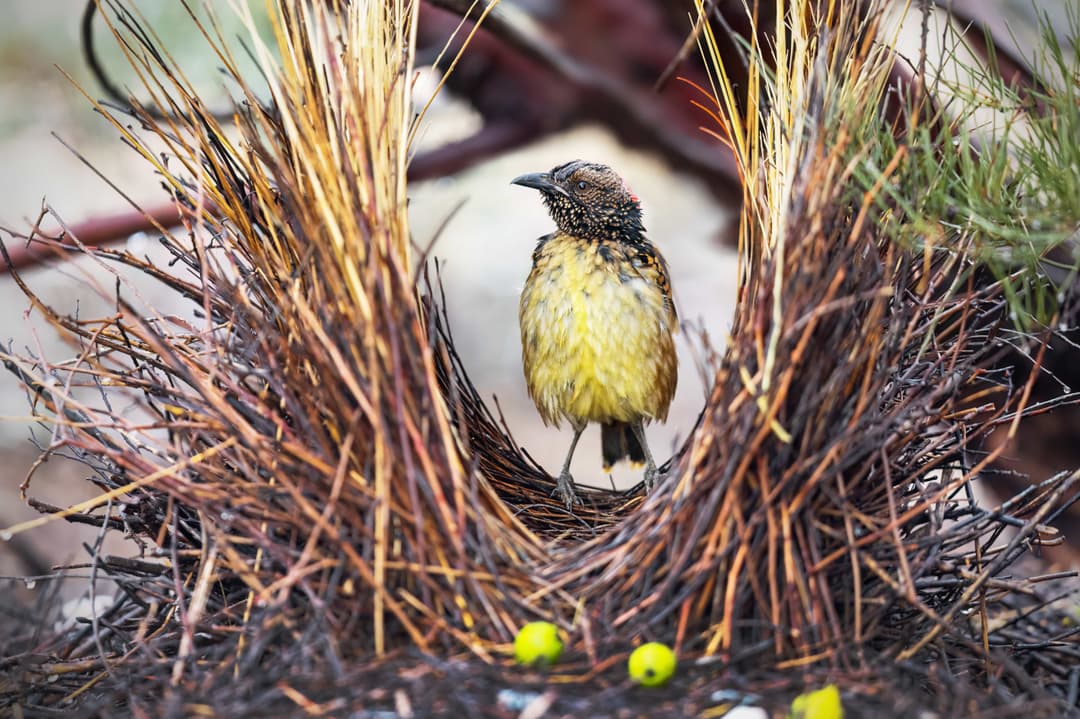
Similar to the Satin Bowerbird in some of its courtship behaviors, the Western Bowerbird differs in appearance with its more subdued brown plumage and absence of the satin sheen that characterizes the male Satin Bowerbird. Additionally, the Western Bowerbird typically has a distinctive pink crest on its nape, which is not present in Satin Bowerbirds.
Breeding and nesting habits of the satin bowerbird
Mating behaviors
Male satin bowerbirds engage in elaborate courtship displays by building and decorating structures known as bowers. They use blue objects to attract females, performing dances and vocalizations as part of the ritual. Courtship takes place at the bower, where females assess the males based on the attractiveness of the display.
Nesting details
Females select nesting sites high in trees, away from the display bowers, using sticks and leaves to construct a cup-shaped nest. The sites are generally in forested areas, but they may also choose gardens if suitable native foliage and materials are available.
Eggs and chick-rearing
Typically, the female lays one to three eggs, which she incubates alone. After hatching, she feeds the chicks a diet of fruit and insects. Males do not participate in rearing the young, as they are focused on courtship activities. The female tends to the chicks until they fledge, ensuring their development in a safe environment.
What does a satin bowerbird like to eat?
Flowers
Fruits
Insects
Plants
Seeds
Natural diet
Satin bowerbirds primarily consume fruits, but their diet includes a variety of other food sources. They forage for berries, seeds, leaves, and insects. The bowerbird is known for eating figs, which are abundant in their habitat. They also consume small invertebrates like caterpillars and grubs, which provide essential protein. Moreover, they occasionally feed on nectar from flowers.
Bird feeders
At bird feeders, satin bowerbirds often eat fruits like apples and grapes, which are commonly provided by bird enthusiasts. They may also consume seeds offered in some feeders, although they generally prefer softer foods over seeds. Nut-based and suet-based food items at feeders may attract them, especially during times of food scarcity in their natural habitat.
Feeding satin bowerbirds: a quick and easy guide
One of the best ways to entice Satin Bowerbirds to visit your backyard or feeder is to provide them with their favorite snacks. These birds are especially fond of fruits such as apples, pears, and berries. You can cut up fruits in small pieces and place them on a flat feeder tray or hang them on trees around your yard. Moreover, satin bowerbirds also enjoy a variety of insects.
Attracting satin bowerbirds with the right feeders
When setting up feeders, satin bowerbirds prefer sturdy, flat tray feeders, rather than hanging ones which can swing and scare them. Make sure that the feeder is placed in a quiet and safe place, preferably near shrubs or trees that provide quick cover from predators. Fresh water in a bird bath can also be a determining factor for these birds to visit your yard or feeder.
Foolproof tricks to encourage the bowerbirds
Satin bowerbirds are famously artistic, so adding blue objects around your yard can attract their attention, as they are attracted to this particular color. Another fun trick is to set up a mirror, these birds are known to be quite fascinated by their reflection which would urge them to visit more often!
The importance of choosing high-quality seeds
Just as important as what you are feeding the satin bowerbirds is the quality of the food you provide. We highly recommend Bird Buddy seeds. Expertly chosen for the season, these seeds have had the best results in attracting satin bowerbirds and keeping them happy and healthy.
Where can you find satin bowerbirds?

Primary habitat
Satin bowerbirds are native to Australia, especially in the rainforests and bush lands along the coast from Queensland to Victoria.
Additional range
Unexpectedly, they can also be found in urban areas and parks, as well as gardens which offer an abundant source of fruits and insects.
Do they migrate?
The satin bowerbird primarily resides in eastern Australia and does not undertake long-distance migratory behavior. Instead, it tends to be a sedentary species, commonly staying within its established home range throughout the year. However, some local movements may occur, often influenced by food availability and seasonal changes. During the breeding season, from September to February, male satin bowerbirds are known to display in specific areas where they construct intricate bowers to attract females. After the breeding season, there may be minor dispersal as individuals search for food, but these movements typically remain within relatively close proximity to their original location. The satin bowerbird inhabits rainforests, eucalypt woodlands, and well-vegetated gardens, adapting to changes in local environments without requiring extensive migration. Thus, while they might shift between slightly different habitats or altitudes, they are not known to undertake defined migratory routes like some other bird species.
What is the role of satin bowerbirds in nature and how to protect them?
Conservation status
The satin bowerbird is classified as a species of least concern, indicating it is relatively common and not currently at risk of extinction. These birds are native to eastern Australia, where they inhabit rainforest and eucalyptus forest regions. Although their population remains stable, habitat destruction and fragmentation pose potential threats. Conservation efforts focus on habitat preservation and management to ensure long-term survival. Engaging local communities in conservation activities and protecting critical habitats are essential strategies for maintaining the species' population and mitigating future risks.
Ecological role of satin bowerbirds
Its role in the ecosystem
The Satin Bowerbird (Ptilonorhynchus violaceus) possesses a unique ecological significance. As omnivores, they consume and stop the overpopulation of insects making them natural pest controllers. Besides controlling pests, they also inhibit plant overgrowth by eating fruits, leaves, and seeds. This diet leads to seed dispersal through their faeces, thus assisting in plant propagation and the diversification of the forest. Furthermore, the Satin Bowerbird contributes to the balance of nature by acting as prey for larger predatory birds and animals, boosting their survival rate. Bowerbirds, known for their elaborate and colourful bower construction to attract mates, help in forest rejuvenation by clearing smaller plants and debris on the forest floor. This multifaceted ecological role portrays the Satin Bowerbird as a vital participant in the maintenance and propagation of biodiversity in their ecosystems.
How to help protect satin bowerbirds
Preservation tips
Habitat preservation strategies
Enhance conservation efforts by safeguarding forest habitats where the satin bowerbird resides. Prevent deforestation and land conversion activities in these areas. Regularly monitor tree health and flowering and fruiting timings, as these are crucial for the bird's food source. Enable corridors connecting different populations to ensure genetic diversity.
Community science initiatives
Encourage participation in citizen science programs like 'The Bowerbird Project'. Train locals to identify and document bowerbird sightings and their bowers. Information on breeding behaviors, population sizes, and/or threats to these species would be beneficial. Promote educational programs to raise awareness of satin bowerbird's ecological importance and the threats they face. Report instances of poaching and illegal pet trade to appropriate authorities.