Yellow-Winged Tanager or Palm Tanager?
Here's how to tell the difference
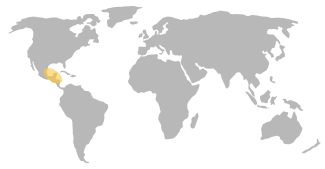

Yellow-Winged Tanager


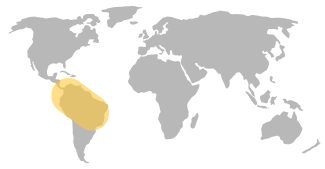
Palm Tanager
Yellow-Winged Tanager
Thraupis abbas
Yellow-Winged Tanager Description
The Yellow-Winged Tanager is a spectacular bird known for its striking plumage. It features a brilliant yellow face and throat, contrasting sharply with its vibrant blue body. The crown is typically blue as well, further accentuated by the vivid yellow patches on its wings which give the bird its distinctive name. Often, the back of the bird shows a darker shade of blue, making for a beautiful contrast with the brighter hues on the front. The tail and upper wings have blackish hints, providing subtle yet important distinctions that aid in identification.
Differences between Male and Female
Among the Yellow-Winged Tanagers, the differences between males and females are subtle, with females generally exhibiting slightly duller coloration than males. Both sexes showcase the characteristic yellow and blue coloration, though the vibrancy of the hues may differ slightly, with males appearing more vivid. This differentiation is essential during the breeding seasons when distinct colors aid in mate attraction.
Juvenile Appearance
Juvenile Yellow-Winged Tanagers often appear less resplendent compared to their adult counterparts. Their plumage is more subdued, primarily displaying duskier yellow tones and lacking the full saturation of blue seen in adults. The juvenile’s wings generally possess less noticeable yellow patches. As they mature, these birds gradually acquire the intensified coloration typical of adulthood, signaling their readiness to participate in breeding activities.
Size
6.5 - 6.9 in/1.3 - 1.9 oz
There's more to learn about Yellow-Winged Tanager
View full detailsPalm Tanager
Thraupis palmarum
General appearance
The Palm Tanager is about 19 cm in length and weighs around 36 grams. It sports an olive-green coloration mostly, but lower parts are yellower, with the underbelly and throat often seeming off-white. The wings and tail are typically dusky brown, contrasted by conspicuous yellowish-edged feathers. The bird's beak is conical and sharply pointed, ideal for their diet of fruits and insects. Its eyes are dark-brown.
Male vs female
Sexual dimorphism is not prominent in Palm Tanagers, meaning males and females largely look alike. They both share the olive-green color scheme with slight variations in intensity. The complexity of identifying the sexes can be attributed partially to their closeness in size and lack of distinctive physical traits.
Juvenile
Juvenile Palm Tanagers bear a strong resemblance to the adults but may be slightly paler. The juvenile's plumage features a less pronounced olive-green hue, favouring a more yellowish undertone. The visibility of the yellow-edged wing and tail feathers is less apparent in younger birds.
Size
6.3 - 7.1 in/1.0 - 1.7 oz
There's more to learn about Palm Tanager
View full detailsHow to tell the Yellow-Winged Tanager from the Palm Tanager
Visual differences
The Yellow-Winged Tanager is smaller and lighter (1.5-1.7 inches, 1.3-1.9 ounces) than the Palm Tanager (7.5 inches, 1-1.7 ounces). Yellow-Winged Tanagers are characterized by their vivid yellow wings, contrasting with their primarily blue-gray body. In contrast, Palm Tanagers display an olive-green body with yellowish underparts and dusky brown wings. The Yellow-Winged has a more elongated, delicate beak, suitable for its varied diet, while the Palm's beak is conical and sharply pointed. These features are essential for distinguishing these similar-sized species.
Key differences and behavior
The Yellow-Winged Tanager and Palm Tanager display distinct behaviors and preferences. While both are social, the Yellow-Winged Tanager forms larger post-breeding groups of up to 50 individuals, whereas Palm Tanagers are extremely sociable year-round without forming such large groups. In terms of habitat, Yellow-Winged Tanagers prefer subtropical moist lowland forests but can adapt to gardens, while Palm Tanagers thrive in tropical to subtropical regions, including urban areas. Both species exhibit vivid courtship behaviors, but Yellow-Winged Tanagers focus on melodic calls and colorful displays, whereas Palm Tanagers engage in synchronized flights. Diet-wise, both consume fruits and insects, though Palm Tanagers may also feed on nectar and sugar water at feeders. Yellow-Winged Tanagers often visit fruit kebab-style feeders. Nesting for Yellow-Winged Tanagers involves dense foliage, while Palm Tanagers utilize palm trees or eaves. Both species' cooperative rearing includes both parents feeding chicks, but Palm Tanagers have a longer fledging period of about 20 days.
Still not sure? Here are more lookalikes!
Yellow-Winged Tanager vs Scrub Tanager

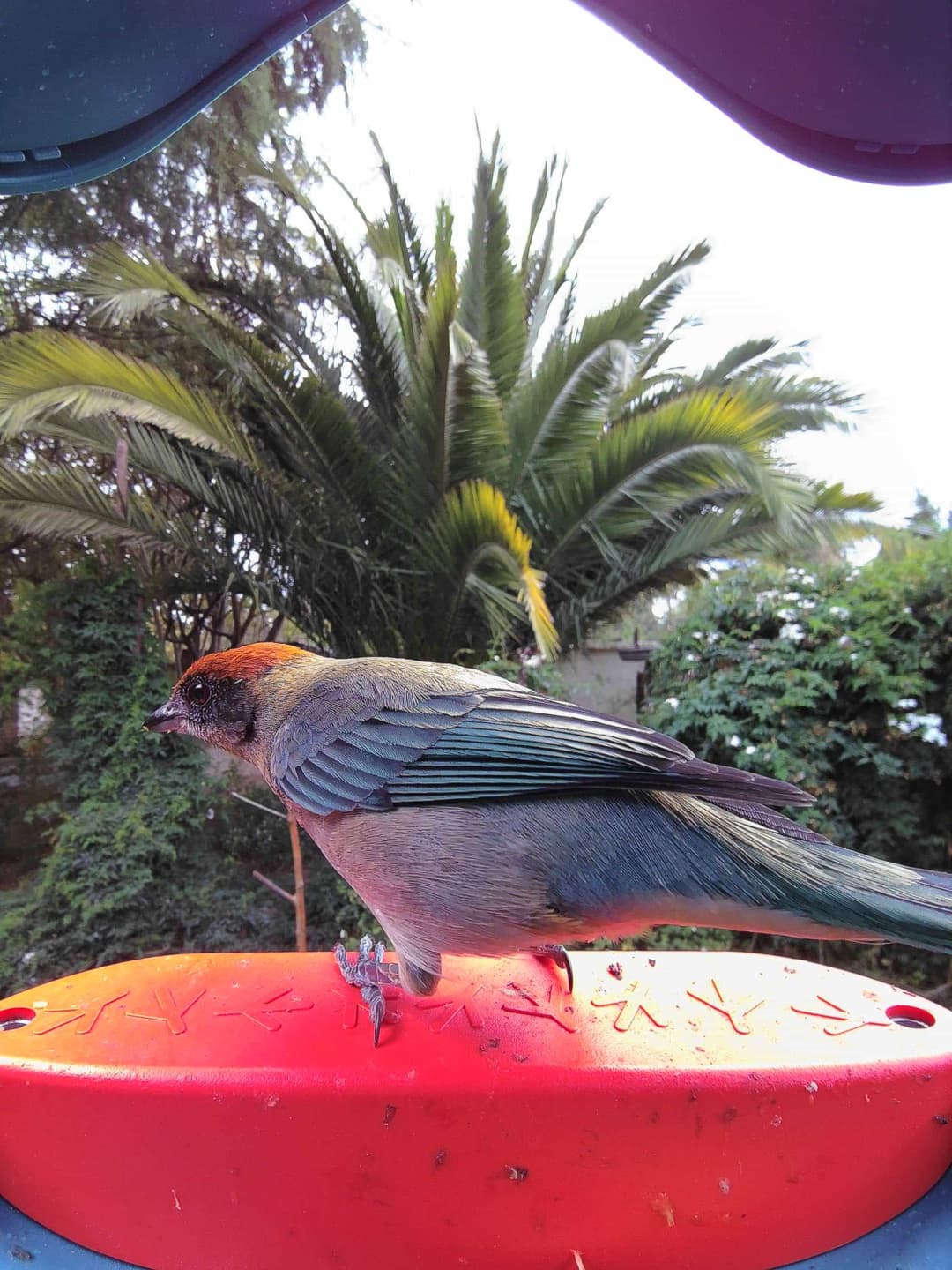
Yellow-Winged Tanager vs [Select a bird]

[Select a bird]
Pick a bird to compare
Palm Tanager vs [Select a bird]
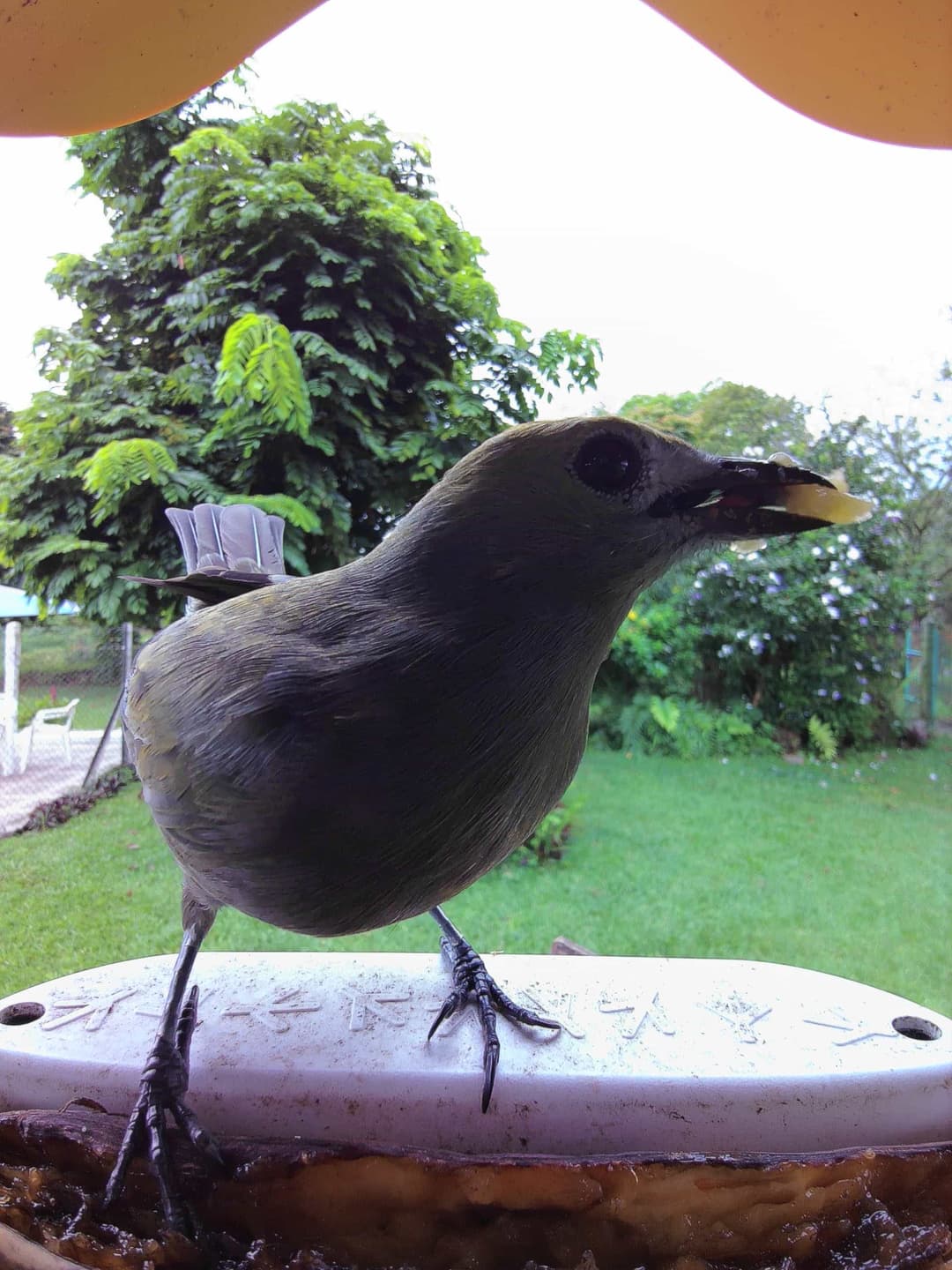
[Select a bird]
Pick a bird to compare