
Palm Tanager
Palm Tanager
Thraupis palmarum


Quick Identification guide
Quick Identification guide
- •
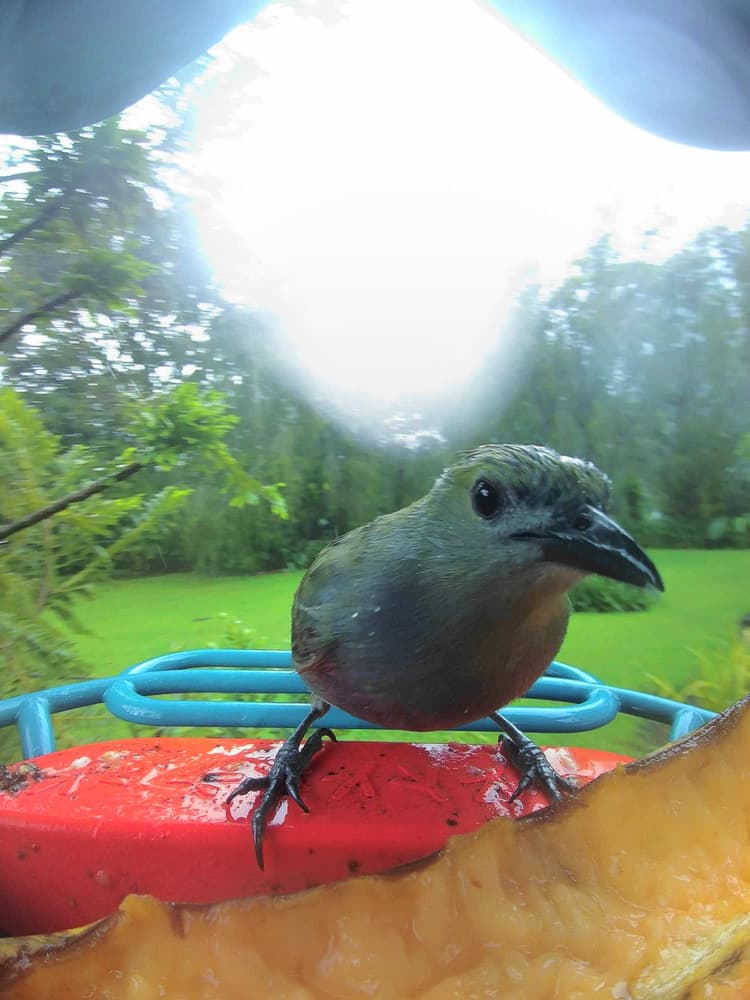
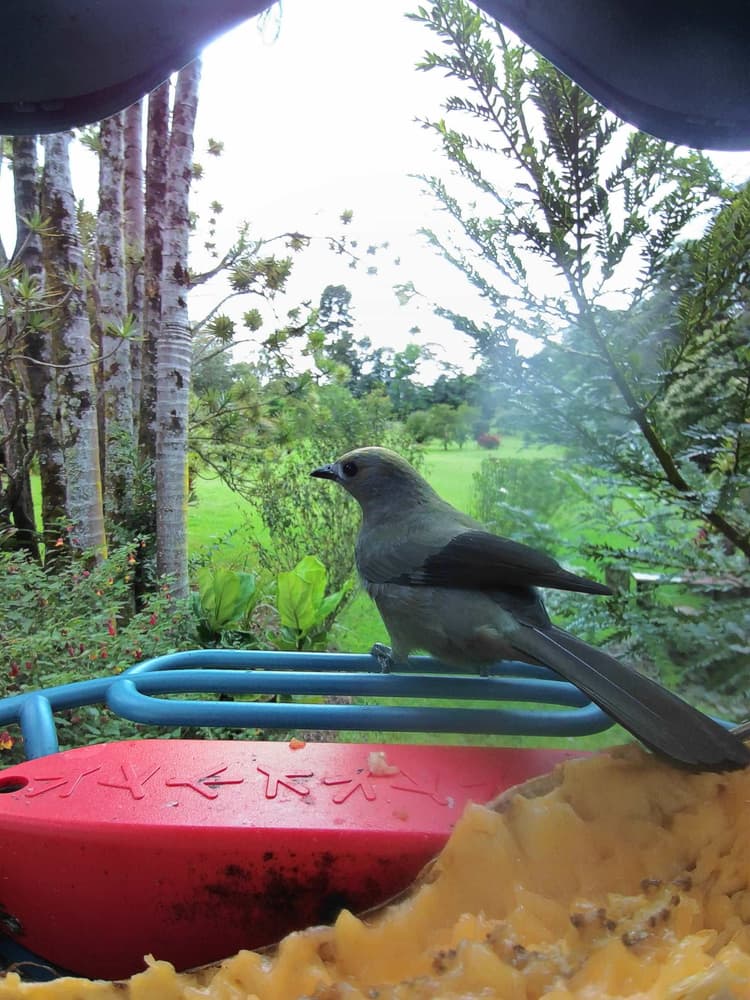
Features olive-green plumage with subtle variations across the back and wings, providing excellent camouflage
- •
Displays a dull grey head and throat, contrasting slightly with the more vibrant body coloration
- •
Possesses a medium-sized, straight black beak typical of the tanager family, built for foraging
What does a palm tanager sound like?
The palm tanager’s vocalizations are typically low-pitched, raspy, and protracted. Its song, often delivered in duets, is a long series of sweet, harmonious notes. The calls vary, ranging from a chirpy 'cheep' or 'seep' to more complex sounds akin to short whistles, trills or slurs. These vocalizations can last for prolonged periods, particularly during territorial disputes or courtship rituals. This bird species is most vocal at dawn or dusk.


Description
Palm tanagers have got some serious moves when they get ahold of a palm frond! When feeding, they perform all kinds of acrobatics to get to their food. The daring they exhibit when grabbing a bite to eat also translates to other walks of their life, as these restless birds are extremely social and not shy in the slightest! On Trinidad and Tobago, they have two neat nicknames: palmiste and green jean!
The palm tanager can weigh between 27to48grams and be from16to18centimeters tall.
The Palm Tanager typically lives up to 9.3 years in the wild. Such a lifespan is comparable to other types of Tanagers such as Granatellus pelzelni, which has a similar lifespan of 8-10 years. The overall lifespan of Palm Tanagers, compared with other tanager species, is considered within the normal range.
Did you know?
Most popular questions about palm tanager
How to recognise a palm tanager?
General appearance
The Palm Tanager is about 19 cm in length and weighs around 36 grams. It sports an olive-green coloration mostly, but lower parts are yellower, with the underbelly and throat often seeming off-white. The wings and tail are typically dusky brown, contrasted by conspicuous yellowish-edged feathers. The bird's beak is conical and sharply pointed, ideal for their diet of fruits and insects. Its eyes are dark-brown.
Male vs female
Sexual dimorphism is not prominent in Palm Tanagers, meaning males and females largely look alike. They both share the olive-green color scheme with slight variations in intensity. The complexity of identifying the sexes can be attributed partially to their closeness in size and lack of distinctive physical traits.
Juvenile
Juvenile Palm Tanagers bear a strong resemblance to the adults but may be slightly paler. The juvenile's plumage features a less pronounced olive-green hue, favouring a more yellowish undertone. The visibility of the yellow-edged wing and tail feathers is less apparent in younger birds.
Breeding and nesting habits of the palm tanager
Mating behaviors
Palm tanagers engage in vivid courtship displays involving fluttering flights and vocalizations to attract mates. Pairs often perform synchronized movements to strengthen bonds.
Nesting details
These birds prefer to nest in palm trees or under eaves of buildings, using materials like twigs, moss, and leaves. They are adaptable and can nest in gardens if suitable structures are available.
Eggs and chick-rearing
The female lays 2-3 eggs, incubating them for about two weeks. Both parents participate in feeding the chicks, which fledge in approximately 20 days. Providing a garden with dense foliage and water sources supports their nesting needs.
What does a palm tanager like to eat?
Berries
Flowers
Fruits
Insects
Nectar
Plants
Seeds
Natural diet
The palm tanager primarily feeds on fruits and berries found in tropical and subtropical forests, such as figs, melastomes, and bananas. They also consume insects and spiders, which they catch in flight or by gleaning off foliage. The diet varies seasonally, focusing on whichever fruits are most abundant. They have been observed feeding on small seeds and nectar as well.
Bird feeders
At bird feeders, palm tanagers are commonly attracted to items like mixed seeds and pieces of fruit, such as papaya and mango. They may also visit feeders offering nectar solutions, similar to those used for hummingbirds, and occasionally consume sugar water or jam. Feeders providing suet with fruit and nuts can also be frequented by these birds.
Setting up feeder
Palm Tanagers are known to be attracted to a variety of feeders, but tube feeders filled with small seeds are particularly appealing to them. Place your feeder in a safe location, away from predators and at least ten feet away from windows to avoid bird collisions.
Choosing the right food for palm tanagers
Palm Tanagers love to nibble on a variety of seeds, fruits, and insects. They are particularly fond of Bird Buddy seeds, which are expertly chosen for each season to meet the nutritional needs of various bird species.
Making your yard palm tanager friendly
Provide natural habitat for the Palm Tanager to encourage frequent visits. Planting native trees and shrubs can attract them to your yard, offering valuable food sources and nesting sites.
Fun tricks to attract palm tanagers
You can encourage a Palm Tanager visit with a birdbath. These birds are drawn to the sound of running water and enjoy taking baths and drinking from clean, fresh water sources. As a plus, they might serenade you with a song while they're at it!
Where can you find palm tanagers?
Primary habitat
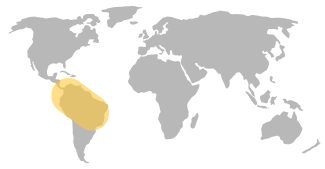
The palm tanager typically resides in tropical regions of the Americas, from Nicaragua through South America to southern Brazil and Trinidad. It prefers humid forest edges and secondary forests but can also be found in gardens and plantations.
Additional range
Despite its preference for tropical climates, the palm tanager is adaptable and can also be found in subtropical dry forests, heavily degraded former forests and urban areas.
Do they migrate?
The palm tanager is a non-migratory bird that typically remains in its habitat year-round. This species is commonly found in a wide range of environments across tropical regions of Central and South America. Its range extends from eastern Honduras, through Nicaragua, Costa Rica, and Panama, down into South America, reaching as far south as Paraguay and northern Argentina. Palm tanagers inhabit various ecosystems, including tropical and subtropical forests, plantations, and even urban areas with sufficient vegetation. They are flexible regarding their environment, which contributes to their non-migratory nature. By adapting to different habitats, palm tanagers can remain in one place throughout the year without the need to migrate in search of food or suitable climate conditions. Since they do not partake in seasonal movements, there is no specific migration route, timing, or key locations to describe for the palm tanager. Instead, these birds remain within their established territories, where they feed on a diet of fruits, nectar, and insects, maintaining their ecological niche consistently throughout the year.
What is the role of palm tanagers in nature and how to protect them?
Conservation status
The palm tanager is classified as a species of Least Concern, indicating it is relatively common and not currently at significant risk of extinction. It is widespread across its range in Central and South America. While there are no major conservation efforts specifically targeting the palm tanager, its survival benefits from broader habitat conservation initiatives. The species faces threats primarily from habitat loss due to deforestation and urban expansion, but it is adaptable and often thrives in disturbed and urban areas. Overall, its population is stable, with no significant immediate threats.
Ecological role of palm tanagers
Its role in the ecosystem
The Palm Tanager (Thraupis palmarum) holds significant ecological importance through its roles in pest control, seed dispersal, and pollination. Being omnivorous, the Palm Tanager is known for its diet of insects and, therefore, plays a significant role in controlling pest populations that could be harmful to plants and trees, aiding in the maintenance of balanced ecosystems. Additionally, the Tanager often consumes various fruits and, in the process, disseminates their seeds in different locations through excretion. This leads to the spreading of diverse plant species and contributes to forest regeneration. The bird has also been observed feeding on the nectar of certain plants, thus aiding in their pollination and ensuring their propagation. Therefore, the Palm Tanager acts as a key player in maintaining biodiversity and the overall health of their ecosystems.
How to help protect palm tanagers
Preservation tips
Habitat preservation strategies
To support the conservation of the palm tanager, preserve its natural habitats. This includes reducing deforestation activities in tropical and subtropical areas, where it primarily thrives. Implement laws and regulations to protect their habitats. Invest in reforestation projects focusing on indigenous trees that attract the palm tanager which fosters their survival and well-being.
Community science initiatives
Engage communities in citizen science projects to monitor palm tanager populations. Educate the public about the importance of biodiversity, and the role of species like the palm tanager in maintaining ecological balance. Organize bird watching tours and other activities that raise awareness. Encourage reporting of sightings for tracking and, where possible, protecting nests from predators and disturbance. Advocate for responsible tourism practices that minimize impact on the tanager's habitats.